Suspected Hantavirus outbreak near Cape Verde raises economic concerns for Africa’s tourism and maritime industries
A suspected hantavirus outbreak aboard a cruise vessel off the coast of Cape Verde has highlighted a growing vulnerability in Africa’s economic landscape: the intersection of public health, tourism, and maritime trade.
 Black News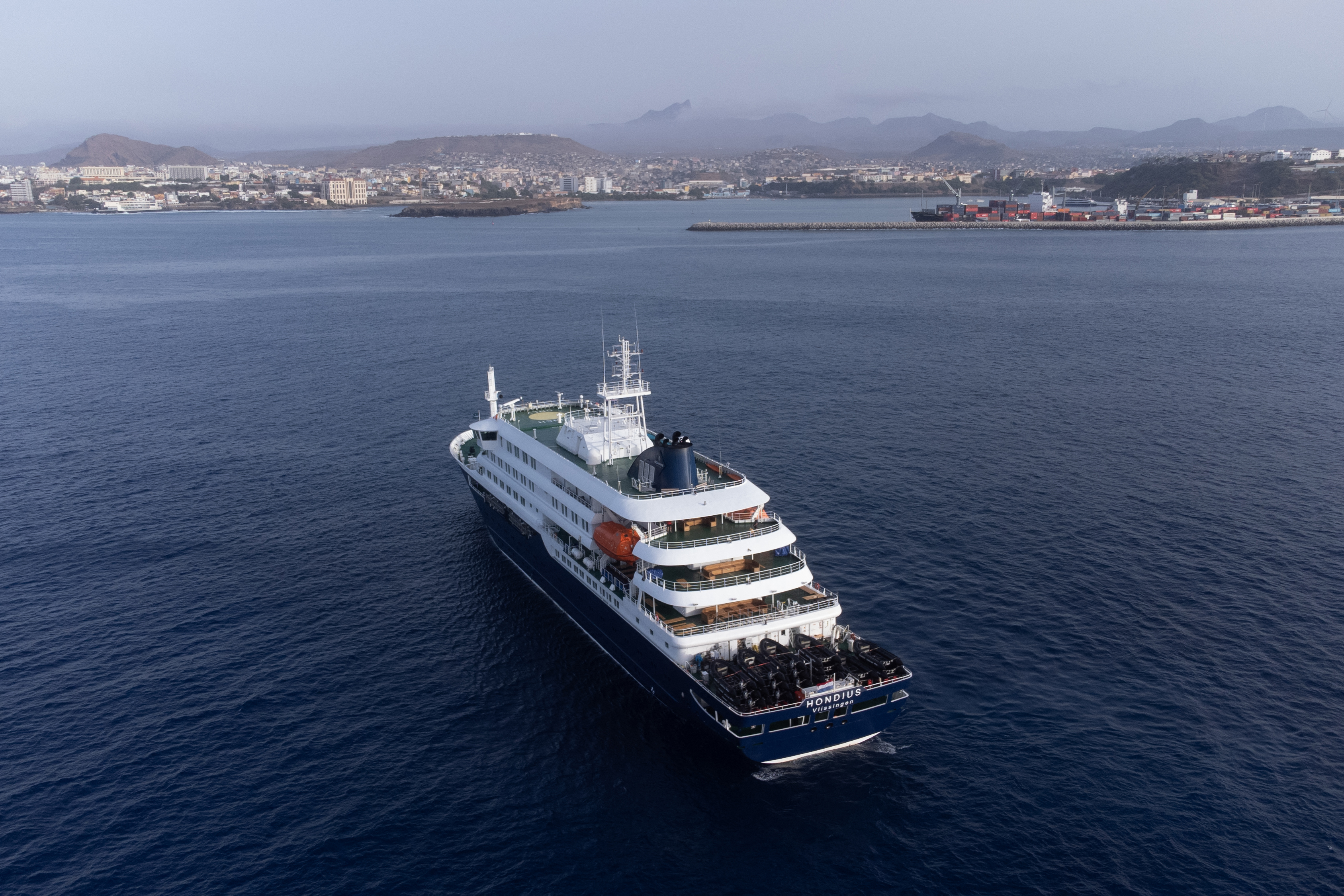
![This aerial picture shows a general view of the cruise ship MV Hondius stationary off the port of Praia, the capital of Cape Verde, on May 5, 2026. The WHO said on May 5, 2026 that Spain would "welcome" a cruise ship anchored off Cape Verde with suspected hantavirus cases onboard, enabling a probe and assessment of the risk to the remaining passengers. [Photo by AFP via Getty Images]](https://ocdn.eu/pulscms/MDA_/c6507afcf9677b36202d0f086ceb5147.jpg)
A suspected hantavirus outbreak aboard a cruise vessel off the coast of Cape Verde has highlighted a growing vulnerability in Africa’s economic landscape: the intersection of public health, tourism, and maritime trade.
- A suspected hantavirus outbreak on a cruise ship off Cape Verde has triggered emergency health measures and halted docking.
- While the World Health Organisation says public risk remains low, the incident exposes vulnerabilities in Africa’s tourism-dependent economies.
- The disruption highlights the need for stronger port health systems and crisis response mechanisms.
- Experts say improved preparedness is key to safeguarding investor confidence and sustaining Africa’s travel and maritime growth.
While global health authorities, including the World Health Organisation, have assessed the risk to the wider public as low, the incident underscores how even isolated health scares can ripple through economies that depend heavily on travel and port activity.
The situation centres on the expedition cruise ship MV Hondius, which was denied docking after reports of illness among passengers and crew.
Several fatalities and suspected infections prompted Cape Verdean authorities to act cautiously, prioritising containment over commercial considerations.
Although such measures are consistent with global health protocols, they also reveal the delicate balance that tourism-dependent economies must strike between safeguarding public health and sustaining economic activity.
Tourism Vulnerabilities
For Cape Verde, the stakes are particularly high. The island nation has emerged in recent years as one of Africa’s fastest-growing tourism markets, with international arrivals forming the backbone of its service-driven economy.
Cruise tourism, in particular, plays a significant role in linking the country to European and transatlantic travel circuits. A single high-profile incident, especially one involving fatalities, can disrupt traveller confidence, at least in the short term.
This vulnerability is not unique to Cape Verde. Across Africa, several coastal and island economies have positioned tourism and maritime services as engines of growth. Countries such as Mauritius, Seychelles, and Morocco have invested heavily in cruise infrastructure, hospitality, and destination marketing.
However, the Cape Verde incident illustrates how quickly a health-related disruption can interrupt these ambitions. Even if the outbreak remains contained, perceptions of risk can linger longer than the incident itself, influencing travel decisions, insurance costs, and operator strategies.
Port Health Risks
Beyond tourism, the episode also raises broader questions about port readiness and crisis management. African ports increasingly serve as gateways not only for tourists but also for trade and logistics.
While cargo operations differ from passenger services, the same health protocols, quarantine capacity, medical screening, and emergency response coordination are essential to maintaining smooth operations. A delay or closure at a key port, even temporarily, can have knock-on effects on supply chains, particularly in regions with limited alternative routes.
The incident further highlights the growing importance of public health preparedness as an economic priority. The COVID-19 pandemic demonstrated how quickly health crises can translate into economic shocks, particularly in regions with limited healthcare infrastructure.
Although hantavirus is far less transmissible than COVID-19, the response it triggered reflects lessons learned from the pandemic: early containment, restricted movement, and international coordination.
In this case, collaboration between Cape Verdean authorities, international health agencies, and the cruise operator helped prevent panic and maintain transparency. Such coordination is increasingly vital in a globalised travel environment where vessels often carry passengers from multiple countries and operate across jurisdictions.
Investors Sentiments
For Africa, strengthening these collaborative frameworks will be key to ensuring that future incidents are managed efficiently without unnecessary economic disruption.
Investor sentiment is another area likely to be influenced by such events. While a single outbreak is unlikely to deter long-term investment, it may prompt a reassessment of risk in sectors tied to tourism and maritime activity.
Investors and insurers may begin to place greater emphasis on health-security standards, contingency planning, and resilience measures. This could lead to higher short-term compliance costs but ultimately strengthen the sector’s long-term stability.
Importantly, the World Health Organisation’s assessment that the risk to the general public remains low provides some reassurance. It suggests that the situation is unlikely to escalate into a broader health crisis or significantly disrupt regional travel patterns.
However, the economic implications lie less in the scale of the outbreak and more in its symbolic impact: a reminder that global mobility, while economically beneficial, also carries inherent risks.
What Next?
Looking ahead, the incident may serve as a catalyst for policy improvements. Governments and port authorities across Africa could accelerate investments in health screening technologies, onboard medical facilities, and emergency evacuation protocols.
Clear communication strategies will also be essential in managing public perception and preventing misinformation from amplifying economic damage.
In essence, the suspected hantavirus outbreak off Cape Verde is a contained event with limited immediate economic fallout. Yet it offers a broader lesson for Africa’s development trajectory.
As the continent continues to integrate into global tourism and trade networks, resilience, particularly in public health, will be as important as growth itself.