The ‘goats’ fighting malnutrition in Dodoma villages
DODOMA: When Rehema Mnyodo, 33, was discharged from Chamwino District Hospital in Dodoma with her triplets, including a baby boy, everything seemed to be going well. As far as she and the newborns had allowed going home depicted that they were both in good health condition. However, after a few days at home, the resident … The post The ‘goats’ fighting malnutrition in Dodoma villages first appeared on Daily News. The post The ‘goats’ fighting malnutrition in Dodoma villages appeared first on Daily News.
 Black News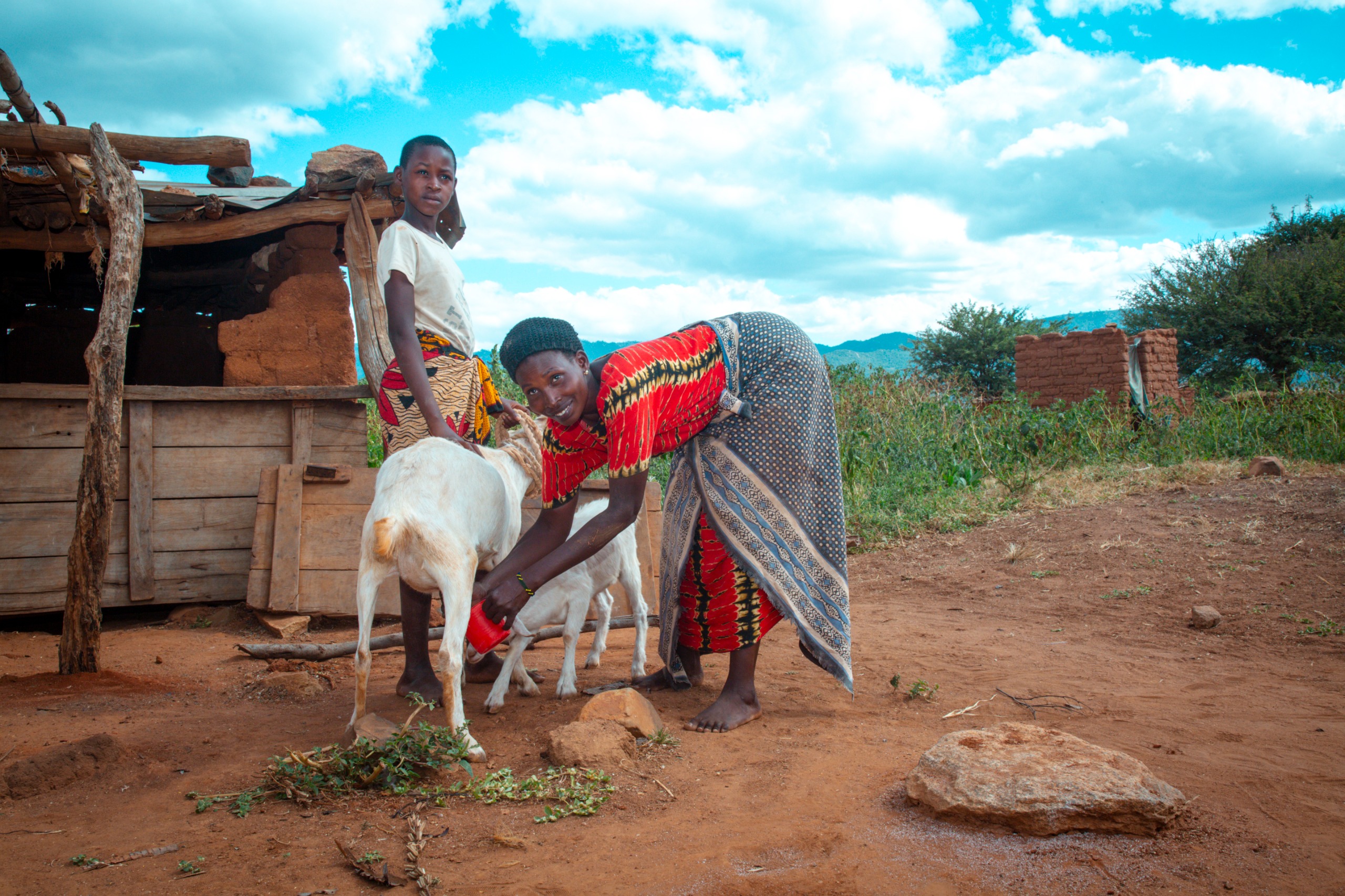
DODOMA: When Rehema Mnyodo, 33, was discharged from Chamwino District Hospital in Dodoma with her triplets, including a baby boy, everything seemed to be going well. As far as she and the newborns had allowed going home depicted that they were both in good health condition.
However, after a few days at home, the resident of Igamba Village in Dabaro Ward, Chamwino District, started experiencing challenges in raising her newborns.
Her husband, who is the father of her triplets, was involved in a murder case and is currently serving a prison sentence at Isanga Prison in Dodoma Region. While struggling to find ways to raise her children, Rehema noticed that one of the three babies was not growing as expected.
“Compared to the others, she was very small. I could see there was a difference between her and the others. All of them were born after nine months, but one girl was the one who had challenges,” said Rehema, a mother of nine who depends on casual labour as her family’s main source of income.
The situation forced her to seek medical attention at Dabaro Health Centre in Chamwino District, where she was informed that her baby girl was suffering from acute malnutrition. She was given nutritional supplements to help improve the child’s condition.
The mother was also enrolled in Save the Children’s Goat Project, which was designed to contribute to improving food and nutrition security in Bahi and Chamwino districts of Dodoma Region.
A goat she received from the project later gave birth to two kids. Unlike other local breeds, the improved goat provided through the project produces enough milk, allowing Rehema to feed her triplets.
Rehema’s children are now one year and nine months old and are growing healthily, thanks to the project.
ALSO READ: Hidden threat of ‘Indian’ crows to sustainable birdwatching tourism
Rahel Tadayo, 25, has a similar story to Rehema, although the circumstances were different. The mother of three who lives in Nayo Village in Dabaro Ward, Chamwino District, experienced challenges with her second-born child after she stopped breastfeeding.
She made the decision after discovering that she was pregnant again.
Perhaps influenced by African cultural beliefs, Rahel stopped breastfeeding immediately after learning she was expecting another child. It is traditionally believed in some communities that pregnancy affects the quality of breast milk.
While the decision was culturally acceptable, it negatively affected the child’s health as the baby girl began suffering from frequent diarrhea and vomiting.
The child was later taken to Dabaro Health Centre, where she was diagnosed with acute malnutrition. Despite receiving nutritional supplements, a health worker at Dabaro Ward, Erica Kahulule, linked Rahel to Save the Children’s Goat Project, where she received an improved goat breed.
After several days of feeding her baby with goat milk, the child’s health condition improved significantly.
To improve nutrition among other households, the first set of twins produced by the goat were distributed to other beneficiaries. However, the goat later gave birth to another pair of twins, which now belong to her.
Similar success stories of how goats are improving children’s health and supporting household incomes through agriculture can be found in selected villages in Bahi District.
Tumaini Abdallah, 32, a mother of three from Kisima cha Ndege Village in Bahi District, uses goat milk to feed her children. She has also utilised goat manure to improve productivity on her small farm surrounding her home.
She expects higher yields this year thanks to the effective use of manure from her goats, which have multiplied significantly.
Like Tumaini, Asanje Village resident in Babayu Ward, Bahi District, Emmanuel Meda says the project has helped his family improve food security.
“We milk the goats for the children. I currently have four goats, and later I expect to earn income from them,” he said.
He added that, unlike some men in his village, he welcomed the project and made preparations to ensure it benefited his family.
According to him, his child is now six years old and has benefited from improved health. The manure from the goats has also improved crop production, especially sunflower farming.
He encouraged other men in his village to accept and actively participate in the project so that it can benefit children and families.
Describing the project and its impact on the community, Chamwino District Veterinary Officer Beda Msimbe said they have been collaborating with Save the Children under the “My Nutrition, My Life” programme since 2023, with the aim of improving nutrition and increasing income among selected households across Chamwino District.
Under the initiative, he said, beneficiaries were grouped, with each group consisting of five people. Five beneficiaries received goats in the first phase, while another five received goats after the animals reproduced.
During the first phase, 563 targeted women benefited from the programme.
Speaking to reporters at her office recently, Bahi District Executive Director Ms Albina Mtumbuka said the project has improved the health of malnourished children while also economically empowering beneficiary women.
She said under the initiative, a total of 575 improved-breed goats were distributed to beneficiaries across 59 villages.
According to her, the goats have multiplied to 1,081 and were later redistributed to additional beneficiaries through a pass-on system.
“The beneficiaries receive milk to feed their children. Goat milk is rich in protein, which is essential for children under the age of five,” she said.
Ms Mtumbuka further noted that women involved in the project have improved their household incomes and overall living standards.
She thanked Save the Children for implementing the project and pledged continued collaboration with stakeholders to ensure its objectives are achieved.
She said the collaboration between Bahi District Council and Save the Children has significantly contributed to improving the livelihoods of rural women with young children.
On his part, the project’s Communications Officer, Fredrick Shija, said the initiative has achieved its target by reaching a total of 29,628 direct beneficiaries, including 884 pregnant women, 1,449 lactating mothers, 8,915 children under five years, as well as 7,466 mothers and caregivers with children under five.
Additionally, he said the project engages 332 village farmers and leaders, 60 care group promoters, and 9,800 care group volunteers, alongside 600 government officials and health workers and 122 government extension workers.
“This demonstrates strong coverage across key community groups and stakeholders critical to project success,” he told the Daily News.
Furthermore, the project has reached 120,750 indirect beneficiaries, expanding its overall impact within the community.
Save the Children continues to expand and improve the delivery of quality nutrition services across Dodoma Region, particularly through community-based interventions and strengthened multisectoral coordination.
Through its programmes, the organisation prioritises nutrition education, awareness campaigns, and the promotion of productive livelihoods as key approaches to addressing both immediate and underlying causes of malnutrition.
Sauli is a Daily News writer who can be reached through sauli.giliard@gmail.com or +255 714 082 648
The post The ‘goats’ fighting malnutrition in Dodoma villages first appeared on Daily News.
The post The ‘goats’ fighting malnutrition in Dodoma villages appeared first on Daily News.