Tigray Mon Amour: Tigrayans Must Reject Religious Intolerance Targeting Muslims
By Mohammed A Nurhussein Photos: Wikimedia Commons The Injustice in Axum This essay is offered in a spirit of grief, responsibility, and moral urgency. It concerns not a peripheral dispute, but a question that reaches the heart of Tigray’s civic future: whether a society marked by immense suffering will submit to the corrosion of prejudice and impunity, or recommit itself to the difficult discipline of justice on which any durable peace must depend. What is unfolding in Axum, therefore, is more than a local controversy. It is a measure of our collective moral seriousness. The injustice directed at our Muslim brothers and sisters in Axum should concern every one of us, not only because it violates the rights of a particular community, but because it strikes at the principles that give public life its legitimacy: equal citizenship, freedom of conscience, access to education, and fidelity to the rule of law. Once such principles are selectively suspended, the injury does not remain confined to its first victims; it expands into a wider civic disorder that ultimately threatens all. At the center of the present controversy is the exclusion of Muslim girls from public school for wearing the hijab. The order was issued by a local official, condemned by civil society—including both Muslim and Christian communities—and overturned by a state court, which ruled that the students must be reinstated. The provisional state government likewise ordered local authorities to allow their return. Yet those orders were openly defied. This was not simply administrative misconduct. It was a direct assault on the rule of law, and a stark reminder of how quickly justice collapses when prejudice is allowed to speak in the name of authority. This is not only an assault on the rights of Muslim students. It is also a warning of how readily rights may be withdrawn, law disregarded, and human dignity sacrificed when prejudice goes unchallenged. Nor is this indignity an isolated wrong. It belongs to a longer history of denial. For many years, Muslims in Axum have sought nothing more than the right to establish a place of worship in the city that is also their own. Successive federal and state administrations have acknowledged that right since the revolution, yet time and again they have failed to uphold it in practice. The result is not merely delay, but the steady conversion of a recognized right into a repeatedly deferred promise. In the words of Dr. Martin Luther King Jr. -justice too long delayed is justice denied (Letter from Birmingham Jail). That such injustice should persist after the genocide our people endured during the Tigray War of 2020–2022 makes it all the more intolerable. During that catastrophe, an estimated 600,000 to one million people perished. After all that has been suffered, buried, and mourned, the work before us should be the construction of a political community grounded in justice, dignity, and mutual protection—not the hardening of old prejudices into public policy. Why “Tigray Mon Amour” The title of this essay draws from the 1959 film Hiroshima, Mon Amour, Alain Resnais’s landmark contribution to French New Wave cinema. On one level, the film tells a love story between two people from different worlds, one French and the other Japanese. On a deeper level, it meditates on Hiroshima and the collective trauma, loss, and devastation borne by its people. By linking an intimate human relationship to the memory of catastrophe, Resnais connects private memory with historical ruin. Lessons for Tigray Japan rose from the ashes of nuclear annihilation by choosing peace, rebuilding with discipline, and forging democratic institutions, while preserving the memory of its suffering in places such as the Hiroshima Peace Memorial Museum. Vietnam, too, rebuilt without erasing its wounds. These nations teach a hard but necessary lesson: devastation is not a license for moral collapse; it is a summons to renewal. Tigray must learn from these examples—and it must do so now. The challenges before us are immense: political economic humanitarian Meeting them will require discipline, seriousness, and collective resolve of the highest order. Yet instead of summoning that strength, we are allowing division, complacency, and injustice to take root among us. This is not a minor failure of judgment. It is a betrayal of what we owe to one another and of the future we claim to be fighting for. The consequences of such betrayal are immediate and corrosive, and they stand in painful contrast to the suffering our people endured, the courage they showed in defending themselves against aggressors, and the sacrifices they made. During the war, the solidarity and shared purpose of our people were undeniable. Tegaru (people of Tigray) at home and abroad stood together to defend their homeland. Many in the diaspora left behind successful careers and the comfort of ordinary life to
 Black News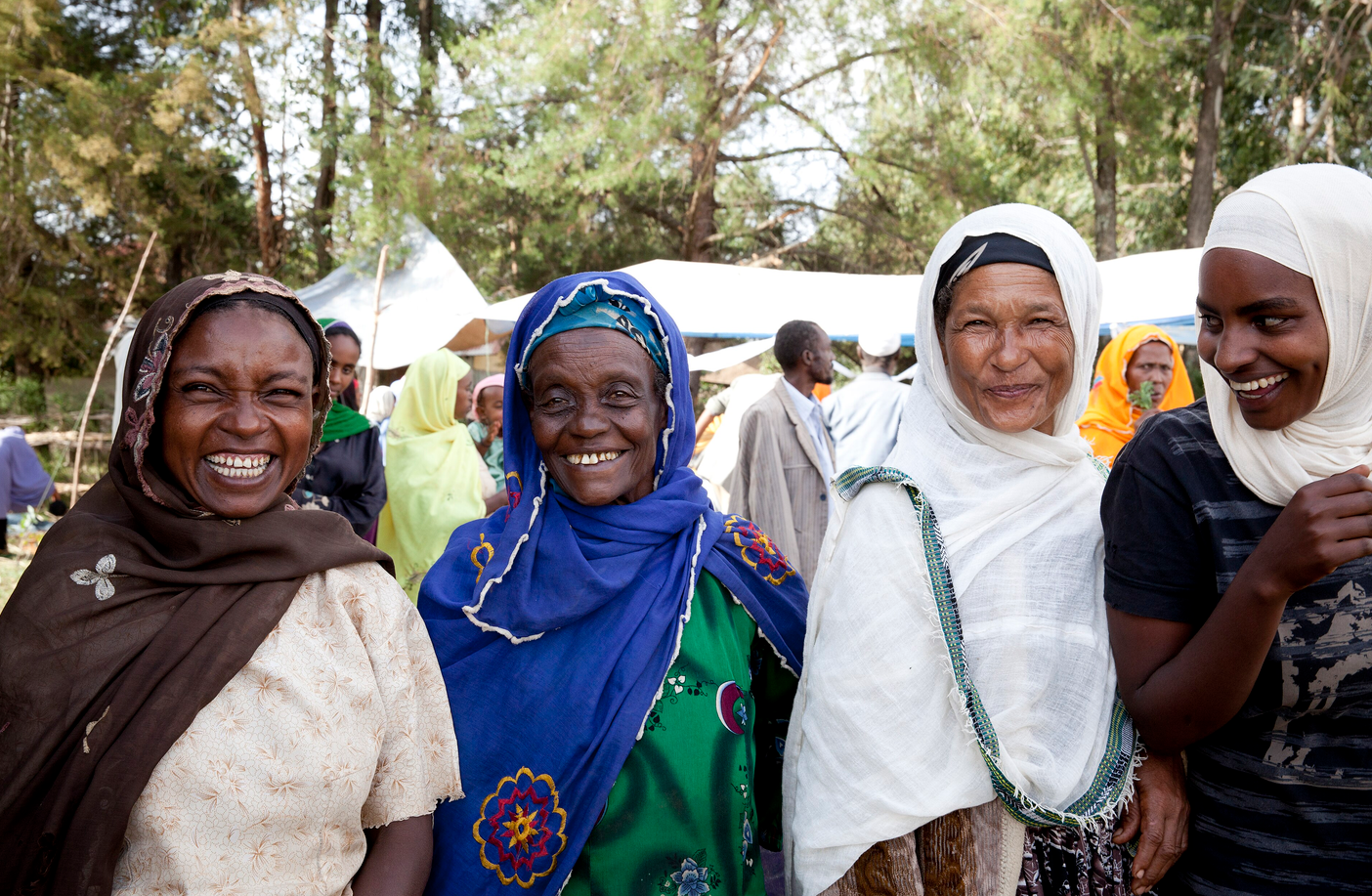
By Mohammed A Nurhussein
Photos: Wikimedia Commons
The Injustice in Axum
This essay is offered in a spirit of grief, responsibility, and moral urgency. It concerns not a peripheral dispute, but a question that reaches the heart of Tigray’s civic future: whether a society marked by immense suffering will submit to the corrosion of prejudice and impunity, or recommit itself to the difficult discipline of justice on which any durable peace must depend. What is unfolding in Axum, therefore, is more than a local controversy. It is a measure of our collective moral seriousness.
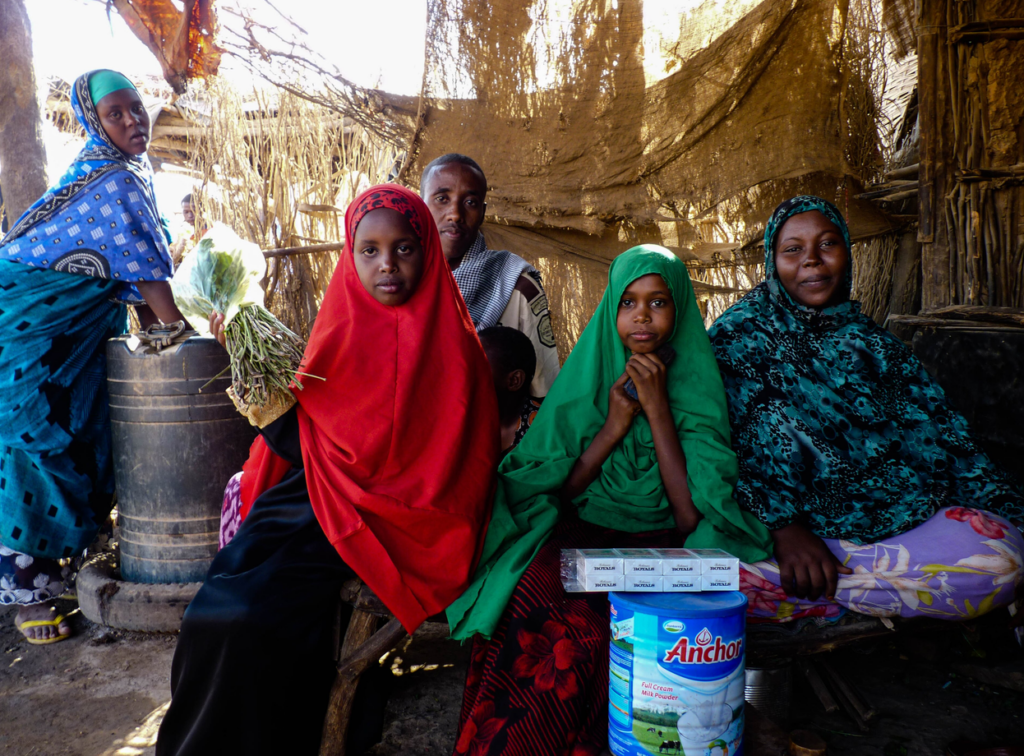
The injustice directed at our Muslim brothers and sisters in Axum should concern every one of us, not only because it violates the rights of a particular community, but because it strikes at the principles that give public life its legitimacy: equal citizenship, freedom of conscience, access to education, and fidelity to the rule of law. Once such principles are selectively suspended, the injury does not remain confined to its first victims; it expands into a wider civic disorder that ultimately threatens all.
At the center of the present controversy is the exclusion of Muslim girls from public school for wearing the hijab. The order was issued by a local official, condemned by civil society—including both Muslim and Christian communities—and overturned by a state court, which ruled that the students must be reinstated. The provisional state government likewise ordered local authorities to allow their return. Yet those orders were openly defied. This was not simply administrative misconduct. It was a direct assault on the rule of law, and a stark reminder of how quickly justice collapses when prejudice is allowed to speak in the name of authority.
This is not only an assault on the rights of Muslim students. It is also a warning of how readily rights may be withdrawn, law disregarded, and human dignity sacrificed when prejudice goes unchallenged.
Nor is this indignity an isolated wrong. It belongs to a longer history of denial. For many years, Muslims in Axum have sought nothing more than the right to establish a place of worship in the city that is also their own. Successive federal and state administrations have acknowledged that right since the revolution, yet time and again they have failed to uphold it in practice. The result is not merely delay, but the steady conversion of a recognized right into a repeatedly deferred promise. In the words of Dr. Martin Luther King Jr. -justice too long delayed is justice denied (Letter from Birmingham Jail).
That such injustice should persist after the genocide our people endured during the Tigray War of 2020–2022 makes it all the more intolerable. During that catastrophe, an estimated 600,000 to one million people perished. After all that has been suffered, buried, and mourned, the work before us should be the construction of a political community grounded in justice, dignity, and mutual protection—not the hardening of old prejudices into public policy.
Why “Tigray Mon Amour”
The title of this essay draws from the 1959 film Hiroshima, Mon Amour, Alain Resnais’s landmark contribution to French New Wave cinema. On one level, the film tells a love story between two people from different worlds, one French and the other Japanese. On a deeper level, it meditates on Hiroshima and the collective trauma, loss, and devastation borne by its people. By linking an intimate human relationship to the memory of catastrophe, Resnais connects private memory with historical ruin.
Lessons for Tigray
Japan rose from the ashes of nuclear annihilation by choosing peace, rebuilding with discipline, and forging democratic institutions, while preserving the memory of its suffering in places such as the Hiroshima Peace Memorial Museum. Vietnam, too, rebuilt without erasing its wounds. These nations teach a hard but necessary lesson:
devastation is not a license for moral collapse; it is a summons to renewal.
Tigray must learn from these examples—and it must do so now. The challenges before us are immense:
- political
- economic
- humanitarian
Meeting them will require discipline, seriousness, and collective resolve of the highest order. Yet instead of summoning that strength, we are allowing division, complacency, and injustice to take root among us. This is not a minor failure of judgment. It is a betrayal of what we owe to one another and of the future we claim to be fighting for.
The consequences of such betrayal are immediate and corrosive, and they stand in painful contrast to the suffering our people endured, the courage they showed in defending themselves against aggressors, and the sacrifices they made.
During the war, the solidarity and shared purpose of our people were undeniable. Tegaru (people of Tigray) at home and abroad stood together to defend their homeland. Many in the diaspora left behind successful careers and the comfort of ordinary life to join the defense of Tigray. Those who could not fight gave freely of their money, labor, and conviction.
Even amid unbearable loss and destruction, a powerful hope endured: that a stronger, freer, and more democratic Tigray would emerge. That hope was not sentimental. It was earned through sacrifice. It now places a claim on us—to act with courage, reject injustice, and prove that those sacrifices were not made in vain.
The Crisis After the War
So how do we find our way back before the damage becomes irreparable?
The Tigray War is often described as the deadliest war of the twenty-first century. It formally ended with the Cessation of Hostilities Agreement (CoHA), signed in Pretoria exactly two years after the conflict began. Yet nearly four years later, none of its central provisions has been meaningfully realized. In truth, the war did not end; it merely changed its guise. It continued through the central government’s embargo on fuel and medicine, the withholding of Tigray’s budget, and the refusal to pay public employees their salaries.
- More than one million people displaced from Western Tigray by ethnic cleansing remain in makeshift shelters, without adequate food or medical care.
- People are still dying—not on the battlefield, but from hunger, exposure, and preventable illness.
- According to the Commission of Inquiry on Tigray Genocide (CITG), 286,250 women and girls were subjected to brutal sexual violence with genocidal intent and are still waiting for justice, accountability, and restitution.
- The invading forces systematically destroyed schools, hospitals, and essential public institutions, undermining the foundations of recovery.
- A portion of Tigray still remains occupied by invading foreign troops.
Yet these urgent realities have been pushed aside—buried beneath the weakness of the provisional postwar government, the long-simmering struggle within the governing party, months of destructive internal conflict that ended in a split, and relentless pressure from the central government to exhaust the people and break their resolve.
Tigray now stands on the brink of the gravest crisis in its history—an existential danger that demands focus, courage, and immediate action.
Law, Religion, and the Constitutional Order
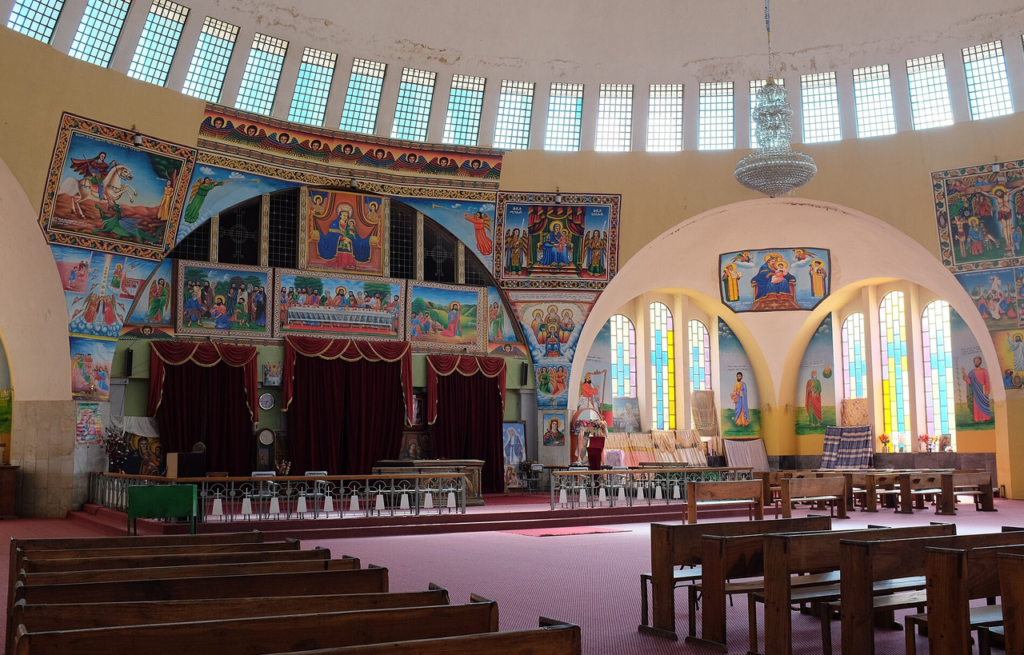
At this critical moment, extremist elements within the Tigray Synod of the Orthodox Tawhedo Church have turned the hijab into a divisive wedge issue—one that deepens internal rifts, inflames tension, and distracts from the urgent work of easing the people’s suffering. More alarming still, Nebri-Id (Nebure-Id) Aregawi, the titular head of St. Mary of Zion Church and also the city’s mayor—a vestige of the Solomonic order—is quoted as saying that the Synod is drafting laws to govern Axum. This suggests an effort to impose a theocratic order in direct violation of the 1995 Constitution, which affirms the secular character of the state.
Article 27, on freedom of religion and thought, deserves attention because it states these rights clearly and unambiguously. The most relevant language appears in bold below.
Everyone has the right to freedom of thought, conscience, and religion. This right includes the freedom to hold or adopt a religion or belief of one’s choice and the freedom, either individually or in community with others, and in public or private, to manifest that religion or belief in worship, observance, practice, and teaching. Sub-article 3 adds: No one shall be subject to coercion or other means that would restrict or prevent the freedom to hold a belief of one’s choice.
Article 18 of the UN Universal Declaration of Human Rights, adopted in 1948, guarantees similar protections. Ethiopia was among the original 48 signatories.
Axum’s Historical Legacy
Long before Christianity arrived in the fourth century AD, Axum stood at the crossroads of civilizations. In the third and fourth centuries, it was a maritime empire at its height, controlling Red Sea trade routes and ranking among the great powers of its day, alongside Persia, Rome, and China. The stelae that still rise across the city testify to the power and glory of that era.
Axum entered a new chapter when King Ezana embraced Christianity in the fourth century, making it one of the earliest Christian states in the world. That transformation helped shape a lasting civilizational inheritance, binding political authority, religious life, and cultural identity in ways that profoundly influenced the region. Yet Axum’s greatness cannot be explained by Christianization alone. Its legacy also rests on the breadth of its outlook, the sophistication of its institutions, and the moral confidence with which it engaged difference without surrendering its identity.
“You cannot truly know where you are going until you understand where you have been,” wrote Maya Angelou, echoing a truth long expressed in African proverb. Axum’s ancient and noble history—marked by tolerance, justice, and multiculturalism—can help show us the path forward.
A Shared Moral Tradition
A core teaching shared by the three Abrahamic faiths appears in the Old Testament: “Love thy neighbor as thyself” (Leviticus 19:18), which Jesus identified as the second greatest commandment.
The people of Tigray have long tried to live by that principle, regardless of religion, language, or ethnicity. Many of us remember fondly neighbors of other faiths as family. We shared one another’s joys and sorrows, observed one another’s holidays with goodwill, and lived peacefully while honoring each other’s beliefs.
That spirit of community sustained us through the darkest period of our recent tragedy, and it is the same spirit we must draw on as we rebuild. As Cynthia McKinney put it, “We are far more powerful when we turn to one another rather than against one another—when we celebrate our diversity and, together, tear down the walls of injustice.” I share that conviction fully.
A Call to All Tegaru
What is required now is not passive disapproval, but principled public clarity. This is an appeal to all Tegaru—Muslim and Christian alike; spiritual leaders; teachers; professionals in law, health, and academia; political thinkers and opinion makers; social media voices, bloggers and influencers—to stand together and speak out against any attempt to strip any part of our population of rights that belong equally to all. Society does not preserve its moral center through sentiment alone. It preserves it by refusing, in word and in deed, to normalize injustice. Mandela’s warning remains instructive: “To deny people their human rights is to challenge their very humanity.” Human rights are not conditional favors conferred by majorities or withheld by local power.
Human Rights are universal, inherent, and indivisible.
To defend them only when they protect those who resemble us is not to defend them at all; it is to surrender the very principle on which a just political order depends.
- Speak clearly against this injustice.
- Do not relent until it is confronted and resolved.
- Remain vigilant in defending the constitutional guarantees owed to every citizen.
The lesson, then, is neither abstract nor distant. In times of moral fracture, silence is rarely neutral; more often, it becomes a form of acquiescence. If Tigray is to emerge from catastrophe with its dignity intact, it must reject the temptation to excuse injustice when it is directed at a minority, and it must recover the civic courage to defend the vulnerable before exclusion hardens into precedent.
It is in that spirit that I close with the enduring words of the Lutheran pastor, Martin Niemöller, written in the shadow of another age of ruin-Hitler’s Aryan supremacist Nazi regime
First they came for the Communists
And I did not speak out
Because I was not a Communist
Then they came for the Socialists
And I did not speak out
Because I was not a Socialist
Then they came for the trade unionists
And I did not speak out
Because I was not a trade unionist
Then they came for the Jews
And I did not speak out
Because I was not a Jew
Then they came for me
And there was no one left
To speak out for me
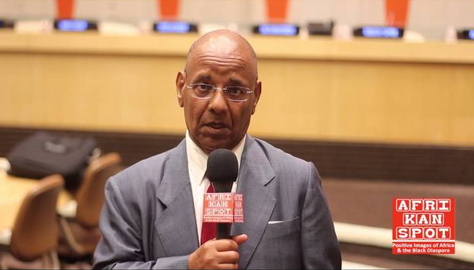
Mohammed A Nurhussein MD
Author of Made in Ethiopia, a memoir
Co-convenor of UN World Interfaith Harmony Week, an interfaith dialogue bringing together Chrisitan, Muslim, Jewish, Hindu and Buddhist faith leaders as well as faith traditions of indigenous people from Africa and native America, held at the UN annually in observance of the 2010 United Nations General Assembly Resolution to promote a culture of peace through interfaith harmony.
Member of Physicians for Human Rights, Brooklyn for Peace