To Naomi Osaka And Taylor Townsend: An Open Letter
Black women creating spaces for ourselves and gathering with intention inevitably draws surveillance and scrutiny born from white discomfort.
 Black News
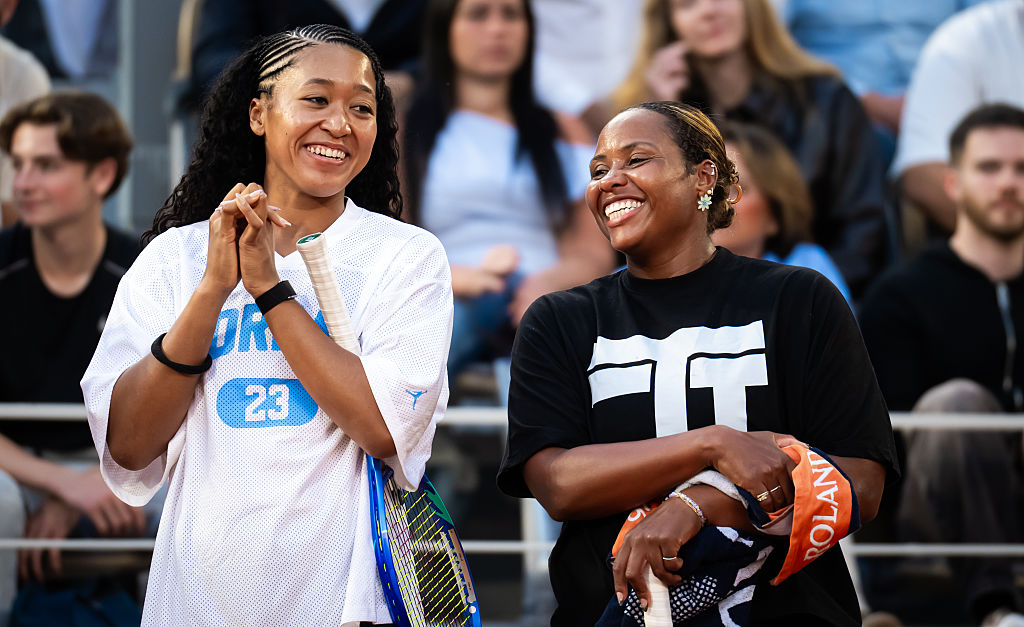
I’m writing to you, Naomi Osaka and Taylor Townsend, as a Black woman who has spent the bulk of my career doing all I can to carve out spaces where Black people and stories get told and elevated. Along the way, I’ve come to understand something that aligns with the backlash you have experienced this week: that as Black women, creating spaces for ourselves and gathering with intention inevitably draws surveillance and scrutiny born from white discomfort.
It happened to me at my first job. I was 17 years old, working as an outreach youth leader for a foster care program in my hometown of San Diego. Two of the case workers I supported were Black women. A trend started to emerge early. When the three of us gathered to talk and laugh over shared cultural references, it drew immediate attention and ire from white employees and the all-white senior leadership.
There was another student worker alongside me, not Black and wholly uninterested in the work and in building relationships, yet my connections with these two Black women were deemed favoritism worthy of reprimand.
When the two Black women brought me a cake on my last day of work before I headed cross-country to college, an achievement the other student wasn’t experiencing or moving towards, that too drew punishment. The logic was absurd yet utterly familiar to Black folks everywhere: even as a young Black woman, I couldn’t be celebrated unless my non-Black peers could be celebrated equally, even though they were at a different stage of development, on a different path, and hadn’t yet achieved a similar milestone to celebrate.
The pushback and scoldings we received during my time working for that organization meant we learned to hide our bond. It meant less laughter in the office, even as our white colleagues joked freely and frequently. This is the surveillance and backlash unique to us that you’ve just encountered on a much larger stage.
Given what I’ve experienced personally, it should come as no surprise to either of you that when I heard the two of you had unabashedly organized a dinner celebrating Black tennis players ahead of the French Open, the first thing I felt was pride, rooted in witnessing two young Black women providing a space of community and celebration for other Black players.
It reminded me of a gathering that used to take place informally in Hollywood every year. Started by an unnamed Black Hollywood couple, the night before the Oscars, for more than 25 years, Black Hollywood actors, actresses, and directors would gather to celebrate one another and hand out Black Oscars.
It was a secret society of sorts, created to honor the talent the Academy had, at the time, been dismissing. It wasn’t until 2002, nearly 40 years after Sidney Poitier’s 1963 win, that another Black man (Denzel Washington) won an Oscar for Best Actor. That same year, Halle Berry became the first Black woman to ever win Best Actress; a distinction she still holds more than two decades later.
By 2007, there were rumors that the Black Oscars ceremony and celebration had been disbanded because the academy had begun to more readily recognize and nominate Black talent for the Academy Awards.
Perhaps we’d have known about this gathering had social media been as robust back then as it is now. It’s also possible that it would have continued on in secret and been protected so as to prevent the kind of backlash you have received. That by celebrating each other in ways we are rarely celebrated by our peers across racial lines, we were somehow maliciously excluding everyone else.
This all falls within the larger context of the sport that you have both dedicated your working lives to playing. As you may know, only 8.9% of professional tennis players are Black. A disparity that, as you’ve likely experienced firsthand, exists because tennis built itself that way. At the center of its legacy, the sport has a history of racial exclusion that extends far beyond the statistics of how many players are Black.
It’s also a sport entrenched in a history where Black players have been maligned and subject to racism. In 2018, Australian cartoonist Mark Knight drew tennis great Serena Williams with exaggerated facial features, a pacifier on the court, and jumping over a broken tennis racket. This depiction was defended by the Australian newspaper that published it, but was rightfully condemned for relying on racist tropes and caricatures of Black people. Serena Williams, her sister Venus, and their Dad have all spoken openly about the racism they experienced throughout their careers. I know both of you have faced criticism for speaking out about racism and that you both have been vocal about the racism you’ve experienced as a player.
The response you received from the white community about the dinner in Paris is all too familiar to those of us who are dedicated to creating safe and celebratory Black spaces and traces back to our collective history. In fact, part of whiteness in America has been grounded in the privilege of policing and regulating and exerting control and force over all areas of Black life.
The white compulsion to police Black gatherings, to surveil Black joy, to demand access or explanation when we create something for ourselves, has its roots in the deputization that began with slave patrols. The slave patrols were in many ways an invitation to any white person to exercise authority over Black bodies, to monitor where we congregated and what we did when we were sharing space.
That logic evolved through Jim Crow into the everyday policing of integration, where white people appointed themselves arbiters of where we belonged and how we should behave, and it metastasized into the institutional structures that govern our lives now. The surveillance has continued; it just changed tools and language.
The notion of deputization is why white folks feel empowered to construe the law and rules, even informally, that they believe Black folks should follow. White people rarely have to deal with their access being restricted. The ways in which they’ve grown accustomed to being centered offer an explanation as to why they demand access and compliance to social spaces like your dinner, with the expectation of deference and inclusion of everyone. It is also why they expect us to surrender our right to choose who to share a meal with and who to celebrate.
In corporate America, this mechanism has become especially sophisticated and often defines success in ways that are inherently subjective. Subjective judgment is a favorite breeding ground for unconscious bias. The machinery of exclusion in corporate America is deliberately vague and most often embedded in the language used to reject, judge, and malign Black employees.
Subjective language that falls under the rubrics of “culture fit,” “leadership presence,” and “team dynamics” is regularly used to assess the performance of Black employees and Black candidates for open positions. Promotions get filtered through narratives written by people in power, and the policing happens through that language and other evaluation systems designed to look neutral while operating as sophisticated racial gatekeeping.
In corporate spaces, assessments like “culture fit” function as an unspoken code for what’s acceptable, and Black women remain underrepresented and underpaid because most workplaces still hire for fit that falls squarely into Eurocentric culture norms. There’s no scoreboard to contradict subjective analysis.
Sports may be one of the few professions where the oft-repeated line popularized as a cultural mantra in the hit TV show Scandal – you have to be twice as good to get half as far – doesn’t quite hold in the same way.
Performance in sports is often measurable by statistics and wins, and excellence becomes undeniable and objective in ways that subjective corporate gatekeeping simply cannot replicate. In sports, every action gets tracked with obsessive detail, creating a moment-by-moment snapshot of performance.
Sports also operate in a fundamentally different register from corporate America because athletes like you command massive platforms and reach. That combination of performance and platform has historically made sports one of the most potent sites of racial resistance in this country.
When Muhammad Ali refused to be drafted into the Vietnam War in the 1960’s, declaring that he would not kill for a country that oppressed Black people, he shifted the conversation about how America viewed and treated Black people, even as it expected us to join its endless war.
Institutional racism in sports becomes most visible when it stands against an objective record. Colin Kaepernick was blackballed from continuing to play in the NFL after kneeling instead of standing for the national anthem as his way of protesting police brutality against Black people. He was one of the top quarterbacks in the league, with the second-lowest pass interception percentage in NFL history at 1.8% and the fifth-highest touchdown-to-interception ratio at 2.40 to 1, making it clear that his removal from the league was about his politics, not his performance on the field.
Natasha Cloud, a veteran WNBA player and vocal advocate for marginalized communities, has also paid a price for her outspokenness. According to Cloud, the WNBA didn’t deem her marketable. When Unrivaled, the 3-on-3 sports league, centered her in their marketing for a Philadelphia tour stop in her hometown, the result was a record-selling game. The market responded differently from what the WNBA had predicted. It understood that Cloud, as a Black masc-presenting queer woman with swag, was already an icon.
Cloud has used her social media platforms to speak out against racism and homophobia, and perhaps one of her most controversial stances has been her committed support for Palestine. It’s safe to conclude that Cloud’s extended wait during free agency, signing later than her on the court credentials warranted, was a consequence of her refusal to silence her activism around Palestine, systemic racism, and her ongoing advocacy for marginalized communities.
These are all a reminder that athletes like you have always been our most powerful advocates precisely because your excellence in your respective sports is undeniable, and so is what you choose to do with it. I’ve always believed in the old saying, “to whom much is given, much will be required.” Although it has been a driving force in the decisions I’ve made to lift as I climb, I’ve learned it’s not the path all of our people take.
What has moved me the most about watching you both is that you’re not carrying that expectation as a burden imposed by an external force. You’re living it because it’s who both of you are. You’ve reached the pinnacle of a white sport, and from that position, you’ve both made the choice to connect with Black peers in a way that lifts them up, centers joy, and refuses to be deterred by any backlash.
Seeing you move from that place of integrity and genuine love for our community gives me a sense of pride and also faith. I know that you are both mothers. What you’ve done is now part of the legacy your children will inherit, no matter what fields they choose for themselves. They will grow up knowing that Black women at the apex of white spaces can both succeed at the highest level and show up for our communities. Because of your example, Black women in every field now understand they can (and should) build their own spaces, too. And maybe most importantly, you’ve reminded us all that we, too, just by existing in our greatness, are always worth celebrating.
SEE ALSO:
An Open Letter To Caitlin Clark From A Black Woman Who Loves The WNBA
Parasocial Ball: The Price Of Proximity In The WNBA