Weak enforcement fuels rise in unlicensed dog breeding in Zimbabwe
By Derick Matsengarwodzi Zimbabwe is facing a surge in dangerous dog attacks as illegal backyard breeding flourishes amid weak enforcement. Hundreds of bites, many from unvaccinated dogs, are reported week – a growing public health threat. As night falls in Zengeza, a suburb near Harare, groups of large dogs roam the streets. They scavenge at […] The post Weak enforcement fuels rise in unlicensed dog breeding in Zimbabwe appeared first on NewZimbabwe.com.
 Black News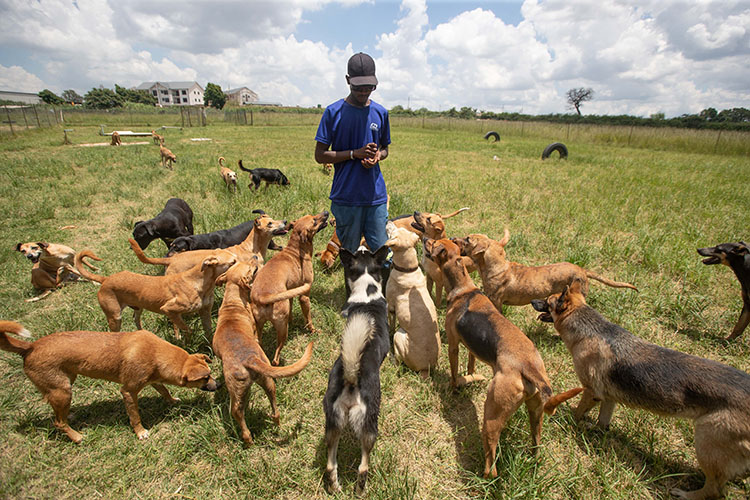
By Derick Matsengarwodzi
Zimbabwe is facing a surge in dangerous dog attacks as illegal backyard breeding flourishes amid weak enforcement. Hundreds of bites, many from unvaccinated dogs, are reported week – a growing public health threat.
As night falls in Zengeza, a suburb near Harare, groups of large dogs roam the streets. They scavenge at dumpsites and only return to their owners’ yards at dawn.
“We live in constant fear of the dogs because they have become a threat to the community and the responsible authorities are not taking action,” said Shiela Muganhu, 47, a resident.
“We fear attacks and the health of our children, because we have heard of attacks around the country, and we always fear for the worst.”
It is only a matter of time, residents say, before there is a serious attack.
Nationally, in Zimbabwe, dog bite cases have become a pressing public health concern.
According to the Ministry of Health and Child Care’s Weekly Disease Surveillance Report for the week ending 04 January 2026, 619 dog bite cases occurred in just that one week across the country.
In only about one in five of those cases could the Ministry establish that the implicated dogs were vaccinated against disease. More often, the ministry established that the dogs were not vaccinated at all. Still, the vaccination status of more than half of the dogs inflicting these bites could not be established.
The number for that week is not atypical. In late 2025, statistics from an earlier version of the same government report showed that Zimbabwe recorded on average around 500 dog bite cases per week. Through 2025, three of these bites led to fatalities.
In July last year, Chrispen Chikadaya, a senior inspector with Zimbabwe National Society for the Prevention of Cruelty to Animals (ZNSPCA) told NewsDay that illegal backyard breeding of dangerous dog breeds was helping drive the crisis.
“Because of economic challenges, people are now doing illegal breeding of dogs as a source of making money. So we find that now we have a lot of what we call backyard breeders who are bringing what they call special breeds. Some are species from South Africa and they breed those and the population of dogs is now increasing,” Chikadaya said.
holds an abandoned dog in Tynawald,
Harare, Zimbabwe 03 February 2026. The
foundation takes care of abandoned and
illegally bred dogs. Photograph Aaron
Ufumeli/SAAJP
Interviews with dog breeders and animal welfare inspectors suggest that unlicensed dog breeding continues to expand in Zimbabwe, particularly in urban areas.
Because there is little enforcement of the rules meant to reign in reckless dog breeding, animal welfare inspectors fear that dog bites might become a continuous threat for people living in dense urban areas.
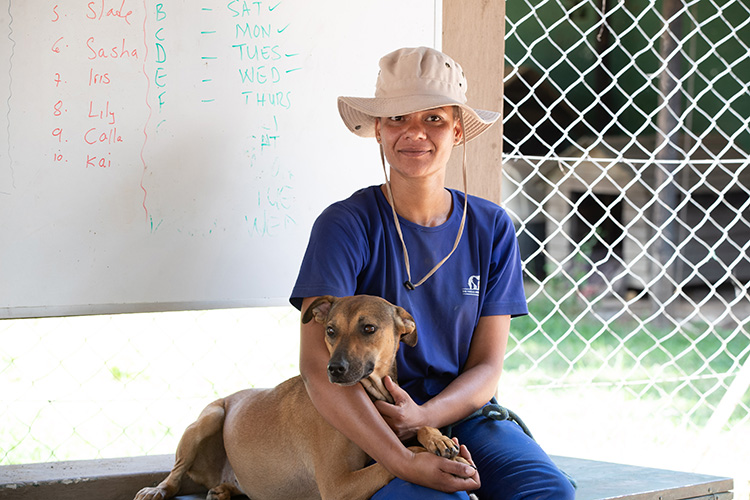
holds an abandoned dog in Tynawald,
Harare, Zimbabwe 03 February 2026. The
foundation takes care of abandoned and
illegally bred dogs. Photograph Aaron
Ufumeli/SAAJP
Breeding without licences
Thomas (which is not his real name) is a 35-year-old illegal Boerboel breeder. Because what he is doing is illegal, he agreed to speak only on condition that his real identity be concealed.
He keeps five boerboels at his home. He says he produces around 60 puppies a year. He confirmed he does not hold a breeding licence and exceeds the maximum number of dogs typically permitted per residential property under municipal by-laws.
“It all started as a hobby,” he said.
“But, after I acquired a dog from a friend, people started to ask about the breed. (They were interested in the dogs,) mainly for security reasons, with a rise in burglaries and violent crimes. Since then, the number of my customers who need dogs has grown. My prices for the puppies range from $200 to $1,000, depending on the size of the puppies.”
Thomas acknowledged that he operates outside municipal rules. He also said that enforcement can be avoided through bribery. Though did not provide documentary evidence of this claim, when asked.
Other breeders interviewed described dog breeding as a viable source of income. One said he could earn up to $2,000 in a good month. Some breeders exchange and trade puppies in lieu of payment for mating services. They coordinate through social media and online messaging platforms, including Facebook, WhatsApp and other social media.
Enforcement challenges
In July 2025, following a tip-off, the SPCA in Harare removed eight dogs, including rottweilers, from a breeder in Southerton.
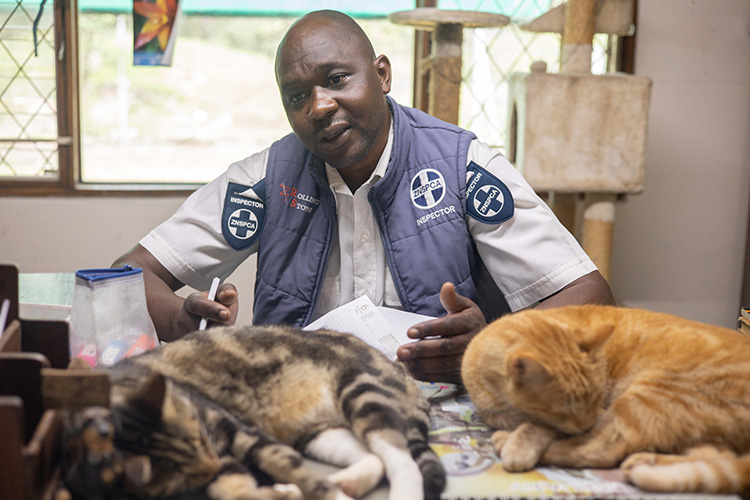
an interview at the organisation’s office in
Harare, Zimbabwe, 04 February 2026.
Zimbabwe has seen an increase in the
number of illegal dog breeders in recent
years. Photograph Aaron Ufumeli/SAAJP
“These female dogs (collectively) were capable of producing at least 100 puppies per year, and we got a tip off from an informer,” said Kudzai Chatikobo, an SPCA inspector.
“The dogs were sick and underfed. They were kept in inhumane conditions, confined to small cages. This is against city by-laws. The case proceeded to court and the dogs were taken by SPCA for rehabilitation and rehoming.”
Animal welfare groups say such cases are difficult to pursue consistently.
The daily operation of dog inspectors from Veterinarians for Animal Welfare Zimbabwe (VAWZ) is always dangerous, sometimes dealing with armed people, and well-connected groups, said Bernard Ndlovu, a VAWZ inspector.
He said inspectors can assist city and law enforcement officers but do not have independent powers to enforce by-laws.
Mel Wood, the Chief Animal Welfare Officer at VAWZ, described instances where suspected breeders appeared to have prior warning of inspections.
“At one time, in Harare, we went to a certain location, where someone was engaged in illegal dog breeding,” Wood said.
“On arrival, we were surprised to hear that the owner knew we were coming, and it seems he got a tip-off from someone in authority, since nothing happened to him.”
Wood said such incidents raise concerns about enforcement effectiveness, though no official findings of wrongdoing have been made public.
In another case in 2025, SPCA inspectors were preparing to act against a breeder when the individual allegedly left the country before the raid, abandoning six dogs, according to Chatikobo.
Responsible breeders
Not all breeders operate outside the law. According to the Zimbabwe Herd Book, dog breeding requires licensing with local municipal authorities and compliance with vaccination and property standards.
Joseph Tichagwa, who breeds American bulldogs and American bullies, said he complies with all local regulations.
“Dogs are kept in separate yards to ensure we abide by the city by-laws of maximum numbers of dogs per yard, making it easy to manage the dogs ensuring they get adequate care and avoid kennel accidents.
“To avoid inbreeding, we have quite a number of dogs of different genealogy which ensures that we can have a breeding program for at least five years without repeat breeding, and each female getting enough rest.”
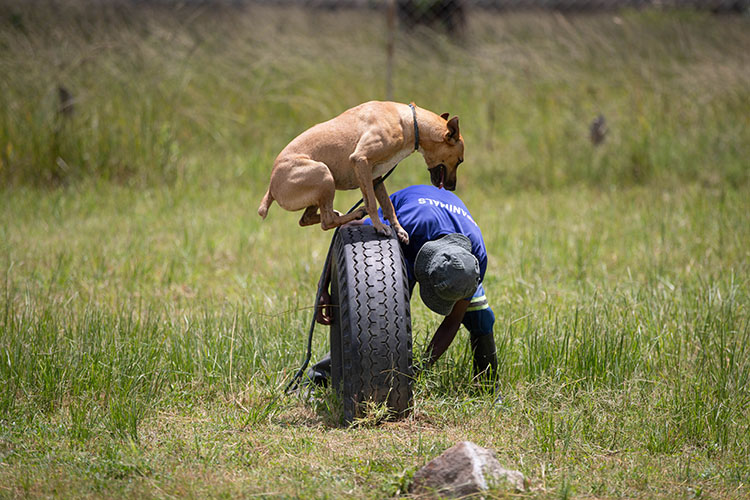
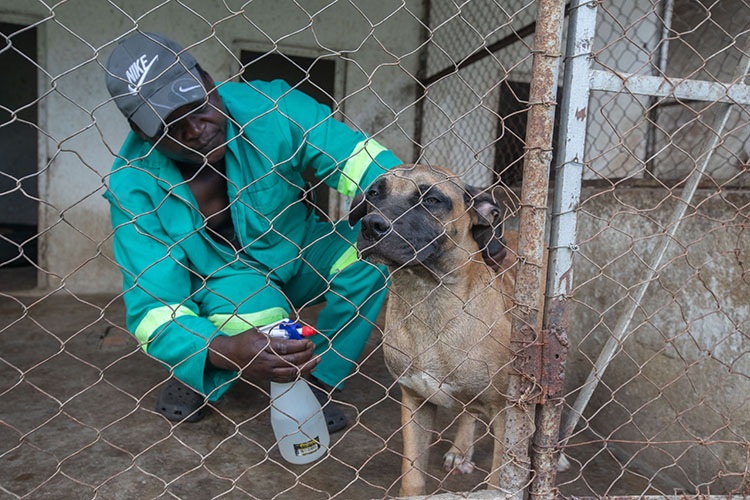
Animal Foundation in Tynwald, Harare,
Zimbabwe 03 February 2026. The
foundation takes care of abandoned and
illegally bred dogs. Photograph Aaron
Ufumeli/SAAJP
Another breeder, who goes by Mhondoro Dzembwa, has spoken publicly about dog breeding online:
“The main purpose of dog breeding is to improve and maintain the breed standard and to avoid some breeds going extinct, to provide security and companionship. We don’t crossbreed, we just select good parents to breed, with the right genes we need.”
On enforcement, he said:
“Currently, there are no serious, or strict laws that prevent dog breeders, it is being done illegally, more like vending. There is a need for the government to amend the existing by-laws, which restrict people from keeping dogs on smaller plots, and make them conducive and allow people to engage in dog breeding, and to operate openly.”
Peter Nyaundi, another dog breeder concurs with Mhondoro Dzembwa. “There is a lack of awareness on the legalizing of keeping of dogs and dog breeding in Zimbabwe. There has also been a lack of support structure in legalising and maintaining the legality of dog breeding, in respect of registration, inspection, documentation and enforcement of laws.”
Animal welfare officials say overbreeding and poor conditions can lead to neglect and abandonment, contributing to stray dog populations. However, official statistics do not disaggregate stray dogs from owned dogs in bite data.
For now, residents in areas such as Zengeza say they want stronger oversight and clearer enforcement.
As dog breeding continues to operate both within and outside the law, animal welfare groups argue that the core issue may lie less in the existence of by-laws and more in their consistent enforcement.
*This report has been produced by the Southern Africa Accountability Journalism Project (SA | AJP), an initiative of the Henry Nxumalo Foundation with the financial assistance of the European Union. It can under no circumstances be regarded as reflecting the position of the European Union.
The post Weak enforcement fuels rise in unlicensed dog breeding in Zimbabwe appeared first on NewZimbabwe.com.