WORLD SICKLE CELL DAY 2026
By Iyamide Thomas – NHS Engagement Lead, Sickle Cell Society Friday, 19th June is World Sickle Cell Day, an annual day that the United Nations asks countries around the world to raise awareness of sickle cell disorder (sickle cell). Sickle cell is an umbrella term that describes different but similar genetically inherited blood conditions in […] The post WORLD SICKLE CELL DAY 2026 appeared first on African Voice Newspaper.
 Black News
By Iyamide Thomas – NHS Engagement Lead, Sickle Cell Society
Friday, 19th June is World Sickle Cell Day, an annual day that the United Nations asks countries around the world to raise awareness of sickle cell disorder (sickle cell). Sickle cell is an umbrella term that describes different but similar genetically inherited blood conditions in which a mutated (i.e. changed) form of haemoglobin causes the normally round blood cells to change to a sickle or ‘half-moon’ shape after giving up their oxygen, blocking their flow around the body. This results in severe pain (called ‘crisis’), anaemia and long-term organ damage. Sickle cell mainly affects people who originate from Africa, The Caribbean, Middle East, Mediterranean and India, as the sickle gene mutation is thought to have been a protective measure against malaria. It is the fastest growing inherited blood condition In the United Kingdom (UK) and approximately 18500 people live with sickle cell. Of babies born here each year, 1 in 79 will carry one copy of the sickle cell gene (and are known as ‘carriers’ or have the ‘trait’), whereas 300 will be born with two copies and have the full condition. Each time two carriers have a baby, there’s a 25% chance the baby will have sickle cell, a 50% chance it will be a carrier and a 25% chance the baby will be unaffected and have the usual haemoglobin.
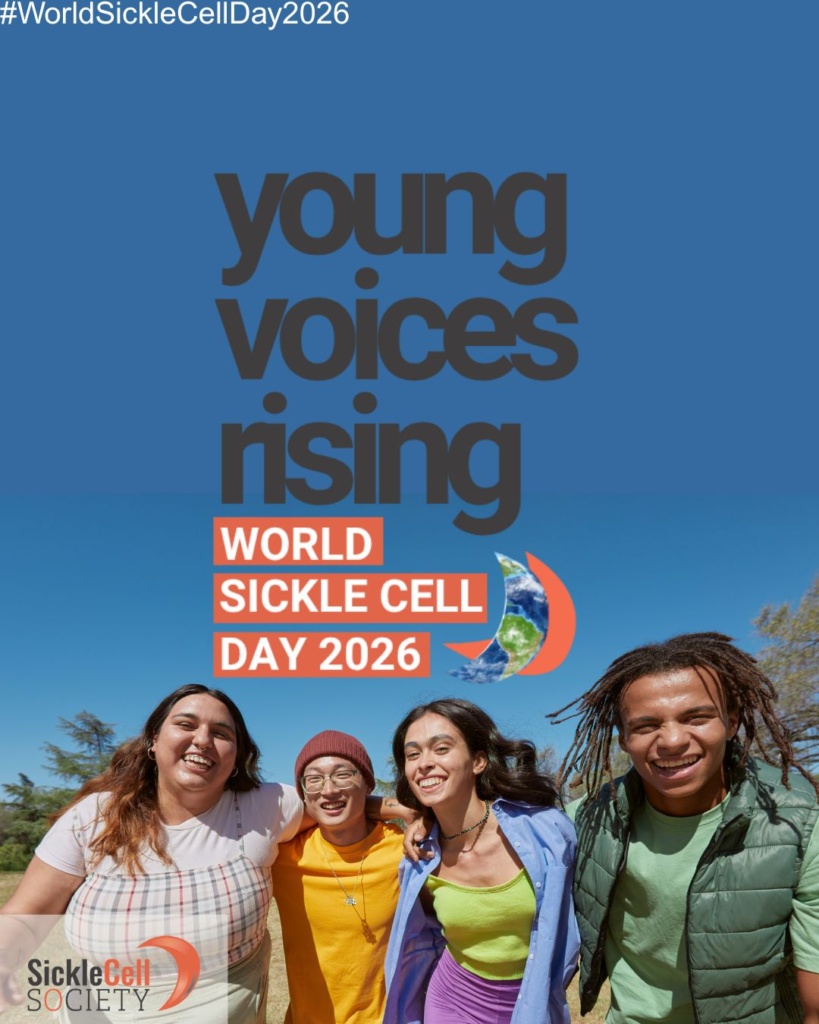
Young people with sickle cell who are moving from paediatric to adult care often face a steep jump in responsibility for managing their condition and at the same time many are navigating exams, jobs and independent living. This year, the Sickle Cell Society’s World Sickle Cell Day campaign theme is: Young Voices Rising’ and puts the experiences of young people living with sickle cell at its centre. It’s a call to action inviting young people, families, schools, healthcare professionals, community groups and supporters to help young voices rise — and to support every young person with sickle cell to own their health, be heard and live well. The Sickle Cell Society has a peer mentoring scheme offering support and advice to young people with sickle cell aged 10 -24 years by mentors who are also living with the condition.
For more information on sickle cell and how to get involved in World Sickle Cell Day 2026 go to: www.sicklecellsociety.org/wscd26/
For more information on our Mentoring Scheme: www.sicklecellsociety.org/mentoring/
For young people who do not have sickle cell but who want to find out if they carry the gene for sickle cell (i.e. are ‘carrier’ or ‘trait’) especially if you have family members with the condition, you can ask your GP for a blood test or go to one of the NHS Sickle Cell and Thalassaemia Centres if there’s one near you. The UK also has a National Health Service (NHS) Sickle Cell and Thalassaemia Screening Programme that tests pregnant women, partners and new-born babies to see if they carry the gene or have the condition.
For information on screening and testing for sickle cell disorder:
https://www.youtube.com/watch?v=TMh3WsKv33c (video podcast)
https://www.sicklecellsociety.org/resource/sickle-cell-and-thalassaemia-preconception-leaflet
About the Sickle Cell Society:
- The Sickle Cell Society is the only national charity in the UK that supports and represents people affected by a sickle cell disorder to improve their overall quality of life. First set up as a registered charity in 1979, the Sickle Cell Society has been working alongside health care professionals, parents, and people living with sickle cell to raise awareness of the disorder. The Society’s aim is to support those living with sickle cell, empowering them to achieve their full potential.
- Email: info@sicklecellsociety.org
- Website: www.sicklecellsociety.org
- Facebook: Sickle Cell Society
- Instagram: @sicklecelluk
- LinkedIn: Sickle Cell Society
Kindly follow us on twitter:@AfricanVoice2
The post WORLD SICKLE CELL DAY 2026 appeared first on African Voice Newspaper.