Zambia and Sweden institutionalise strategic dialogue to boost trade, climate action, and others
Zambia and Sweden have agreed on a framework for regular, high‑level political consultations to deepen cooperation on development, governance, and shared strategic priorities.
 Black News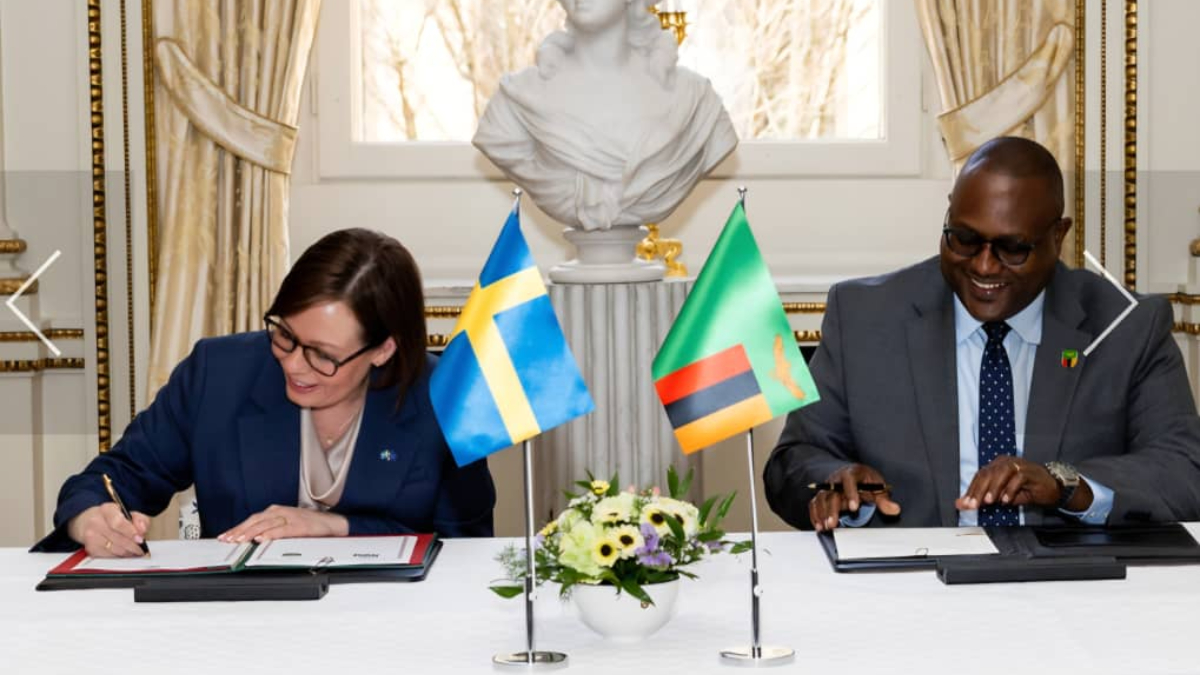
![Zambian Foreign Minister Mulambo Haimbe and Swedish Foreign Minister Maria Malmer Stenergard sign a new Memorandum of Understanding in Stockholm, formalising regular political consultations to boost trade, governance, and climate cooperation. [X, formerly Twitter/Zambia Foreign Ministry]](https://ocdn.eu/pulscms/MDA_/5d31629fe8ce3a63b04f3c8b557f9e18.jpg)
Zambia and Sweden have agreed on a framework for regular, high‑level political consultations to deepen cooperation on development, governance, and shared strategic priorities.
- Zambia and Sweden have formalised a schedule of high-level political consultations to strengthen bilateral cooperation.
- The MoU, signed in Stockholm, institutionalizes dialogue on trade, development, peace, and climate action.
- Officials highlight the shift towards a structured, results-oriented partnership.
- Analysts note the agreement reflects Zambia’s aim to expand beyond traditional aid while Sweden deepens strategic ties in Africa.
On Monday, March 30, 2026, in Stockholm, Zambia’s Foreign Affairs and International Cooperation Minister, Mulambo Haimbe, and Sweden’s Foreign Minister, Maria Malmer Stenergard, signed a Memorandum of Understanding on Political Consultations, which will institutionalize bilateral dialogue.
The agreement commits both capitals to scheduled engagement on issues from trade and development cooperation to peace, security, and climate action.
Addressing the first session of the newly established consultations immediately after signing the agreement, Haimbe said the MoU marked “a new chapter in our longstanding partnership” between the two countries, which have maintained diplomatic relations since 1965.
Sweden has been a key development partner for Zambia for decades, providing support in areas such as governance, human rights, education, health, and gender equality. In recent years, cooperation has expanded into climate action and green economic transition, reflecting shared global priorities.
Malmer Stenergard said the structured consultations would provide a platform for reviewing ongoing collaboration and exploring “new opportunities for political and economic engagement.”
She emphasised that the MoU was designed to make cooperation more predictable and results‑oriented, and to strengthen coordination on bilateral, regional, and global issues.
Analysts say the agreement reflects Zambia’s interest in diversifying its partnerships beyond traditional aid relationships, while Sweden appears keen to reinforce ties with African nations amid shifting geopolitical and economic currents.
Officials from both sides indicated that future meetings under the new framework could address trade facilitation, investment opportunities, and joint efforts on regional peace and stability.
The institutionalised dialogue is expected to foster greater mutual understanding and lay the groundwork for expanded strategic cooperation.