Activists hack London billboards to call out big tech harm
Tax Big Tech: With UK youth mental health services under strain, guerrilla billboards across the capital accuse social media companies of profiting from a growing crisis.
 Black News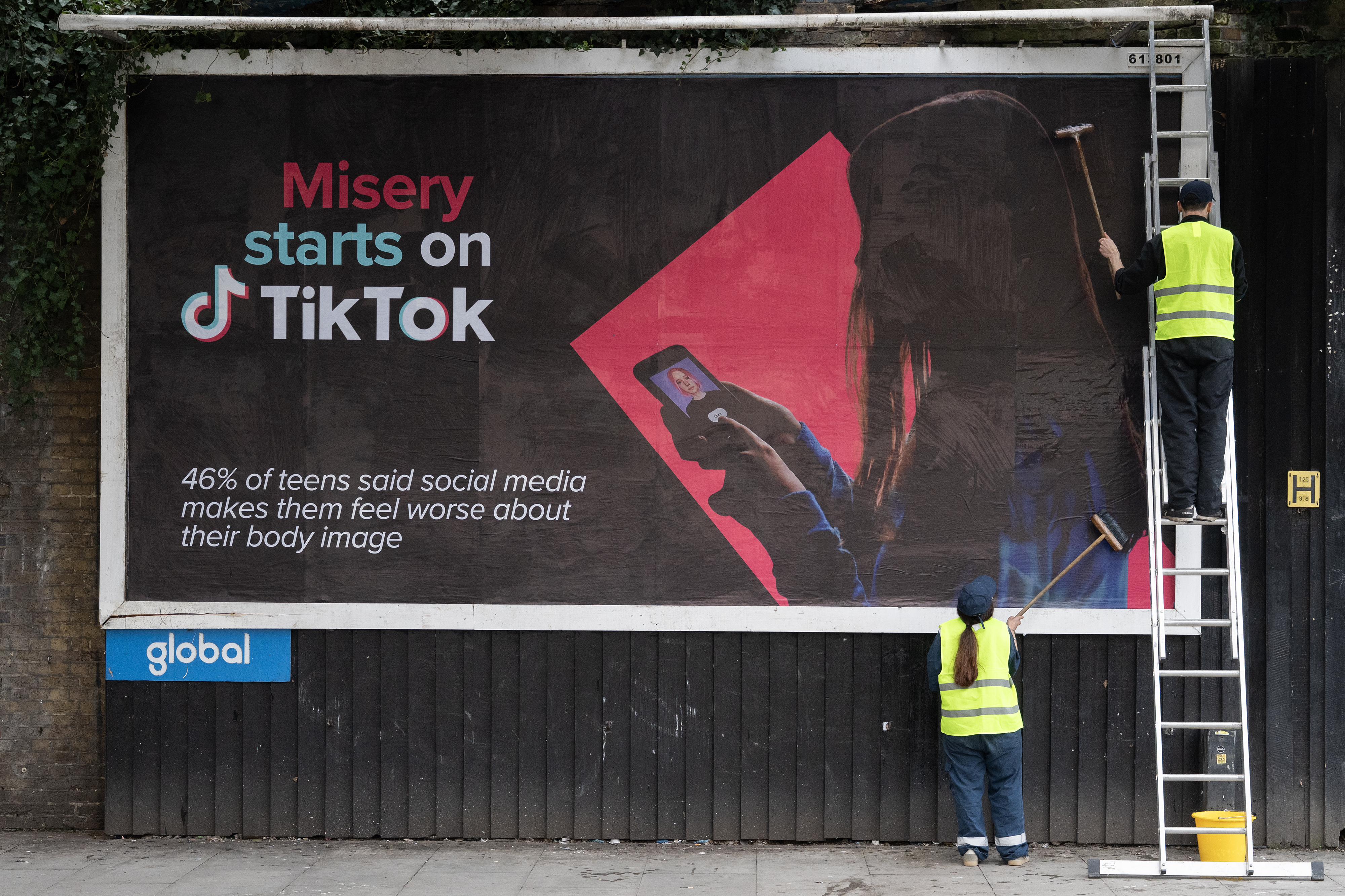


Tax Big Tech: With UK youth mental health services under strain, guerrilla billboards across the capital accuse social media companies of profiting from a growing crisis.
Posters mimicking ads for major tech platforms have appeared across London this week, accusing big tech billionaires of profiting from a growing youth mental health crisis. The campaign is plastered on billboards and bus stop posters, carrying messages like “The Youth Mental Health Crisis – Sponsored by Meta”, “Misery starts on TikTok”, and “We’re more lonely with Meta”.
The action has been linked to youth-led activist group Mad Youth Organise, part of health justice campaign group Just Treatment, which has been campaigning for social media companies to pay for what it says is the damage caused by their products.
It comes as the UK faces a worsening youth mental health crisis. According to a report by NHS England, one in five young people in the UK now has a probable mental disorder, while more than 500,000 children are waiting for mental health support through the NHS.


The ads suggest that the business models of major platforms such as Meta and the app TikTok are part of the problem: “This app was designed to keep you hooked,” one billboard reads alongside a photo of Mark Zuckerberg. “If you feel worse, it’s working”.
2023 research from the US Department of Health and Human Services found that teens who spend more than three hours a day on social media are around twice as likely to experience mental health problems compared with those who spend less time on the platforms. Meanwhile, tech companies continue to generate enormous profits; Meta alone reported $62 billion (£46 billion) in profit last year.
The campaign comes as debate intensifies around how governments should regulate social media. Last week, UK MPs rejected a proposal to introduce a blanket ban on social media for under-16s, instead voting to give ministers new powers to introduce targeted restrictions following a government consultation on online safety. Under the alternative approach backed by MPs, the government could introduce restrictions for certain age groups, limit children’s use of VPNs, restrict features considered addictive such as autoplay, and review the age of digital consent.
Groups like Mad Youth Organise argue that focusing solely on restricting young people’s access risks missing the bigger issue. Instead, they are proposing a “Misery Tax” – a 4% levy on the UK revenues of tech companies with global revenues above £500 million. The group is also calling for stronger action to break up Big Tech monopolies and support the creation of alternative platforms designed around community rather than addictive algorithms.
The action is part of an increasingly common tactic used by activist groups known as “subvertising” – the practice of hijacking advertising spaces to challenge corporate messaging. Last November, activists linked to the anonymous artist network Brandalism hijacked 100 advertising sites across London ahead of Black Friday, criticising the tax practices of tech giants such as Amazon and what they described as the “destructive hyper-consumerism” of the annual sales event.
Ella Glossop is Huck’s social editor. Follow her on Bluesky.
Buy your copy of Huck 83 here.
Enjoyed this article? Follow Huck on Instagram and sign up to our newsletter for more from the cutting edge of sport, music and counterculture.
Support stories like this by becoming a member of Club Huck.