Affective Encoding: Coping with Political Depression through Urban Wall Writing in Post-2020 Hong Kong
In 2023, the Special Interest Group on Computer Graphics and Interactive Techniques (SIGGRAPH) conference and exhibition, held in Sydney, featured an interactive installation by Miu Ling Lam titled Erased Murmurs. The art piece drew attention to the ever-vanishing graffiti in the artist’s hometown, Hong Kong. In Lam’s description, Erased Murmurs centred on affective, sentimental poems […] The post Affective Encoding: Coping with Political Depression through Urban Wall Writing in Post-2020 Hong Kong appeared first on Made in China Journal.
 Black News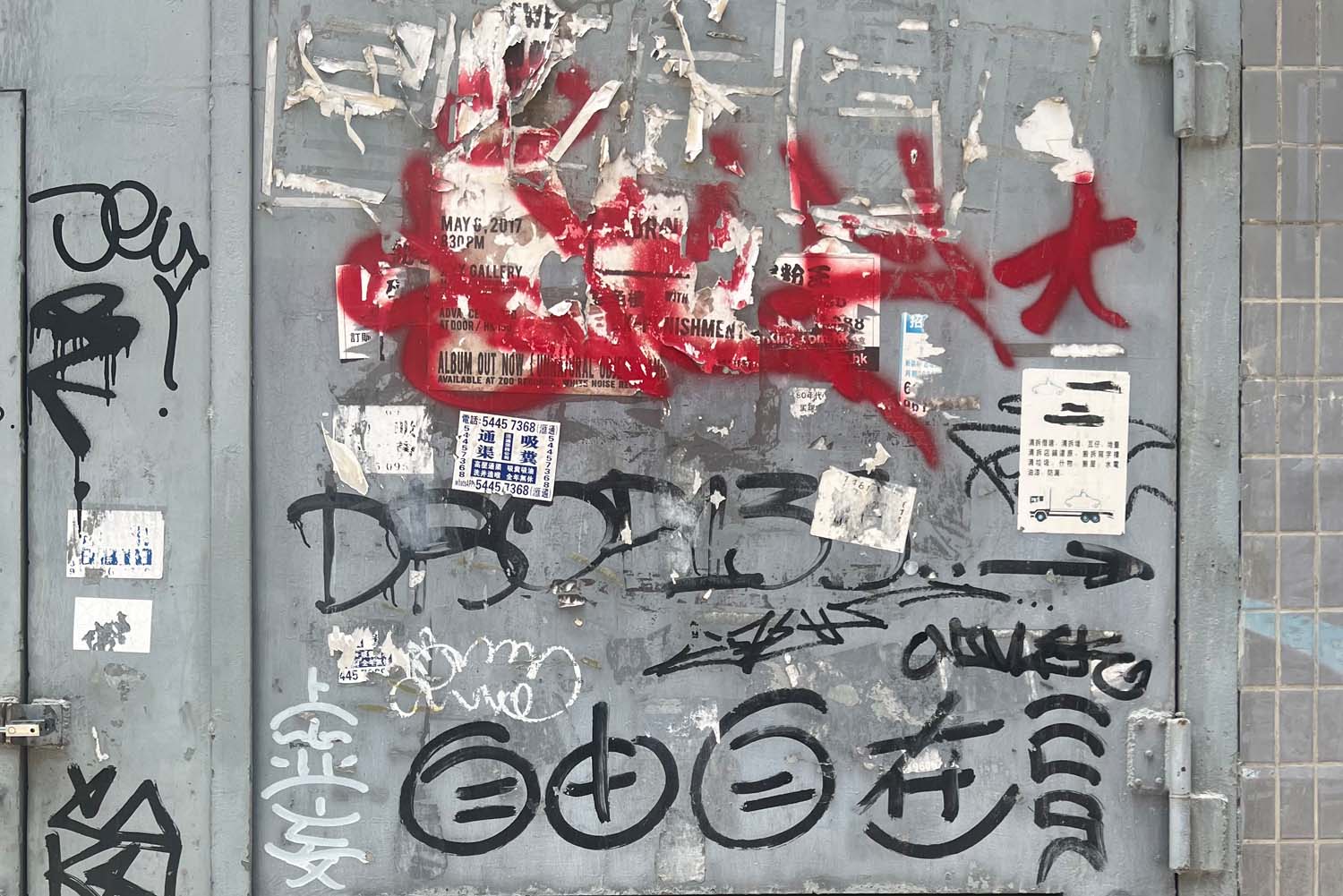
In 2023, the Special Interest Group on Computer Graphics and Interactive Techniques (SIGGRAPH) conference and exhibition, held in Sydney, featured an interactive installation by Miu Ling Lam titled Erased Murmurs. The art piece drew attention to the ever-vanishing graffiti in the artist’s hometown, Hong Kong. In Lam’s description, Erased Murmurs centred on affective, sentimental poems or short sentences scrawled across the city’s urban surfaces, delving into the dynamics of communal expression and the lingering resonance of the prodemocracy demonstrations that rocked the former British colony in 2019–20 (Lam 2023: 1).
A volume of photographs documenting Hong Kong’s graffiti was displayed as part of the installation. Reflecting how attempts by the authorities to cover street art with layers of paint often paradoxically emphasise the very marks they wish to erase, Lam overlaid the wall texts in the photo book with a special ink, making the original inscriptions invisible under normal lighting. Viewers had to use a handheld infrared light to uncover the secret messages. The ordering of these concealed poems and short phrases of encouragement was far from haphazard. They had been deliberately placed to form a cohesive narrative. Beginning with intimate confessions and accounts of personal turmoil, stretching through critiques of social conditions, and culminating in words of comfort and solidarity, the sequence offered a poignant glimpse into the emotional realities of Hong Kong’s populace (WRO Biennale 2025).
What was perhaps most intriguing about the interactive installation was that it produced an experience similar to that which locals would have had while walking around urban Hong Kong. With the help of projectors, hidden messages were revealed as attendees walked about the dark room, blocking one of the projectors and revealing the affective messages that were otherwise covered with bright white flashes. This precisely captured the coded nature of Hong Kong graffiti after 2020.
In 2019–20, Hong Kong’s tunnels, bridges, and street walls were animated with protest graffiti and posters that expressed Hongkongers’ demands, yet this vibrant protest-scape experienced a swift and pronounced reversal in the period that followed. Vivienne Chow (2020) points out that the enactment of the National Security Law (NSL) in 2020 has had a profound ‘chilling effect’ on the city’s artistic community. This legislation has imposed ambiguous boundaries on permissible expression, compelling artists to navigate a landscape fraught with potential repercussions. Since 2021, many graffiti artists and urban taggers have been arrested and prosecuted for their public artwork, which was targeted for conveying counter-hegemonic narratives or prodemocracy messages.
According to data compiled by Initium Media, between 2021 and 2024, eight cases involving 11 urban taggers resulted in formal sentencing (Mok 2024). All were charged with offences such as ‘criminal damage’ or ‘possessing articles with intent to destroy or damage property’. Penalties ranged from imprisonment for up to six months to community service orders of up to 200 hours, alongside fines and probationary measures. The prevailing atmosphere has prompted a significant exodus of creative professionals, with many relocating to foreign countries. Those who remain often grapple with self-censorship, balancing artistic integrity with the potential risks to themselves and their collaborators.
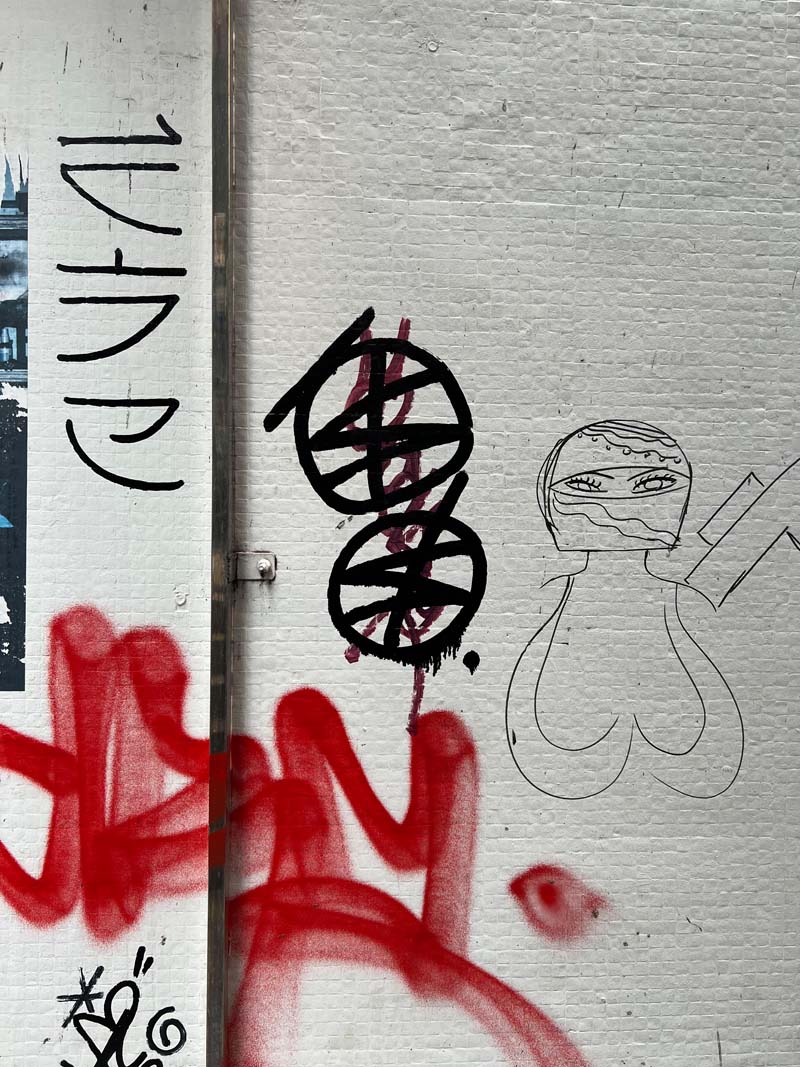
Spatial Retrenchment: Stairways to Affective Sanctuary
Kimberley Kinder (2021) argues that independent bookstores function as essential ‘counter spaces’ that sustain organisation between public protests, providing meeting places, libraries, and social infrastructure for social and political movements. With relentless witch-hunts against urban taggers, many Hong Kong graffiti artists have reconfigured their creative canvases from public boulevards to liminal spaces. Narrow staircases or ageing lifts leading to the upper floors of independent bookstores and art spaces have become the new incubators of wall writing. In Hong Kong, such ‘counter spaces’ lie in the transitional zone between public and private, the unclaimed passageway between the streets and shops, producing a spatial retrenchment.
As Lucy Zuo (2024) vividly describes, one must literally ascend a tucked‑away stairway behind an unmarked door or step into a retro elevator to discover this wall writing. Beyond these portals, walls are a palimpsest of speeches—posters, poems, and stickers coalescing into a ‘superimposed landscape of signs’ that fuses personal sentiment with collective memory (Zuo 2024). These semi‑private sanctuaries cater to an audience already in the know, including loyal patrons and scholars, while remaining largely invisible to casual passers-by and surveillance apparatus. Thus, Hong Kong’s urban art of resilience has undergone a spatial retrenchment, withdrawing from open avenues to obscure passages where protest messages can ‘hide and linger’ beyond the reach of immediate erasure or interdiction.
Complementing Kinder’s idea of a radical bookstore, Minna Valjakka’s concept of ‘affective paragrounds’ highlights the emotional geography of these hidden sites. Valjakka (2021) argues that, in Singapore, under pervasive surveillance, artists strategically inhabit a fluid in‑between area—neither wholly public nor entirely underground—to circulate alternative imaginaries without directly provoking the authorities. Hong Kong’s stairwells and lifts fulfil this role: they operate on the borderline of (in)visibility, permitting coded messages to quietly reach a sympathetic cohort. By relegating slogans to these semi‑private niches, practitioners deploy affective signals of solidarity that strengthen intra-movement bonds while mitigating exposure to state forces. What is more, these interstitial arenas act as functional communal message boards. Passers-by respond to one another’s writing, further enforcing the idea of an affective space. This liminal retreat ensures that dissent endures in a grey zone—neither overtly public (and policed) nor entirely private (and occluded)—thereby reinforcing affect where it might otherwise be extinguished.
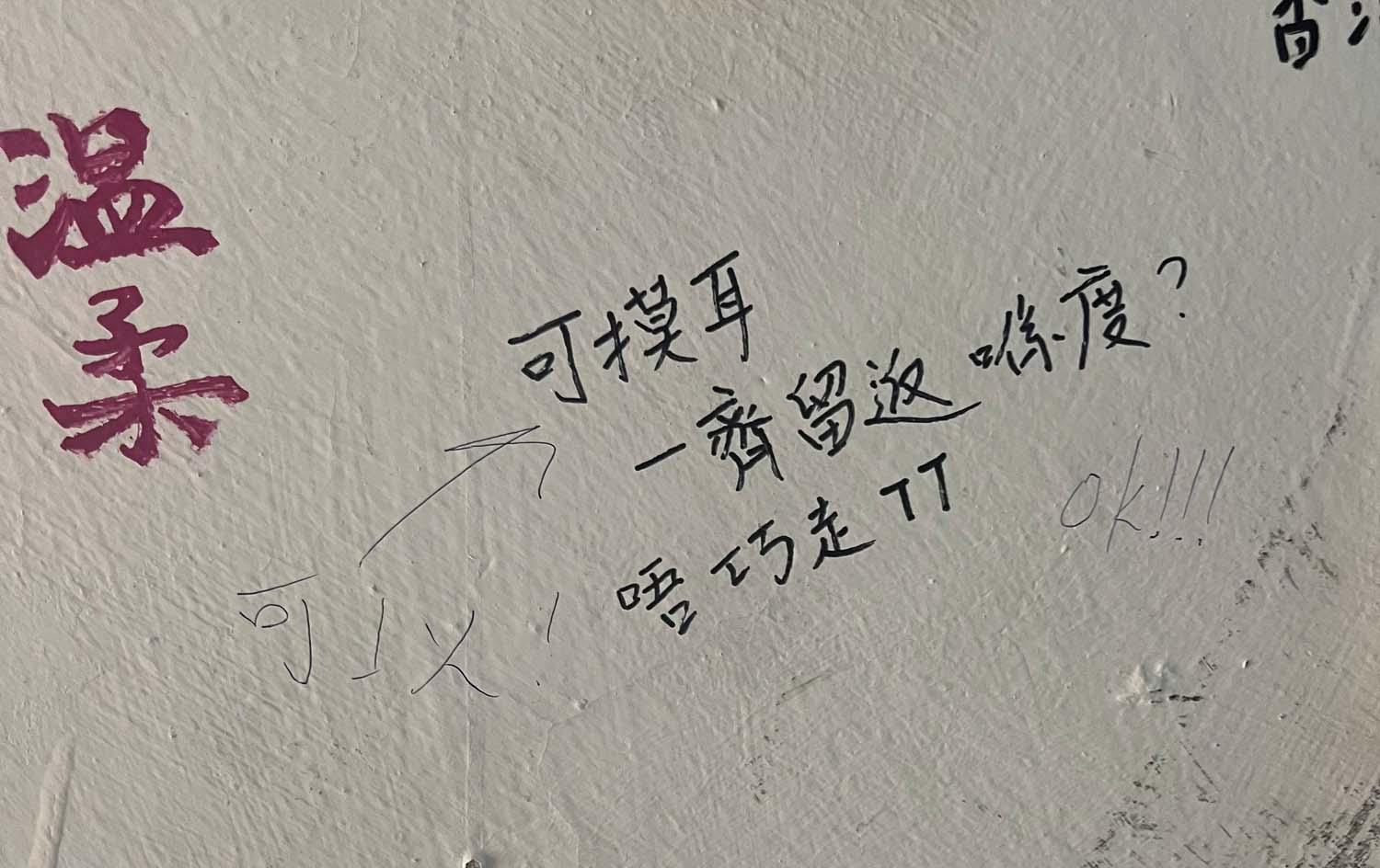
Encoding Affect: Poetics on the Wall
Graffiti in Hong Kong remains heavily stigmatised, commonly read as evidence of delinquency, urban disorder, or subcultural deviance. Yet, from 2021, a new urban art trend emerged across the Territories that produced a countervailing reception of street writing among Hongkongers. Departing from the large, bubbly English lettering that once dominated, the city saw a rise of written Cantonese poems, short aphorisms, and even couplets. Examples range from the four-character slogan 溫柔處世 (‘Be gentle to the world’) and 相信未來 (‘Believe in your future’) to bilingual invocations such as ‘Life must go on / 但我永遠記住香港 [But I will always remember Hong Kong]’. These concise, often rhyming lines of warm, consolatory, and forward-looking poems covered the urban fabric and encouraged passers-by to practise self-care with hopeful projections. The following analysis examines three instances of urban wall writing to trace such literal affective encoding in the wake of Hong Kong’s recent social–political conjuncture.
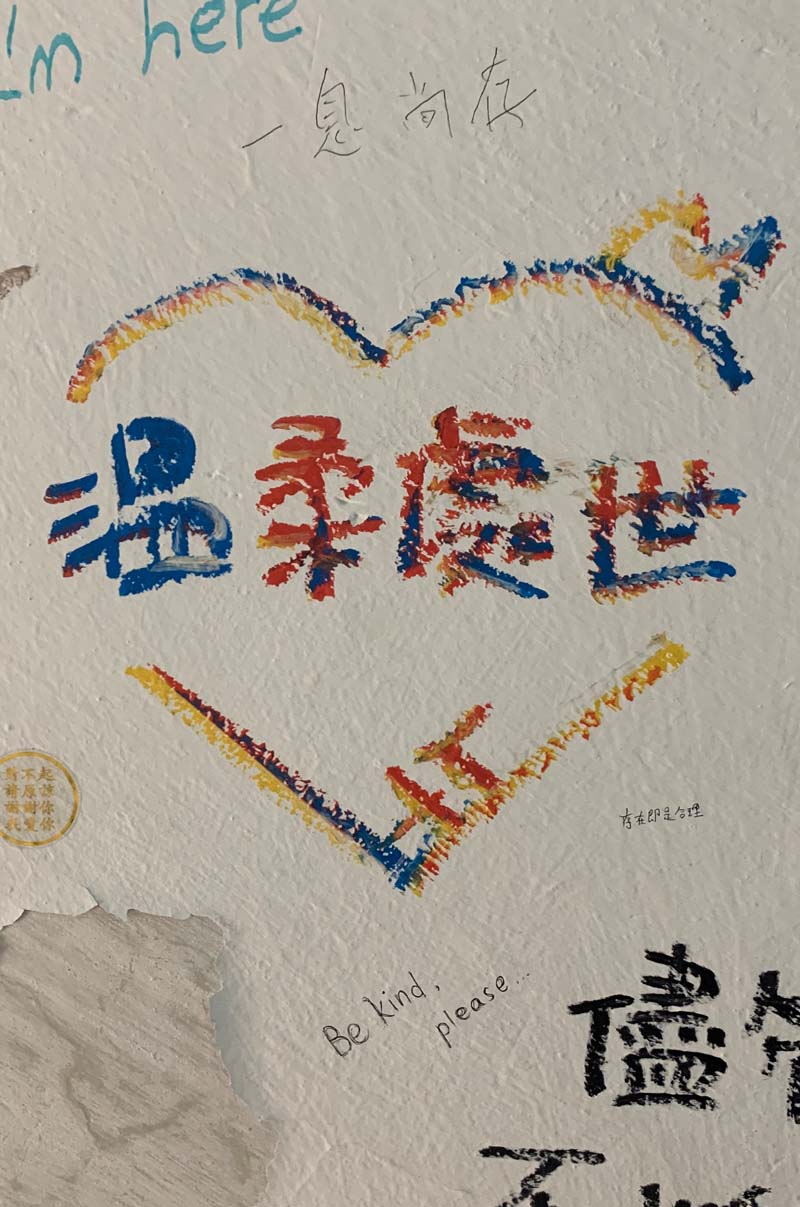
Case 1: ‘Rest When Weary’
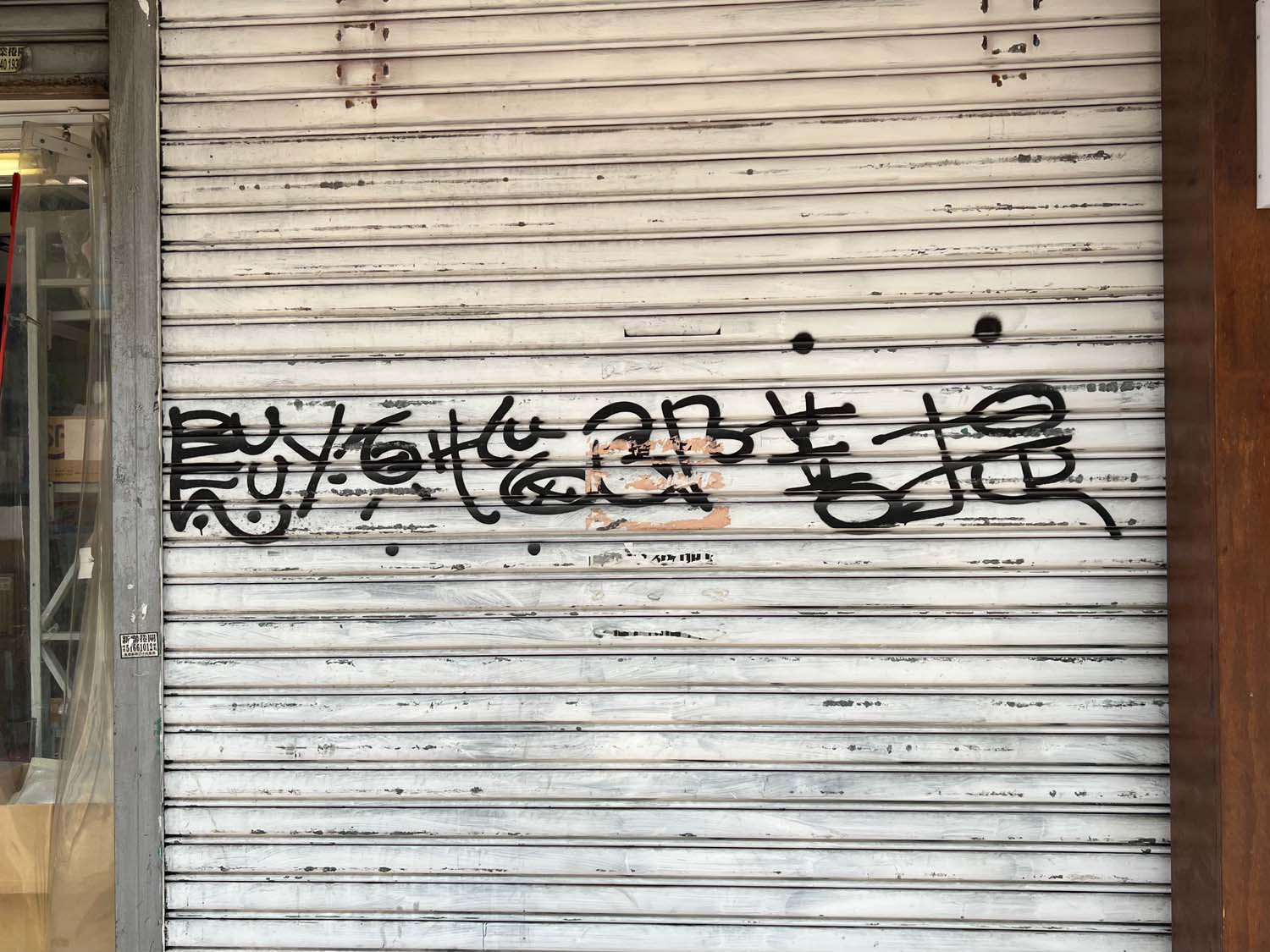
A cable TV news report in 2024 (i-Cable 2024) featured several urban poetic works and interviewed pedestrians about their thoughts on the ‘motivational phrases on the street’. One urban text that has risen to prominence in recent years is 見攰就唞 (‘Rest when weary’). This four-character phrase is ubiquitous across Hong Kong and has given rise to numerous variants, including 見攰聽歌 (‘Listen to music when weary’) and 見攰踩車 (‘Cycle when weary’). The phrase attracted broad attention and gradually entered colloquial usage among Hongkongers. It also migrated to consumer culture: T-shirts, bedside lamps, and other merchandise emerged bearing the four characters.
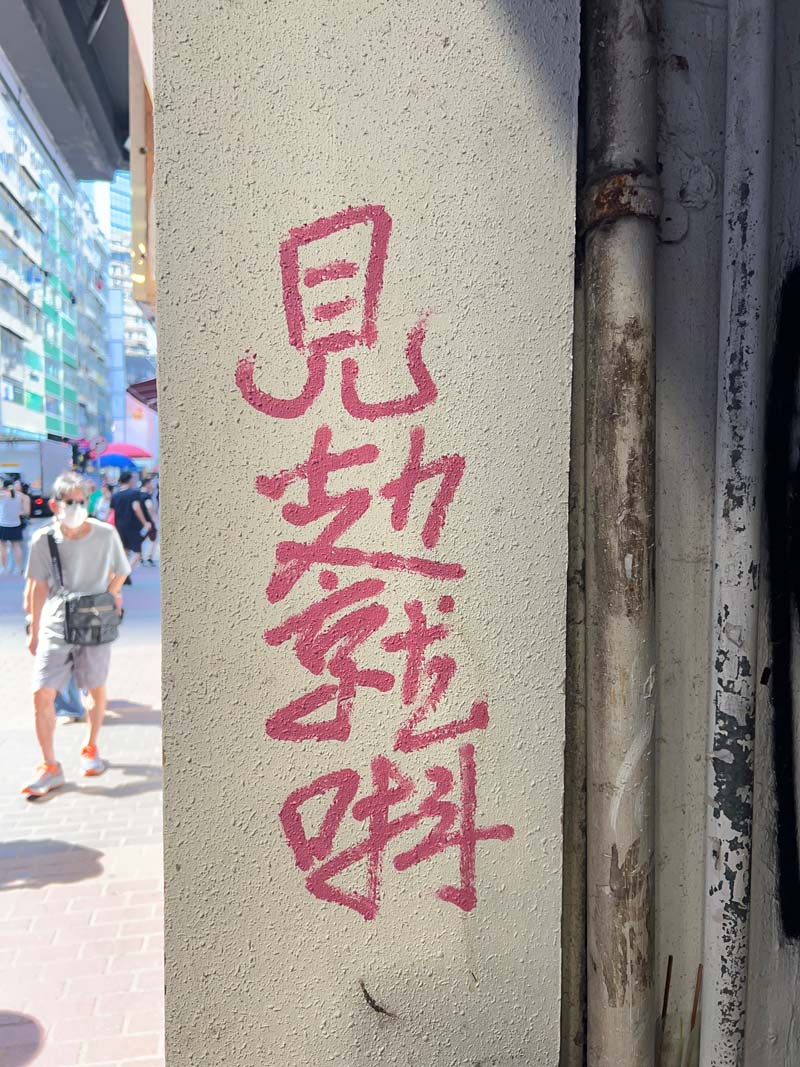
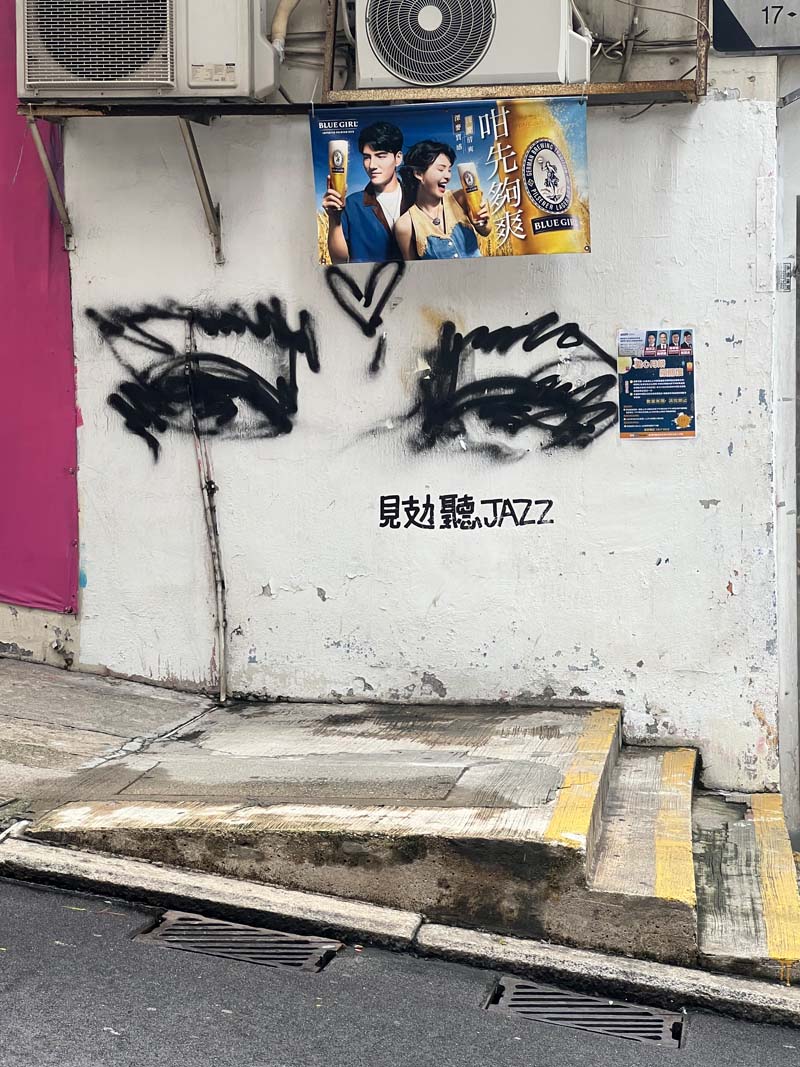
Although ‘Rest when weary’ has been extensively depoliticised through commodification, wellness discourse, and ordinary usage, its formal resemblance to protest movement–era slogans persists. For many Hongkongers, the phrase functions as a kind of mnemonic residue: at first glance, it reads as a reminder for benign self-care, yet its cadence and template quietly signal a history of collective action. This parallel does not revive explicit political content so much as it inspires brief reflection on the protest movement’s language and affect that linger beneath the surface of everyday life. In this way, the phrase exemplifies how slogans can be diluted into apolitical registers that carry an echo of their political origins, producing minor acts of remembrance through daily speech and consumption.
Case 2: Affective Camouflage
While Hong Kong is experiencing a massive purge of its printouts and graffiti, one type of tag has evaded this erasure: commercial advertising. Hong Kong is covered with all kinds of advertisements, for everything from plumbing services to furniture repairs. Yim Chiu Tong, widely known as the ‘Plumber King’, has articulated a distinctive representation of Hong Kong culture through his hand-painted ‘Plumber King’ advertisements. Rendered in characteristic calligraphy and displayed across the city for many years, these signs have made his name widely recognisable. Other nearly ubiquitous commercial graffiti are advertisements for furniture repairers. These notices have a highly uniform style: unlike Yim’s idiosyncratic calligraphy, they are written in black marker on bus stops and street signs, bearing simple phrases such as ‘修理梳化 [Repair Sofa]’, with a contact number underneath. With little concern for aesthetics, this type of commercial graffiti in Hong Kong is considered straightforward.
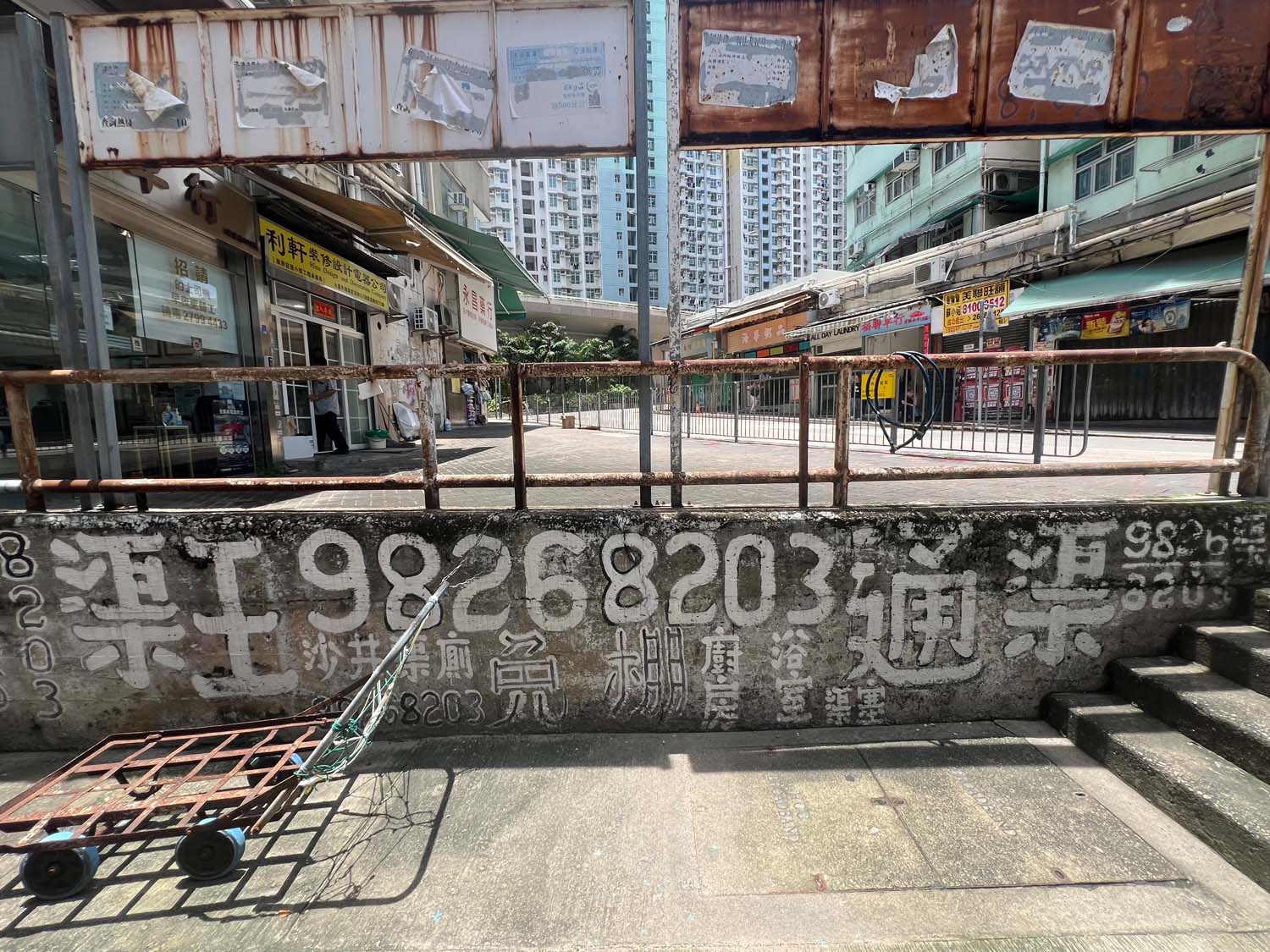
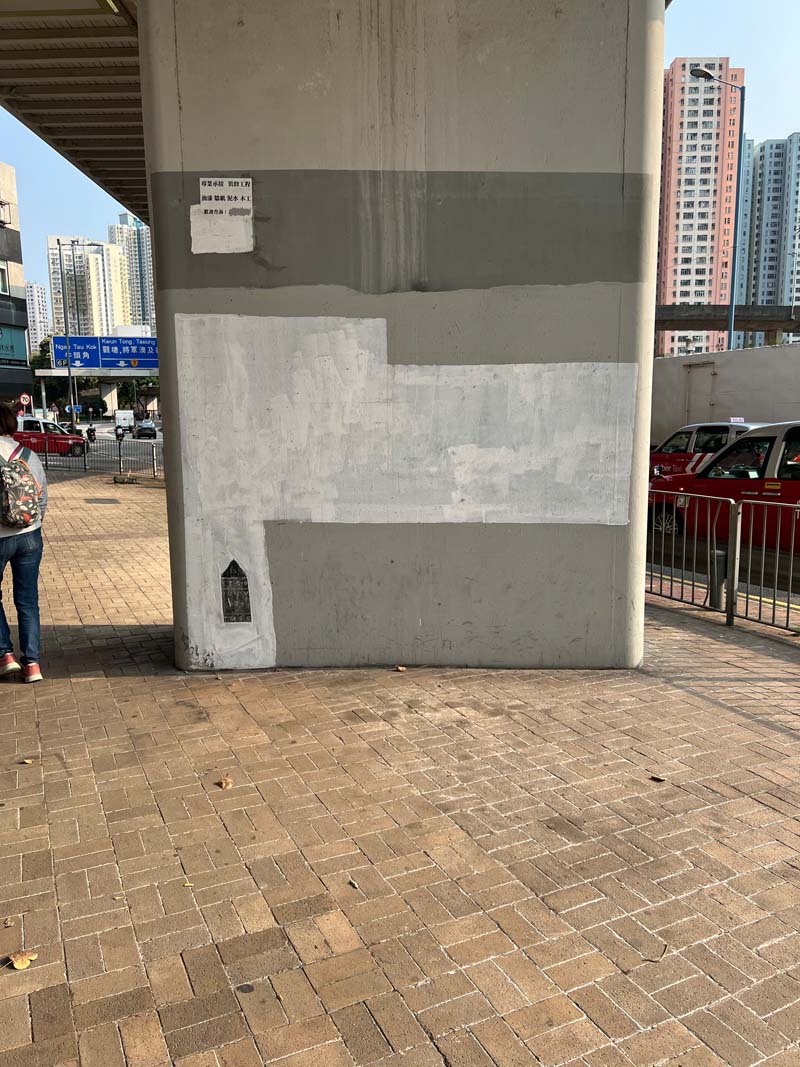
Because such markings have become so pervasive in Hong Kong, a street poetics has begun to surface. Within a capitalist-dominated milieu, street artists deftly project affect into commercial registers, attempting to transmit feeling within public space using camouflage. Without scrutiny, pedestrians cannot tell which inscriptions are genuine service notices and which are disguised or appropriated artistic texts. Drawing on the urban lexicon, one artist mimics repair advertisements on traffic panels, appending a fictitious telephone number and inscribing the phrase ‘修理自己 [Repair Yourself]’. If viewers strip the phrase of its context and ignore its deeper meaning, it can be read as a parody of a common commercial street text. Yet, the four-word street poetics conceals an invocation of collective trauma.
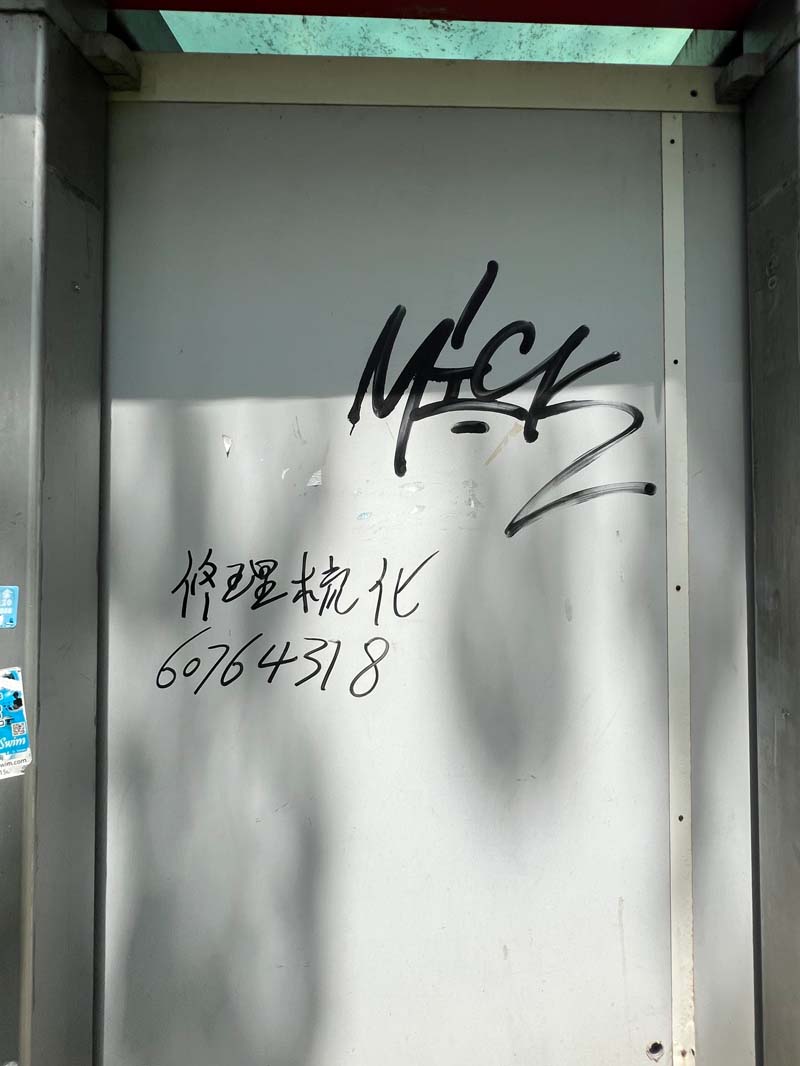
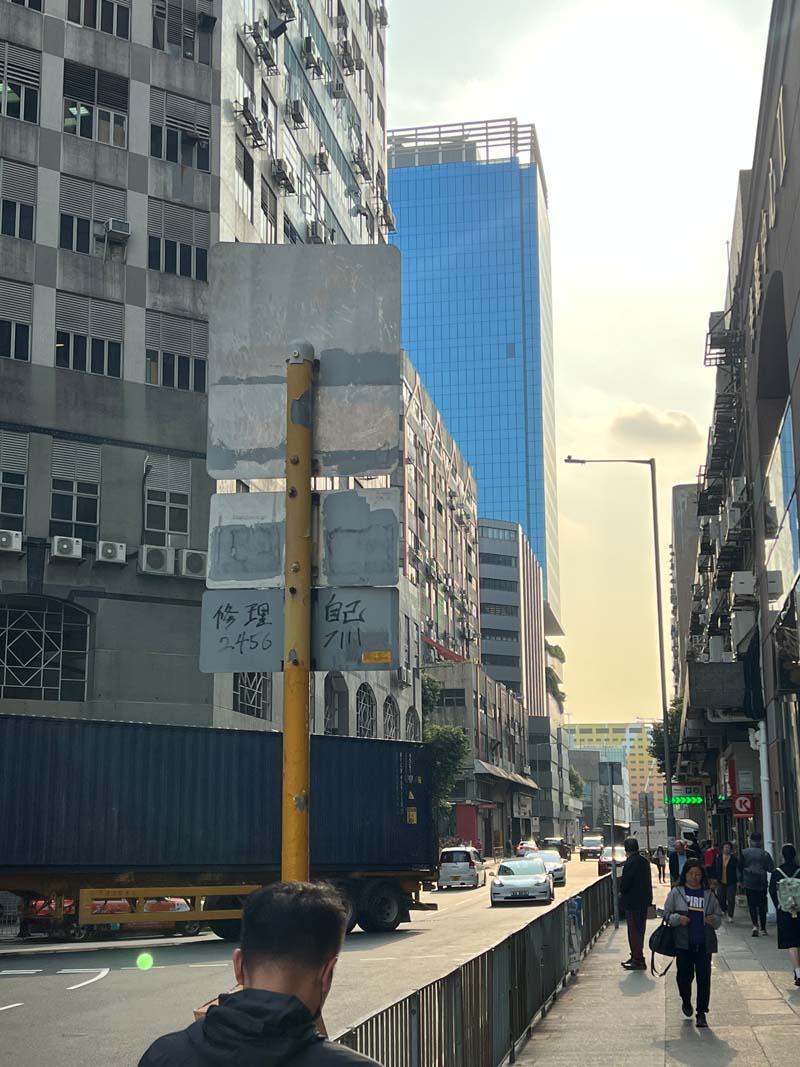
The urban wall writing in Figure 9 thereby reworks the familiar language and conventions of street advertising to mimic that aesthetic. In so doing, it transforms ordinary signage into a vehicle for affective communication: enveloped in the innocuous shell of commercial text, the disguised wall writing embeds messages of consolation and calls for healing within the everyday visual field. Casual passers-by see only the ad-like surface, whereas careful viewers decode the emotional claims of political depression concealed beneath. This outwardly banal yet inwardly coded double address functions as a form of camouflage that allows writers to circumvent censorship of direct political speech. Such ad-mimetic texts therefore constitute a vernacular street-level leveraging of aesthetic familiarity, plausible deniability, and in-group reading practices to sustain affective solidarity under conditions of constrained speech.
Case 3: Double Entendre behind Buddhist Graffiti
One interesting phenomenon in the Hong Kong urban art scene is that, after 2020, a huge influx of Buddhism-related graffiti and text has appeared in the cityscape, from phrases such as ‘即煩惱即菩提 [Affliction is bodhi]’ to concepts of 禪 (‘Zen’) and 念 (‘Contemplation’). One graffiti artist, Ding Yu Wan, stands out for his quintessential ‘Buddha head’ artwork and 慈悲 (‘Compassion’) graffiti. Ding produces other works inspired by Buddhist themes, infusing them with his personal reflections on the social upheaval in Hong Kong in 2019.
In an interview, Ding talked about how the 2019 protest movement became a pivotal moment for him (Ching 2023). The political upheavals produced a decisive rupture in which he experienced a period of disorientation and his sense of belonging to Hong Kong felt attenuated. He then adopted a suite of contemplative practices including scriptural study, formal meditation, and a vegetarian regimen to work through his anger and disaffection towards the city. The emergence of the Covid-19 pandemic deepened his understanding of the impermanence of life. To Ding, the collective trauma and hatred within Hongkongers stem from a failure to apprehend the impermanence of life. He therefore reoriented his art practice and began employing graffiti as a means of disseminating Buddhist teachings to the public and coping with political depression. His graffiti thus seeks to translate private processes of self-cultivation into public forms of engagement, using street art to prompt reflection on attachment, perspective, and the provisional nature of social and personal identities.
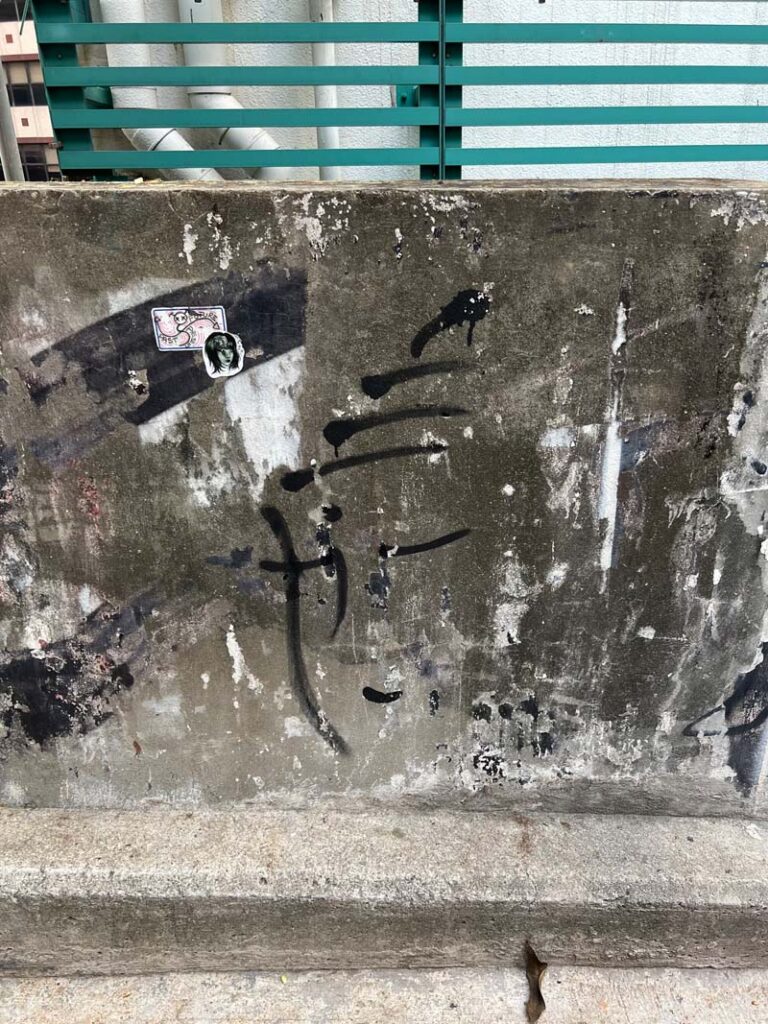
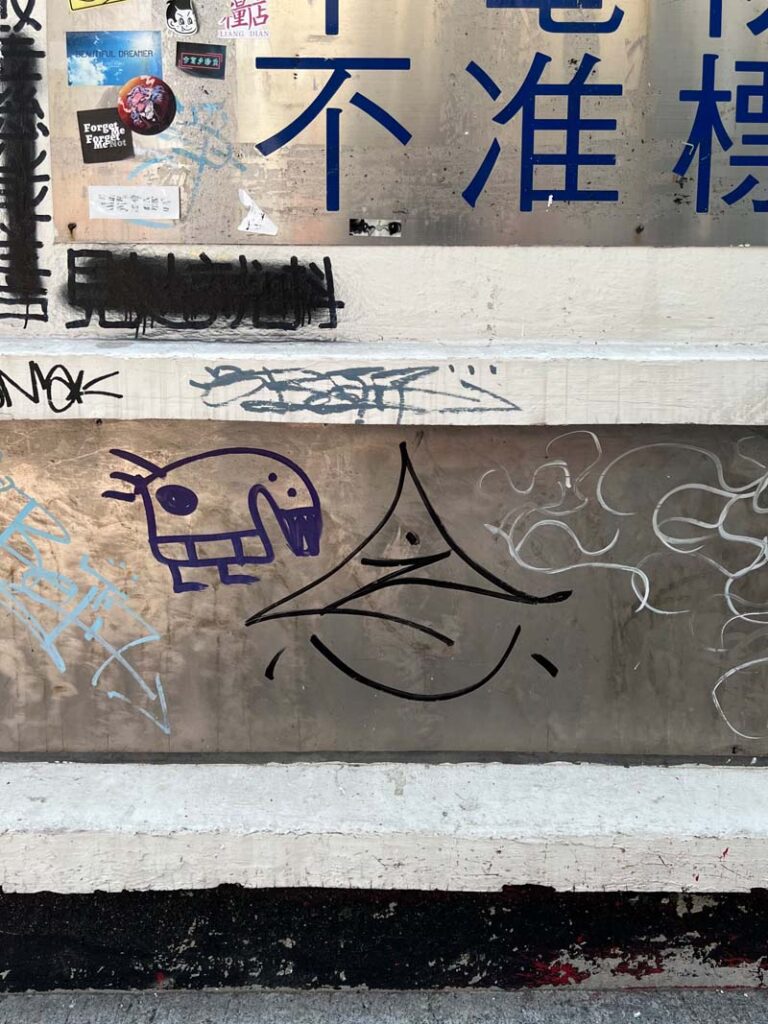
Figure 11 (left): Buddha’s head by Ding Yu Wan in Sheung Wan, April 2025. Source: N.S. Leung. Figure 12 (right): ‘念 [Contemplations]’ by NOW in Sham Shui Po, April 2025. Source: N.S. Leung.
With the recent proliferation of Buddhist-themed graffiti across Hong Kong’s urban landscape, the pseudo-Buddhist four-character idiom 堅慈能善 (‘firm in compassion, capable of virtue’) has widely circulated in both physical and digital public spheres. The idiom embodies the characteristics of literary affective encoding. It presents a variant of a Buddhist ideology while camouflaging an opposite meaning. On the surface, the idiom functions superficially as a call for ethical behaviour. Its ostensible religious-ethical framing situates it within a register of benevolence that appears to invite passers-by to exercise temperance and moral reflection. Yet, the idiom’s popularity derives in part from a locally intelligible linguistic play that renders it ambiguous, polyvalent, and politically resonant.
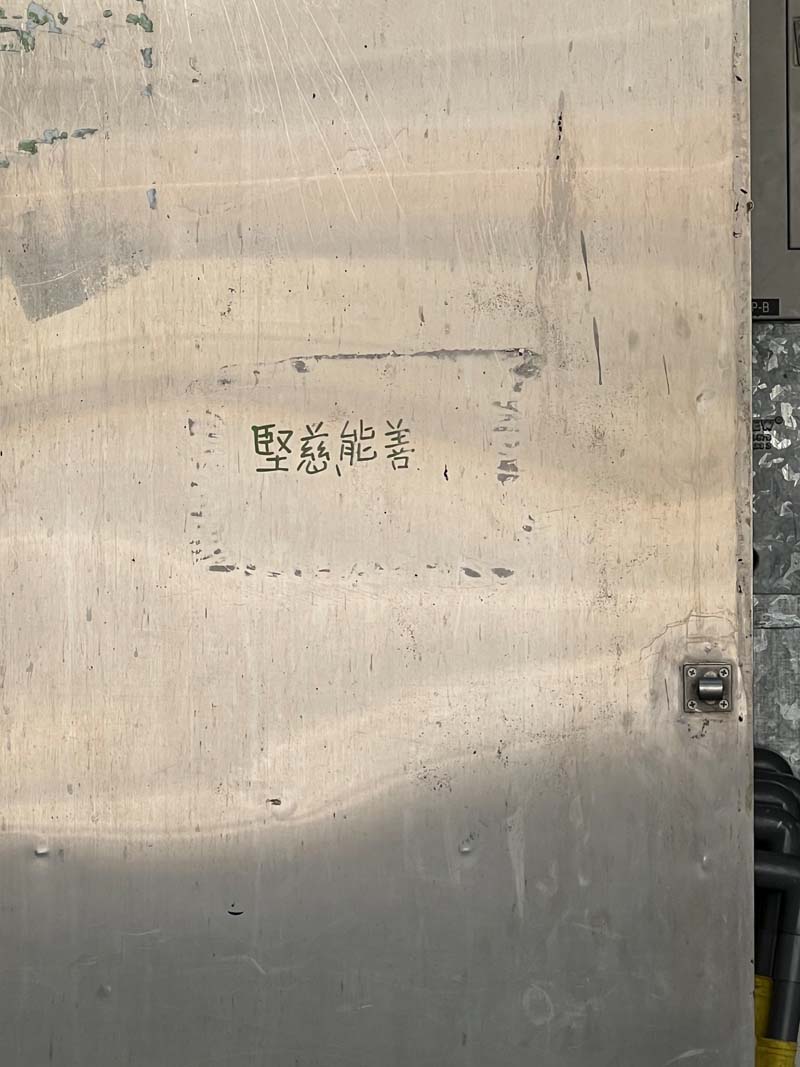
The idiom’s effectiveness lies in its capacity to provide plausible deniability while enabling in-group signalling. The double entendre thereby functions as a form of vernacular resilience against political depression, a coded commentary on collective anxieties and the normalisation of abnormal conditions, while also revealing how religious idioms can be converted into vernacular satire.
Whispered Territories
If the street was once Hong Kong’s loudspeaker, the post-2020 city has learned to whisper. These whispers are not, however, weak echoes of a lost public sphere but a deliberate, generative strategy of ‘affective encoding’ by which meaning is relocated and rephrased. Spatial retrenchment converts avenues and overpasses into stairwells, lifts, and other semi-private thresholds—liminal passages that function as both sanctuary and selective sites of encounter. These spaces are not merely safer; they also create new possibilities for meaning. By moving inscriptions into in-between spaces, writers invite an intimate readership, cultivate slow circulation, and transform the city’s connective tissue into a palimpsest of shared feeling and memory.
Textual encoding operates through form and diction. The morphosyntax of ‘Rest when weary’ and the mimicry of repair advertisements show how slogan templates are repurposed, shifting from collective instruction to everyday care. Protest language remains, but it is reframed through the softer medium of wellness and commerce. Camouflage techniques of commercial parody, such as Buddhist idioms with homophony, create a double message: outwardly apolitical but inwardly legible to a locally attuned audience. This double entendre is not simply evasive, but also performative: it sustains communal bonds, licenses mutual recognition, and produces a vernacular archive of affective survival in the age of political depression and recession.
Reading these practices together clarifies why ‘political depression’ in Hong Kong cannot be reduced to individual pathology. It is a public mood reworked into material strategies: artists and audiences collaboratively manage risk, preserve memory, and keep dissent alive through coded expressions of care. Affective encoding is therefore both tactic and testimony—a mode of coping that yields new forms of aesthetic awareness and civic literacy under constraint.
At the same time, encoding exposes tensions. The migration of dissent into semi-private arenas risks narrowing the public and intensifying exclusions; camouflaged speech can harden into comfortable ambiguity; commodification may neutralise mnemonic force. These are not reasons to dismiss encoding; rather, they mark the contours of a fragile politics that must be documented, interpreted, and protected.
If the city is a text, Hong Kong’s recent wall writing insists on a reading practice that privileges sensitivity to place, lexicon, and gesture. Ultimately, affective encoding teaches a civic lesson: where open dissent is curtailed, the politics of care and the poetics of concealment conspire to keep the possibility of solidarity alive—quiet, coded, and stubbornly public in its intimacy.
Cover Image: ‘虛妄 [Illusory]’ and ‘自由自在 [Carefree]’, graffiti by anonymous in Ngau Tau Kok, July 2025. Source: N.S. Leung.
References
Ching. 2023. ‘鬧市中的「佛系」塗鴉 [“Buddhist-Style” Graffiti in the Bustling City].’ Betterme by Yahoo, 13 September. www.betterme-magazine.com/習慣文青/鬧市中的「佛系」塗鴉.
Chow, Vivienne. 2020. ‘Under the Shadow of China’s New Security Law, a New Generation of Hong Kong Artists Is Learning to Make Art in Code.’ Artnet, 20 October. news.artnet.com/art-world-archives/chinas-security-law-new-generation-hong-kong-artists-1916748.
i-Cable. 2024. ‘勉勵塗鴉遍街頭 旅客視作景點打卡 港人: 社會仍有創意 提醒他人保持善良 [Encouraging Graffiti Across the City: Tourists Treat It as a Sightseeing Spot for Photos; Locals Say It Shows that Society Still Has Creativity and Reminds Others to Stay Kind].’ 有線新聞 [i-Cable], 17 February. www.i-cable.com/新聞資訊/199499/勉勵塗鴉遍街頭-旅客視作景點打卡-港人-社會.
Ka, Lok Yi. 2020. ‘Google 2020|10大搜尋字: 壞過凱婷、見字飲水 其他潮語識唔識 [Google 2020|Top 10 Search Terms: “Worse than Hoi Ting”, “Drink Water When You See This”—Do You Know the Other Trending Slang]?’ HK01, 9 December. www.hk01.com/article/647770.
Kinder, Kimberley. 2021. The Radical Bookstore: Counterspace for Social Movements. Minneapolis, MN: University of Minnesota Press.
Lam, Miu Ling. 2023. ‘Erased Murmurs.’ In SA 23: SIGGRAPH Asia 2023 Art Gallery Proceedings, 1–2. New York, NY: Association for Computing Machinery. doi.org/10.1145/3610537.3622952.
Leung, Giraffe Lok Hei. 2020. Paper Over the Cracks. Photo exhibition.
Mok, Kwan Ling. 2024. ‘香港塗鴉新世代: 「他們問我, 是不是畫過自由」 [The New Generation of Hong Kong Graffiti: “They Asked Me, Have I Ever Painted Freedom?”].’ Initium Media, 24 April. theinitium.com/20240424-culture-graffity-hk-streets.
Suen, Sing Yin 孫聖然. 2021. ‘歌詞被賦政治意味QQ音樂下架《銀河修理員》內地網民嘆遺憾 [Lyrics Found Political, QQ Music Removed “The Galactic Repairman”; Mainland Netizens Lament the Loss].’ HK01, 8 July. www.hk01.com/article/647770.
Valjakka, Minna. 2021. ‘Affective Paragrounds: Alternative Envisionings through Multidisciplinary Contemporary Arts in Singapore.’ Cultural Studies 35(1): 183–209.
WRO Biennale. 2025. Erased Murmurs. Wrocław, Poland: WRO Art Center. wro2025.wrocenter.pl/en/works/erased-murmurs.
Wu, Ka Ming. 2022. ‘Mapping the Affective Neighbourhood in Post-Protest Hong Kong.’ Made in China Journal 6(3): 107–13.
Yip. 2022. ‘「讀多啲書, 飲多啲水」 [Read More Books, Drink More Water].’ Our Voice HKSYU, 30 May. jmc.hksyu.edu/ourvoice/?p=11090.
Zuo, Lucy. 2024. ‘Occupying the Cracks: Hong Kong Independent Bookstores.’ Paprika Magazine, 6 December. paprikamagazine.com/folds/maintenance/occupying-the-cracks-hong-kong-independent-bookstores.
The post Affective Encoding: Coping with Political Depression through Urban Wall Writing in Post-2020 Hong Kong appeared first on Made in China Journal.