Africa sits at the crossroads of terror and critical minerals, four-star US general warns
General Dagvin Anderson of the United States Air Force (USAF) has outlined a bleak viewpoint on the state of security across Africa.
 Black News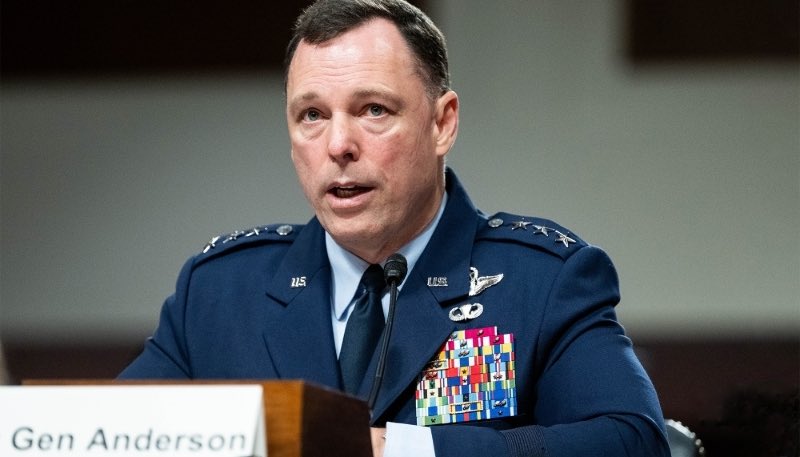
![General Dagvin R M Anderson, commander of the United States Africa Command [X: @wembi_steve]](https://ocdn.eu/pulscms/MDA_/7edfedbd9759cfbce9454ebdc638fe25.jpg)
General Dagvin Anderson of the United States Air Force (USAF) has outlined a bleak viewpoint on the state of security across Africa.
- General Dagvin Anderson highlighted worsening security in Africa due to growing terrorist networks and bad actors.
- Africa's strategic significance was emphasized, both as a global commerce hub and a key supplier of critical minerals.
- There is evidence of growing cooperation between groups like the Houthis and al-Shabaab, and several foreign terrorist organizations remain active on the continent.
- General Anderson advised that Africom should strengthen partnerships with regional allies and leverage unique US military capabilities, despite limited resources and geographic reach.
The senior United States (US) military officer in Africa noted that the continent is faced with a “precarious situation due to bad actors.”
He made this known during a briefing last week to the US Senate Armed Services Committee on the continental security environment.
What the US officer said
“Africa sits at the crossroads of global commerce and security, bridging the strategic terrain between the Atlantic and the Indo-Pacific.
It’s the world’s supplier of critical minerals for advanced defence systems and home to 12 of the world’s 20 fastest-growing economies,” he said to the committee.
The US Senate committee was told that terror networks are growing in Africa as the continent progresses globally.
The United States Senate committee received a rundown, indicating that terrorist networks are expanding throughout Africa, even as the continent achieves significant global advancements, as seen on DefenseWeb.
“The epicentre of global terrorism is in Africa. ISIS leadership is African; al-Qaeda’s economic engine is in Africa — both these groups share the will and intent to strike our homeland,” Anderson said, adding ISIS and al-Qaeda affiliates are showing increased connectivity.
The US senior officer observed, for example, more cooperation between the Iranian-backed Houthis, responsible for attacks on United States and British naval and commercial vessels in the Red Sea from October 2023 to October 2025, and al-Shabaab, an East African affiliate of al-Qaeda.
State Department records from late 2025 indicate the presence of at least ten foreign terrorist organizations active across the African continent, six of which maintain affiliations with ISIS.
“These efforts have driven ISIS leaders in Somalia underground, disrupting their command and control of the global ISIS network,” he said.
DON'T MISS THIS: U.S opens communications with the AES bloc as Sahel insecurity deepens
“Africom’s lack of expeditionary capabilities and diminished force posture compromises crisis response. In a crisis, we can always surge assets, but you cannot surge trust,” Anderson added.
In addressing these extremist threats, the naval officer advised that Africom prioritizes strategic collaborations with capable regional partners, augmenting their efforts with specialized capabilities unique to the United States military, especially considering that Africom currently has a smaller geographic reach and funding that makes up a very small portion of the War Department's overall budget.