Africa’s key gateway to Europe bars citizens of four nations as migration pressures grow
Eastern Libyan authorities have banned citizens of Sudan, Eritrea, Ethiopia and Somalia from entering territory under their control, a move that could reshape migration flows through one of Africa’s most important transit routes to Europe.
 Black News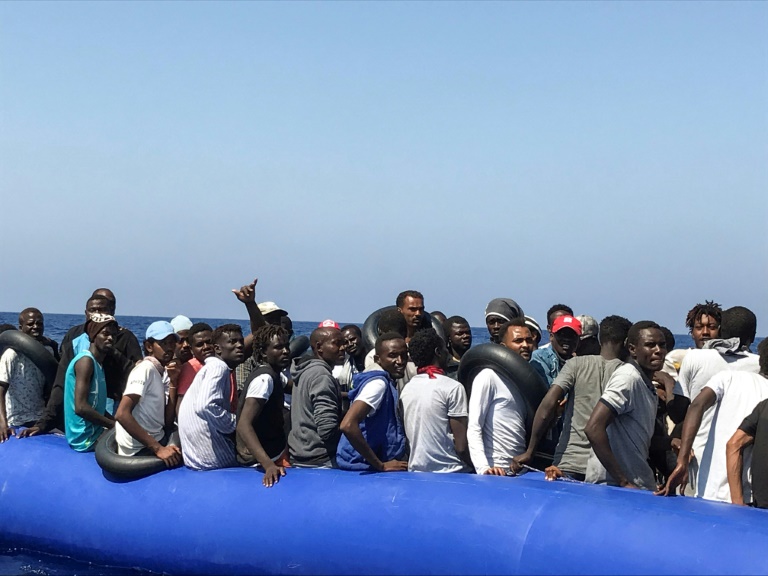
Eastern Libyan authorities have banned citizens of Sudan, Eritrea, Ethiopia and Somalia from entering territory under their control, a move that could reshape migration flows through one of Africa’s most important transit routes to Europe.
- Eastern Libya has banned citizens of Sudan, Eritrea, Ethiopia and Somalia from entering territory under its control.
- Officials said the measure is part of a reorganisation of foreign nationals’ entry into the country.
- The move affects four countries that have long been among the largest sources of migrants transiting through Libya toward Europe.
- It comes as Libya hosts more than 900,000 migrants and faces growing pressure over migration, border security and regional instability.
The decision was announced on Tuesday by the Benghazi-based administration of Prime Minister Osama Hamad, which governs eastern Libya and is aligned with military commander Khalifa Haftar.
According to a decree issued by the administration, nationals of the four countries are prohibited from entering eastern Libya through land, sea and air entry points.
An eastern government source told Reuters the measure was aimed at “reorganizing foreign nationals’ entry to Libya.”
The restrictions do not apply to accredited diplomats, consular staff and their families. Workers in the education, medical and allied health sectors are also exempt provided they obtain the required approvals and valid employment contracts.
Why these four countries matter
The countries affected by the decision are among the largest sources of migrants and displaced people in Africa.
Sudan is in the midst of what the United Nations has described as one of the world’s worst humanitarian crises.
Since war broke out between the Sudanese Armed Forces and the Rapid Support Forces in April 2023, millions of people have been displaced, with many seeking refuge in neighbouring countries or attempting to move north toward Libya and Europe.
Eritrea has for years been one of Africa’s largest sources of asylum seekers, driven by indefinite national service, economic hardship and political restrictions.
Meanwhile, Ethiopia and Somalia continue to grapple with a mix of security challenges, climate-related shocks and economic pressures that have contributed to outward migration.
For migrants from all four countries, Libya has long served as a critical transit point on the journey toward Europe.
Libya’s role in a migration system that spans continents
Since the overthrow of Muammar Gaddafi in 2011, Libya has emerged as one of the principal gateways for irregular migration across the Mediterranean.
Its long coastline, porous southern borders and prolonged political fragmentation have made it a major route for migrants seeking to reach Europe from Africa and parts of the Middle East.
According to data collected by the International Organization for Migration earlier this year, more than 900,000 migrants are currently in Libya.
The figure has risen sharply in recent years, fuelled by conflicts in Sudan and the wider Horn of Africa, as well as economic challenges across parts of the continent.
European governments have increasingly focused on Libya as they seek to curb migrant arrivals across the Mediterranean.
The European Union and several member states have spent years supporting Libyan border management and coast guard operations in an effort to reduce crossings.
Migration remains one of the most politically sensitive issues in Europe, with governments facing growing domestic pressure to tighten border controls.
Security, politics and labour
The latest restrictions also underscore the complexities of governance in Libya, where rival administrations continue to compete for authority more than a decade after the country’s descent into conflict.
While the internationally recognised Government of National Unity led by Abdulhamid Dbeibah is based in Tripoli, the eastern administration exercises control over large parts of eastern and southern Libya with the backing of Haftar’s forces.
The ban may also have implications beyond migration. Citizens of Sudan, Ethiopia, Eritrea and Somalia form part of the migrant labour force in sectors ranging from agriculture and construction to domestic work and services across Libya.
Although eastern authorities have described the move as an administrative measure, analysts are likely to view it through the broader lens of migration management, border security and the political pressures surrounding population movements across North Africa.
For now, officials have not indicated how long the restrictions will remain in place.