De la Espriella gives Colombia’s armed groups one month to surrender
Colombia’s president-elect Abelardo de la Espriella on Thursday gave the country’s illegal armed groups one month to submit to justice, pledging to abandon the broad negotiations pursued by the outgoing administration and instead adopt a hardline security strategy aimed at dismantling criminal organizations. Speaking after receiving his official credentials from the National Election Council (CNE) […]
 Black News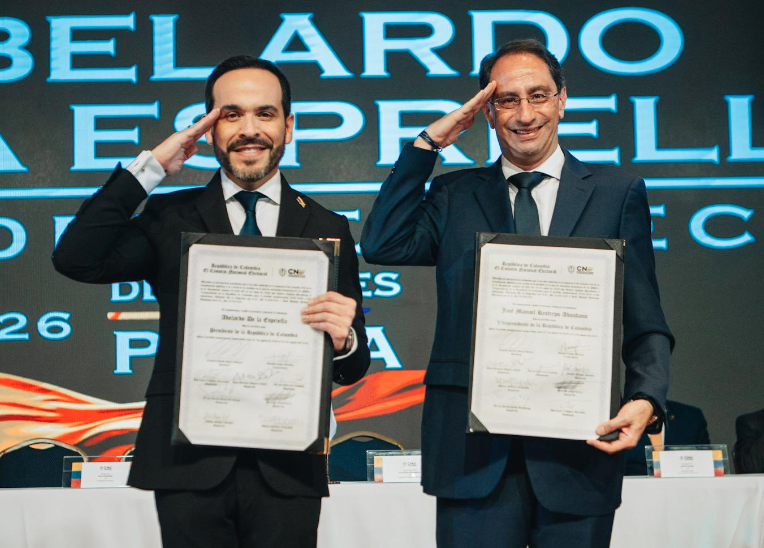
Colombia’s president-elect Abelardo de la Espriella on Thursday gave the country’s illegal armed groups one month to submit to justice, pledging to abandon the broad negotiations pursued by the outgoing administration and instead adopt a hardline security strategy aimed at dismantling criminal organizations.
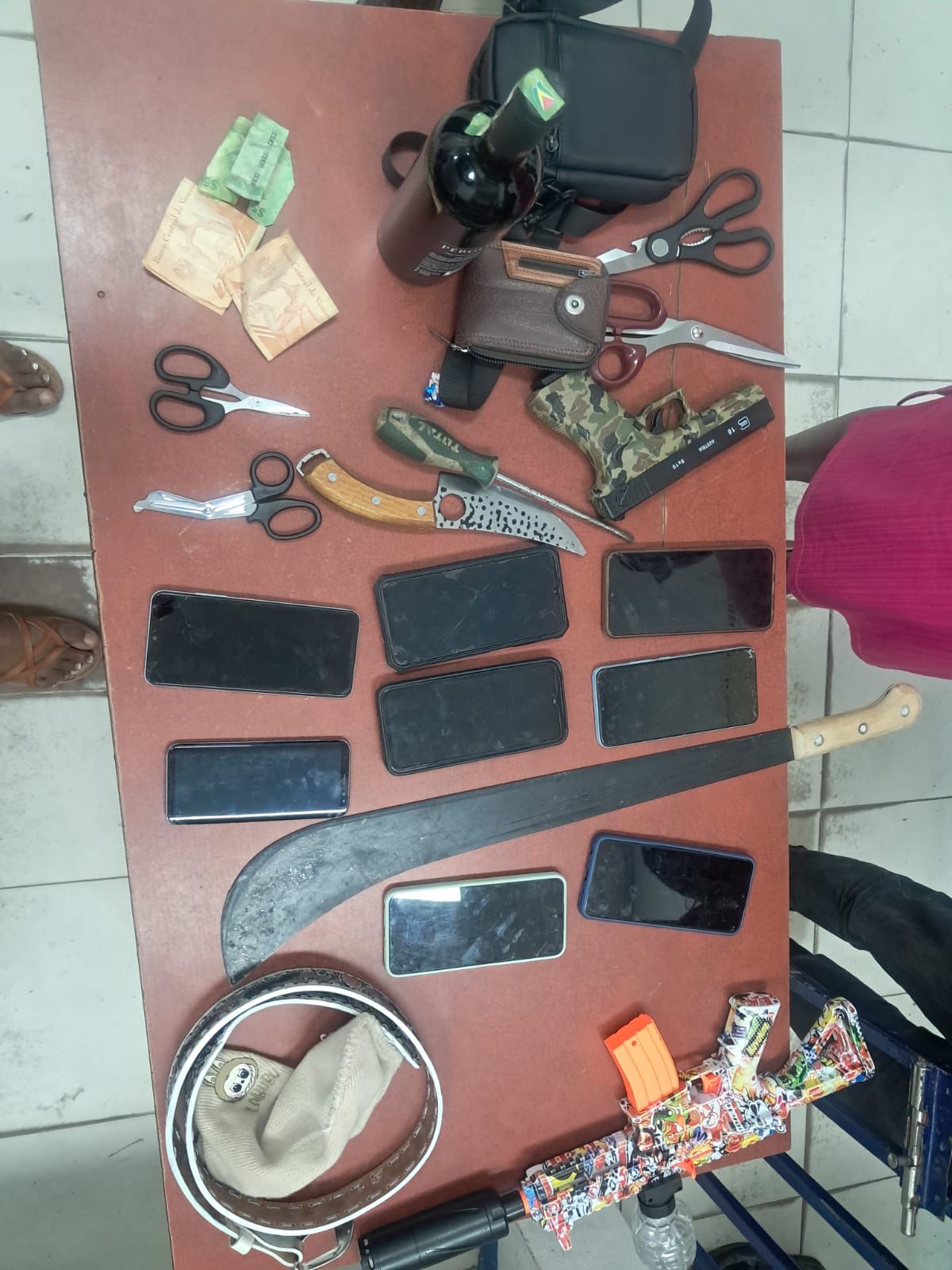
Speaking after receiving his official credentials from the National Election Council (CNE) during a ceremony at Bogotá’s Corferias exhibition center, De la Espriella said his administration would offer no sweeping peace deals or generous concessions to guerrilla groups, criminal gangs or drug trafficking organizations.
“They have one month to organize their surrender,” De la Espriella told hundreds of supporters gathered inside one of the exhibition halls. “In my government there will be no generous offers or unacceptable concessions such as those received from the regime that is coming to an end.”
The president-elect, who campaigned on restoring security and strengthening the armed forces, used his first major address since his election victory to sharply criticize outgoing President Gustavo Petro’s “Total Peace” policy, accusing the government of allowing criminal organizations to strengthen during negotiations.
“The coexistence of the current government with organized crime is disgusting and shameful,” he said. “In the era of the Tiger, impunity is over. Only the rule of law will prevail.”
He warned that groups continuing to engage in terrorism, drug trafficking, extortion and other criminal activities would face “the full capacity of the Colombian State and the unwavering determination of our glorious Armed Forces.”
The remarks signal a dramatic shift in Colombia’s security policy after four years of Petro’s efforts to negotiate simultaneous peace agreements with multiple armed organizations, including left-wing guerrillas, dissident factions and criminal groups. While several ceasefires were agreed during Petro’s presidency, many ultimately collapsed amid renewed violence and accusations that armed groups had used negotiations to expand their territorial control.
De la Espriella also declared that Colombia had “saved its democracy” following the closely contested election, praising both the electorate and the country’s institutions for safeguarding the constitutional order.
“I say it loudly: democracy has been saved, thanks to God and the determination of Colombia,” he said, adding that millions of Colombians had participated peacefully in the election and that the institutions responsible for overseeing the vote had ensured its legitimacy and transparency.
The president-elect pledged to respect Colombia’s democratic institutions throughout his four-year term, emphasizing that power would again be transferred through free elections at the end of his presidency.
“Four years from today, the person freely elected by the Colombian people to replace me as president will stand in this very place,” he said.
De la Espriella’s ultimatum is expected to be one of the first major policy tests for his administration before he formally takes office on Aug. 7.
The conservative lawyer and political newcomer also announced plans for an extensive anti-corruption audit during the transition period, promising what he described as a comprehensive review of the outgoing government’s finances and institutions.
“We will begin with an exhaustive audit, an anti-corruption transition process that allows us to establish the true magnitude of the institutional deterioration that we are inheriting,” he said.
Although he did not identify who would lead the investigation, he has previously proposed carrying out a forensic audit to uncover alleged corruption within the outgoing administration.
Throughout his address, De la Espriella portrayed his electoral victory as an unprecedented political achievement, emphasizing that his campaign had been conducted without the backing of traditional political parties, powerful business groups or major media organizations. “I do not hesitate to affirm that this victory is epic,” he told supporters to sustained applause.
Official final results certified by electoral authorities showed De la Espriella and vice president-elect José Manuel Restrepo won 12,960,166 votes, 624 more than the preliminary election-night count. His opponent, left-wing senator Iván Cepeda, received 12,708,312 votes after the final scrutiny, 400 fewer than initially reported.
The president-elect maintained the assertive tone that characterized his campaign, repeatedly promising to restore what he called the dignity of Colombia’s security forces and rebuild institutions weakened under Petro’s presidency.
“The person I will succeed was responsible for diminishing the majesty of the presidency and weakening our institutions,” De la Espriella said. “I will receive a nation that has been battered, but not defeated.”
In one of his first foreign policy announcements since the election, De la Espriella’s office said he would hold institutional meetings with Israel’s foreign minister to advance bilateral cooperation. According to his team, discussions will focus on cooperation against organized crime, security and intelligence exchanges, expanded trade opportunities and strengthening what it described as a strategic partnership based on technology, security and the defense of democratic institutions.
His office said the incoming government intends to restore what it called a “serious and firm” relationship with Israel while seeking closer cooperation with international partners in combating organized crime, attracting investment and expanding commercial ties.
De la Espriella’s victory marks a decisive turn toward a tougher security agenda after campaigning under the slogan “Firmes por la Patria” (“Firm for the Homeland”). He has pledged to strengthen the military, combat drug trafficking and illegal armed groups, and revive Colombia’s mining and energy sectors in an effort to boost investment and economic growth