Egyptian billionaire family lead North African alliance into Central Africa’s infrastructure and energy markets
The billionaire El Sewedy family of Egypt is currently deploying industrial capital into Central African markets, positioning its new manufacturing and infrastructure investments in Cameroon under the umbrella of a newly formed Algeria–Egypt industrial consortium.
 Black News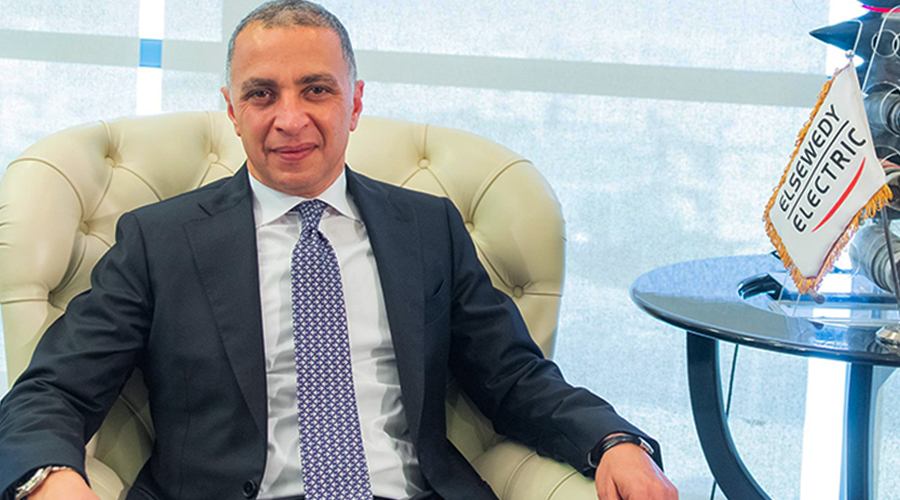

The billionaire El Sewedy family of Egypt is currently deploying industrial capital into Central African markets, positioning its new manufacturing and infrastructure investments in Cameroon under the umbrella of a newly formed Algeria–Egypt industrial consortium.
- The El Sewedy family from Egypt is expanding into Central African markets through a new Algeria–Egypt industrial consortium, focusing investments in Cameroon.
- The Egyptian–Algerian consortium plans to invest heavily in Douala and Yaoundé, focusing on logistics, energy, and engineering sectors.
- Elsewedy Electric and Sonelgaz are launching a renewable energy venture targeting Senegal, Ivory Coast, and Cameroon.
- Plans also include fiber optic cable manufacturing, expanding into integrated energy, engineering, and digital infrastructure across Africa.
This cross-border corporate expansion marks a calculated push by the prominent Egyptian business dynasty to scale its logistics, energy, and engineering footprint outside of its traditional North African stronghold.
By uniting Egyptian and Algerian industrial heavyweights, the consortium is establishing a direct pipeline to funnel significant capital into major economic hubs like Douala and Yaoundé.
DON'T MISS THIS: Egypt earmarks $500bn to finance 300 projects across Africa
According to reporting by News du Camer, Elsewedy Electric, led by Managing Director Ahmed Elsewedy, is partnering with Algeria’s state-owned utility Sonelgaz to develop a joint venture focused on renewable energy projects, particularly solar and wind power.
The initiative forms part of a wider strategy to expand into African infrastructure and energy markets, with Senegal, Ivory Coast, and Cameroon identified among the early target destinations.
Seven projects are currently under review with Algerian authorities, signaling a growing pipeline of cross-border energy investments.
The alliance is also exploring industrial diversification beyond power generation, including the manufacture of fiber optic cables to serve Algeria and other African markets.
This reflects a broader push to build integrated infrastructure systems that combine energy, engineering, and digital connectivity across the region.
Challenging Long-Established Corporate Dominance
This strategic move is creating major shockwaves because it disrupts a market that has been exclusively managed by a few specific interest groups for decades.
Historically, the business landscape in Cameroon and the broader Central African Economic and Monetary Community (CEMAC) zone has been tightly locked down by two main players: wealthy, historical French corporations and highly aggressive West African banking and consumer goods conglomerates.
For years, these two forces faced very little outside competition for major state and private contracts.
By entering this highly competitive market, the El Sewedy family’s new North African consortium is completely shifting the balance of power.
DON'T MISS THIS: Egypt's Elsewedy Electric wants to invest $200 million in Tanzania's ambitious Kigamboni Industrial Park
Rather than relying on traditional colonial-era trade networks or Western European engineering models, this alliance introduces an independent, continent-grown financing and procurement framework.
For local economies, this means higher competition, better technology transfers, and fresh options for building critical infrastructure.
For the entrenched French and West African corporate giants, however, it is a direct operational challenge. They must now rapidly adapt to this highly competitive, vertically integrated North African push or risk losing structural ground in one of sub-Saharan Africa's fastest-growing industrial arenas.
Victor Awogbemila