Germany injects 3 million Euros towards Ebola response efforts in the East African Community
Essentially, the East African Community and KfW Development Bank of Germany signed a 5 million Euro partnership to strengthen the regional health sector in addressing Mpox and other highly infectious disease outbreaks.
 Black News

Germany has injected 3 million Euros in the ongoing response efforts against the Ebola outbreak in the Eastern African Region, just as the pandemic claimed nearly 140 lives in DR Congo alone.
At least two babies have died from the disease which also affected 6 young children.
The Ebola response sum is part of the 8 million Euros that the Federal Republic of Germany is committing as a health response to the region through special agreement with the Arusha-based East African Community (EAC).
Essentially, the East African Community and KfW Development Bank of Germany signed a 5 million Euro partnership to strengthen the regional health sector in addressing Mpox and other highly infectious disease outbreaks.
The agreement was signed by the EAC Secretary General, Stephen P. Mbundi and the KfW Development Bank Country Director, for Tanzania and EAC, Ms. Vanessa Eidt as the Chargé d’Affaires of the Germany Embassy in Tanzania, Manuel Müller, looked on.

The new partnership also includes strengthening laboratory capacities across the eight EAC member states.
In addition, Germany has committed another 3 million Euros, through the KfW Development Bank, to support Ebola response efforts in East Africa.
Ebola cases have so far reached 676 in DR Congo alone. The disease was reported in DRC and Uganda with a single case listed in Brazil.
The East African Community (EAC) secretariat in Arusha will again receive 500 sets of Personal Protective Equipment (PPEs) from the Government of Germany to support frontline health workers engaged in preparedness and response activities.
Regional Preparedness and Response
Speaking during the agreement signing occasion in Arusha, the EAC Secretary General Ambassador Stephen Mbundi, assured that the secretariat has intensified regional coordination in response to current public health threats.
“This includes strengthening surveillance systems, enhancing laboratory capacity, and mobilizing technical expertise across Partner States,” he pointed out.
“Through the support of the German Federal Ministry for Economic Cooperation and Development (BMZ), the EAC has deployed ten mobile laboratories across seven Partner States; Burundi, the Democratic Republic of Congo, Kenya, Rwanda, South Sudan, Tanzania, and Uganda,” added the Secretary General.
According to the official, the mobile laboratories provide rapid diagnostic services that enable early detection, confirmation of cases, and timely outbreak containment.
The Mobile Laboratory Network was established under the Regional Network of Reference Laboratories for Combating Communicable Diseases Project, implemented by the EAC with support from the Government of Germany through KfW Development Bank.
“These laboratories have already proven critical in major public health responses, including the 2020 global COVID-19, the 2022 Ebola outbreak in Uganda, the 2023 Marburg outbreak in Tanzania, and the regional Mpox outbreak in 2024,” he said.
The Secretary General noted that EAC Partner States continue to facilitate the deployment of technical experts at strategic locations, including border points of entry and identified hotspots.
“The EAC Rapidly Deployable Pool of Experts (RDE), a multidisciplinary network of more than 180 experts operating under a One Health approach, has been significant in strengthening this response by enabling rapid deployment of specialists during outbreaks and other public health emergencies,” he added.
To further enhance regional readiness, healthcare workers and members of the RDE will undergo targeted training in infection prevention and control, risk communication and community engagement, risk assessment, and outbreak management.
These activities are being implemented through the Support to Pandemic Preparedness in the EAC Region (PanPrep) project by GIZ in collaboration with Charité – Universitätsmedizin Berlin, the German Epidemic Preparedness Team (SEEG), and the African Volunteers Health Corps (AVoHC) of the Africa Centres for Disease Control and Prevention (Africa CDC).
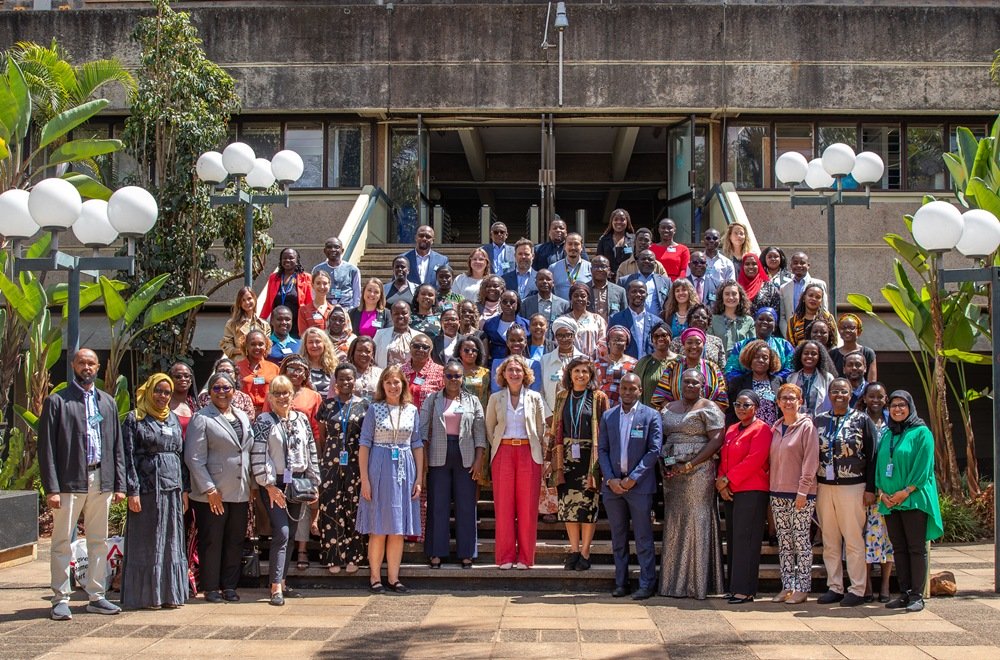
| Attending the event was the EAC Deputy Secretary General responsible for Infrastructure, Productive, Social and Political Sectors, Aguer Ariik Malueth, while the German delegation comprised Ms. Julia Kronberg, Head of Cooperation, German Embassy, Dar es Salaam, Tanzania; Ms. Anne Hahn, GIZ Country Director, Tanzania/EAC; and Mr. Bjorn Richter, GIZ Cluster Coordinator. |
|---|
Medical Countermeasures and Regulatory Cooperation
The EAC continues to advance regional cooperation on access to medical countermeasures, including vaccines, therapeutics, and diagnostics for priority infectious diseases, with Germany remaining one of the community’s long-standing and highly valued strategic partners.
Over the years, this partnership has reportedly evolved into a strong and trusted collaboration that continues to make tangible contributions to regional integration and development and in fact the EAC said it appreciates Germany’s consistent commitment to strengthening resilient regional systems and institutions that directly serve the people of East Africa.
The purpose of the EAC Regional Network of Public Health Reference Laboratories for Communicable Diseases Project supported by Germany was to install nine mobile laboratories in order to strengthen the capacity in the EAC Partner States to detect and respond to pathogens of biosafety level 3 and 4 (BSL3/4) nature, with a particular focus on viral hemorrhagic viruses (VHFs), such as Ebola Virus Disease (EVD), among others.
EAC Regional Network of Public Health Reference Laboratories for Communicable Diseases, involves establishing a sustainable laboratory infrastructure and disease outbreak response network across the East African Partner States.
Regional reference laboratory and laboratory network in the EAC for combating communicable diseases, while mobile Laboratory project operates within a critical context of addressing the widespread and insufficient monitoring of infectious diseases in East Africa.
“With the region facing recurrent outbreaks of high-risk pathogens, such as Ebola and Rift Valley fever, the project aims to enhance diagnostic laboratory capacities and improve regional coordination,” explained Germany Embassy Chargé d’Affaires Manuel Müller.
Previously, the global COVID-19 pandemic has underscored the necessity for molecular surveillance and rapid diagnostics, highlighting the need for advanced laboratory capabilities.
By implementing a One Health approach, which integrates human, animal, and environmental health, the project seeks to strengthen the region’s resilience against future health threats.
Through collaboration with established reference laboratories and research institutions, the EAC Mobile Labs project is positioned to leverage existing capacities and foster a sustainable framework for effective disease prevention and response in the East African Community.
Procured and deployed 10 mobile labs in the EAC Partner States each fully equipped with portable Polymerase Chain Reaction (PCR) machines, Enzyme-linked immunosorbent assay (ELISA) machines, glove- boxes, mobile vehicles and electrical power supply systems.
Mobile labs have been deployed in response to several suspected and confirmed disease outbreaks such as Ebola, Dengue, Marburg, COVID-19, Rift Valley Fever and Mpox.
Under the initiative 406 laboratory experts have been trained in various areas of laboratory diagnosis as trainers, testers, shippers of infectious substances (IATA), ICT and specialized drivers.
Supported assurance of regional trade through testing of truck drivers for COVID-19 at border points enabling the movement of goods and services during lockdowns.
There have also been previous procurement of 6 mobile container labs Establishing whole genome sequencing technology for identification of AMR and emerging pathogens and train lab personnel in the use of mobile container labs
Capacity building through field missions for AMR and disease surveillance
Electronic data capture throughout the EAC mobile lab network through a Laboratory Information Management System (LIMS) Capacity building of regional biomedical engineers
Developing harmonized regional AMR policies and Standard Operating Procedures (SOPs)