Germany renews support as Gambia pushes Security Sector Reforms
He made reference to the role of security in strengthening democracy, reminding that this was just the opposite of what was obtained under former dictatorship, when the police and other security forces were used to implementing the will of the president instead of the law. This, he said, is the reason Germany decided to run two projects with the Gambia Police Force. “I'm also glad to tell you that the GPST project, which ended a year ago, will see a phase 2.0,” he pointed out. From dictatorship to democracy Ambassador Botzet reminded that the fall of the dictatorship and the birth of The Gambia’s young democracy marked the start of a new chapter in the bilateral relations. “The German President Frank-Walter Steinmeier visited The Gambia as the first head of state who came to visit President Barrow,” he recalled, saying: “Since then, we have seen an intensification of our relations without any parallel in the past.” Germany, he added, has supported Gambia’s young democracy and its institutions, the Truth Reconciliation and Reparations Commissions (TRRC), and, through the UN Peacebuilding Fund, community-based peacebuilding initiatives in areas with many victims. “However, an area where we felt support was particularly critical for the young democracy is the Security Sector Reforms,” he said. “Security services should serve every citizen and protect citizens against those who break the law. They should not only exist to implement the will of the government. No, they are there to implement the law.” He observed that after 22 years of dictatorship, this culture must be taught in police academics and training programs. The German envoy noted that they have also provided a lot of equipment necessary for good police work to all four branches of the GNP. “The fact that The Gambia Police Force was last year recognized by the South African Institute in Stellenbosch as the best police force in West Africa is a testament to the success of this cooperation,” he said. Embassy opening The Federal Republic of Germany opened its full-fledged Embassy in Banjul in 2023. Botzet said the decision reflected Gambia’s growing importance in West Africa. “As a young, stable democracy with a free press and with its respect for human rights, we are also pleased to discover that The Gambia is a strong partner at the United Nations, particularly in the Human Rights Council, where it has been re-elected for a second time,” he stated. He stressed that in a time human rights and the sovereignty of small states are under threat, Germany is committed to deepening cooperation with The Gambia. Grassroots interventions Beyond security, Germany’s cooperation extends to grassroots development. Their intervention cuts across many areas including solar installations, women’s gardens and human rights projects. He stated: “We work with ECOWAS on a regional project that strengthens local agricultural production, particularly vegetables, poultry and fish. We're also supporting the EU program that has built solar installations in over 800 schools and over 90 clinics throughout the country. The latter goes hand-in-hand with a German-funded WASCAL project that financed over 20 solar installations in communities across The Gambia.” The German diplomat also commented on the current development taking shape in the country, acknowledging that the country has seen stronger economic growth since the fall of the dictatorship than most of its neighbors, a sign that the interventions are working. “The indicators show that The Gambia is moving upward in food production, electricity access and education,” he said. “Of course, not everything is yet perfect. You cannot expect a perfect world only eight years after a dictatorship but The Gambia is experiencing significant progress.” He said the progress is evident and the government has been working well with the international community and in particular Germany. Diaspora investment The German envoy also urged Gambians at home and abroad to invest more in the country, describing remittances as a major asset. “Last year, the Diaspora sent over 800 million US dollars to The Gambia.” he said. “A lot of it still goes into consumption but it's important that an increasing part of it is invested into profitable businesses so that more will be produced here.” That, he observed, will make the economy grow and become more productive and self-sustainable.
 Black News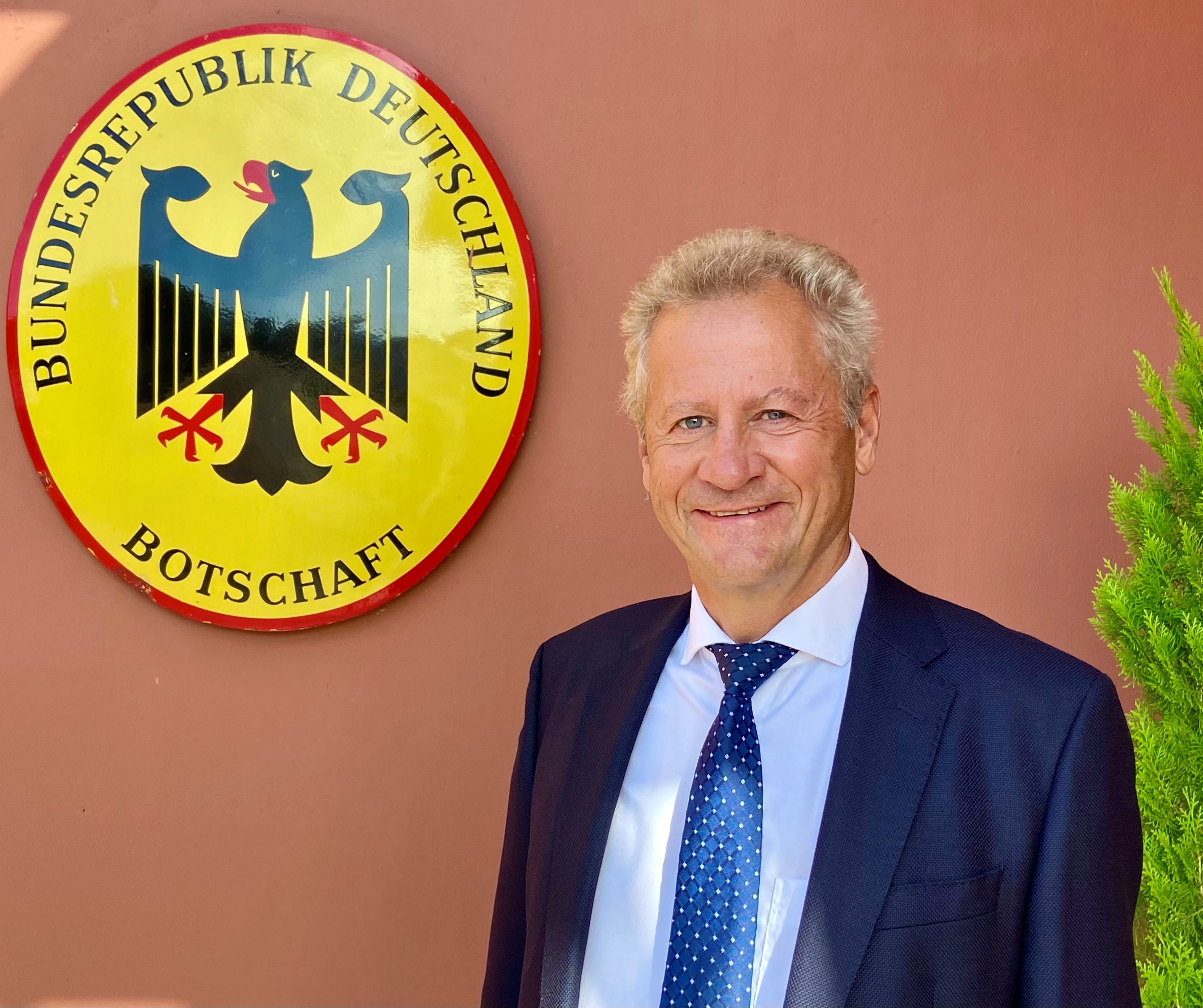
He made reference to the role of security in strengthening democracy, reminding that this was just the opposite of what was obtained under former dictatorship, when the police and other security forces were used to implementing the will of the president instead of the law.
This, he said, is the reason Germany decided to run two projects with the Gambia Police Force.
“I'm also glad to tell you that the GPST project, which ended a year ago, will see a phase 2.0,” he pointed out.
From dictatorship to democracy
Ambassador Botzet reminded that the fall of the dictatorship and the birth of The Gambia’s young democracy marked the start of a new chapter in the bilateral relations.
“The German President Frank-Walter Steinmeier visited The Gambia as the first head of state who came to visit President Barrow,” he recalled, saying: “Since then, we have seen an intensification of our relations without any parallel in the past.”
Germany, he added, has supported Gambia’s young democracy and its institutions, the Truth Reconciliation and Reparations Commissions (TRRC), and, through the UN Peacebuilding Fund, community-based peacebuilding initiatives in areas with many victims.
“However, an area where we felt support was particularly critical for the young democracy is the Security Sector Reforms,” he said.
“Security services should serve every citizen and protect citizens against those who break the law. They should not only exist to implement the will of the government. No, they are there to implement the law.”
He observed that after 22 years of dictatorship, this culture must be taught in police academics and training programs.
The German envoy noted that they have also provided a lot of equipment necessary for good police work to all four branches of the GNP.
“The fact that The Gambia Police Force was last year recognized by the South African Institute in Stellenbosch as the best police force in West Africa is a testament to the success of this cooperation,” he said.
Embassy opening
The Federal Republic of Germany opened its full-fledged Embassy in Banjul in 2023. Botzet said the decision reflected Gambia’s growing importance in West Africa.
“As a young, stable democracy with a free press and with its respect for human rights, we are also pleased to discover that The Gambia is a strong partner at the United Nations, particularly in the Human Rights Council, where it has been re-elected for a second time,” he stated.
He stressed that in a time human rights and the sovereignty of small states are under threat, Germany is committed to deepening cooperation with The Gambia.
Grassroots interventions
Beyond security, Germany’s cooperation extends to grassroots development. Their intervention cuts across many areas including solar installations, women’s gardens and human rights projects.
He stated: “We work with ECOWAS on a regional project that strengthens local agricultural production, particularly vegetables, poultry and fish. We're also supporting the EU program that has built solar installations in over 800 schools and over 90 clinics throughout the country. The latter goes hand-in-hand with a German-funded WASCAL project that financed over 20 solar installations in communities across The Gambia.”
The German diplomat also commented on the current development taking shape in the country, acknowledging that the country has seen stronger economic growth since the fall of the dictatorship than most of its neighbors, a sign that the interventions are working.
“The indicators show that The Gambia is moving upward in food production, electricity access and education,” he said. “Of course, not everything is yet perfect. You cannot expect a perfect world only eight years after a dictatorship but The Gambia is experiencing significant progress.”
He said the progress is evident and the government has been working well with the international community and in particular Germany.
Diaspora investment
The German envoy also urged Gambians at home and abroad to invest more in the country, describing remittances as a major asset.
“Last year, the Diaspora sent over 800 million US dollars to The Gambia.” he said. “A lot of it still goes into consumption but it's important that an increasing part of it is invested into profitable businesses so that more will be produced here.”
That, he observed, will make the economy grow and become more productive and self-sustainable.