'Greater New York' Gets Real at MoMA PS1
It can take a lot to persuade snobby Manhattanites to venture all the way to Queens, but if anything can do it, MoMA PS1 can. On a fittingly unseasonable day, being warm and balmy in mid-April, crowds filled the museum’s large courtyard. They arrived from both the city center and the outer boroughs. But PS1 draws a cooler crowd than most art institutions: the eclectic, boisterous audience underscored that this was not the domain of the Upper East Side collector, or the out-of-states board member. Instead, local artists and their circles dominated the scene at the opening of Greater New York, the museum’s quinquennial exhibition.Greater New York is, in many ways, the show that first conceptualized what MoMA PS1’s identity would be as an institution. Launched in February 2000, it was the first show produced jointly by the Museum of Modern Art and the P.S.1 Contemporary Art Center, with the ink barely dry on the 1999 contract joining the two institutions as partners. At the time, P.S.1 was barely 15 years old, having been founded by curator Alanna Heiss to utilize abandoned New York buildings while promoting groundbreaking contemporary artists. Concurrently, MoMA director Glenn Lowry was pushing the belief that the future lay in contemporary art. By joining with P.S.1, MoMA gained an experimental space dedicated to large-scale contemporary exhibitions, while P.S.1 got the funding and institutional muscle to keep going. They opened with Greater New York, a show meant to spotlight artists living and working in the New York area. It also functioned as a statement of intent, proving the institution’s commitment to its city and to the artists actively shaping it.Today the tradition continues, as the sixth edition of Greater New York presents over 50 artists from the New York area. Spanning all floors of the building, the show is remarkably well rounded. Museum-goers will know it is easy for large group shows to lose their common thread and quickly become confusing; however, as I walked through the galleries, I was impressed by the ways various individual works were bonded together by their essential New York-ness. The topics at hand were clearly local: immigration, taxi drivers, massage parlors, rats and bodega cats. It was a microcosm of the city’s real concerns, as well as a testament to the artists’ deep relationships with New York. fields harrington (an artist who rejects upper cases) and the Cevallos Brothers took over the lobby of the exhibition, serving as the show’s zeitgeist. An innocuous bike rack greeted visitors, to which a delivery bicycle was periodically locked. Titled Unfree Free Time, the delivery bicycle belongs to Gustavo, one of the leaders of Los Deliveristas Unidas (a group committed to delivery app drivers’ rights). Gustavo is paid $21.44 for each hour the bike is strapped to the bike rack, the same as the local minimum wage for delivery drivers established last year, thanks to the organization's fight for fair pay. Behind the rack is a bold, colorful mural depicting painting supplies and a view of the Queensboro Bridge, along with the words “Greater New York” in bright green and blue. The mural was commissioned from the Cevallos Brothers, who are not fine artists in the traditional, somewhat pretentious sense, but are New York legends nonetheless. The brothers have made their living off of creating posters for local restaurants, bars, and coffee shops; upstairs, a collection of said posters is shown, cheerfully advertising karaoke nights and happy hours. Both works ground the Greater New York show in the quotidian, banal New York experience, reminding viewers that the city’s artistic landscape is shaped not just in galleries, but in the hands of those who move through it every day.Also on the first floor is a remarkable room installation by the Queens organization Red Canary Song, which advocates for Asian immigrant women who work in massage and sex parlors across New York. Titled Touch the Heart, it consists of blush pink curtains surrounding four round dining tables. One table is laden with prostitution awareness pamphlets, poetry books by sex workers and sexual liberation manifestos. Another has an array of dim sum containers, each one holding a sexual object (thongs, bondage rope, breast implants.) The work complicates the industry, showing how it can both financially empower Asian women with limited opportunities while trapping them in an unregulated system where injustice often goes unpunished. The invitation for viewers to ‘consume’ the fruits of these women’s labors is vaguely unsettling, especially as the curtains evoke the sense of literally being in a massage room. Along the walls are posters announcing underground gatherings that feature an “extravaganza of Asian American entertainment and eroticism” (as one flyer advertised.)Other favorites include Mekko Harjo’s I have eaten and made friends (The Devouring Hill), which regular club-goers will recognize as modeled after the not
 Black News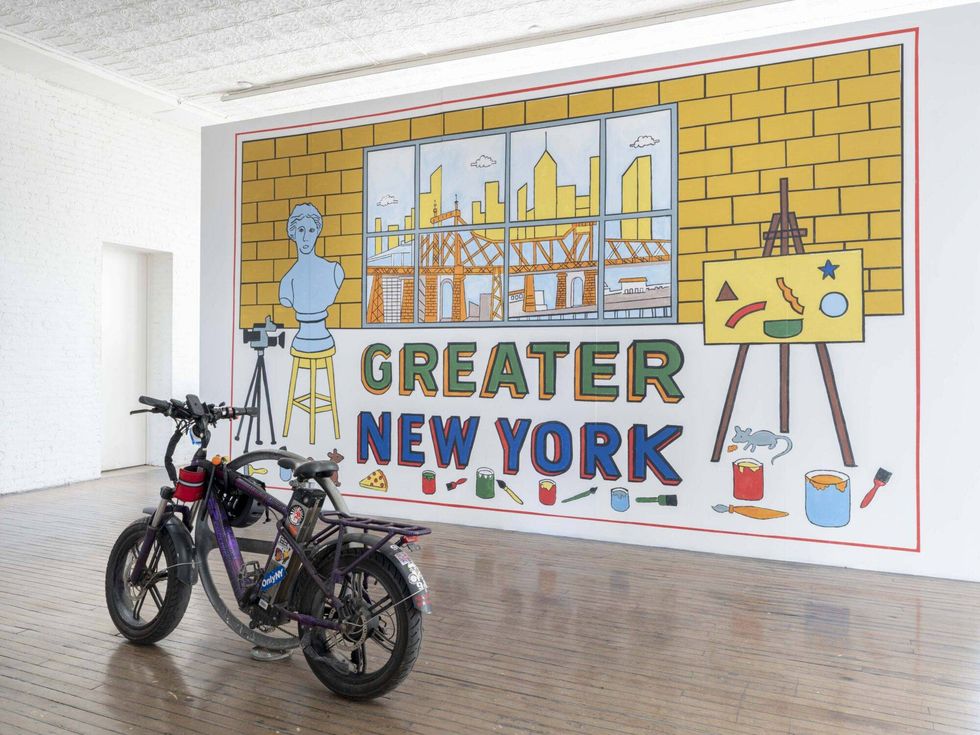
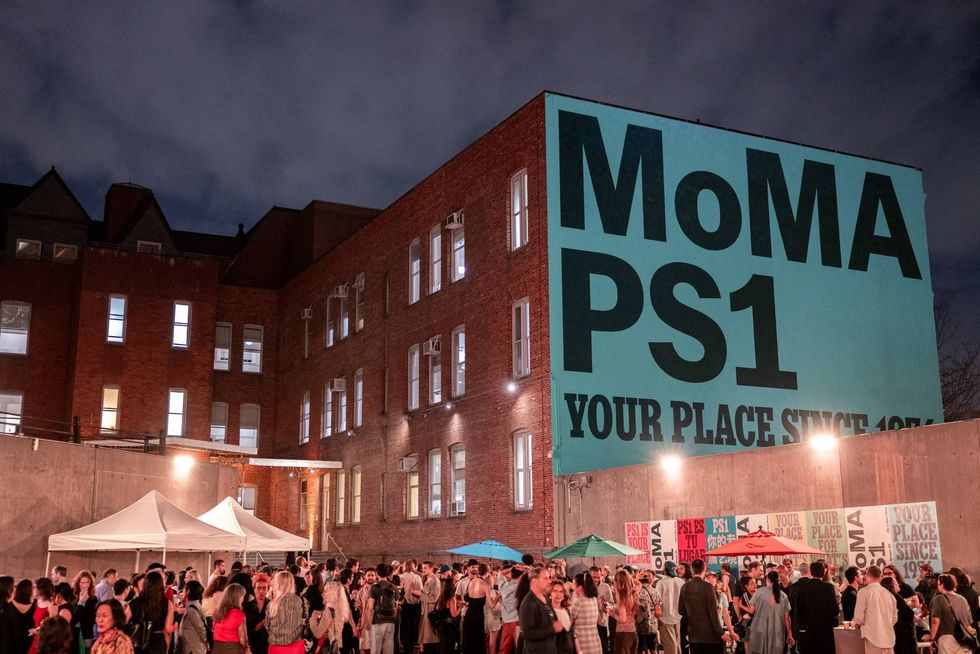
It can take a lot to persuade snobby Manhattanites to venture all the way to Queens, but if anything can do it, MoMA PS1 can. On a fittingly unseasonable day, being warm and balmy in mid-April, crowds filled the museum’s large courtyard.
They arrived from both the city center and the outer boroughs. But PS1 draws a cooler crowd than most art institutions: the eclectic, boisterous audience underscored that this was not the domain of the Upper East Side collector, or the out-of-states board member. Instead, local artists and their circles dominated the scene at the opening of Greater New York, the museum’s quinquennial exhibition.
Greater New York is, in many ways, the show that first conceptualized what MoMA PS1’s identity would be as an institution. Launched in February 2000, it was the first show produced jointly by the Museum of Modern Art and the P.S.1 Contemporary Art Center, with the ink barely dry on the 1999 contract joining the two institutions as partners.
At the time, P.S.1 was barely 15 years old, having been founded by curator Alanna Heiss to utilize abandoned New York buildings while promoting groundbreaking contemporary artists. Concurrently, MoMA director Glenn Lowry was pushing the belief that the future lay in contemporary art. By joining with P.S.1, MoMA gained an experimental space dedicated to large-scale contemporary exhibitions, while P.S.1 got the funding and institutional muscle to keep going. They opened with Greater New York, a show meant to spotlight artists living and working in the New York area. It also functioned as a statement of intent, proving the institution’s commitment to its city and to the artists actively shaping it.
Today the tradition continues, as the sixth edition of Greater New York presents over 50 artists from the New York area.
Spanning all floors of the building, the show is remarkably well rounded. Museum-goers will know it is easy for large group shows to lose their common thread and quickly become confusing; however, as I walked through the galleries, I was impressed by the ways various individual works were bonded together by their essential New York-ness. The topics at hand were clearly local: immigration, taxi drivers, massage parlors, rats and bodega cats. It was a microcosm of the city’s real concerns, as well as a testament to the artists’ deep relationships with New York.
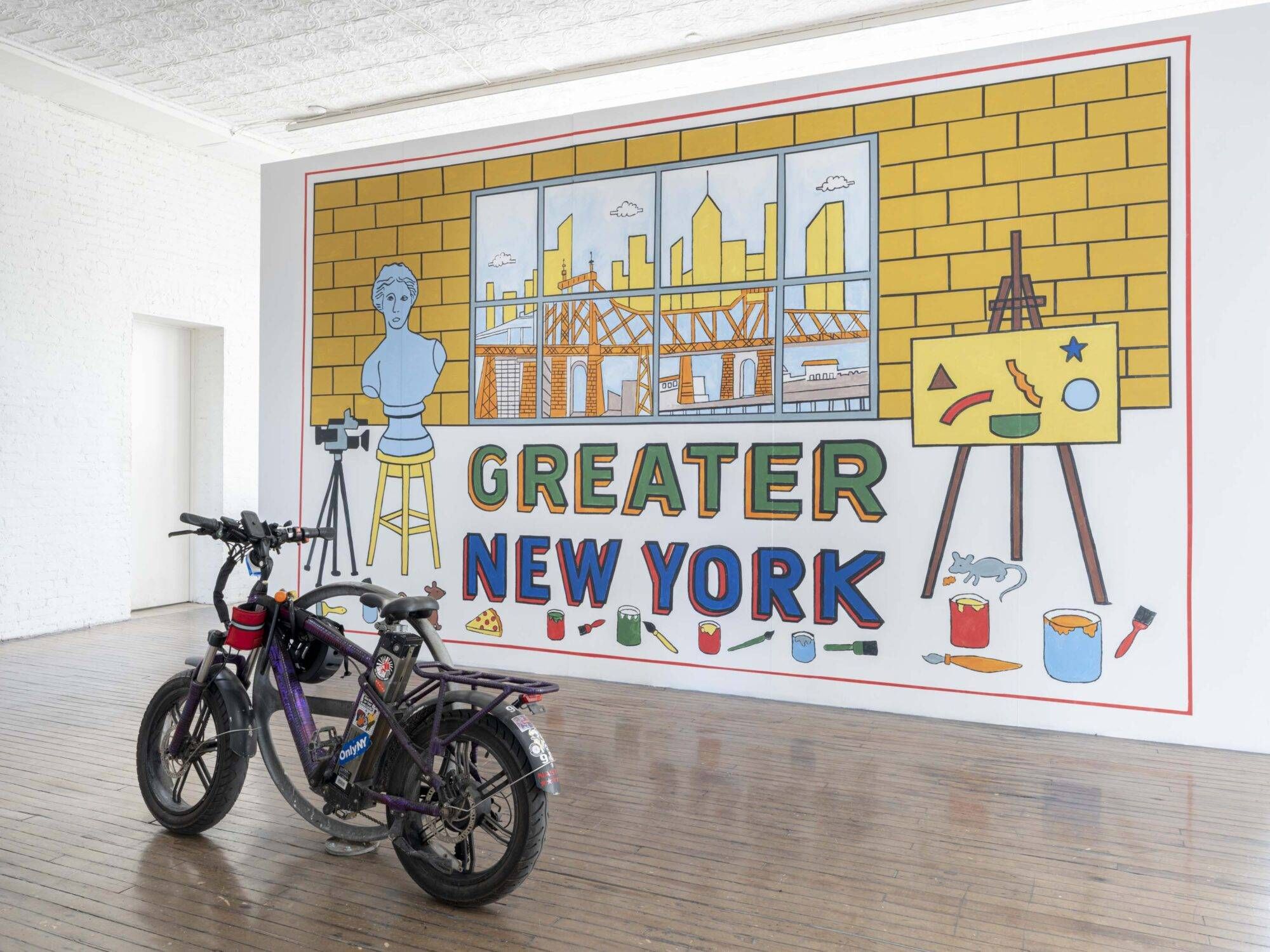
fields harrington (an artist who rejects upper cases) and the Cevallos Brothers took over the lobby of the exhibition, serving as the show’s zeitgeist. An innocuous bike rack greeted visitors, to which a delivery bicycle was periodically locked. Titled Unfree Free Time, the delivery bicycle belongs to Gustavo, one of the leaders of Los Deliveristas Unidas (a group committed to delivery app drivers’ rights).
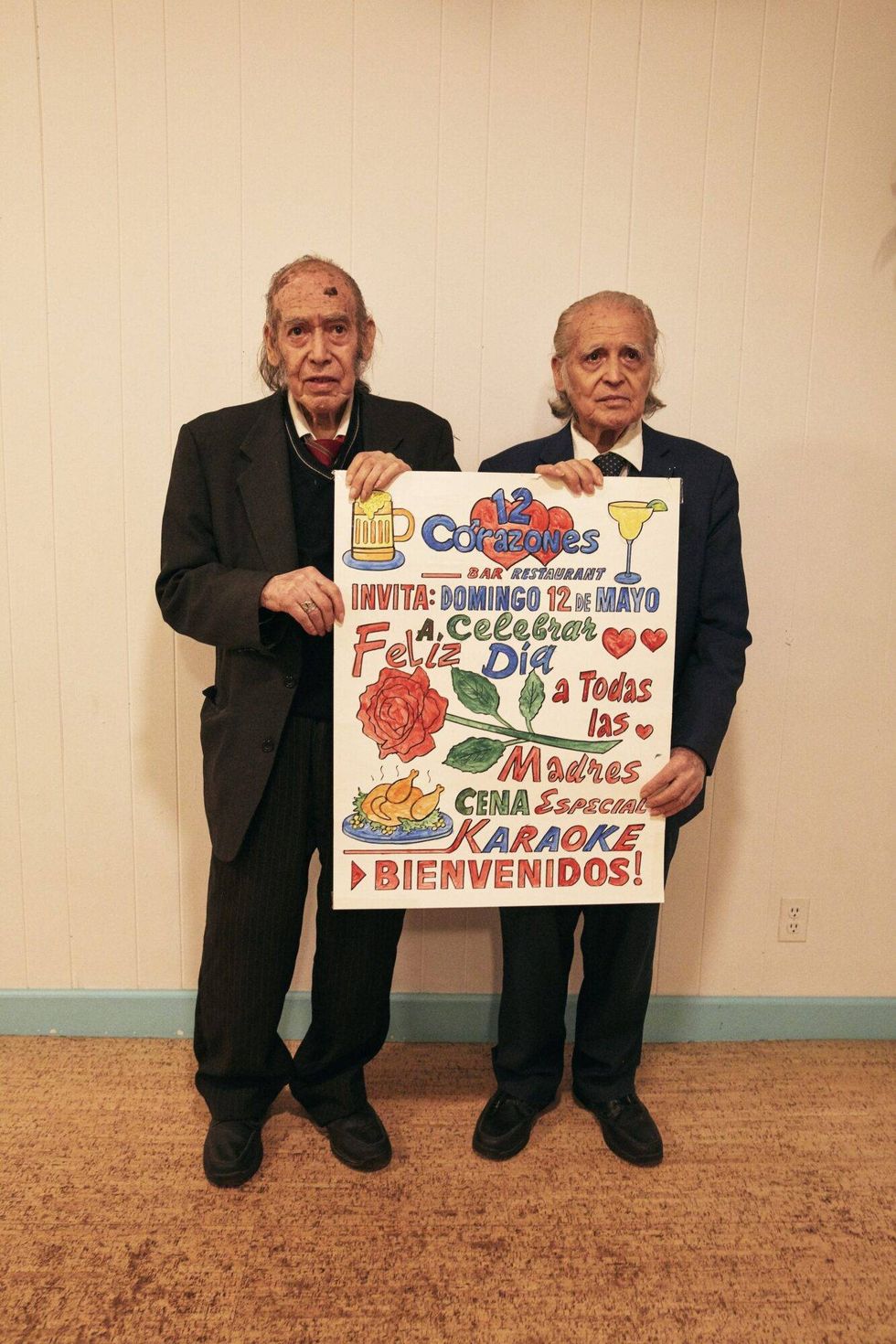
Gustavo is paid $21.44 for each hour the bike is strapped to the bike rack, the same as the local minimum wage for delivery drivers established last year, thanks to the organization's fight for fair pay. Behind the rack is a bold, colorful mural depicting painting supplies and a view of the Queensboro Bridge, along with the words “Greater New York” in bright green and blue. The mural was commissioned from the Cevallos Brothers, who are not fine artists in the traditional, somewhat pretentious sense, but are New York legends nonetheless. The brothers have made their living off of creating posters for local restaurants, bars, and coffee shops; upstairs, a collection of said posters is shown, cheerfully advertising karaoke nights and happy hours.
Both works ground the Greater New York show in the quotidian, banal New York experience, reminding viewers that the city’s artistic landscape is shaped not just in galleries, but in the hands of those who move through it every day.
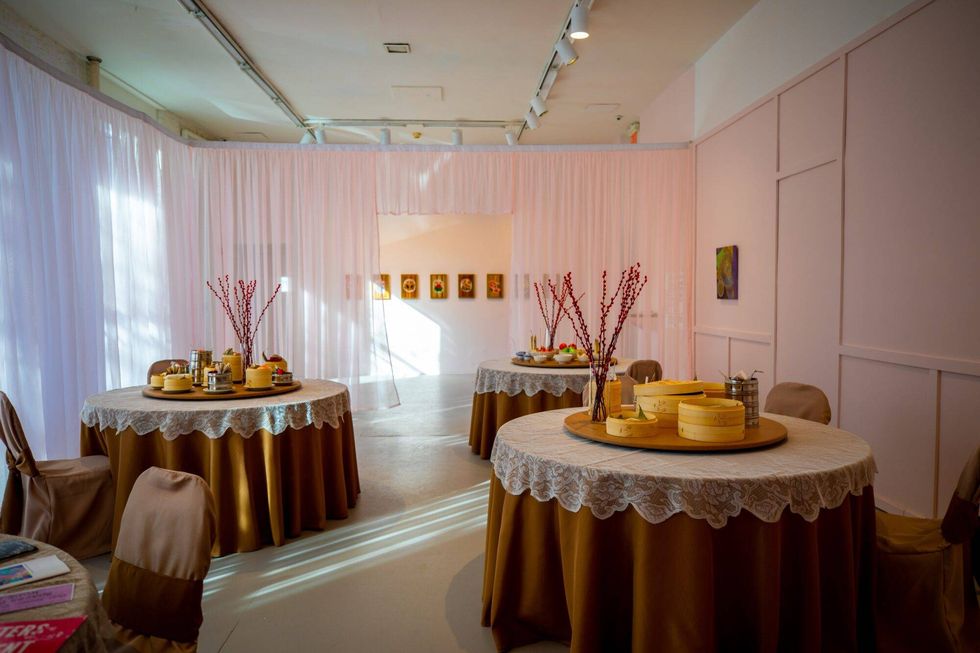
Also on the first floor is a remarkable room installation by the Queens organization Red Canary Song, which advocates for Asian immigrant women who work in massage and sex parlors across New York. Titled Touch the Heart, it consists of blush pink curtains surrounding four round dining tables. One table is laden with prostitution awareness pamphlets, poetry books by sex workers and sexual liberation manifestos. Another has an array of dim sum containers, each one holding a sexual object (thongs, bondage rope, breast implants.)
The work complicates the industry, showing how it can both financially empower Asian women with limited opportunities while trapping them in an unregulated system where injustice often goes unpunished. The invitation for viewers to ‘consume’ the fruits of these women’s labors is vaguely unsettling, especially as the curtains evoke the sense of literally being in a massage room. Along the walls are posters announcing underground gatherings that feature an “extravaganza of Asian American entertainment and eroticism” (as one flyer advertised.)
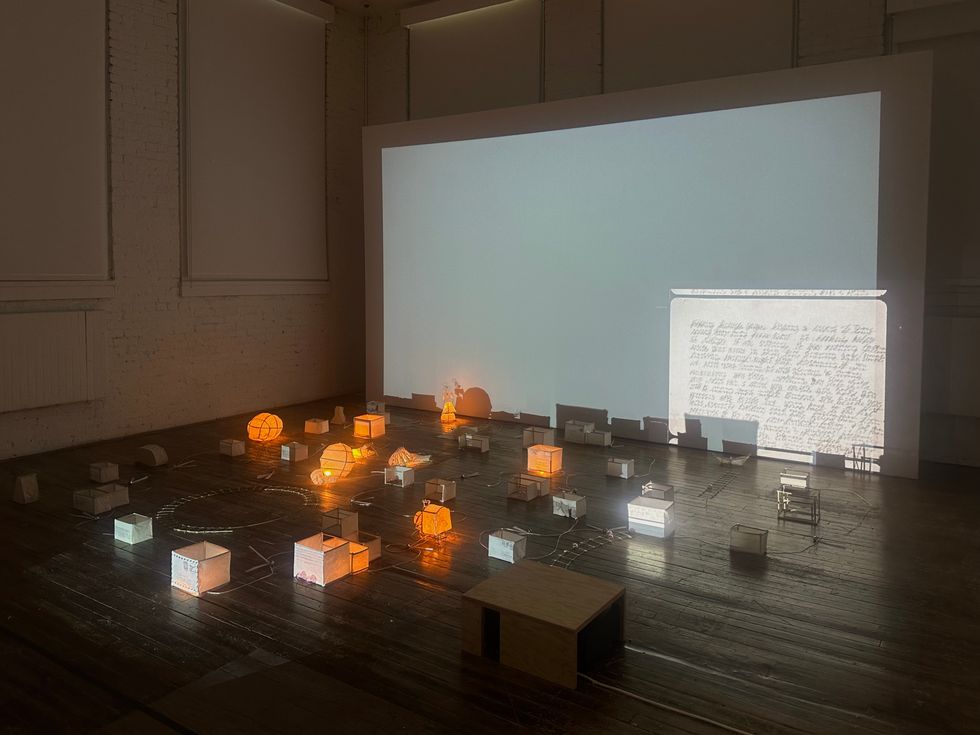
Other favorites include Mekko Harjo’s I have eaten and made friends (The Devouring Hill), which regular club-goers will recognize as modeled after the notorious Bossa Nova Civic Club in Bushwick. The work considers nightlife as a breeding ground for community and radical thought. In another corner room, Cici Wu’s enchanting work flickers with lantern-light, while a film from the late artist Theresa Hak Kyung Cha plays in the background. Cha, a multidisciplinary Korean artist who explored themes of colonialism and displacement, died tragically at just 31; Wu picks up her thread, drawing on her own experience as an Asian immigrant to examine collective memory through light and film.
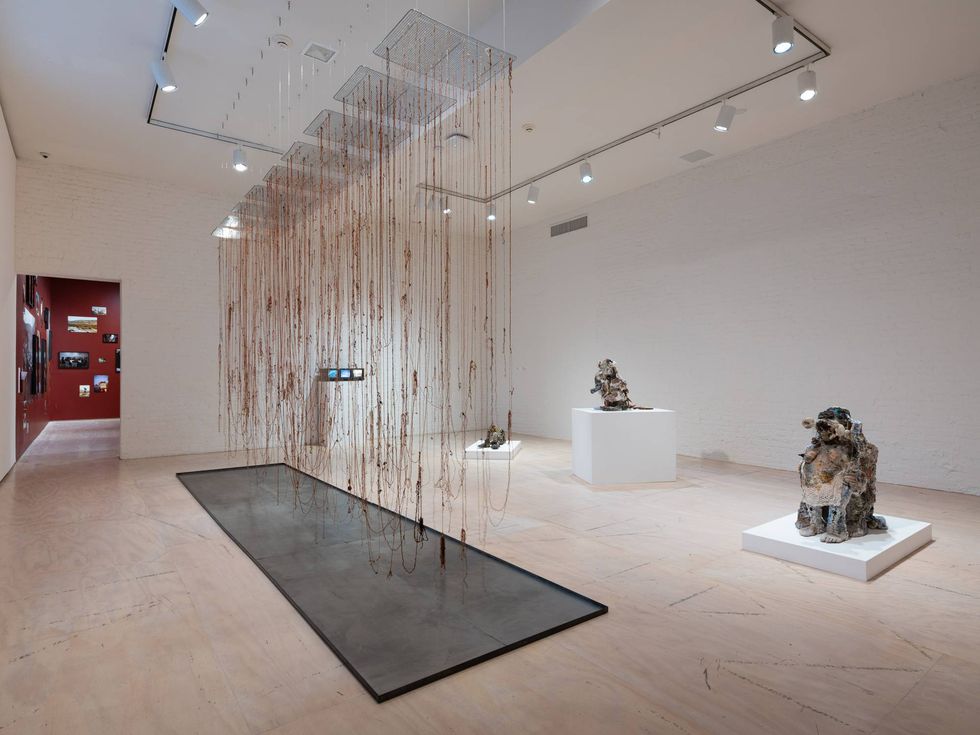
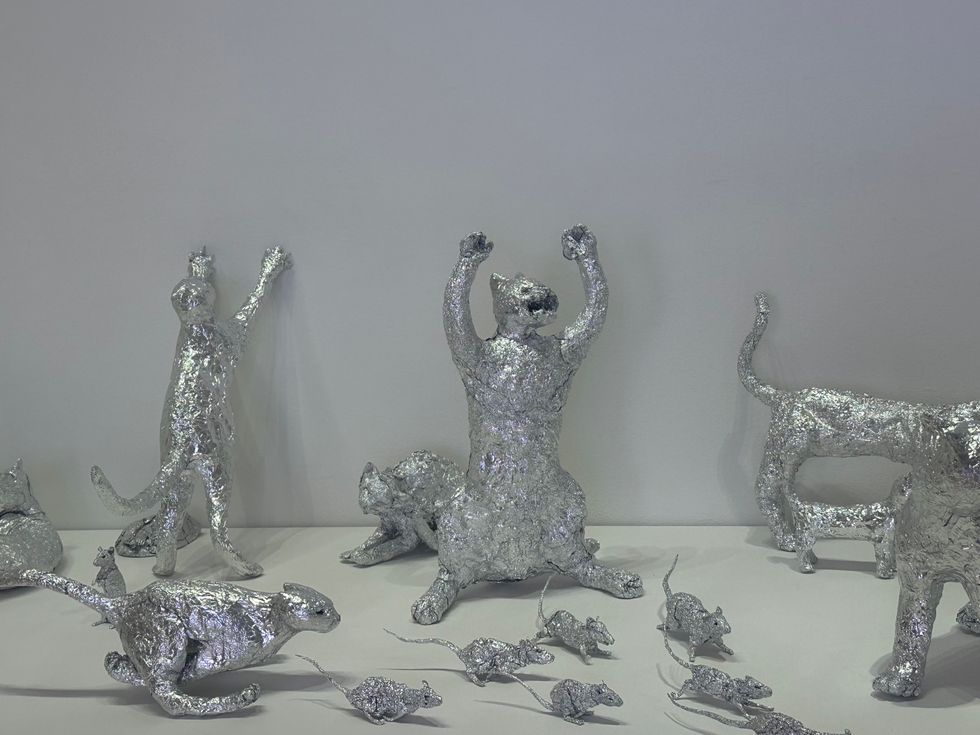
Maria-Elena Pombo’s sinister red threads (which strongly resemble bleeding veins strung from the ceiling) symbolize Venezuelan immigration, as well as a kind of mad science experiment. Each strand is actually a cultured algae organism, painstakingly grown from water samples gathered from the homes of Venezuelan families living in over 20 different countries and tinted with avocado pits bought from local Brooklyn fruit markets. On a more playful note, Dean Millien’s aptly titled The Cats and the Rats brings to life the endless rivalry between cats (bodega cats, perhaps?) and their prey via aluminum foil sculptures, complete with feline somersaults and mad dashes after one another.
Stepping outside of the exhibition space and back into the PS1 courtyard, a surprisingly youthful audience had gathered to celebrate the show. Artists showed up to support fellow artists, while young, ambitious collectors and dewy-eyed gallerinas (as we affectionately call art gallery divas) shared dumplings from the local Chinese food truck that had parked inside the museum grounds.
What lingers after Greater New York is a sense that artists and viewers today are most concerned with New York as a living, changing organism, made up of real people; it feels refreshingly current, grounded in modern issues, and not as caught up in the endless nostalgia that the rest of pop culture can’t seem to shake off.
Photography and images courtesy of MoMA PS1, Elizabeth Chung, Cici Wu, Walter Wlodarczyk, Kris Graves, Dean Millien, Cevallos Brothers, Michael Stasiak, fields harrington, Kris Graves, John Kim, Maria-Elena Pombo, Red Canary Song


-(1).jpeg?width=1200&auto=webp&crop=3:2#)