Helao Shityuwete dead: Robben Island freedom fighter dies
Former Robben Island political prisoner and anti-apartheid activist Helao Shityuwete is remembered as a fearless freedom fighter and a humble man who remained committed to freedom, equality and humanity. Shityuwete, who spent 18 years imprisoned on Robben Island for his role in the liberation struggle, died on Saturday at the age of 92. His death […] The post Helao Shityuwete dead: Robben Island freedom fighter dies appeared first on The Namibian.
 Black News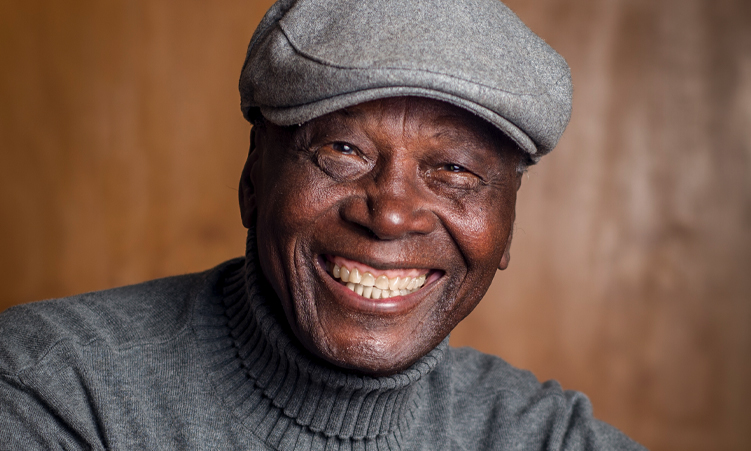

Former Robben Island political prisoner and anti-apartheid activist Helao Shityuwete is remembered as a fearless freedom fighter and a humble man who remained committed to freedom, equality and humanity.
Shityuwete, who spent 18 years imprisoned on Robben Island for his role in the liberation struggle, died on Saturday at the age of 92.
His death leaves Betuel Nuunyango as the only surviving member of the group of 37 Namibian nationalists who were incarcerated on Robben Island during the 1960s.
Former parliamentarian Ben Ulenga, who was imprisoned alongside Shityuwete on Robben Island, describes him as a jovial and determined person who remained resilient despite the challenges of imprisonment.
“He was jovial. When we came to know him more closely, we found he was determined to fight against all physical and natural challenges. He was quite strong and very tall – a gigantic man,” Ulenga said yesterday.
He said Shityuwete’s Angolan roots and cultural background were an important part of his identity.
“He was from Angola from the Omuvale community. In prison, we called him our ‘Kimbundu’,” Ulenga said.
He said Shityuwete was artistic and had a passion for storytelling, qualities reflected in his book, ‘Never Follow the Wolf’, in which he chronicled his life and experiences.
“He was more open to the common man,” Ulenga said.
He said Shityuwete was a humble person.
“He believed in humanity throughout his political existence as well,” Ulenga said.
He would remember Shityuwete as a loyal friend who stood firmly by those close to him.
“I will miss him as a friend, as a person who was always there for me. When you stood with him, it was only the two of you. Nothing came between you,” he said.
“We let him go, but we still keep him in our lives, minds and hearts.”
Swapo deputy secretary general Uahekua Herunga yesterday described Shityuwete as a fearless freedom fighter who was always prepared to sacrifice his life for Namibia’s liberation.
“He made sure we are who we are today. He was a man who did not fear death, because to him freedom was more important than death,” Herunga said.
PERSEVERANCE
Shityuwete believed the struggle for Namibia’s freedom was worth any sacrifice, he said.
“He said, ‘I am doing this for the defence of Namibia, no matter what comes, whether death or life’,” Herunga said.
He said Namibians could honour Shityuwete’s memory by safeguarding the country’s independence and working towards genuine development.
Former prime minister Nahas Angula said Shityuwete’s life can be summed up in one word: perseverance.
He said Shityuwete walked to Tanganyika, now Tanzania, and back to Namibia in 1965 to start a liberation front in the country.
“He persevered at Robben Island and he persevered in old age. The theme is perseverance. Young people should learn that perseverance means victory,” he said.
Angula said the sacrifices made by Shityuwete and his generation should serve as a reminder that Namibia’s independence came at a cost.
He said he first crossed paths with Shityuwete in the Kavango region in 1965 when he was travelling abroad and Shityuwete and his group were traveling back to Namibia.
This was before he and his comrades were intercepted by South African forces before the battle of Omugulugwombashe.
“He unfortunately became one of the people tried under the Terrorism Act,” he said.
Angula described Shityuwete and his group as pioneers who made major efforts to bring the liberation struggle back to Namibia.
He said the group formed part of the early efforts to establish an armed liberation front in the country.
Back then it was called the South West Africa Liberation Army (Swala), he said.
He said Shityuwete’s generation helped raise political awareness among Namibians under difficult conditions.
Angula said Shityuwete and other elder veterans inspired younger generations.
He said he was among those who helped build the country’s labour ministry.
“I hope those in power will remember him and recognise his contribution,” Angula said.
He said he used to visit him at his house as they were neighbours and called him ‘Don’t follow the wolf’, the title of the book Shityuwete later wrote.
Shityuwete is survived by his wife, Jane, daughter Tulimelila and son Frederick.
In September 1967, Shityuwete and 36 other men were tried under the South African Terrorism Act. In 1968, they were found guilty and sent to Robben Island prison.
He was released from prison in 1984.
Shityuwete was the 19th of his father’s 22 children.
Born in Angola, Shityuwete moved to Namibia at the age of 10 and attended school at Endola in the Ohangwena region and St Mary’s Mission Odibo.
At that time, St Mary’s was a sought-after school as the only one in northern Namibia where English was taught and spoken.
Shityuwete told The Namibian in 2011 that it was at St Mary’s Odibo where he met his longtime friend and fellow Robbin Island prisoner Andimba Toivo ya Toivo.
Ya Toivo was also one of his first teachers.
In early 1956, Shityuwete found employment at Outjo Girls school.
“My job was to look after the school superintendent’s house, and my tasks included cleaning the house, washing the dishes, looking after the chickens, tending the garden and selling flowers,’” he said in 2011.
He said his salary was 5c per day.
In 1964 Shityuwete left Namibia and was taken care of by then Swanu members in Botswana.
He was one of the founders of Owambo People’s Organisation, which later became Swapo.
The post Helao Shityuwete dead: Robben Island freedom fighter dies appeared first on The Namibian.