Jamaican Poet Linton Kwesi Johnson honoured with Lecture Theatre from Goldsmiths University
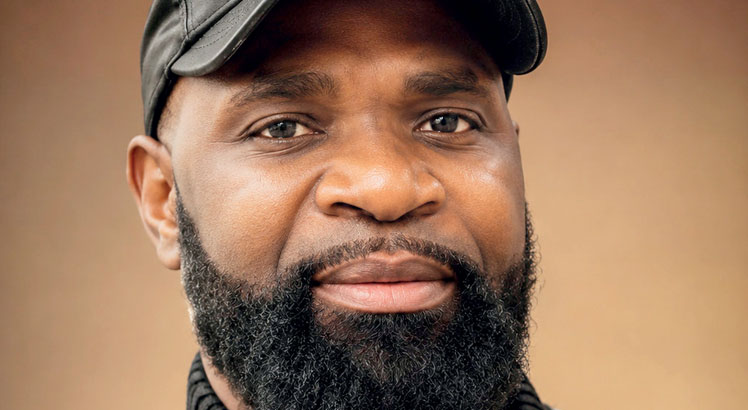
A lasting tribute recognises the poet’s profound impact on British culture, politics, and literature On 14 January 2026, Goldsmiths, University of London formally dedicated a lecture theatre to Linton Kwesi Johnson, honouring the Jamaican-born poet, activist, musician, and alumnus whose work has cast a long and influential shadow across British cultural, political, and literary life. […]
 Black News


A lasting tribute recognises the poet’s profound impact on British culture, politics, and literature
On 14 January 2026, Goldsmiths, University of London formally dedicated a lecture theatre to Linton Kwesi Johnson, honouring the Jamaican-born poet, activist, musician, and alumnus whose work has cast a long and influential shadow across British cultural, political, and literary life. A plaque commemorating the honour was also unveiled on the night.
The event took place in the Professor Stuart Hall Building and included reflections from journalists and academics, poetry performances by students, and screenings of films connected to Johnson’s work. Contributions from academic and journalist Gary Younge celebrated why Johnson’s legacy deserves institutional recognition at one of the U.K.’s leading universities.
Born in Chapelton, Clarendon, Jamaica, in 1952, Johnson came to London in 1963 at the age of 11 to join his mother, part of the post-World War II Windrush generation whose migration reshaped British society. His early life in Brixton and subsequent studies in sociology at Goldsmiths laid the foundation for a lifetime of artistic and political engagement. While still at school, he joined the British Black Panther Movement, helping to organise a poetry workshop that would seed the beginnings of his politically charged voice.
Johnson’s cultural contribution is nothing short of seminal. He is widely credited as the “father of dub poetry,” a genre that blends rhythmic spoken word delivered in Jamaican patois, creating a vibrant hybrid art form that connects poetry, rhythm, and resistance. His debut collection, Voices of the Living and the Dead, appeared in 1974, and his 1978 LP, Dread Beat An’ Blood, further cemented his status as an innovator whose work spoke directly to lived realities, from police brutality and street life in Brixton to the broader Black British experience.
Importantly, Johnson’s work was always rooted in his Jamaican and Caribbean heritage. He drew on traditions of oral storytelling, “toasting,” and reggae rhythms, a lineage that made his poetry both deeply particular and widely resonant. His use of patois was a deliberate artistic choice, elevating Caribbean linguistic creativity within British literary spaces and challenging the dominance of standard English in cultural institutions.
Over five decades, Johnson built a body of work that gave voice to marginalised communities and chronicled social and political struggle. His poem Di Great Insohreckshan (1984), for example, responded to the 1981 Brixton uprisings and the New Cross Fire, events that were pivotal in shaping race relations in Britain and in articulating collective grief and injustice.
Recognition of Johnson’s impact has been extensive. He was the first Black poet and only the second living poet to be published in the Penguin Modern Classics series; awarded the Golden PEN Award for Lifetime Service to Literature; elected a Fellow of the Royal Society of Literature; received Jamaica’s Order of Distinction; and won the PEN Pinter Prize, where judges described him as a “living legend” whose influence is “colossal and multi-generational.”
Beyond plaques and prizes, however, the dedication of a lecture theatre, a space for learning, dialogue, and community, speaks to what Johnson’s work embodies: education as empowerment, poetry as political consciousness, and cultural expression as a force that shapes history and identity.
It is fitting that a building associated with one of his alma maters now carries his name, inspiring future generations to recognise how art and activism intersect to challenge power and articulate the experiences of those too often unheard.