“Like skating an amphitheatre”: 50 years of the South Bank skatepark, in photos
Skate 50 — A new exhibition celebrates half a century of British skateboarding’s spiritual centre. Noah Petersons traces the Undercroft’s history and enduring presence as one of the world’s most iconic spots.
 Black News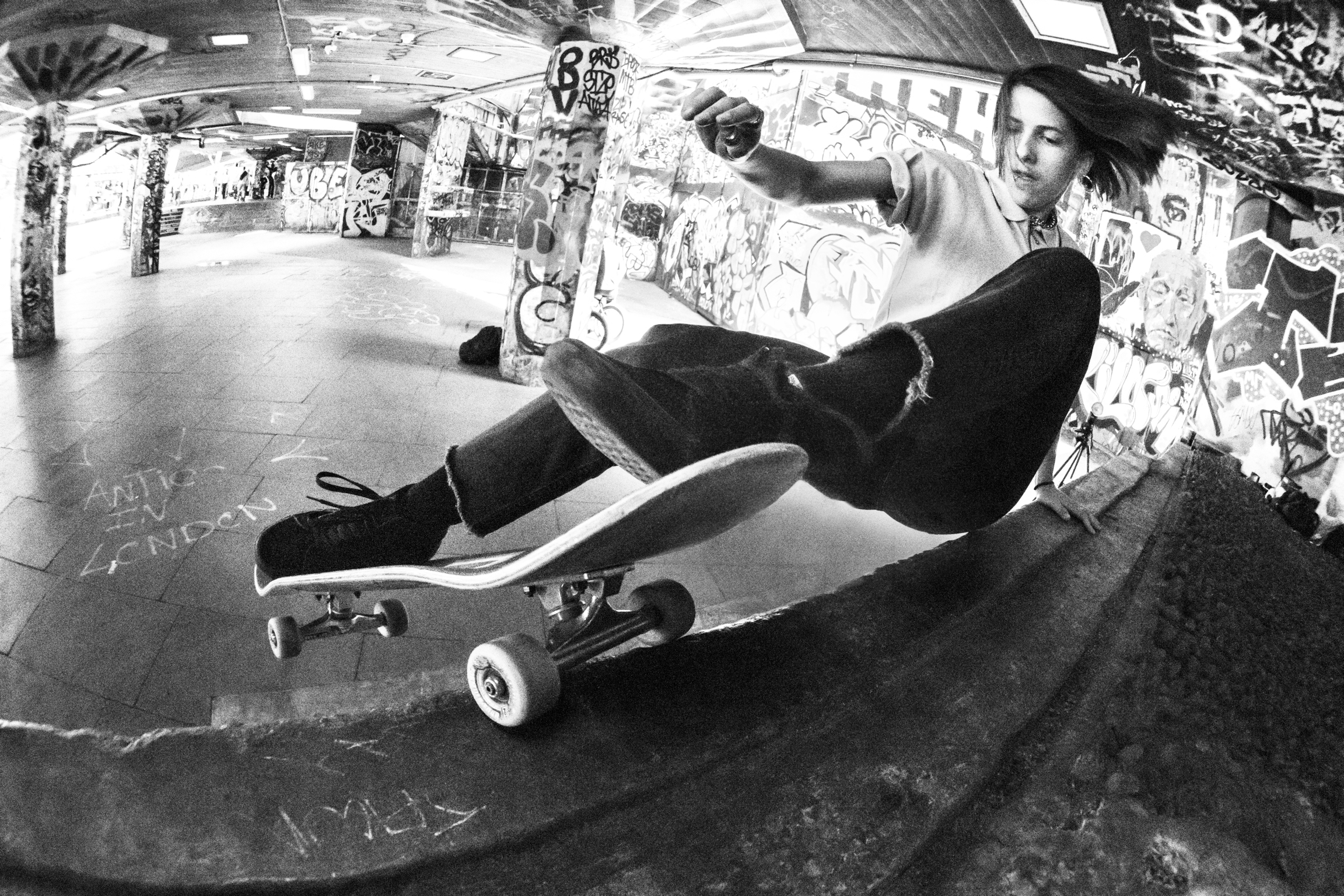
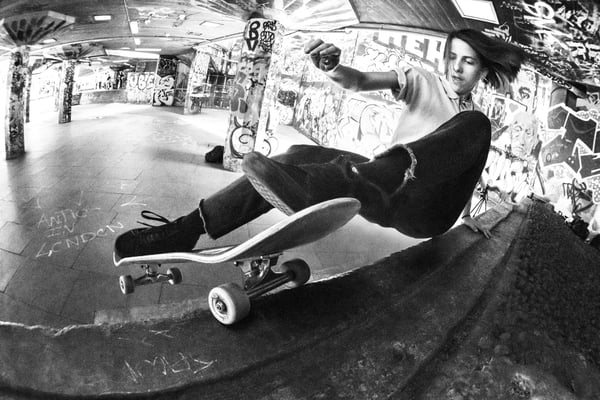
Skate 50 — A new exhibition celebrates half a century of British skateboarding’s spiritual centre. Noah Petersons traces the Undercroft’s history and enduring presence as one of the world’s most iconic spots.
Midday at the Undercroft and the tourists barely exist. They gather along the edge of the railing, phones in hand, watching a tight-knit group of skaters work a concrete ledge beneath the Queen Elizabeth Hall. But the skaters take no notice. They’re locked into something far more important – a line, a trick, a conversation between board and ground that’s been happening here consistently for the past 50 years.
The concrete ceilings swallow the sound and spit it back. Wheels sliding, boards breaking, and the screams of stoked skaters watching their mate nollie heel the 7 stair is enough to draw the attention of any bystander. Layers of graffiti run up the pillars. The light gets thinner the deeper in you go. Nothing about this place is polished. “It was like skating around an acoustic amphitheatre,” says Shane O’Brien, a prominent skateboarder in the London scene during the ’80s and ’90s.
When the Queen Elizabeth Hall was built on the South Bank of London’s River Thames in 1968, nobody planned for what would happen underneath it. The rugged concrete space left open beneath the brutalist structure was an architectural afterthought – a stretch of pillars, ledges and shadow, open to whoever passed through. Within a few years, London’s skateboarders had claimed it as their own. The banks were the right height. The ledges were the right length. The concrete, solid and unforgiving. By the mid-’70s the Undercroft had become the gravitational centre of British skateboarding.
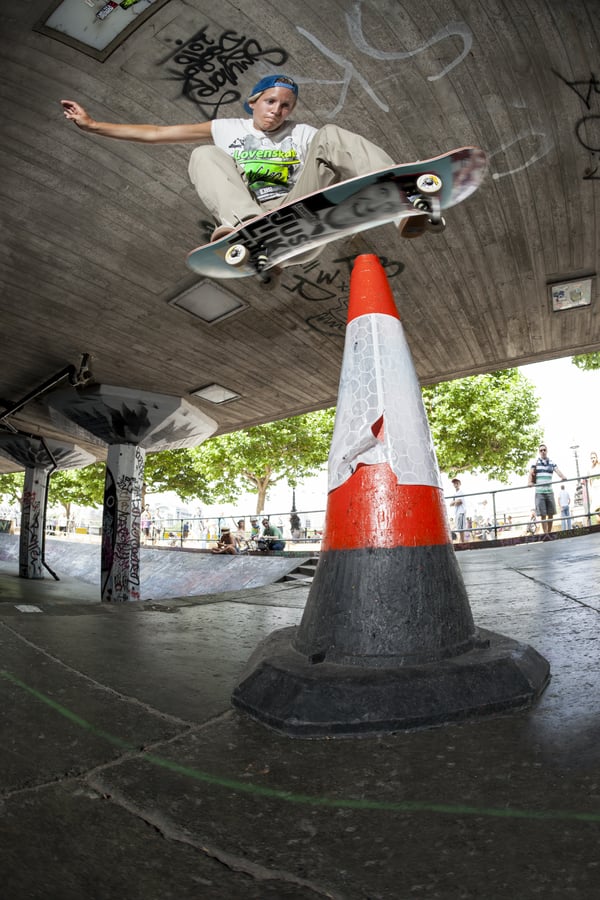
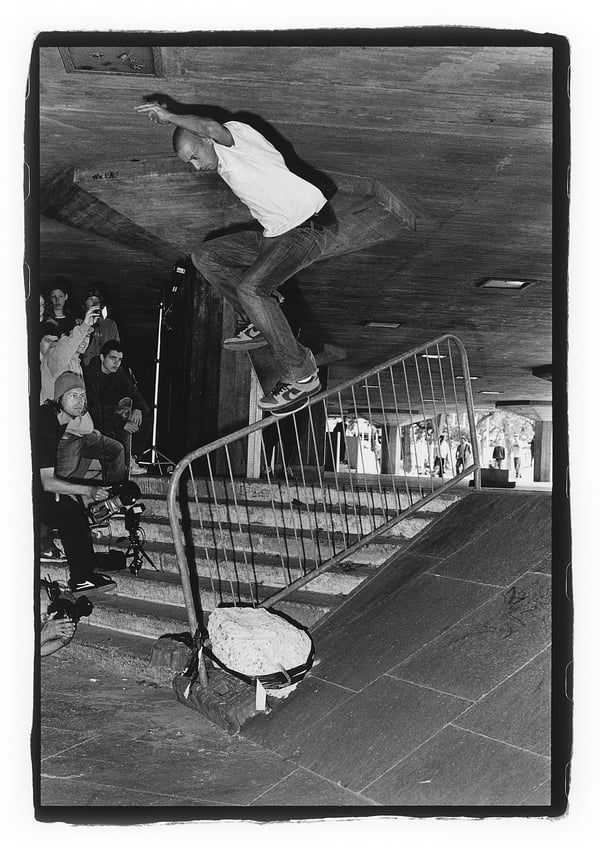
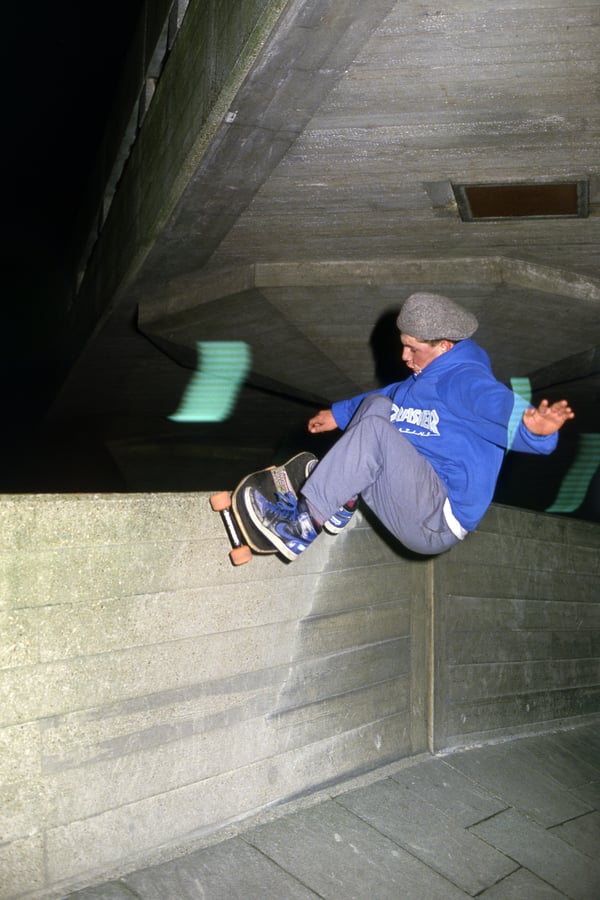
Shane O’Brien first skated at the Undercroft in the summer of 1975, aged 10. The space was originally 20% larger than it is now – big enough that when one section got busy, you moved to another. “In 1983,” he says, “in order to become a recognised Southbanker I had to undergo the normal initiation of being launched into the Thames by already senior recognised Southbankers.” He skated as a paid amateur for Santa Cruz, going on to become their European Team Manager from 1991 to 1995. He’s now 60, and still shows up. “Southbank gave me a second home and a second family,” he says.
50 years on, that same patch of ground has outlived the conditions that produced it. Trends have come and gone, London has developed around it and each time the city has tried to reclaim it, the community has pushed back hard enough to keep what they’ve claimed. What was once an afterthought now stands as one of the oldest continuously used skate spots in the world – a rare example of urban space held, not owned.
To celebrate that history, the Southbank Centre is staging Skate 50, a multimedia exhibition running from April 30 to June 21. The show – largely built by the community that has sustained it – traces how a space like this survives: through use, memory and a constant negotiation over who the city is actually for.
Read next: Eating concrete with London Skate Mums
“It’s the imperfections that have made it. The fact it wasn’t a designed skatepark. It was a bit raw and edgy.”
Curator Cedar Lewisohn grew up in the suburbs of London, aware of the Undercroft long before he ever set foot in the Southbank Centre. When he got into art school in the early ’90s, one of the first things he did was head straight for Slam City Skates in Covent Garden. “I bought some Vans and a Sonic Youth album and I was like, ‘Okay, I’m set,’” he says. “Suddenly I was plugged in.”
Drawing on archival footage, photography and new film commissions, Skate 50 maps five decades of use. Lewisohn describes it as “an exploded documentary told through different voices”. Growing out of workshops led by filmmaker and skate historian Winstan Whitter, the exhibition brings together different generations of skaters to identify the moments and characters that have shaped the space. “It’s the imperfections that have made it,” Lewisohn says. “The fact it wasn’t a designed skatepark. It was a bit raw and edgy.”
Yet, as O’Brien explains, “The ledges, the banks, the vert walls were all proportionate, and unlike every other UK park at the time, which were rough, porous, skin-scalping concrete by design. The Undercroft’s banks were shiny and smooth.” A heavenly design, he says, by total mistake.
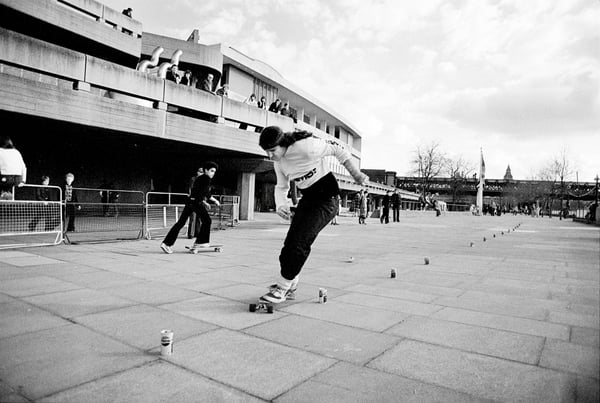
That mistake shaped something specific. The Undercroft demanded speed and commitment from anyone who skated it. Over time that produced what O’Brien calls a recognisable approach – a Southbanker. “It automatically demanded a certain style,” he says, “which was recognised by skaters from other UK locations.”
Unlike the purpose-built parks that came later, modelled on what was happening in the States, the Undercroft wasn’t designed by anyone with skating in mind. The location also produced something specific. “You’re right in the centre of the empire,” Lewisohn says. “But you’re just skating, just doing your own thing.” It became a gathering place for those who didn’t fit elsewhere – misfits and outcasts drawn together by a space for those with nowhere else to go. The Southbank Centre, he points out, was itself born from a postwar idealism – art for everybody, access for all. “There’s a poetry to what the skaters are doing,” he says. “A subversiveness. A questioning of architecture. There’s so much happening with these skateboarders.”
But the relationship between the Southbank Centre and the community it’s now celebrating hasn’t always been this harmonious. Scratch the surface of the Undercroft’s history and a rougher story emerges. The skaters have repeatedly found themselves at odds with the institution above them – pushed back, threatened with relocation, their space called into question by the people who owned the land beneath their wheels.
It came to a head in 2013, when plans to redevelop the Southbank Centre would have displaced the skate space entirely. The backlash was fierce. A campaign led by Long Live Southbank – a collective formed specifically to fight the plans – drew global attention and eventually forced a reversal. The space survived. But the damage to trust ran deep.
Lewisohn doesn’t sidestep this history. “The relationship between the Southbank Centre and the skaters has been bad for a long time,” he says. “The skaters have always had a pretty raw deal.” He’s clear that many of the people who work there now had nothing to do with those decisions. But he’s equally clear about what the institution owes. “The organisation owes the skaters an apology for sure,” he says. “We’re not going to hide away from this history. We’re not going to deny it.”
Lewisohn believes that Skate 50 is an attempt to hand the microphone back. “The whole ethos of the project is really about giving the skaters the voice to say whatever they want,” he says. “Not censoring them. That’s all you can do.”
“It represents something iconic even to skaters who didn’t grow up skating there, and it’s really special to think that some kid on the other side of the world is thinking about what trick they would land there.”
For Aurore and Rachael, of the Keep Rolling Project, amplifying voices and underrepresented skate communities has been the focus of their work over the past 10 years.
Both grew up as the only girls in their local skate scenes, and didn’t know other girls skated, apart from Elissa Steamer because of the Tony Hawk Pro Skater video game. It wasn’t until they moved to London that they found each other and a wider community of female skaters. Aurore, originally from France, had been skating since the early 2000s. Rachael first found her way to the Undercroft in 2015, during the tail end of the Long Live Southbank campaign. “If I’m honest, it was quite intimidating,” Aurore says. “I’m a pretty shy skater, and the fact that people were always watching can feel intense.” But she kept coming back – to film, to sit in the chaos, to watch. “There’s always someone doing sick tricks.”
They’ve filmed at the Undercroft enough times to know its quirks intimately. The light reflecting off the river shifts constantly, making certain angles a nightmare unless you want a skater silhouetted. And then there’s the corner. “It sometimes smells of piss,” she says. “It’s not glamorous, but it’s part of the reality of the space and somehow adds to that raw, unfiltered feeling of Southbank – even if we would prefer guys stopped peeing there.”
Read next: Tony Hawk never sold out
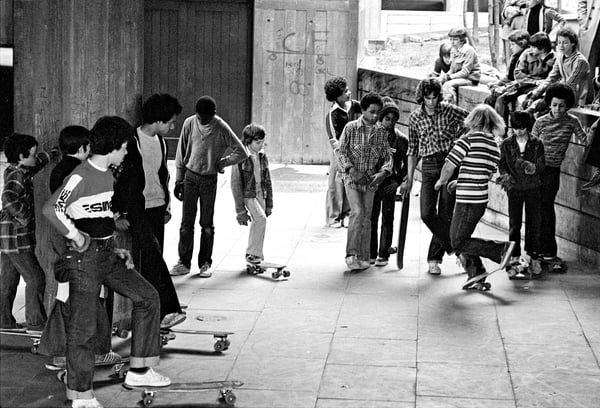
Keep Rolling have taken their cameras from London to Iraqi Kurdistan. Everywhere they go, the same question comes up. “When we say we’re based in London, the first thing people ask is, do you know Southbank?” she says. “It represents something iconic even to skaters who didn’t grow up skating there, and it’s really special to think that some kid on the other side of the world is thinking about what trick they would land there.”
What they’ve noticed, documenting skate communities across that distance, is what typically gets forgotten. “Historically, women and queer people have been left out of the archive, both in front of and behind the camera” even though they were always there. “That absence affects how people see the culture,” they say. “What we’re trying to do is make sure those stories exist, and are part of skateboarding history going forward.”
The exhibition is a start, but having somewhere to go on a cold, grey January afternoon is what really matters. “Keeping Southbank alive matters not just for skateboarding history, but for every subculture. It sets a precedent. It says this matters, and we are here to stay.”
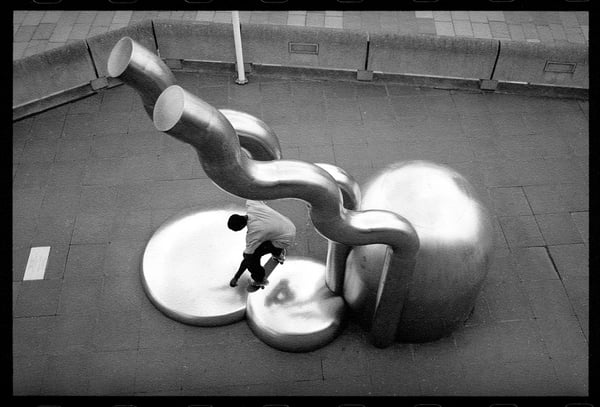
Skate 50 is on view at the Queen Elizabeth Hall, Southbank Centre until June 21. On August 15, Southbank hosts an open skate day for skaters of all abilities.
Noah Petersons is a freelance journalist. Follow him on Instagram.
Buy your copy of Huck 83 here.
Enjoyed this article? Follow Huck on Instagram for more from the cutting edge of sport, music and counterculture.
Support stories like this by becoming a member of Club Huck.