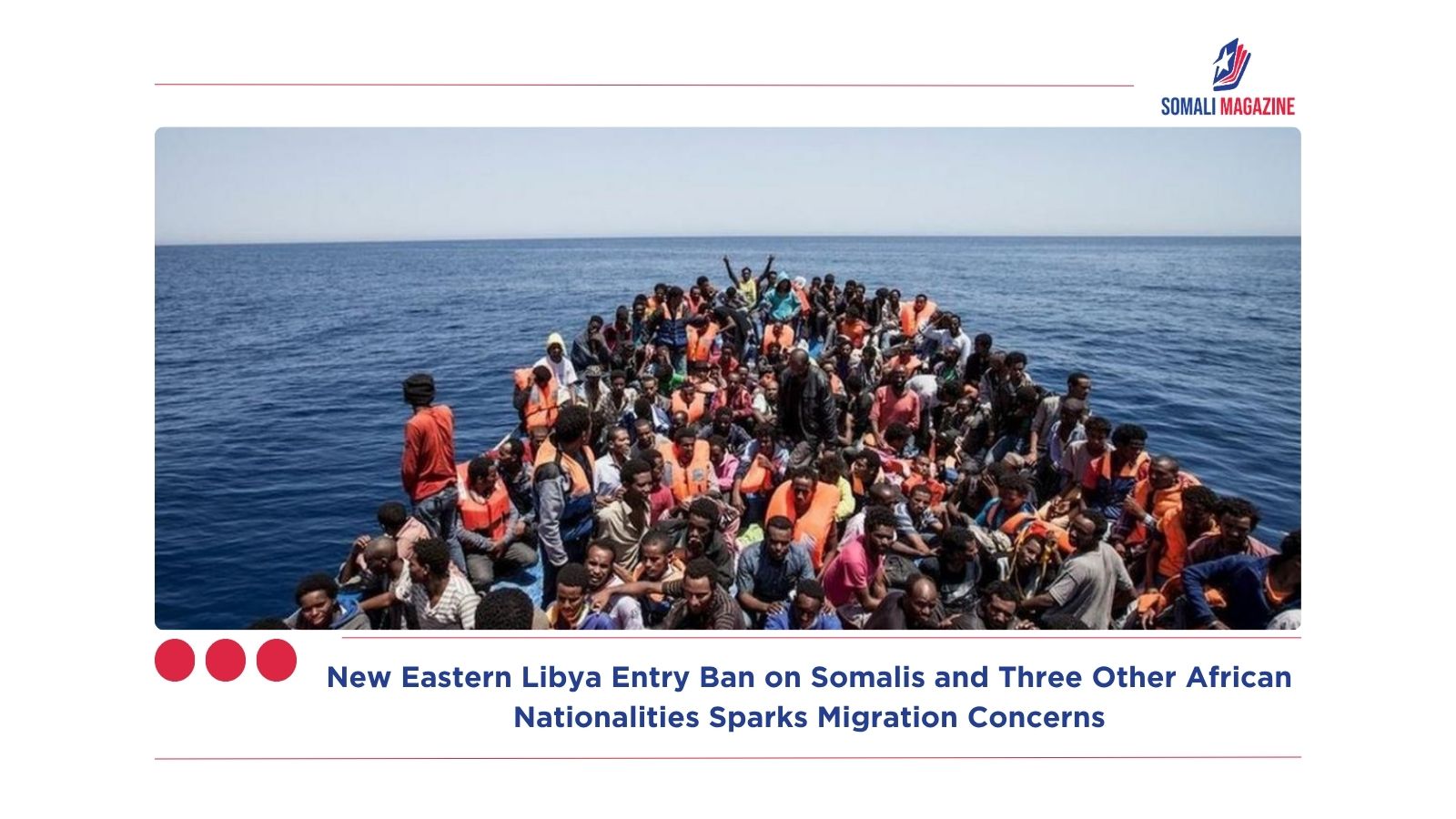
The newly enacted Libya entry ban on Somalis alongside nationals from three other Sub-Saharan countries has sent shockwaves through regional migration networks and diplomatic corridors across the Horn of Africa. Issued by the parallel, Benghazi-based administration of Prime Minister Osama Hamad, the sweeping decree strictly prohibits citizens of Somalia, Sudan, Eritrea, and Ethiopia from entering territory under its control via any land, sea, or air checkpoints. This parallel executive authority, heavily backed by military commander Khalifa Haftar, currently maintains territorial jurisdiction over vast swaths of eastern and southern Libya. An official spokesperson representing the eastern authorities stated that the unexpected security directive was initiated as a necessary mechanism for a broad foreign nationals entry reorganization within their regional boundaries.
While the administrative policy introduces extreme travel limitations, the text of the decree explicitly outlines narrow exemptions for accredited diplomatic personnel, consular missions, and their immediate family members. Furthermore, foreign professionals operating within critical public sectors—specifically education, medicine, and allied health fields—remain legally permitted to bypass the entry restrictions, provided they possess fully verified employment contracts and formal administrative clearances from relevant ministries. However, independent analysts monitor the border closures with deep concern, viewing the measure as an aggressive strategy to curb irregular movement through what has historically served as a primary transit route for migrants fleeing systemic poverty and violent civil conflicts to reach European shores.
The geopolitical fallout arrives as international humanitarian groups estimate that Libya hosts upwards of nine hundred thousand foreign migrants, a population that has expanded exponentially due to active warfare in neighboring Sudan. Since the chaotic overthrow of Muammar Gaddafi in 2011, the North African nation has consistently functioned as a major launching point for fragile vessels crossing the Mediterranean Sea. European governing bodies have continuously placed intense pressure on local factional authorities to enforce rigorous border management strategies to suppress these highly dangerous maritime journeys. Consequently, this latest Benghazi administration decree highlights the deeply fragmented governance structure dividing the nation, as the internationally recognized Government of National Unity based in Tripoli continues to maintain a entirely separate set of border and visa protocols.
The far-reaching implications of the Libya entry ban on Somalis extend well beyond border enforcement, threatening to heavily disrupt local industries that rely heavily on foreign laborers. Migrants from the four blacklisted nations comprise a massive portion of the regional workforce, driving critical outputs in municipal construction, domestic services, and seasonal agriculture. Neither the federal ministry in Mogadishu nor regional heads in the Horn of Africa have published formal diplomatic responses regarding the sweeping travel exclusions. As regional human rights networks warn that trapping displaced populations in volatile border zones could exacerbate a mounting humanitarian emergency, international monitors continue to watch whether the rival authorities in western Tripoli will implement reciprocal border directives or push for a unified immigration policy.


 Black News