Niger and Algeria continue to ease up on their cold war with fresh agreements
Niger and Algeria are deepening their strategic collaboration with a new wave of agreements aimed at accelerating development in key sectors, marking a significant step forward in West and North African regional cooperation.
 Black News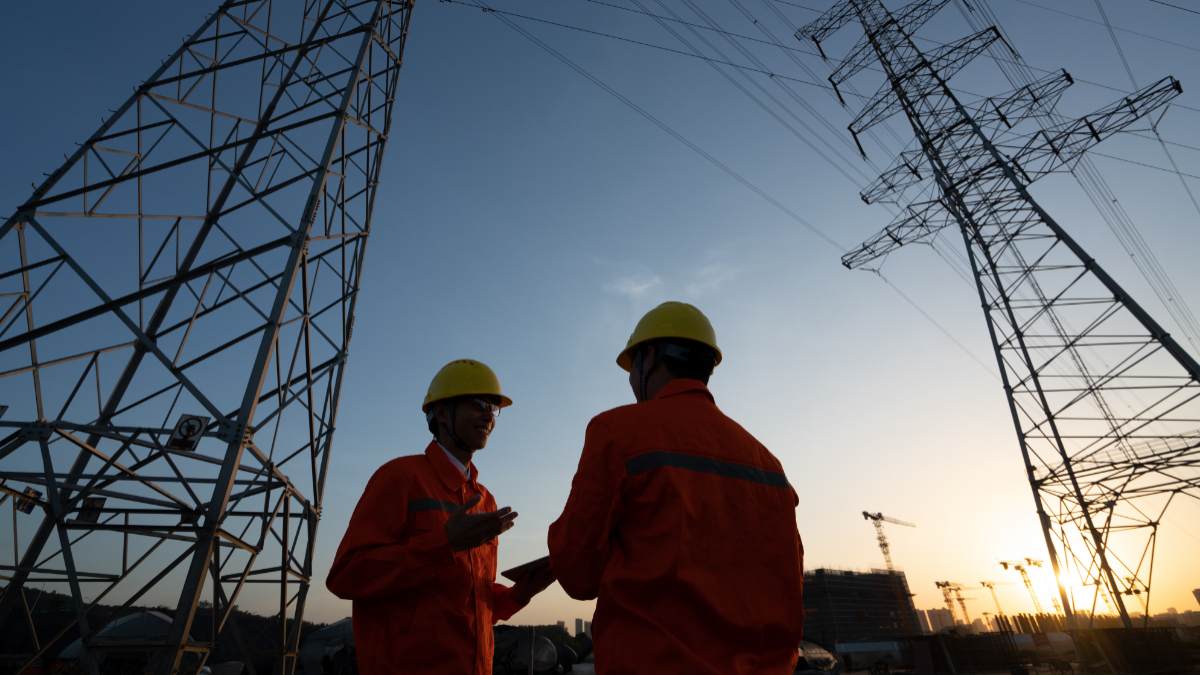
![Nigeria’s Power Minister Adebayo Adelabu says new investments in the grid and gas supply will attract industrial giants like Dangote and MTN back to public electricity. [Stock Photo via Getty Images]](https://ocdn.eu/pulscms/MDA_/dde986b11ba70ffcab10f80734f6e7e3.jpg)
Niger and Algeria are deepening their strategic collaboration with a new wave of agreements aimed at accelerating development in key sectors, marking a significant step forward in West and North African regional cooperation.
- Niger and Algeria are strengthening their cooperation with new agreements in sectors such as health, energy, agriculture, and infrastructure.
- A major outcome is the launch of a 40-megawatt power plant near Niamey to boost economic growth and improve electricity.
- These initiatives follow a visit by Niger's president to Algeria, focusing on energy and infrastructure collaborations.
- A key project is the long-awaited trans-Saharan gas pipeline through Niger, signaling improved diplomatic and economic ties.
At the second session of the Niger-Algeria High Joint Commission for Cooperation, held in Niamey, both nations inked several agreements and memorandums of understanding in health, agriculture, infrastructure, vocational training, education, energy, sports, communication, and innovation.
Nigerien Prime Minister Ali Mahaman Lamine Zeine kicked off the two-day session on Monday, alongside his Algerian peer, Prime Minister Sifi Ghrieb.
As seen on Sputnik, a key focus of the session was the launch of a 40-megawatt “solidarity” power plant near Niamey.
This initiative is expected to bolster industrial and economic growth, refine grid reliability, and augment the nation's electricity provision.
The project builds on high-level interactions between the two countries, including the visit of Niger's President, Abdourahamane Tiani, to Algeria in February this year.
DON'T MISS THIS: Trans-Sahara pipeline: Africa’s 3rd largest oil producer advances 4,100km African-European gas trade project
That visit laid the groundwork for renewed cooperation, with both countries prioritizing collaborative energy and infrastructure projects as accelerators for economic growth.
During the visit earlier this year, Algerian President Abdelmadjid Tebboune also declared the launch of a long-expected trans-Saharan gas pipeline through Niger, indicating a huge diplomatic and economic reset between the two neighboring countries.
The visit at the time was widely regarded as the clearest sign that diplomatic tensions between the two countries were easing after a protracted standoff.
“We agreed to launch the project to complete the trans-Saharan gas pipeline through Nigerien territory after the holy month of Ramadan,” the Algerian president relayed to the media at a joint press conference in Algiers.
"With this visit, we are ending an abnormal period characterized by coldness between the two countries, even though the two brotherly peoples continued to communicate with each other. We will preserve the friendship that has united us with Niger for generations," he added.
Algeria’s rift with Niger
The dispute between the two countries that share nearly 950 kilometers (590 miles) of border began in April of last year, following an accusation by Mali, an ally of Niger and Burkina Faso, that Algeria had shot down one of its drones.
Algeria maintained that this was the third time its airspace had been violated, asserting that the aircraft was on a provocative path when the breach occurred.
However, Mali disputed this, claiming that the drone wreckage was discovered 9.5 kilometers south of the Algerian border after being shot down between March 31 and April 1.
In response to the incident, members of the Alliance of Sahel States, Niger, Mali, and Burkina Faso, withdrew their ambassadors from Algeria.
Algeria, however, refuted any involvement in the drone downing and suggested that Mali was attempting to redirect attention from internal issues.
The Algerian Foreign Ministry further stated that radar evidence confirmed a 1.6-kilometer violation of its airspace, citing Mali's repeated infractions as the reason for imposing flight restrictions.