Raids on illegal miners reveal an ignored vacuum
Malawi’s knee-jerk war on illegal mining has revealed what was already obvious to most but apparently not to those who govern the nation: remote-controlling mining activities from Capital Hill leaves natural resources under siege. The Operation Samala Mgodi report was explicit about the plunder created by lack of mining regulators in mineral-rich districts. Locals scour … The post Raids on illegal miners reveal an ignored vacuum appeared first on Nation Online.
 Black News
Malawi’s knee-jerk war on illegal mining has revealed what was already obvious to most but apparently not to those who govern the nation: remote-controlling mining activities from Capital Hill leaves natural resources under siege.
The Operation Samala Mgodi report was explicit about the plunder created by lack of mining regulators in mineral-rich districts.
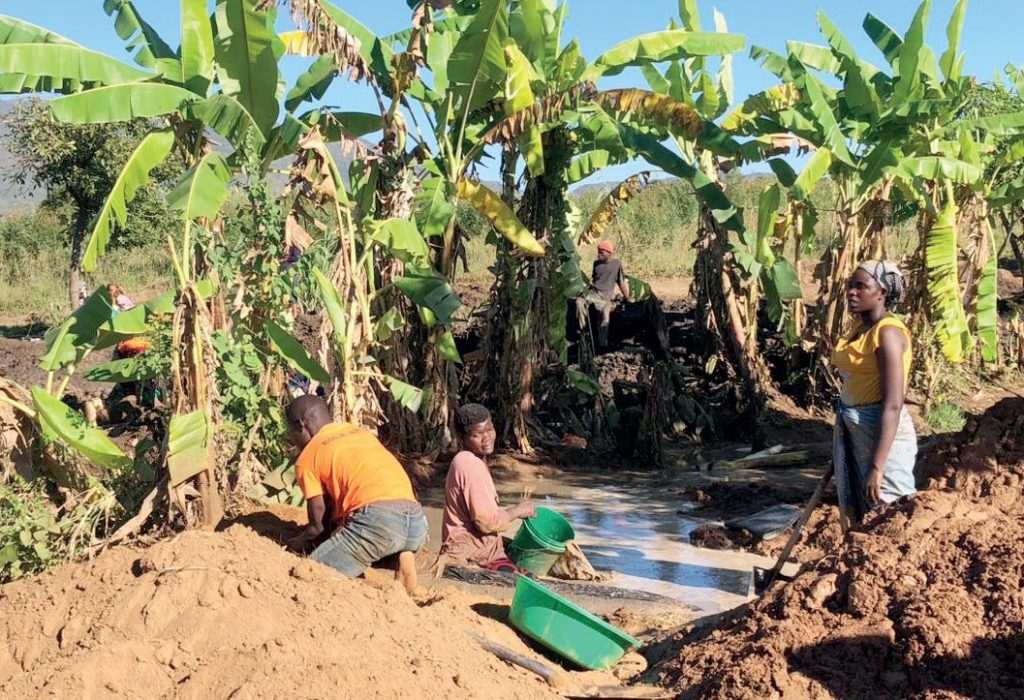
“The Department of Mining [now a standalone ministry] has no clear structure, presence or office in reasonable proximity to most active mining sites. This leaves the mining hotspots vulnerable to illegal mining and environmental degradation,” reports joint task force leader General Lackson Phiri, from the Malawi Defence Force (MDF).
The military-led task force raided seven illegal mining hotspots between March and April to restore law and order in the high-stakes sector.
In the process, they arrested 400 suspects, including two Chinese allegedly intercepted at Mvera in Dowa District with about 17 tonnes of rare earth used for making explosives.
“During the operation, we needed one of the mining personnel to be on site, but some teams didn’t have technical staff, which forced us to make technical decisions that were beyond our mandate,” Phiri told the Parliamentary Committee of Natural Resources, Energy and Climate Change.
He added: “The Mining Department [now a ministry] should immediately establish district offices or mobile inspection units in high-activity regions.”
Neglected gap
The long-standing vacancies—lamented by affected communities, media and campaigners—became glaring with the Kayelekera Uranium Mine in Karonga, which contributed 10 percent to Malawi’s economy between 2010 and 2014.
Secretary for Mining Rodwell Mzonde commends the joint task force for “revealing these issues” that deny the country full dividends of its mineral wealth.
He agreed that the ministry was pushing to fill the vacancies at Capital Hill and in the districts.
“We are making progress,” Mzonde said. “Currently, we are working with the Ministry of Local Government and Rural Development so that at the [district] council, we have a desk for a mining officer.”
However, Natural Resources Justice Network (NRJN) chairperson Kennedy Rashid says it is ironic that the vacancies activists highlighted in 2009 “are now their 2026 revelation”.
“That the joint task force now ‘discovers’ this is not a failure of evidence; it is a failure of political will,” he says. “The true test is whether this moment produces permanent district offices with empowered local staff or becomes another megaphone publicity stunt while our rivers run red with sediment and our children breathe mercury vapour.”
The campaigner opposes “militarisation of mining regulation”, but says NRJN stands ready to co-design district mining offices and “track every shovelful of commitment against our two-decade ledger of broken promises”.
Limping regulator
Understaffing also cripple sthe Mines and Minerals Regulatory Authority (MMRA), established by the Mining and Minerals Act amended in 2023 to ensure mining activities are sustainable, economically viable and socially acceptable for national prosperity.
It took off with skeletal staff seconded from other State agencies.
“We have recruited 10 technical officers who will start working this month. So, we are starting to have officers who will be under the authority. By the end of this year, we will have recruited directors,” says MMRA monitoring and evaluation officer Dikani Chibwe.
Mining contributes less than one percent to Malawi’s gross domestic product since eight years ago when Paladin Africa exited Kayerekera.
Policymakers expect proceeds of the extractive sector’s to bounce back to at least 10 percent by 2030.
“Malawi expects mining to become a panacea for our economic wounds, but this is nothing unless the sector starts to tick,” says Lilongwe Ngwenya parliamentarian Nancy Tembo (Malawi Congress Party).
The ex-minister of Natural Resources urged regulators to ensure unlicensed miners do not return to neutralised hotspots.
Sleepy giants
Bintony Kutsaira, her predecessor at the Ministry of Natural Resources and deputy chairperson of the parliamentary committee, asked Mzonde to shake up his “sleeping” giants, including MMRA and Malawi Mining and Investment Company.
He states: “Illegal mining is a long-standing issue, so the ministry has to operate with urgency, not like we are still in the 1980s when we thought the country had no minerals.
“Evidence shows the country has several minerals, but we don’t have the urgency and human resource to sustainably exploit them so that we can benefit. Can we do more and learn from our neighbours like Zambia and Botswana?”
MDF and its allies plan to expand Operation Samala Mgodi nationwide following President Peter Mutharika’s Executive ban on exportation of raw minerals.
The post Raids on illegal miners reveal an ignored vacuum appeared first on Nation Online.