Shs126 trillion borrowed: Did Uganda get value for its debt?
Uganda’s public debt has expanded significantly over the past decade, rising to Shs126.19 trillion by December 2025, sparking debate among economists, policymakers, and the public about whether the borrowing has delivered value for money. However, the government maintains that the debt has been prudently deployed to finance strategic investments that are transforming the structure of […] The post Shs126 trillion borrowed: Did Uganda get value for its debt? appeared first on Daily Star.
 Black News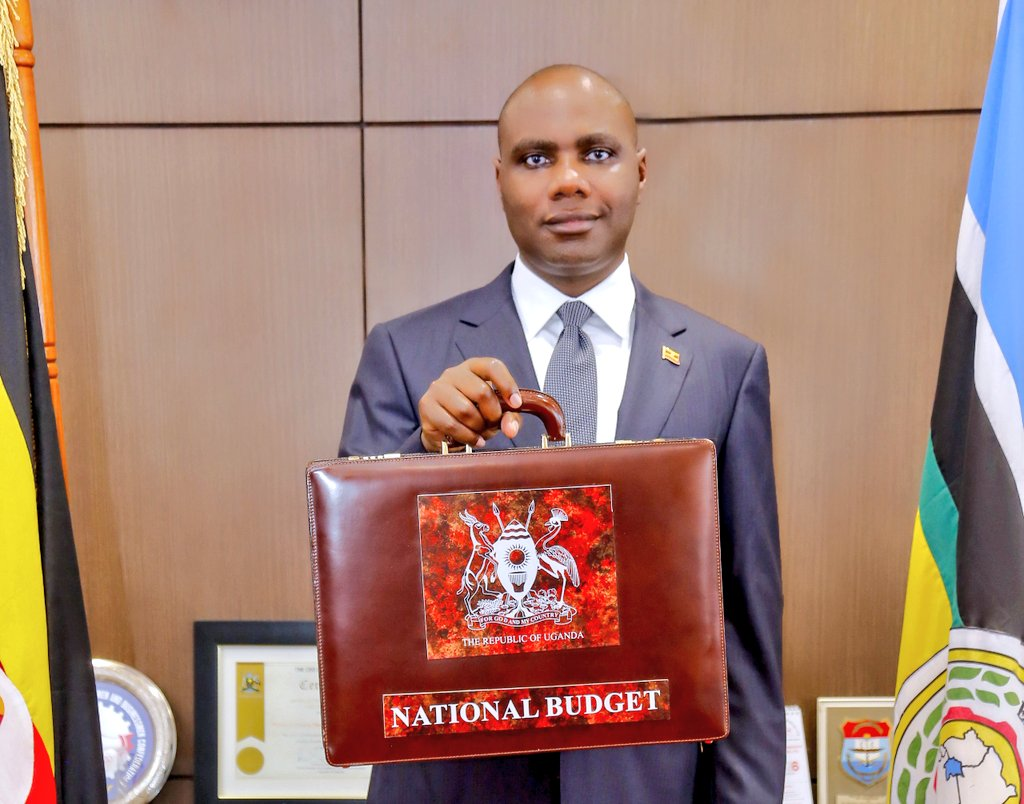
Uganda’s public debt has expanded significantly over the past decade, rising to Shs126.19 trillion by December 2025, sparking debate among economists, policymakers, and the public about whether the borrowing has delivered value for money. However, the government maintains that the debt has been prudently deployed to finance strategic investments that are transforming the structure of the economy and laying the groundwork for long-term growth.
According to figures from the Ministry of Finance, Planning and Economic Development, Uganda’s total public debt stood at USD 34.86 billion (Shs126.19 trillion) by the end of 2025. External debt accounted for USD 15.84 billion, while domestic borrowing stood at USD 19.02 billion, placing the country’s debt-to-GDP ratio at about 53 percent. While this level has raised concerns about sustainability, government insists it remains within manageable limits and compares favourably with many peer economies.
Presenting the 2026/27 national budget, Finance Minister Henry Musasizi defended the government’s borrowing strategy, arguing that public debt should not be viewed in isolation but rather in the context of the assets created and the economic returns expected from those investments. He stressed that over the last ten years, Uganda has deliberately borrowed to finance large-scale infrastructure and productive sectors in order to unlock economic potential, reduce structural bottlenecks, and stimulate private sector growth.
A significant portion of the borrowed funds—31.1 percent—has been channelled into integrated transport infrastructure. This has included the construction and upgrading of national roads across the country, rehabilitation of key bridges, expansion of airports, development of ferry services, and investments in railway infrastructure. Government argues that these projects are already reducing the cost of doing business by improving connectivity between production centres and markets. Major undertakings include ongoing works on the Standard Gauge Railway from Malaba to Kampala, rehabilitation of the metre-gauge railway, upgrades at Entebbe International Airport, and the completion of Kabalega International Airport to support the oil and gas sector.
Electricity infrastructure has taken up 19.3 percent of the borrowed resources, reflecting government’s focus on addressing one of the most critical constraints to industrialisation—reliable and affordable power. Over the decade, Uganda has expanded its electricity generation capacity to over 2,000 megawatts, supported by major hydropower projects and the expansion of transmission lines and substations across the country. These investments are aimed at ensuring that industries, businesses, and households have access to stable electricity, which is essential for economic transformation.
Water infrastructure has also been a key priority, receiving 10.3 percent of the debt-financed investments. The funds have been used to expand access to safe and clean water, particularly in rural and underserved areas, while also supporting irrigation schemes and water-for-production projects. These initiatives are intended not only to improve public health but also to strengthen agricultural productivity and enhance resilience to climate variability. As a result, access to improved water sources has risen to over 71 percent of households, marking steady progress in service delivery.
In line with Uganda’s ambition to achieve tenfold economic growth, 9.2 percent of the borrowed funds have been invested in agro-industrialisation. Government has focused on modernising agriculture through mechanisation, irrigation, research, and value addition, as well as promoting agro-processing industries. Investments have also supported innovations such as the development of an anti-tick vaccine, expansion of coffee cultivation, and establishment of irrigation schemes across various regions. These efforts are intended to increase farmer incomes, reduce post-harvest losses, and shift the country away from exporting raw agricultural commodities.
The social sectors of education and health have received 7.7 percent of the borrowed resources, financing the construction and rehabilitation of schools, hospitals, and specialised health facilities. Government has expanded regional referral hospitals, invested in medical research institutions, and improved access to education infrastructure. Officials argue that these investments are critical for building a skilled and healthy workforce capable of driving economic growth and supporting industrial development.
Housing and urban development projects accounted for 6.3 percent of the debt portfolio, reflecting the pressures of rapid urbanisation. Investments have been directed towards improving urban infrastructure, including roads, drainage systems, and housing developments aimed at enhancing living conditions in towns and cities. With Uganda’s urban population growing quickly, government views these investments as necessary to support sustainable urban growth and prevent the emergence of unplanned settlements.
Although a smaller share at 2 percent, investments in industrial parks and industrial development have played a strategic role in attracting investors and expanding manufacturing activities. Government says Uganda now hosts thousands of factories, many located within industrial parks established with state support. These facilities are seen as key drivers of job creation, export growth, and value addition in the economy.
An additional 7 percent of the borrowed funds has been invested in other strategic areas, including the National Backbone Infrastructure project, which has expanded internet connectivity across the country, as well as science, technology, and innovation programmes. These investments are aimed at positioning Uganda for participation in the digital economy while supporting research and development.
The government argues that the cumulative impact of these investments is already visible in key economic indicators. Uganda’s economy is projected to grow by 6.4 percent in the current financial year, up slightly from 6.3 percent previously, with the size of the economy expected to reach Shs250.4 trillion by June 2026. Even more ambitious projections indicate that growth could accelerate to 10.2 percent in the 2026/27 financial year, largely driven by the anticipated start of commercial oil production.
External sector performance has also improved, with exports of goods and services increasing by more than 200 percent over the past five years to reach USD 18.04 billion by March 2026. At the same time, foreign direct investment has remained strong at USD 3.2 billion, while remittances from Ugandans working abroad have risen to USD 2.8 billion. Government attributes much of this progress to the infrastructure and productive investments financed through borrowing.
Despite these gains, concerns persist among some economists about the pace of debt accumulation and the country’s ability to service its obligations, especially in the face of global economic uncertainties. Critics argue that while infrastructure investments are necessary, their returns often take time to materialise, raising questions about short-term fiscal pressures.
However, the Ministry of Finance maintains that Uganda’s debt remains sustainable and is expected to stay within acceptable levels in the medium to long term. Officials argue that as major projects—particularly in oil and gas—begin to generate revenues, the country’s capacity to repay its debt will strengthen significantly.
The government has also called for more informed public debate on the issue, urging stakeholders to look beyond headline debt figures and consider the broader economic impact of the investments financed through borrowing.
“As we engage in post-budget dialogues, informed debates should be on both the money borrowed and how it has been used,” the Ministry said, reiterating its position that Uganda’s borrowing has been purposeful and aligned with national development priorities.
The post Shs126 trillion borrowed: Did Uganda get value for its debt? appeared first on Daily Star.