South Africa misses shipping boom as Cape Town ranks worst port in the world
The global shipping industry has spent nearly two years rerouting vessels around Africa as attacks in the Red Sea disrupt one of the world’s most important trade corridors. Yet South Africa, the country best positioned to benefit from the shift, is struggling to seize the opportunity.
 Black News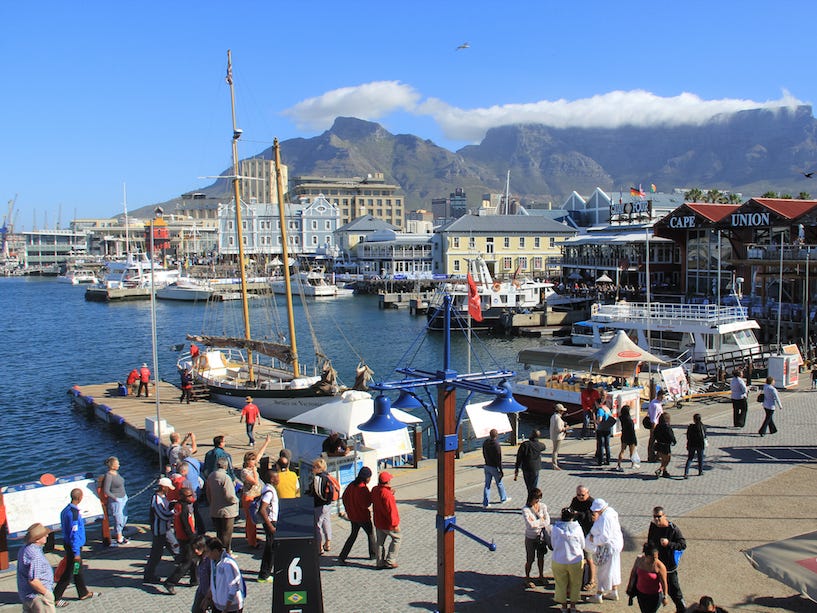
The global shipping industry has spent nearly two years rerouting vessels around Africa as attacks in the Red Sea disrupt one of the world’s most important trade corridors. Yet South Africa, the country best positioned to benefit from the shift, is struggling to seize the opportunity.
- Cape Town has been ranked the world’s worst-performing container port by the World Bank and S&P Global Market Intelligence.
- The ranking comes as more global shipping traffic is diverted around Africa due to disruptions in the Red Sea.
- Delays, equipment failures and weather disruptions continue to slow vessel turnaround times at the port.
- The findings raise concerns that South Africa is missing out on one of the biggest trade route shifts in recent years.
The World Bank and S&P Global Market Intelligence have ranked the Port of Cape Town as the world’s worst-performing container port, raising fresh concerns about whether Africa’s most industrialised economy can capitalise on a historic change in global trade routes.
Cape Town placed 400th out of 400 ports assessed in the 2025 Container Port Performance Index (CPPI), a global benchmark that measures how efficiently ports move container vessels through their facilities.
Since late 2023, attacks on commercial vessels in the Red Sea have forced many shipping companies to avoid the Suez Canal and reroute around the Cape of Good Hope.
The shift has increased the strategic importance of southern Africa, placing South Africa at the centre of one of the world’s busiest alternative trade routes.
For many countries, such a development would represent a major economic opportunity. meanwhile, for South Africa, the latest rankings suggest the country is struggling to turn geography into a competitive advantage.
The CPPI measures how long container ships spend in port, taking into account waiting times, berth availability, cargo handling productivity and operational coordination.
Unlike many industry surveys, the index relies on actual vessel movement data rather than self-reported information from port authorities.
According to the report, global port performance weakened slightly in 2025 as vessel turnaround times increased across several regions. However, Cape Town’s performance deteriorated far more sharply than many of its peers.
The World Bank said persistent weather disruptions and equipment reliability problems continued to undermine operations at the port.
“Persistent weather-related disruption, combined with equipment reliability issues, led to high variability in ship times in port,” the report noted.
One of the most striking findings was the amount of time vessels spent waiting rather than being serviced. Data from the report showed ships spent only 56% of their total port time at berth in Cape Town, meaning nearly half of their turnaround time was consumed by delays outside productive cargo operations.
The ranking highlights a growing challenge for South African exporters. Cape Town serves as a key gateway for agricultural exports, including fruit, wine and other products shipped to markets in Europe, Asia and the Middle East.
Longer turnaround times can increase logistics costs, delay deliveries and weaken competitiveness in international markets.
The findings also reinforce concerns about South Africa’s broader logistics network, which has faced years of criticism over infrastructure constraints, equipment shortages and operational inefficiencies.
While Cape Town ranked at the bottom of the global table, there was some positive news for South Africa.
The Port of Durban, which ranked 398th, recorded one of the most significant improvements globally. According to the World Bank, Durban’s score improved after reforms helped reduce vessel waiting times and improve equipment availability.
The port’s share of productive berth time rose to 76%, significantly higher than Cape Town’s performance.
The contrast between the two ports suggests that targeted interventions can deliver results, even within South Africa’s challenging logistics environment.
Transnet has already introduced several measures aimed at improving operations in Cape Town.
These include a predictive wind model developed with the Council for Scientific and Industrial Research, a helicopter piloting service designed to improve vessel access during rough sea conditions, and digital cargo-planning systems intended to reduce delays.
Whether those efforts are enough remains uncertain. The latest rankings also highlight how far some competitors have moved ahead.
Chinese ports accounted for six of the world’s top ten performers in the CPPI, reflecting years of investment in infrastructure, automation and operational efficiency.
In Africa, Morocco’s Tanger Med remained among the strongest-performing ports globally, reinforcing its growing role as a major gateway between Africa, Europe and the Mediterranean.
For South Africa, the implications go beyond a poor ranking. Efficient ports are increasingly viewed as strategic economic assets that influence export competitiveness, supply chain resilience, investment decisions and economic growth.
As global trade patterns continue to shift because of geopolitical tensions, shipping disruptions and changing supply chains, countries with efficient ports are likely to attract more cargo, more investment and more business activity.