South Africa’s anti-migrant fury threatens to turn it into a fascist state
Often, history’s dark chapters appeared like light to the participants.
 Black News
Tendai Ruben Mbofana
The unfolding crisis of anti-migrant sentiment and protests in South Africa is not merely a localized outburst of frustration.
If you value my social justice advocacy and writing, please consider a financial contribution to keep it going. Contact me on WhatsApp: +263 715 667 700 or Email: mbofana.tendairuben73@gmail.com
Across the country, a terrifying shift is taking place under the guise of community preservation and grassroots activism.
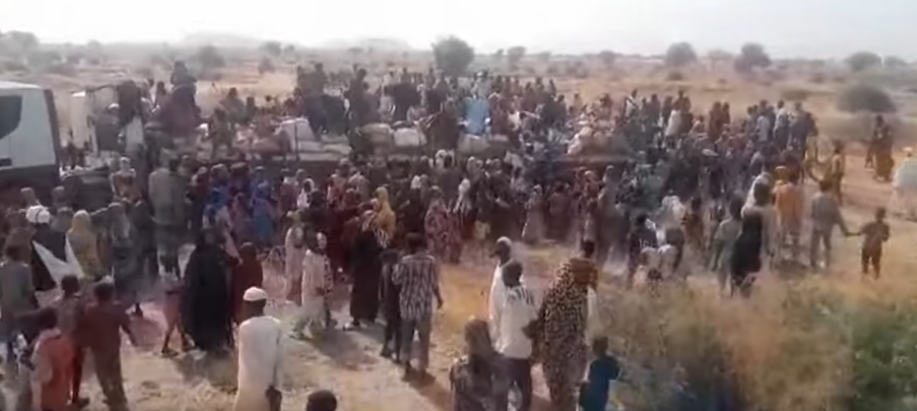
In townships and cities from Johannesburg to Durban, organized anti-immigrant movements like Operation Dudula and March and March are no longer just staging sporadic protests.
They are actively dictating terms of survival.
We see it in the systematic blockading of public health clinics to deny medical care to foreign nationals, the illegal “documentation checks” carried out by private citizens, and the enforcement of arbitrary deadlines ordering migrants to leave the country.
What is being sold to a desperate public as a necessary reclamation of sovereignty is, in reality, the rapid, calculated assembly of a fascist state.
To look at this organized targeting of a vulnerable minority and connect it to the early, foundational phases of history’s darkest regimes is not hyperbole.
Fascism does not begin overnight with an automated state apparatus of mass violence.
It begins precisely where South Africa stands today: when a society successfully normalizes street-level terror, weaponizes language, and bends the rule of law to the whims of the mob.
By evaluating what is happening on South African streets right now, it becomes clear that the country is tracing a highly predictable and dangerous path.
This slide toward fascism relies fundamentally on a weaponized form of hyper-nationalism—the creation of a rigid, exclusionary definition of who belongs to the nation and who must be targeted for removal.
In South Africa, this has manifested as a toxic political climate where national identity is increasingly defined not by civic duty or democratic values, but by a shared, visceral hatred of the outsider.
The inclusive, multi-ethnic solidarity that once famously defined the fight against apartheid is being systematically dismantled and replaced by an aggressive chauvinism.
This is the primary foundational pillar of fascist ideology: a deliberate psychological shift where the dominant group convinces itself that its own prosperity and survival depend entirely on the complete eradication of another group’s presence.
This hyper-nationalism operates by shifting the blame for absolute structural ruin onto this vulnerable minority.
Fascist movements historically consolidate power by exploiting genuine economic misery—such as crushing unemployment, municipal collapse, and the deterioration of public infrastructure—and providing a simple, violent explanation.
Instead of demanding accountability from a deeply failing political class, public anger in South Africa has been deliberately engineered to face downward.
Vigilante groups have successfully sold a desperate populace the dangerous lie that purging African and Asian migrants will instantly deliver jobs, rescue hospitals, and restore electricity.
This is the classic fascist pivot: taking systemic state failure and re-branding it as an immigration problem, thereby turning an angry population into a weapon that shields the ruling elite from accountability.
The enforcement of this ideology relies heavily on the total collapse of the rule of law in favor of organized, violent mob rule.
A defining characteristic of a fascist state is the emergence of private, radicalized groups that usurp the power of the police to enforce their own will with absolute impunity.
When citizen committees can issue public ultimatums giving human beings mere days to pack up and vanish, and when formal law enforcement stands by or actively tolerates the lawlessness, the democratic state has surrendered its monopoly on force to the mob.
This is a direct modern duplication of the tactics used by historical brownshirts, who terrorized minorities to create a permanent state of fear long before their atrocities were codified into state law.
This street-level terror is sustained and justified by a sophisticated language of total dehumanization.
Fascism requires the complete erosion of human empathy before mass violence can be systematically sustained on the streets.
The widespread trending of exclusionary digital campaigns, the chanting of slogans demanding that foreigners leave, and the blanket labeling of migrants as inherent criminals and parasites remove the targeted population from the realm of human concern.
Once a community internalizes the belief that an entire group of people is an existential disease ruining the country, the moral guardrails disappear.
The mob ceases to see a human being, a fellow African, or a desperate refugee; they see an obstacle to their own prosperity that must be violently cleared away.
The final, fatal step occurs when mainstream political leaders begin to co-opt and legitimize this street terror for their own political survival.
Fascism reaches its zenith when democratic institutions begin to bend to the demands of the radical fringe.
Facing immense electoral pressure and a furious populace, politicians are increasingly validating xenophobic rhetoric to secure votes.
Framing immigration as the primary driver of national collapse, even while superficially issuing hollow condemnations of violence, provides a dangerous stamp of institutional approval to the perpetrators on the street.
It signals to the mob that their fascist goals are correct, even if their methods are untidy.
South Africa’s anti-migrant fury is a direct, existential assault on democracy, and the cost of looking away from this unfolding catastrophe will be absolute.
- Tendai Ruben Mbofana is a social justice advocate and writer. To directly receive his articles please join his WhatsApp Channel on: https://whatsapp.com/channel/0029VaqprWCIyPtRnKpkHe08