Gubernatorial debate follows familiar script, offering a host of ideas, but few workable solutions
I’ve been to hundreds of political debates, and just about all of them have essentially followed a similar script. The winning candidate for local office — alderman, county supervisor, school […]
 Black News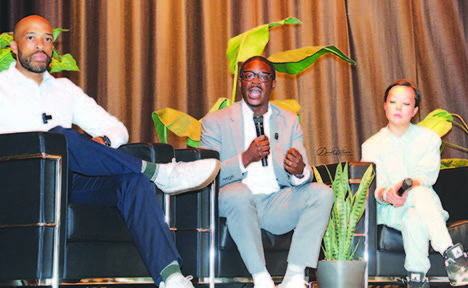
 I’ve been to hundreds of political debates, and just about all of them have essentially followed a similar script.
The winning candidate for local office — alderman, county supervisor, school board- is normally the aspirant who best articulates the problem, but not the solution. Think about that, and you’ll realize my truth.
In partisan elections, each of the Democratic candidates will blame the ‘racist, condescending and mysogynistic’ Republicans.
If they don’t point a finger at a specific Republican, they will blame Donald (the) Trumpster.
Saturday’s gubernatorial debate at North Division High School followed that latter script.
And while each candidate offered proposals to offset the myriad problems confronting citizens, it is unlikely that they could bring most of those systemic plans to fruition.
As one observer noted, “Politics don’t operate that way. A governor can propose eliminating poverty, but that’s just an idealistic goal that will never be achieved unless orchestrated by God.”
Moreover, the two-party system has worked against the best interests of minorities and the poor, he continued, as the Republican majority has either blocked or voted down the rare Democratic Party proposals being offered.
When not advancing anti-Black, anti-education and anti-taxpayer policies, state Republicans—who have maintained the majority in the Senate and Assembly for a coon’s age (no disrespect to coons)—currently follow the MAGA philosophies of that Caesar in the White House.

Governor Tony Evers has been an advocate for using his veto pen to keep the Republican agenda at bay, even as his fellow Democrats in the assembly and senate have offered little to counter to Republican goals.
The powerful veto pen, each candidate said, is an important tool that should be maintained.
Saturday’s debate (actually, it was more of a bullet-point forum) followed the script I mentioned earlier.
Shannon Sims, a former opera singer and TV-4 anchor, ‘sang’ a series of questions ranging from the ecosystem to affordability concerns.
The candidates participating in the forum were Democrats Francesca Hong, David Crowley, Mandela Barnes, Sara Rodriguez, and Kelda Roys.
To his credit, Republican candidate Andy Manske made his mark as an alternative to the Democrats, although his responses didn’t deviate far from the consensus.
There was essentially a pattern of consensus among the candidates’ responses to questions about clean energy and addressing flaws in school funding.
While Crowley was the first candidate to wrap the issues aroundtheir impact on the Black community, Barnes repeatedly mentioned that most of the problemsfacing the Black community would be solved if “we can fix poverty; everything else will fall in place.”
How to achieve that Herculean task—like most proposals— was left to the imagination.
Hong, a Democratic Socialist, received consistent applause for attacking corporate greed, and stressing the need for regulations that will ensure a ‘brighter future for our children.’
Rodriguez, the current Lt. Governor, used her time to talk about affordability for those negatively impacted by Trump policies. She stressed the need for a health safety net, and taking a page from Hong, taxing billionaires.
There was a general consistency about NDAs (non-disclosure agreements) which have been used to advance data centers around the state.
Each candidate said NDAs were essentially undermining public input and opposition to data centers.
Rodriguez added that in far too many cases, neighbors didn’t know about data centers coming into their neighborhoods until it was too late. She also noted those corporate interests should be forced to invest in communities and the state.
Hong lamented corporations that seek state subsidies should be required to offer community benefit wages.
Barnes offered that he served on a committee under Governor Tony Evers as his lieutenant governor, that advocated freezing rates. He went on to say he advanced an energy plan that advocates for lower energy rates and clean energy.
(A Journal Sentinel story Monday revealed that Barnes’s statements that he ‘authored’ the Clean Energy Plan, was false. Actually, the plan was written by the Office of Sustainability and Clean Energy and the Great Plains Institute.)
Following the debate, I quizzed a dozen audience members on their reactions to the debate and who they felt was the most impressive candidate.
Surprisingly, after Crowley, whose tenure as county executive makes him the only candidate with administrative skills and a track record, the second most impressive candidate was Hong.
I would have thought given his name recognition, Barnes would place second (he ran a statewide campaign against Senator Ron Johnson two years ago.)
An audience member who was among four given a chance to pose questions, instead commented that he was not optimistic the winning candidate would enact policies that would significantly impact the lives of most Black folks.
Asked her impression of the ‘debate’, a 30-ish sister named Tasha, said it was informative, but she was disappointed so few people were allowed to ask questions.
“I was also disappointed because the questions posed by the moderator didn’t address the problems we face in the central city.”
Another sister named Shenquale, said the debate was very informative and she was also impressed because everyone in attendance was respectful, as was the candidates toward each other.
Two White audience members echoed that Crowley and Hong stood out the most.
“He (Crowley) has the experience of running the county, a million people, and he’s done an excellent job, providing housing, attacking mental health problems and anti-violence initiatives,” said Dee Dee.
His companion endorsed that assessment, but offered that Hong offered a philosophy and agenda that would shift resources from corporations and billionaires to the poor.
Only two candidates placed Barnes among the top two (with Crowley), and two others were most impressed with Roys.
Given the responses, I spent a few minutes with Hong and Crowley, asking each what they would do about education in general, and North Division, the lowest ranked school in the state, in particular.
Hong said she would seek to replace the state school funding formula to provide additional resources for struggling schools like North.
“I want to make sure all kids have access to quality education,” she explained.
Hong also noted that, while she opposes school choice, she would not seek to sunset it until the system can provide an equitable education to all Milwaukee children.
(Which I interpreted to mean in another century or so.)
Crowley, who stood out for his repeated emphasis on central city concerns, said he would also address the school funding formula, offering additional funding for failing schools. Equally important for North, he provides wrap-around services and prioritizes reading programs.
North, he noted, is victimized by a feeder system in which many of its students are several years behind in reading as freshmen, a problem that follows them throughout their tenure.
Crowley also noted that North is a microcosm of a district that has underserved minorities and the poor for decades.
There is much a governor can do to help close the achievement gap, which would be among his priorities.
He would start by ensuring Milwaukee gets its fair share of state revenue funding.
I wished more of the audience had an opportunity to eavesdrop on my interviews (I also planned to interview Barnes, but he got lost in the crowd).
I was most impressed that so many people filled the auditorium. Ironically, there were probably more filled seats than during the school year. North Division was built for 1,500 students, but has fewer than 400.
That’s a sad point raised by members of Call to Action, a group proposing that North be converted to an instrumentality charter, providing a true opportunity for community input.
Members of the organization, consisting of North Division alumni, filled the front row of the auditorium, holding signs calling for systematic change at the school.
If wishful thinking translates into systemic change, the forum would have offered a springboard for a better Wisconsin and closed the wealth and educational gaps for Black children.
Instead, with the exception of Crowley, none of the candidates provided much of a track record to suggest where they will take the state.
I may be wrong to doubt the next governor can impact the status quo. But based on the results of hundreds of prior debates, I’d bet a dollar against a dime that none of them can turn water into wine. Hotep.