Stable Shilling Masks Rising Liquidity and Borrowing Pressures
The Uganda shilling remained broadly stable against the US dollar during the week, trading within the 3,755–3,775 range. However, signs point to potential appreciation in the near term, as corporate demand is expected to ease, with many firms conserving shilling liquidity to meet end-of-financial-year tax obligations. The currency pair was quoted at 3,765/3,775 on Friday […] The post Stable Shilling Masks Rising Liquidity and Borrowing Pressures appeared first on Daily Star.
 Black News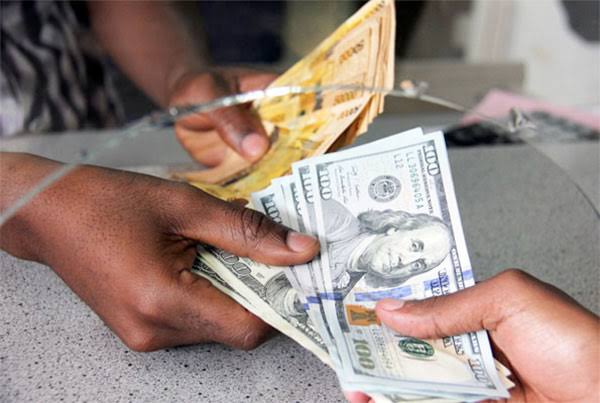
The Uganda shilling remained broadly stable against the US dollar during the week, trading within the 3,755–3,775 range. However, signs point to potential appreciation in the near term, as corporate demand is expected to ease, with many firms conserving shilling liquidity to meet end-of-financial-year tax obligations.
The currency pair was quoted at 3,765/3,775 on Friday morning, unchanged from the start of the week, reflecting a balanced interplay between supply and demand. Looking ahead, the shilling is projected to trade within a wider range of 3,680–3,800 amid continued uncertainty in the global economic outlook.
Richard Nsubuga, Acting Head of Trading, CIB Markets at Absa Bank Uganda, revealed that money markets remained liquid throughout the week, prompting the Central Bank to conduct Open Market Operations on Thursday, mopping up a total of UGX 611 billion via a 7-day repo. Overnight rates averaged 9.68% during the week, reflecting elevated liquidity levels in the system.
Yields at Wednesday’s Treasury bond auction ticked higher, driven by the government’s strong appetite for borrowing amid robust demand in the secondary market. The benchmark 3-year, 10-year, and 20-year tenors cleared at 13.300%, 15.625%, and 16.50%, respectively, in an auction underpinned by abundant liquidity. A total of UGX 1.676 trillion in face value was accepted, translating to a 169% acceptance rate. The Bank of Uganda is scheduled to return to the primary market on 17 June for the final Treasury Bill auction of the current financial year.
Regionally, the USD/KES pair edged higher during the week, trading at 129.50/129.65 in a session dominated by thin liquidity amid ongoing demand for dividend payments from corporates. Soft dollar inflows from tea exporters and remittance firms kept the Kenya shilling biased toward further depreciation. In the near term, it is expected to trade within the 129.20–130.20 range.
Nsubuga noted that the dollar index edged up to about 99.8 on Friday, though it still reflected much of the prior session’s decline. The pressure came from softer safe-haven demand after President Donald Trump suggested that a peace deal with Iran could be finalised as early as this weekend in Europe. His comments followed a decision to delay planned military action, alongside a warning that US forces could still strike Iran’s oil infrastructure.
Iran’s semi-official Fars news agency indicated that Tehran may be open to the agreement, although no final terms have been confirmed by either side. These developments triggered a sharp fall in oil prices, easing fears of persistent inflation and reducing pressure for further interest rate hikes by major global central banks. Meanwhile, data released on Thursday showed US producer prices rose 6.5% year-on-year in May—the highest level since November 2022 and slightly above forecasts of 6.4%—underscoring the growing impact of the Middle East energy shock.
“The euro hovered just below $1.15, staying close to its weakest level since early April, following the European Central Bank’s widely anticipated decision to raise interest rates by 25 basis points—its first increase since 2023,” he said. Policymakers pointed to rising energy prices and ongoing inflationary pressures, intensified by the Iran conflict and disruptions to oil flows through the Strait of Hormuz.
The ECB also updated its inflation outlook, raising projections for the coming years. Headline inflation is now expected to reach 3.0% in 2026, up from 2.6%, and 2.3% in 2027, previously 2.0%. Core inflation forecasts have also been revised upward to 2.5% for both years, from earlier estimates of 2.3% and 2.2%.
The British pound hovered slightly below $1.34, pressured by expectations that the Bank of England will maintain a restrictive monetary policy stance, alongside rising tensions in the Middle East.
Brent crude fell to about $89 per barrel on Friday, marking its lowest level in nearly two months. The drop followed remarks from President Trump suggesting a potential peace deal with Iran, after postponing planned military action while warning that the US could still target Iran’s oil facilities.
Gold prices dropped below $4,450 per ounce on Friday, heading for a weekly loss of more than 2%. The decline was driven by continued uncertainty in the Middle East, which has kept concerns about inflation and interest rates in focus.
The post Stable Shilling Masks Rising Liquidity and Borrowing Pressures appeared first on Daily Star.