The Time Has Come To Build More Cultivated-Meat Research Facilities
By Jon Hochschartner Photos: YouTube Screenshots Technological development sometimes feels like it makes the world worse. Innovation can produce deadlier weapons and more effective means of totalitarian control. But, fundamentally, technology is a tool that can be used for both good and evil. As humble citizens of a nominal democracy, we should do everything in our power to try to steer innovation so as to maximize peace, justice and freedom. In my view, one important way of doing this is accelerating the development of cultivated meat, which is grown from livestock cells, without slaughter. It’s almost impossible to overstate the amount of suffering caused by our current food system. Humans kill more than a trillion aquatic and land animals every year for the purpose of consumption. To put that in a little perspective, only about 117 billion humans have ever lived, according to the Population Reference Bureau. The scale of our violence against animals makes all human atrocities appear small in comparison. My hope is the advent of cheap cultivated meat that is identical to incumbent options will help push slaughterhouses into the dustbin of history.However, even low adoption rates of the new protein would save massive numbers of animals. For example, say cultivated meat only ever replaces one percent of the existing meat market. That would spare more than 10 billion sentient beings from untold suffering and premature death every year. If even that’s too optimistic a prediction for skeptical readers, I’d note cultivated meat replacing .1 percent of existing flesh sold would still save a billion creatures annually. I don’t know many animal-rights interventions which could have that kind of impact.Of course, the new protein offers a number of other potential benefits as well. For instance, most people are unaware that animal agriculture is one of the leading causes of global warming. Scientists in the field believe cultivated meat will eventually require a fraction of the greenhouse-gas emissions to produce that slaughtered options do. Similarly, many pandemics can be traced back to animal agriculture. Since livestock are removed from the process of making cultivated meat, adoption of the protein would reduce our public-health risks.Unfortunately, various technological barriers to commercializing the protein remain. Perhaps the most significant of these is it’s simply too expensive to mass produce. Pioneering cultivated meat companies are rapidly going bankrupt. Hostile observers have used this fact to write off the very concept of cellular agriculture, however, in many ways, these early business failures are unsurprising. Private firms which must pursue their short-term economic self-interest are ill-equipped to perform the kind of long-term research necessary to advance the field.What’s needed is a substantial investment of state and federal funding into cellular-agriculture development. There has been some already but to date it’s been insufficient. We should build cultivated-meat research facilities like the Tufts University Center for Cellular Agriculture at schools across the country. I have no doubt that, working together, these facilities can overcome the remaining barriers to mass producing cultivated meat and achieving price parity with slaughtered options. At this point, opportunistic private investors will return.As dark as our political moment currently seems, it’s not too late to begin the hard work of constructing a better world. Technology can either be a help or a hindrance in this respect. In reality, it will likely be a combination of both. Everyday citizens must pressure their elected representatives to direct innovation so it more closely aligns with our values — like peace, justice and freedom. Accelerating development of cellular agriculture, which has the potential to replace a food system based on unimaginable suffering, should be a priority. Jon Hochschartner lives in Connecticut. He is the author of a number of books, including The Animals’ Freedom Fighter: A Biography of Ronnie Lee, Founder of the Animal Liberation Front.
 Black News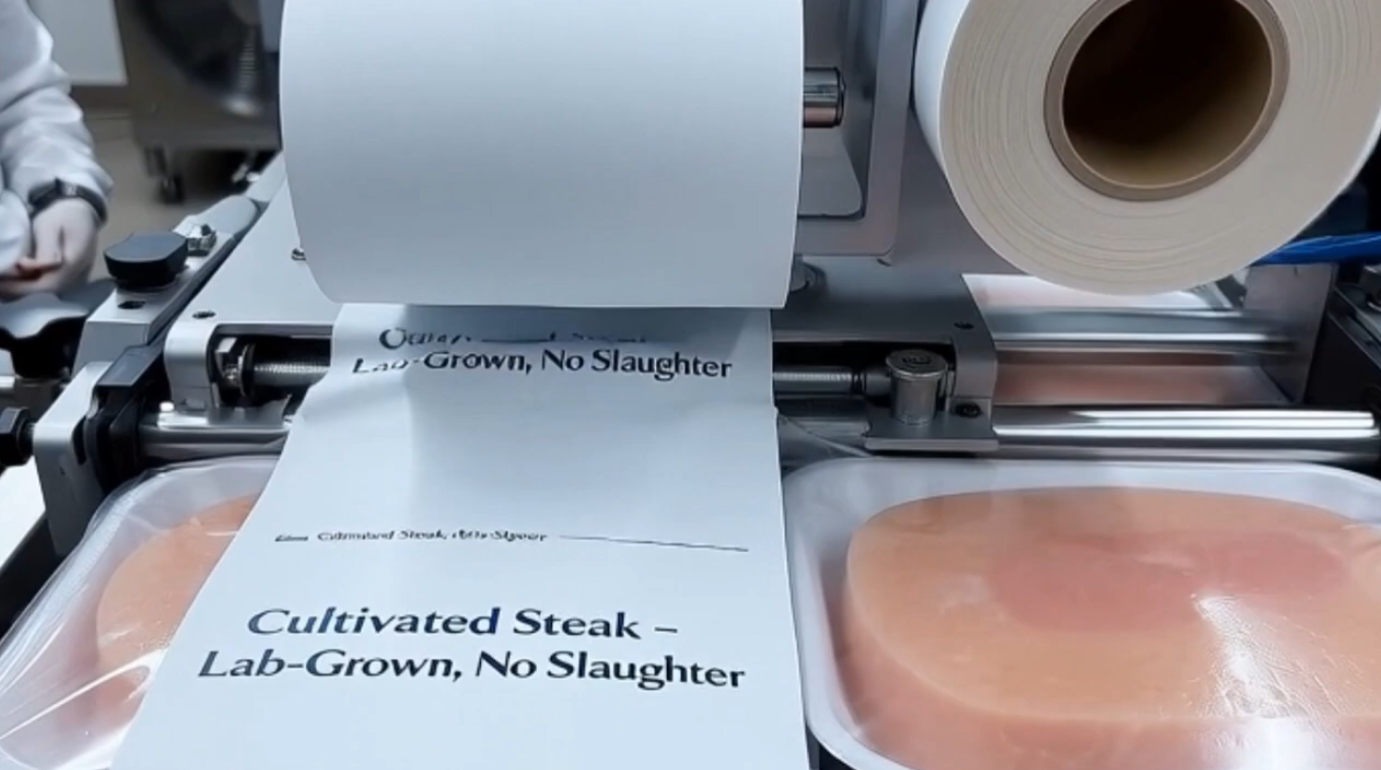
By Jon Hochschartner
Photos: YouTube Screenshots
Technological development sometimes feels like it makes the world worse. Innovation can produce deadlier weapons and more effective means of totalitarian control. But, fundamentally, technology is a tool that can be used for both good and evil. As humble citizens of a nominal democracy, we should do everything in our power to try to steer innovation so as to maximize peace, justice and freedom. In my view, one important way of doing this is accelerating the development of cultivated meat, which is grown from livestock cells, without slaughter.

It’s almost impossible to overstate the amount of suffering caused by our current food system. Humans kill more than a trillion aquatic and land animals every year for the purpose of consumption. To put that in a little perspective, only about 117 billion humans have ever lived, according to the Population Reference Bureau. The scale of our violence against animals makes all human atrocities appear small in comparison. My hope is the advent of cheap cultivated meat that is identical to incumbent options will help push slaughterhouses into the dustbin of history.
However, even low adoption rates of the new protein would save massive numbers of animals. For example, say cultivated meat only ever replaces one percent of the existing meat market. That would spare more than 10 billion sentient beings from untold suffering and premature death every year. If even that’s too optimistic a prediction for skeptical readers, I’d note cultivated meat replacing .1 percent of existing flesh sold would still save a billion creatures annually. I don’t know many animal-rights interventions which could have that kind of impact.
Of course, the new protein offers a number of other potential benefits as well. For instance, most people are unaware that animal agriculture is one of the leading causes of global warming. Scientists in the field believe cultivated meat will eventually require a fraction of the greenhouse-gas emissions to produce that slaughtered options do. Similarly, many pandemics can be traced back to animal agriculture. Since livestock are removed from the process of making cultivated meat, adoption of the protein would reduce our public-health risks.
Unfortunately, various technological barriers to commercializing the protein remain. Perhaps the most significant of these is it’s simply too expensive to mass produce. Pioneering cultivated meat companies are rapidly going bankrupt. Hostile observers have used this fact to write off the very concept of cellular agriculture, however, in many ways, these early business failures are unsurprising. Private firms which must pursue their short-term economic self-interest are ill-equipped to perform the kind of long-term research necessary to advance the field.
What’s needed is a substantial investment of state and federal funding into cellular-agriculture development. There has been some already but to date it’s been insufficient. We should build cultivated-meat research facilities like the Tufts University Center for Cellular Agriculture at schools across the country. I have no doubt that, working together, these facilities can overcome the remaining barriers to mass producing cultivated meat and achieving price parity with slaughtered options. At this point, opportunistic private investors will return.
As dark as our political moment currently seems, it’s not too late to begin the hard work of constructing a better world. Technology can either be a help or a hindrance in this respect. In reality, it will likely be a combination of both. Everyday citizens must pressure their elected representatives to direct innovation so it more closely aligns with our values — like peace, justice and freedom. Accelerating development of cellular agriculture, which has the potential to replace a food system based on unimaginable suffering, should be a priority.

Jon Hochschartner lives in Connecticut. He is the author of a number of books, including The Animals’ Freedom Fighter: A Biography of Ronnie Lee, Founder of the Animal Liberation Front.