John Early and Kate Berlant Are Totally Unbelievable
John Early and Kate Berlant are the most influential, forward thinking comedians of the 21st century. I might even say they're visionaries of the filmic medium, although one or the other might roll their eyes at the thought. Less effusive sentences tend to fail when entertainment writers in the know attempt to describe the cosmic pull they've had on art and comedy over the last 14 odd years. "Their latest gift to the world is the genre-shifting Maddie's Secret, an homage to the daytime film of the same name. Melodramatic to the point of complete absurdity, it is a singular work that pulls together every loose thread of combined comedic output. In full sincerity, I have thought about it every single day since. Not just because the film's naked humanity, uncovered through the absurd, but through the fulfillment of what feels like prophecy between them. "This whole movie was like that for me. I very innocently thought I was playing with these archetypes or these genres or these references that felt so far away from me. I thought I was safe, in other words," Early tells me. "And then before I knew it, I was like, "Oh my God, this is profoundly personal." It was a very emotional experience." A bit on the nose, I arrive to our interview with my hair in rollers and a half-face of makeup on, nearly ready for a work event that follows and a living commentary on online media culture and beauty standards, which the film excavates to depths never seen before. Early laughs and Berlant waves off my apologies, and all together, we're off to the races. On that film: Maddie's Secret follows budding social media chef Maddie, played by Early, as a childhood eating disorder circles the block amidst her rapidly accelerating online fame. Berlant plays Dina, an archetypal lesbian with a keen interest in Maddie's wellbeing, for better or worse, alongside a host of familiar faces to the combined Early-Berlant comedic multiverse. Kristen Johnson and Vanessa Bayer among them deliver career high performances as Maddie's bewitching mother and eventual rehab bunkmate respectively. "I tend not to like when movies very self-consciously try to correct for the ills of past films by being like, 'Let's give Dina a hopeful arc.' There is something funny about being like, "No, this is opera." This is a Greek tragedy," says Early. "I wanted the stakes of this movie to be Greek. I didn't want them to feel educational or like some sort of corrective."Thrillingly, longtime fans will also see unintentional nods at their perfect recreation of the iconic dance sequence from Showgirls, alongside the omnipresent dread in the short film Rachel and Early's unabashed love of getting up in drag for characters like Vicky, the queen of denim. In the case of that Showgirls nod, I seem to surprise them both that there is a near 1:1 dance movement that occurs in both. Early laughs, admitting "I didn't even think about that."For more on Charles Busch, the naked humanity of melodrama, Kate Berlant's least favorite tacos in Los Angeles and more, read our full interview below.I want to start by saying I loved your guys' movie. It was transcendent. I'm a huge Douglas Sirk fan and Charles Busch fan, so this was a real treat for me. I've been following your work for so long, and I was immediately reminded during the dance sequence of your Showgirls recreation, which is a staple in my household. Movement comes back a lot in your collaborations together. Even in your special, you play two indignant dance toddlers. Why dance? Where does dance come into your friendship? John Early: To me, the reason why I choose dance in our various projects is there's something very audacious about it. It's kind of like a dare. It's like we're going to learn choreography, actually. You think this is just a little sketch, or you think this is some low-budget ass movie? No, we're going to have a full dream ballet in the middle of the movie. We're going to learn choreography. We're going to execute it. We're going to read professional dancers. There's something about choreography that immediately, I think, telegraphs a certain kind of, maybe this is totally defensive or desperate of me to do this, but it tells people that a certain amount of care went into this. And I think that is on some level important to me. It's like a kind of showmanship thing, where it's like I'm not making some fucking mumble core indie where we're sitting on a fucking couch with too much room. I'm not doing that. I want to make something that requires some effort. I mean, sometimes I feel like it's possible that it feels almost aggressive or too dense or heavy for the audience. Jesus, we get it. But I would like to think that people hopefully go, oh, they care about us. They wanted to give us an experience.What about you, Kate? Kate: Totally. I'm reminded that we've done that on stage too, John. John and I have done so many choreographed dances on stage from Marfa, Texas to- John: And we choreographed that, right?
 Black News
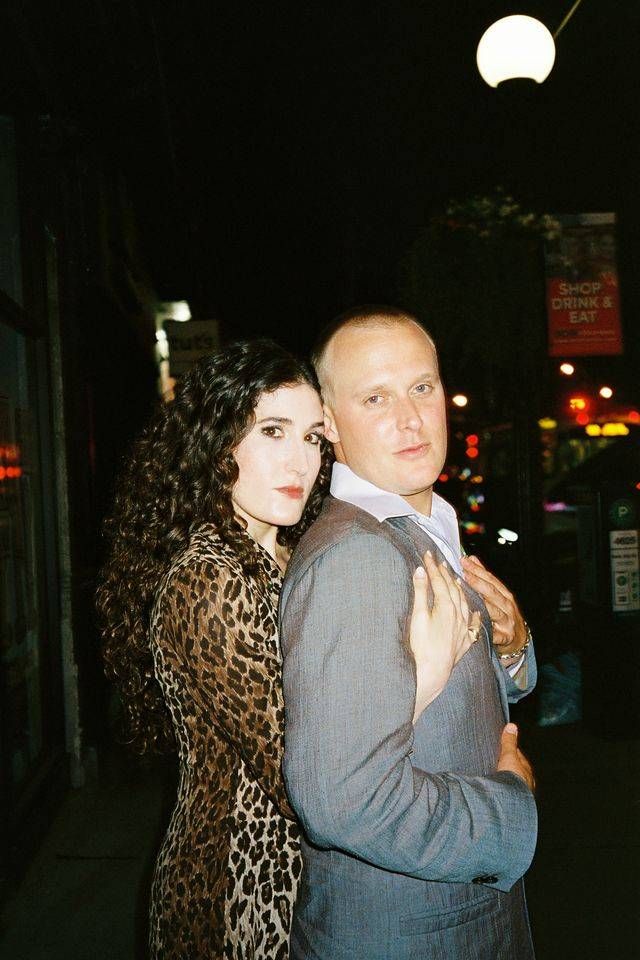
John Early and Kate Berlant are the most influential, forward thinking comedians of the 21st century.
I might even say they're visionaries of the filmic medium, although one or the other might roll their eyes at the thought. Less effusive sentences tend to fail when entertainment writers in the know attempt to describe the cosmic pull they've had on art and comedy over the last 14 odd years. "
Their latest gift to the world is the genre-shifting Maddie's Secret, an homage to the daytime film of the same name. Melodramatic to the point of complete absurdity, it is a singular work that pulls together every loose thread of combined comedic output. In full sincerity, I have thought about it every single day since. Not just because the film's naked humanity, uncovered through the absurd, but through the fulfillment of what feels like prophecy between them. "This whole movie was like that for me. I very innocently thought I was playing with these archetypes or these genres or these references that felt so far away from me. I thought I was safe, in other words," Early tells me. "And then before I knew it, I was like, "Oh my God, this is profoundly personal." It was a very emotional experience."
A bit on the nose, I arrive to our interview with my hair in rollers and a half-face of makeup on, nearly ready for a work event that follows and a living commentary on online media culture and beauty standards, which the film excavates to depths never seen before. Early laughs and Berlant waves off my apologies, and all together, we're off to the races.
On that film: Maddie's Secret follows budding social media chef Maddie, played by Early, as a childhood eating disorder circles the block amidst her rapidly accelerating online fame. Berlant plays Dina, an archetypal lesbian with a keen interest in Maddie's wellbeing, for better or worse, alongside a host of familiar faces to the combined Early-Berlant comedic multiverse. Kristen Johnson and Vanessa Bayer among them deliver career high performances as Maddie's bewitching mother and eventual rehab bunkmate respectively.
"I tend not to like when movies very self-consciously try to correct for the ills of past films by being like, 'Let's give Dina a hopeful arc.' There is something funny about being like, "No, this is opera." This is a Greek tragedy," says Early. "I wanted the stakes of this movie to be Greek. I didn't want them to feel educational or like some sort of corrective."
Thrillingly, longtime fans will also see unintentional nods at their perfect recreation of the iconic dance sequence from Showgirls, alongside the omnipresent dread in the short film Rachel and Early's unabashed love of getting up in drag for characters like Vicky, the queen of denim. In the case of that Showgirls nod, I seem to surprise them both that there is a near 1:1 dance movement that occurs in both. Early laughs, admitting "I didn't even think about that."
For more on Charles Busch, the naked humanity of melodrama, Kate Berlant's least favorite tacos in Los Angeles and more, read our full interview below.
I want to start by saying I loved your guys' movie. It was transcendent. I'm a huge Douglas Sirk fan and Charles Busch fan, so this was a real treat for me. I've been following your work for so long, and I was immediately reminded during the dance sequence of your Showgirls recreation, which is a staple in my household. Movement comes back a lot in your collaborations together. Even in your special, you play two indignant dance toddlers.
Why dance? Where does dance come into your friendship?
John Early: To me, the reason why I choose dance in our various projects is there's something very audacious about it. It's kind of like a dare. It's like we're going to learn choreography, actually. You think this is just a little sketch, or you think this is some low-budget ass movie? No, we're going to have a full dream ballet in the middle of the movie. We're going to learn choreography. We're going to execute it. We're going to read professional dancers. There's something about choreography that immediately, I think, telegraphs a certain kind of, maybe this is totally defensive or desperate of me to do this, but it tells people that a certain amount of care went into this. And I think that is on some level important to me. It's like a kind of showmanship thing, where it's like I'm not making some fucking mumble core indie where we're sitting on a fucking couch with too much room. I'm not doing that. I want to make something that requires some effort. I mean, sometimes I feel like it's possible that it feels almost aggressive or too dense or heavy for the audience. Jesus, we get it. But I would like to think that people hopefully go, oh, they care about us. They wanted to give us an experience.
What about you, Kate?
Kate: Totally. I'm reminded that we've done that on stage too, John. John and I have done so many choreographed dances on stage from Marfa, Texas to-
John: And we choreographed that, right?
Kate:I know. We did a choreographed dance to "Can't Feel My Face", when that was top 40, you were like, "That's a fun kind of ironic choice."... I was going to say, I have a personal aversion to learning choreography. It really frustrates me. Actually, John, did I tell you about the workout class I went to? I didn't know they were teaching you choreography.
John: Oh yes, you did, but you have to say it, though.
Kate: Well, it was a workout class. Then one day, it was like, oh, it's like dance workout. And I was like, okay, sure. And I went, and then I quickly realized, okay, so we're going to learn a couple moves. And I was so pissed. The entire class I was working up the courage to leave, and I was like, "Just go.” I was like, "Just leave. What is this? You're hostage?" The main reason I couldn't leave is because it was curtains to leave, and I didn't want to get lost in the curtains and then make too much of a show of leaving. But I stayed. There was one other girl who clearly was like, "I thought this was fucking Pilates." Anyway, it's because of various learning and spatial disorders that I have, but I love to dance, and dance is a huge part of my life.
John: No, it is. Kate and I do have this thing where it's like we can mimic certain dance styles without training.
Kate: I've been asked if I have dance training several times. I've been asked if I have acting training several times.
It was one of those moments where, when you reach out your hand to John's character and pull him into the dance, I was with my boyfriend watching the screener, and I kind of did the pointing at the screen Leonardo DiCaprio thing. They did that in the Showgirls bit. Literally.
John: Oh yeah. [laughs] I didn't even think about that.
I was like, “it must be unintentional”, just because it makes the scene. But just as a longtime follower, I was like, “Guys, they did the thing. They literally did the thing.”
You begin the film with this beautiful monologue about all of these things that are happening in LA. You're talking about the jasmine, the Filipino and the Mexican food, and they're making cacio e pepe in the back. As two LA people, also New York too — let's give credit to New York and honor to New York. But in the context of LA, what are some things you want not to be happening in LA right now?
John: I mean, lines. I mean, everyone's talking about it, but-
Kate: Well, it's the biggest thing. It's like Tito's Tacos. The line is around the block. The food's inedible. I'm from LA, so I get to say that. And then it's like next door, this taco place that has zero line and the food-
John: Just go to that place.
Kate: Listen, I'm a matcha girl. Sorry, not sorry.
It's sad that you have to apologize for liking it.
Kate: I won't apologize for matcha because I've been doing macha for a long time. But I will say, and this is my own thing, I gasped with excitement because I saw that there was a new matcha. It's called rock. But the point is the cream top matcha. I do a cream top matcha as a fun treat a couple times a month. I'm not getting cream top once a month, once every five weeks. I don't know. But I guess I'm feeling a little bit — it's so obvious to even say it, fatigue for the cream top, but Maru, they took away their cream top for matcha. You can get it for coffee! Don't worry. They took away their cream top matcha, because they were clearly like, "We don't want this culture." And I thought that was worth noting.
John: I mean, I guess LA does have so much. I mean, when I first moved to LA, and this is where so much of this movie is born out of, I was shocked by this very kind of Jonathan Gold thing of, “Oh my God, the beauty of the restaurant that's actually in a strip mall. Oh my God, it's a hole in the wall, and there's fluorescent lights. Yet it's the best sushi you've ever had.” And it was very exciting when I first moved there, to explore these things earnestly and to feel like you were stumbling upon these genius restaurants. And now, of course, there's just a little bit of a sadness where it all feels very algorithmically determined, and it's very hard to feel like a kind of organic relationship to a restaurant now. It's all on a list.
Kate: The state sanctioned places to go.
One of the things that I was really struck by, just obviously so much of it takes place within the office and the lighting in that office, I know obviously we're–
Kate: We were just talking about it.
I was like, “How intentional was that?” It felt so Sirk-ian to me, just this insane backlighting and the glow around everything. Obviously, there's stuff happening with the filmmaking there, but I would love to know how much of that was intentional and how much was it that the space literally just looked like that?
John: Well, it was totally intentional. There ended up being some unintentional elements that made it extremely exaggerated. But the key reference point for the Gourmaybe space was Adrian Lyne and Flashdance, 9 ½ weeks, and Unfaithful, even. Adrian Lyne has all these big, beautiful old warehouse spaces in his movies, and there's always tons of giant shafts of sunset light.
In Flashdance, there's fans that create a moving shadow. And so I was with the DP and the grip and electric department, I was like, “Don't be polite. Really pump it up. Turn it up.” I want it to feel artificial. The big thing with Adrian Lyne is haze, even in apartments. There's lots of unmotivated haze in his movies, and it just makes everything feel more dreamlike and beautiful. And so again, we were a bunch of amateurs. This was so many people's first feature. And so we were pumping rooms full of haze any chance we got. Unfortunately, the treatment center did not let us use haze, but every space where we were allowed to use haze, we would use it.
And then what happened actually was that it made the image so murky. We used too much haze. And so then in color correction, in order to see the people clearly, we had to brighten everything even more. It's many layers worth of artificiality that makes it as extreme as it is. But yeah, I mean, that's the thing, I wanted to make these kinds of miserable jobs, these kind of media food content influencer jobs that all live inside our phones. I wanted to make them feel more romantic and cinematic.
It's playing so much in past melodrama, TV and movies, which you've talked about extensively. One of the things I always love about Douglas Sirk movies is this sort of naked humanity that melodrama exposes, where in the extremity of the emotions, it gets at something much truer. Dina's arc in the film was very unexpected to me, and it took it to a place of, speaking of Sirk, you become an eye surgeon so you could fix the woman you accidentally blinded after her husband dies. I'm curious how you threaded that needle with Dina. What was the inspiration there?
Kate: It's John's movie! I just showed up, hit my mark. But oh my God, I mean, I remember John telling me about the character and it was like, it's such an archetype. There's no, “send me reference images of what this looks like.” We all know her.
John: Kate is obviously just so gifted and was able to immediately tap into this archetype with very little discussion, but...
Kate: I love what you said about it being heightened.... It's like our philosophy in life and in work always, it's like the artifice is the way to the reality and there isn't this-
John: Exaggeration is even a pathway.
Kate: It's more real.
John: Yes, exactly.
Kate: That feels more like what life feels like.
John: That's the job of a movie, it is not to represent some texture of real life, some sort of subdued texture of real life. You push in and go-
Kate: And it's like a perversion of what actual real life feels like. Or it's like, “How dare you tell me life doesn't feel like that?”
John: No, I know. I'm like, if I could punch the wall right now, I would.
That is what it feels like. That is how it feels, all the time. And I think that's what your comedy really plays into. By heightening it to such an extreme, you're getting at something almost more honest than if it was just a cut and dry movie about an influencer's life gone wrong.
John: Well, this whole movie was like that for me. I very innocently thought I was playing with these archetypes or these genres or these references that felt so far away from me. I thought I was safe, in other words. And then before I knew it, I was like, "Oh my God, this is profoundly personal." It was a very emotional experience writing it, acting it, and it's still emotional for me to watch it.
I think Kate's character is such a vessel for a lot of the emotion in the movie. It's all in Kate's eyes. But in terms of the queer tropes, I mean, I was concerned about that and also completely titillated by the idea of going deep into it. I mean, there was something quite funny to me actually about not being cautious about it — of the tragic queer character. Because also, it's like, I'm queer, and yet I'm playing a straight cis woman — a blonde girl, a very kind of normal girl, just some ally. I tend not to like when movies very self-consciously try to correct for the ills of past films by being like, "Let's give Dina a hopeful arc." There is something funny about being like, "No, this is opera." This is a Greek tragedy. I mean, that's the thing, it is Greek. I wanted the stakes of this movie to be Greek. I didn't want them to feel educational or like some sort of corrective. And it's not just Kate's character, people go through hell in this movie.
It's very Dante's Inferno like that, where everyone here is in hell. I wanted to say too, films really struggle with technological cues like phones, Siri, TV. And I really love the way you did it in this film. There's a moment that calls to mind a crossfade, with the TV. Or when she's on the phone with her mom and goes “Hey Siri, call mom,” with the dramatic lighting in the back and the sound cue. Maybe that's all we need to make texting believable — ireally blown-out dramatic lighting.
Kate: Thank you. I love that because it's so true. Every movie now, it's like, the texts. And John, today I actually thought of the movie, because I was on a beautiful walk, and I texted my mom. And I said, "It's so beautiful outside, exclamation point, send." And I was like, "That is- "
John: So Maddie.
Kate: Yeah.
John: Well, to me, one of the funniest lines of the movie is, "Hey, Siri, call Mom."
I wrote that line down to ask about it because I loved it so much.
John: I've been in a few screenings where people really laugh at that. I've seen haters comment on the trailer, “There are no jokes.” And I'm like, that to me, is a joke that's hard to define. There's something that's very funny about me very sincerely saying, "Hey, Siri, call mom." And it's also like, it's true. I mean, she's trying to build up courage to speak to her mother, and yet she's using this blunt, ugly technological language of our moment.
And how polite you are to Siri in that moment was what really came through. The politeness, I love that.
Kate: It's like when you feel yourself obeying.
In the spirit of Maddie’s Secret, you both should find a film on the Lifetime original channel called Stalked by My Doctor. There's seven of them. When I was watching this film, I was like, I just have to introduce you both to the Stalked by My Doctor franchise.
Kate: I'm going to look it up right now.
John: It’s a franchise?
Yeah, it's a franchise. Julia Roberts' brother is the lead in all of them.
Kate: No, no, no.
And it's always like a girl breaks her ankle, and then she finds this nice doctor at the ER who becomes a little bit too involved in her life—
Kate: By the way, he looks like a predatory lesbian, in the poster that I'm looking at.
It's very melodrama. It's very Douglas Sirk.
Kate: This is a real gift.
Photography by Vanessa Heins