Turning Grief and Self-Doubt Into Empowerment for Black Women
From family expectations to workplace pressures and racial stereotypes, Black women have often been discouraged from speaking freely. Leslie Lee Sanders' new book — part memoir, part workbook — helps women reclaim agency and push back. The post Turning Grief and Self-Doubt Into Empowerment for Black Women appeared first on Word In Black.
 Black News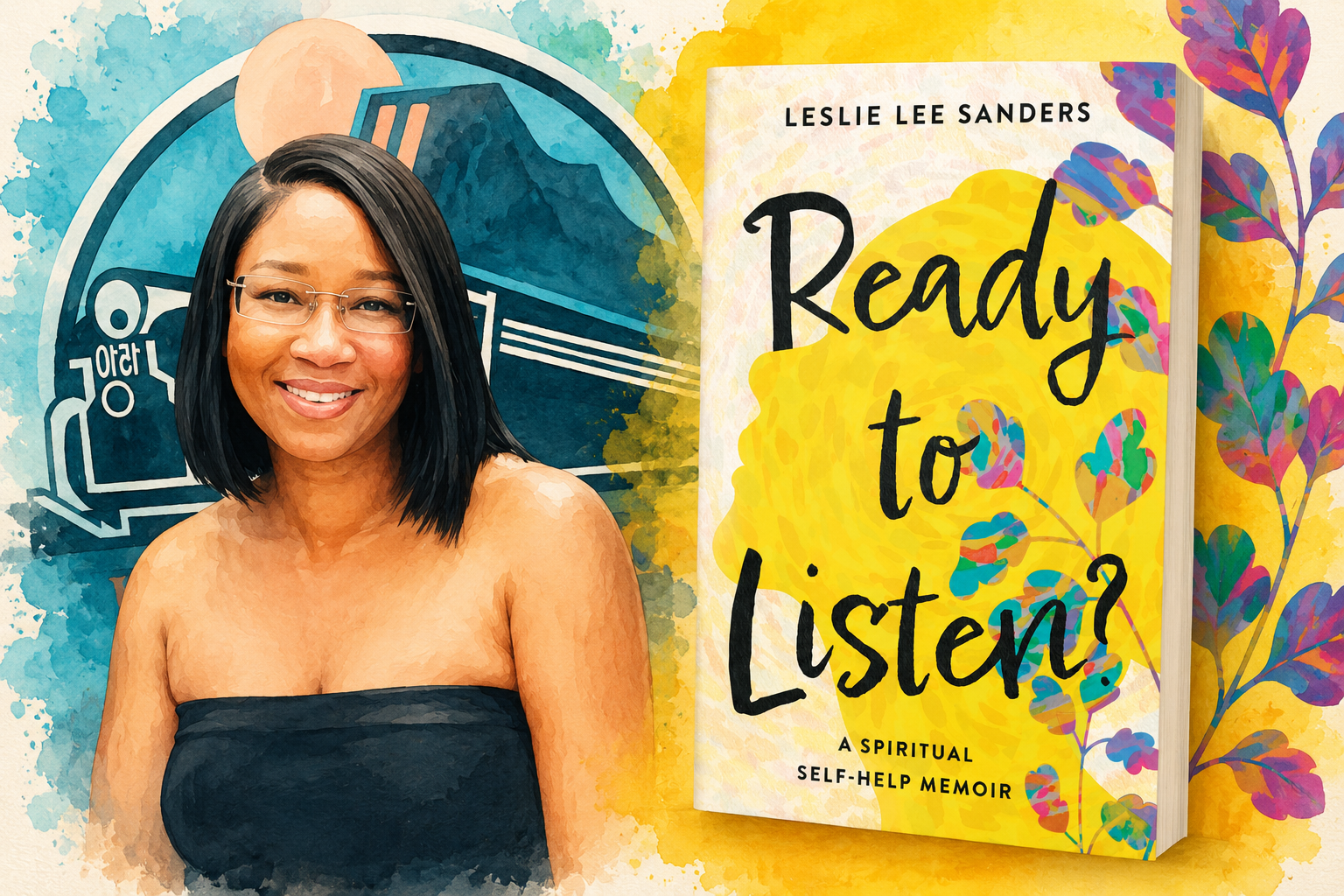

Raised on ghost stories, grief and the unspoken rules about silence Black girls like her learned early in life, author Leslie Lee Sanders says she spent much of her life trying not to take up too much space.
“Sit down, be quiet, raise your hand before you speak,” Sanders recalls being told during her childhood. “It kind of put in me that I’m supposed to stay silent.”
RELATED: Her Calling: Healing Through Music and Medicine
That silence — shaped by family expectations, publishing industry pressures, grief and the political realities facing Black women — ultimately led Sanders to write, “Ready to Listen?” It’s a spiritual self-help memoir that urges women to speak up, speak out and trust their intuition.
Cautionary Tales
The independently published memoir traces Sanders’ evolution from a child who expressed herself through writing stories to a woman determined to speak honestly about identity, spirituality and self-worth.
For Sanders, who lives and works in Arizona, storytelling started at home.
This is the time where a lot of people need to be reminded that they have whatever they need inside of them. They just have to be ready.
Leslie lee sanders, author
She remembers her mother telling vivid cautionary tales that blurred the line between folklore and spiritual warning. One story about the devil so frightened young Leslie that she stayed engaged until the very end.
“She would always end it with, ‘That’s why we didn’t belong there. We shouldn’t have been there,’” Sanders said. “As I look back on stories like that, I realize the message behind it. She was simply saying, ‘Don’t be in a place where you don’t belong.’”
Expressing Herself
Learning to see storytelling as both entertainment and instruction became foundational to Sanders’ writing life as a youngster. Discovering “Scary Stories to Tell in the Dark,” writer Alvin Schwartz’s popular series of children’s horror short story collections, triggered something in Saunders’ imagination.
“I didn’t realize my mom’s stories were in this book — not literally, but the feeling of them,” she said. “That’s when I started really wanting to see my name on a book cover.”
Writing eventually became more than Saunders’ creative expression throughout her life. After the deaths of both her sister and brother within a three-year period, storytelling helped Sanders process overwhelming grief.
“I just wanted to express,” she said. “At the time, I couldn’t express verbally.”
That emotional journey inspired her novel “Tattered Page,” a thriller centered on a woman who realizes she is living in a spine-tingling story her late brother had written.
Fighting Compromise
Writing it “was cathartic,” Sanders said. “Getting it off my heart. Even though I’m still going through the grief that doesn’t end. It just transforms.”
Although fiction gave Sanders an outlet, her experience with mainstream publishers was a disappointment. Even though she has written across multiple genres, from romance to dystopia, editors and agents in the predominantly white, insular book world wanted conformity.
“‘I need you to write this way, this fast, make sure it says this, make sure it ends this way,’” Sanders recalls, describing her experience with publishing gatekeepers. The industry wanted white-centered narratives — “whitewashing your covers and your characters,” she says — and marketable Black stereotypes.
Those experiences mirror the broader treatment of Black women, Sanders says, “keeping us silenced in a box, keeping us down, keeping us from our full potential.” That realization led her toward self-publishing and nonfiction.
“I had to learn the hard way to just be independent and do my own thing,” she says.
Conquering Fear
Sanders says she wrote “Ready to Listen?” without compromise, hoping it inspires other marginalized women to live their lives the same way.
Much of the memoir centers on self-reflection, with the author stripping away “all these masks that society told us to put on,” Sanders says. “Let’s strip them all away and figure out who we are. I wanted to help other women — marginalized women, Black women — find that they have a voice. That they have presence, they have worth.”
Finding that voice for herself, Sanders says, required solitude, therapy, self-reflection, and ultimately honesty.
RELATED: She Didn’t Want the Pulpit. Instead, She Built a Stage
“I was always scared,” she says. “Scared to show my face, scared to raise my voice.”
Ideally, Sanders believes “Ready to Listen?” can help readers move beyond fear and self-silencing to “feel inspired, empowered, and ready to take on your life the way you want to.” Arriving during the Trump era, Sanders also feels the memoir arrives at a moment when many marginalized communities feel increasingly unheard.
“This is the time where a lot of people need to be reminded that they have whatever they need inside of them,” Sanders said. “They just have to be ready.”
The post Turning Grief and Self-Doubt Into Empowerment for Black Women appeared first on Word In Black.