What life on the Strait of Hormuz is really like
Southern Winds — Bandar Abbas based photographer Morteza Niknahad has been capturing the diverse communities and stories of his local region since he first picked up a camera. His new series highlights the human impact of war.
 Black News

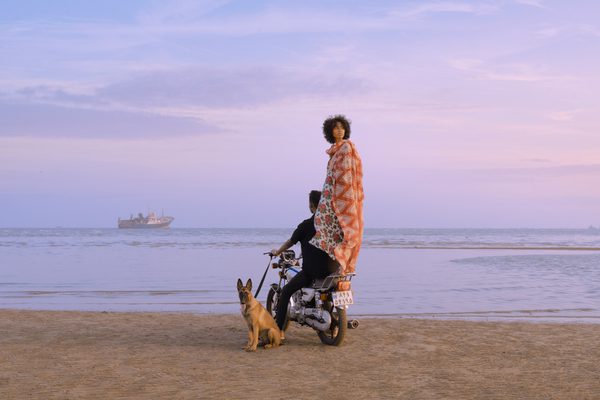
Southern Winds — Bandar Abbas based photographer Morteza Niknahad has been capturing the diverse communities and stories of his local region since he first picked up a camera. His new series highlights the human impact of war.
On February 28, 2026, Iran announced that it was closing the Strait of Hormuz. Earlier that day, the USA launched a swathe of air strikes against the country under ‘Operation Epic Fury’ including one that killed the country’s supreme leader Ayatollah Ali Khamenei, who had ruled over the nation since 1989. Despite President Donald Trump telling US lawmakers that the war “would take approximately four to six weeks”, attacks continue to rumble on, with four people killed at a wedding celebration after a US missile hit a house in southern Iran on Tuesday, September 1, according to the Iranian Red Crescent.
But its closing also placed a small, previously largely overlooked waterway between the Persian Gulf and the Gulf of Oman directly into the international consciousness. At 104 miles long, the Strait is a maritime pinchpoint that connects the Persian Gulf to the rest of the world’s oceans. It’s a crucial stretch in the global shipping trade, with roughly a quarter of the world’s seaborne oil travelling through the Strait and a third of its fertiliser. Prices for fuel, food and more have risen across the world as supply has tightened, while a global food crisis is predicted later in the year as a lack of nitrogen fertilisers are likely to heavily disrupt harvests and crop cycles.
Photographer Morteza Niknahad grew up in Bandar Abbas – a coastal city in southern Iran, situated on the north shore of the Strait of Hormuz. As a young child, he nearly died in the sea, which led to an understanding and respect of the water’s power. “I remember drowning in the Persian Gulf, but fortunately my father managed to save me,” Niknahad remembers. “A deep fear took root in me that later transformed into a meaningful relationship with the sea.”
He’s watched it switch suddenly overnight from a rather nondescript strait to globalisation’s breaking point. “During my childhood, the Strait of Hormuz was simply an international waterway and held no other meaning for us. As a teenager, I would sometimes go to the seashore at night hoping to see a mermaid,” he says. “But after the recent tensions, its definition and meaning have changed.”
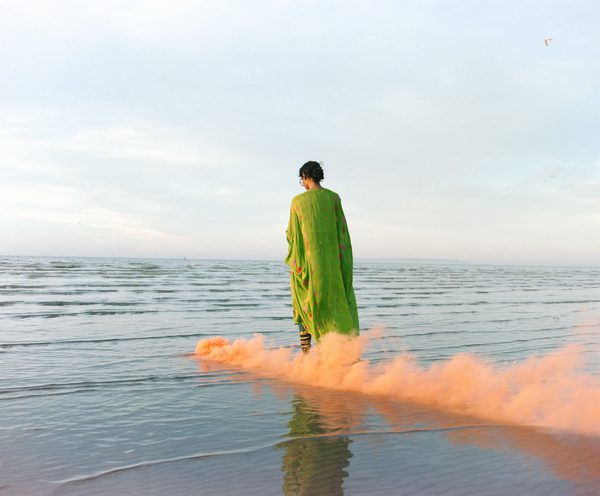
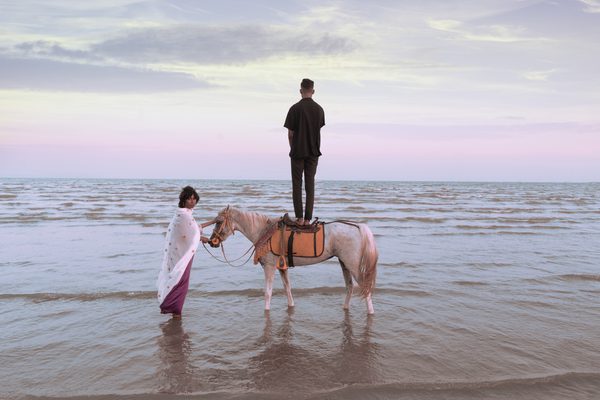
It was as a teenager when he first picked up a camera and began documenting the world and people around him. Focusing on the diverse communities and people of the Strait of Hormuz, his photographs explore the unique shape of life in the region, crafted by the constant flow of water, people and goods across centuries. In an area that has been key in trade and movement long before the creation of the United States and Israel, borders mean little to those who live on its coast.
“The culture of southern Iran is very different and diverse,” he explains. “The people of this region are very warm and generous. I believe we have taken this quality, in part, from the sea. At the same time, the presence of the sea throughout history has allowed us to be in contact with the world, and the world around us.”
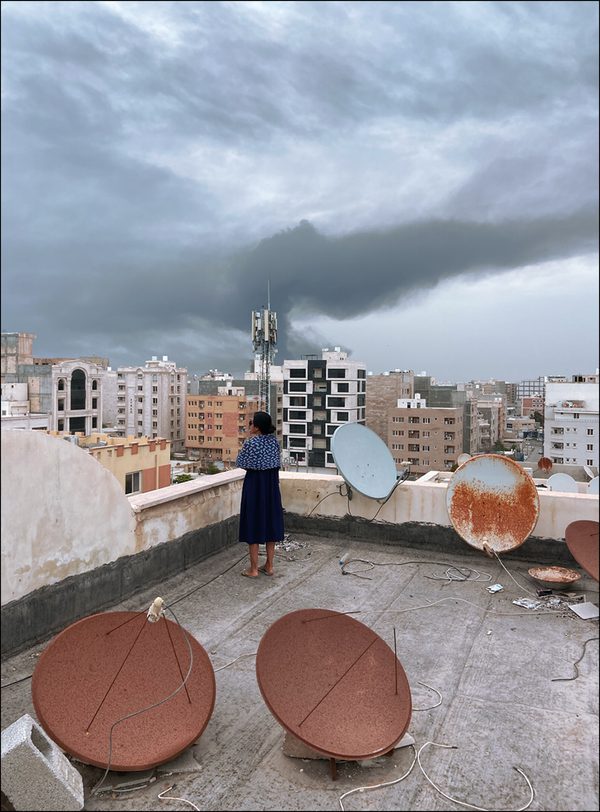
Niknahad’s new series, Southern Winds, combines his deep archive of the area with photographs taken since February 28. With the beginning of strikes and war, the Iranian government introduced sweeping restrictions, including over movement and access to the internet. As a result, he began taking pictures using his phone camera, rather than his usual analogue setup. Recent shots show people standing by the seaside, or on rooftops as black smoke billows from the distance. He explains that as the sea has become unsafe, fishermen have stopped going out to catch food, while maritime trade has stopped, drastically affecting the local economy.
“I only took the wartime photographs with a mobile phone, because it was not possible to photograph with a camera unless you were a photographer with official permits,” he says. “What made me leave the house was seeing something new and bitter. Ships burning at sea and the sky over the city turning black with smoke. I thought I had to document these historic moments so I could look back at them later and tell their story.”
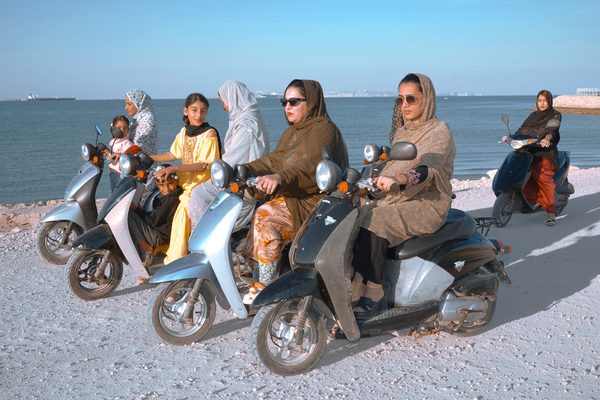
Alongside these, Niknahad lays out old family portraits, as well as studio portraits of those who lived around the Strait of Hormuz’s islands – both as an exploration of his memory and roots in the area, but also highlighting how people’s lives and stories have always existed in the area. There’s photographs of local cultures and rituals, including the Zar healing ritual ceremony to groups of women riding around on motorcycles, as well as people of African descent who have lived there for generations.
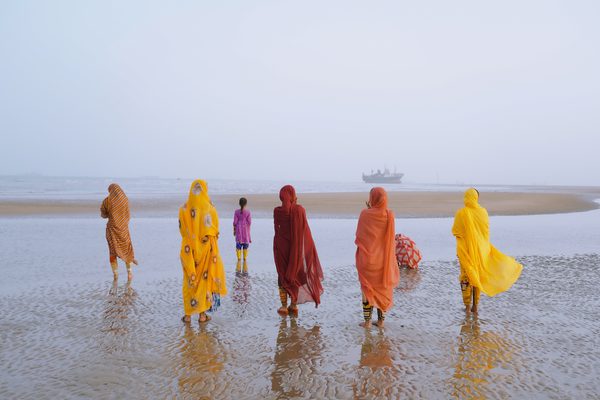
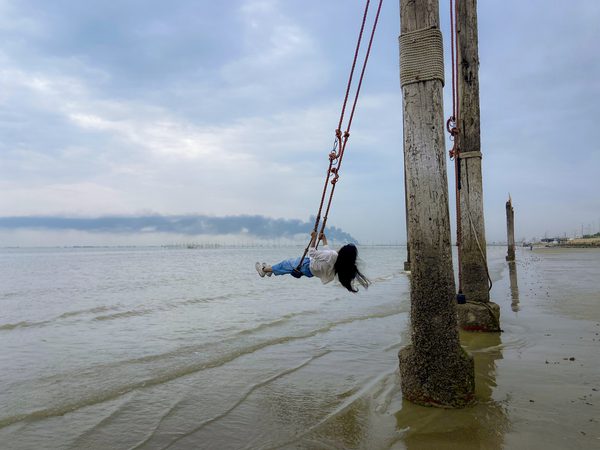
“Seeing the people who live by the shore and hearing their stories has always been sweet and instructive for me,” Niknahad says. “I think these people are very oppressed and voiceless. The media usually pays attention to headlines and news events, not necessarily to the lives of the people behind those headlines. As a result, I have always felt that I must tell the story. Every moment of this path of discovery is memorable for me.”
His work helps shine a different light on an area that is rarely understood beyond its strategic importance on the world’s geopolitical chessboard, while shining a light on the real impacts felt by people in the region as a result of the war started by the USA and Israel. But Niknahad is quick to remind that the region is no stranger to conflict, and its people will continue on existing in the area long into the future.
“Different generations come and go, but there are common chapters in their experiences, that we too have experienced in the last hundred years,” he says. “People know that this story has no clear final chapter. They are getting by with difficulty and continuing to live because they have no other choice.”
To see more of Morteza Niknahad’s work, follow him on Instagram.
Isaac Muk is Huck’s digital editor. Follow him on Bluesky.
Buy your copy of Huck 83 here.
Enjoyed this article? Follow Huck on Instagram and sign up to our newsletter for more from the cutting edge of sport, music and counterculture.