Why Nigerian Entrepreneurs Are Chasing Grants Instead of Investors
By James Gbadamosi A few years ago, every startup founder seemed to have the same dream: raise venture capital, announce a funding round, and become the next Flutterwave or Paystack. Today, a different trend is emerging. More Nigerian entrepreneurs are actively pursuing grants, accelerators, and non-dilutive funding opportunities rather than traditional investors. From the Tony […]
 Black News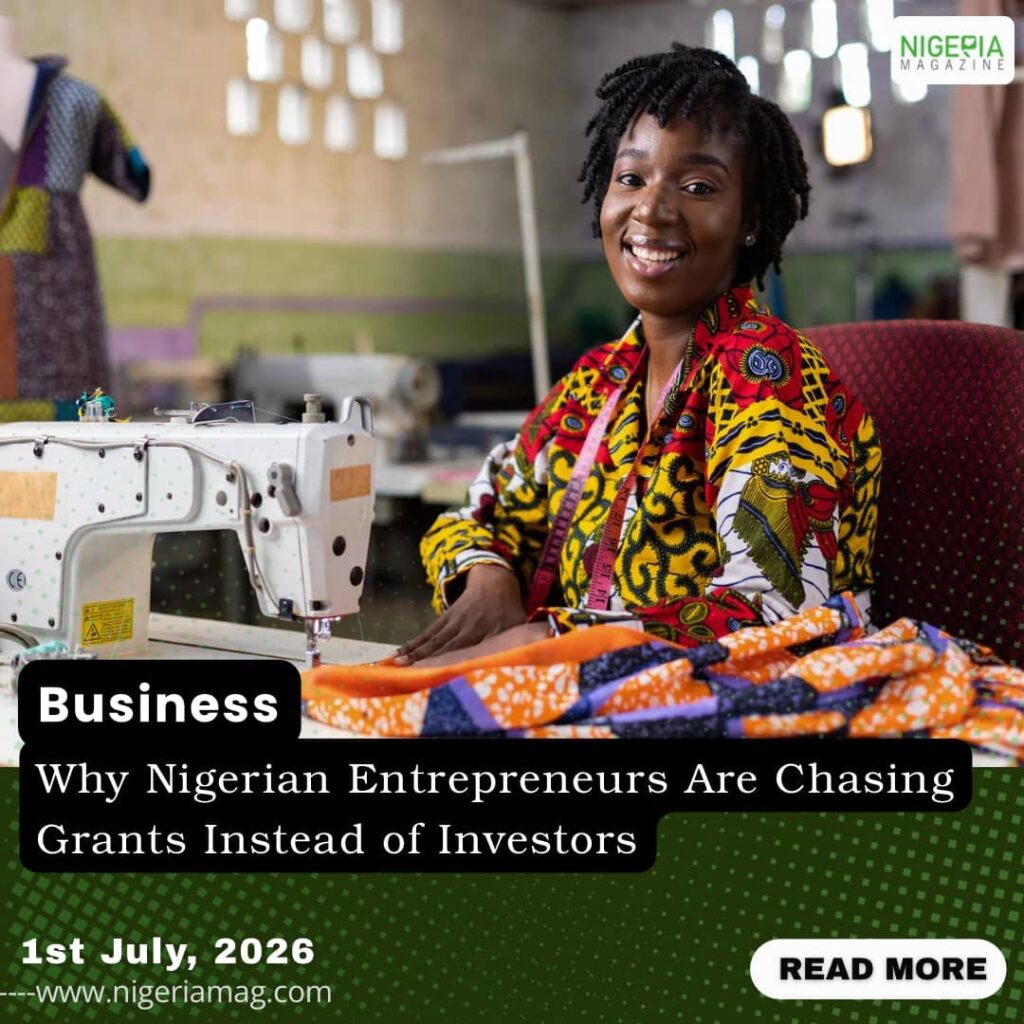
By James Gbadamosi
A few years ago, every startup founder seemed to have the same dream: raise venture capital, announce a funding round, and become the next Flutterwave or Paystack.
Today, a different trend is emerging.
More Nigerian entrepreneurs are actively pursuing grants, accelerators, and non-dilutive funding opportunities rather than traditional investors.
From the Tony Elumelu Foundation Entrepreneurship Programme to Poju Oyemade’s recently announced ₦150 million startup fund, government-backed initiatives, innovation competitions, and accelerator programmes, founders are increasingly discovering that there are alternatives to giving away equity.
The shift is not accidental.
The African venture capital market has experienced significant changes over the past few years. Global economic uncertainty, rising interest rates, and investor caution have reduced the flow of startup funding across emerging markets.
For many founders, raising capital has become more difficult than ever.
Investors are asking tougher questions.
Businesses are expected to demonstrate profitability, strong unit economics, and sustainable growth before attracting funding.
As a result, entrepreneurs are exploring new ways to finance growth.
Grants have become particularly attractive because they provide capital without requiring founders to give up ownership of their businesses.
Unlike venture capital, which typically involves exchanging equity for investment, grants allow entrepreneurs to maintain full control of their companies while accessing resources that can help them grow.
The trend is particularly visible among early-stage founders.
Many entrepreneurs now build businesses using grants, competitions, consulting income, and customer revenue before approaching investors.
This approach reduces dependency on external funding while improving long-term sustainability.
However, grants are not a perfect solution.
Most grants are limited in size, highly competitive, and often come with specific eligibility requirements.
They can help businesses survive and grow, but rarely provide the scale of capital available through institutional investment.
The most successful founders understand this distinction.
Rather than choosing between grants and investors, they use grants strategically—to validate ideas, build traction, and strengthen their position before raising larger rounds.
In many ways, the funding landscape is maturing.
The era when startups raised money primarily on vision and growth projections is gradually giving way to a new reality where founders must demonstrate value before attracting significant capital.
For Nigeria’s entrepreneurial ecosystem, this may ultimately be a positive development.
Businesses built on sustainable foundations tend to survive longer than businesses built solely on investor enthusiasm.
And for a growing number of entrepreneurs, grants are becoming the bridge between ambition and long-term success.