Africa’s biggest lithium producer wants to trade future mineral wealth for Chinese-backed infrastructure
Africa’s largest lithium producer is exploring plans to use future mineral revenues to finance roads and railways with China, in a move that could deepen Beijing’s role in one of the world’s fastest-growing battery mineral supply chains.
 Black News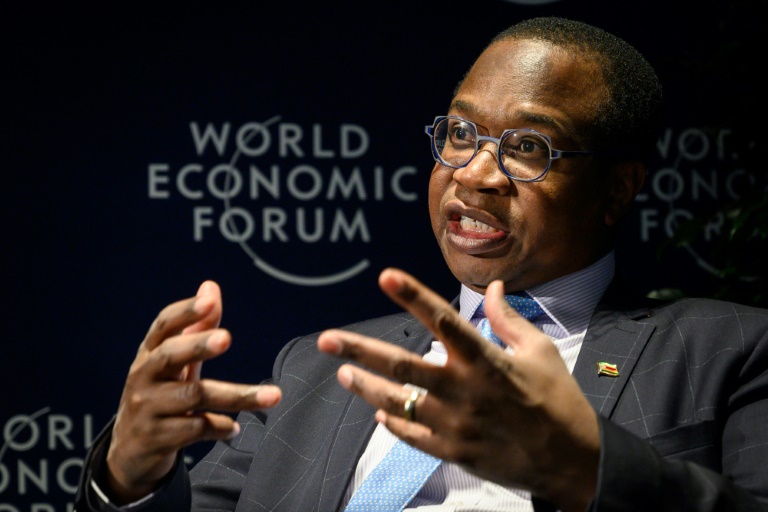
Africa’s largest lithium producer is exploring plans to use future mineral revenues to finance roads and railways with China, in a move that could deepen Beijing’s role in one of the world’s fastest-growing battery mineral supply chains.
- Zimbabwe is exploring mineral-backed financing with China to fund roads and railways.
- The African Development Bank estimates the country needs about $34 billion to modernise its transport and logistics networks.
- The talks come as Chinese firms deepen their hold on Zimbabwe’s lithium industry, with more than $2 billion invested since 2021.
- Zimbabwe is also pressing ahead with a January 2027 ban on lithium concentrate exports to force more local processing.
Zimbabwe’s Finance Minister Mthuli Ncube said the government has opened discussions with China Railway Group on resource-backed financing arrangements to support transport infrastructure, especially roads and rail.
“We spoke to them about resource-linked debt instruments that we want to explore going forward to support our infrastructure development, especially roads and rail,” Ncube told reporters on the sidelines of the World Economic Forum in Dalian.
Under the proposed model, Zimbabwe would use future income from natural resources to repay loans tied to specific infrastructure projects.
“It’s now up to us to decide which roads we want to develop, how much these roads will cost, how much we will raise in terms of toll fees, and how much still remains to be filled by investment in a natural resource, how much return it will generate towards extinguishing the loan,” Ncube said.
Why lithium matters
Zimbabwe’s pitch comes at a critical moment for global battery supply chains.
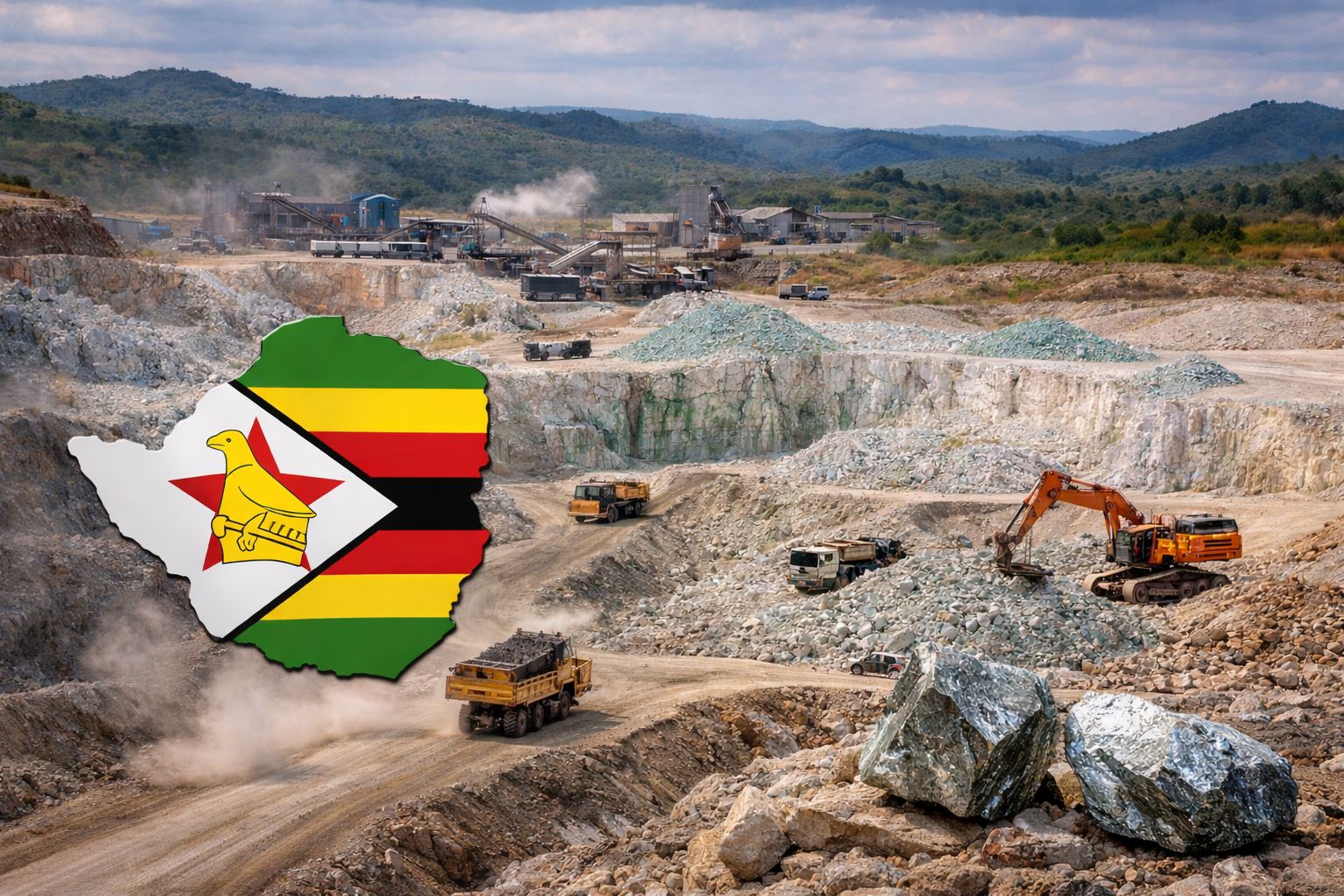
The country is Africa’s top producer of lithium-bearing spodumene concentrate and exported about 1.13 million metric tons to China in 2025, accounting for roughly 15% of China’s lithium concentrate imports.
Lithium is central to electric vehicle batteries, grid storage and consumer electronics, making Zimbabwe increasingly important to the global energy transition.
Chinese companies have invested more than $2 billion in Zimbabwe’s lithium sector since 2021, with major players including Zhejiang Huayou Cobalt, Sinomine Resource Group, Chengxin Lithium Group and Yahua Group.
That investment has made Zimbabwe one of China’s most important African sources of battery minerals, but it has also raised a bigger policy question for Harare: how to convert mineral wealth into infrastructure, jobs and industrial capacity.
A $34 billion gap
Zimbabwe’s infrastructure deficit is one of the biggest constraints on its economy. The African Development Bank estimates that the country needs about $34 billion to modernise its transport and logistics networks.
Its rail system, once central to moving minerals, tobacco, grain and industrial goods, has suffered years of underinvestment. For mining companies, poor rail capacity means higher logistics costs and greater dependence on roads.
That makes transport infrastructure especially important for Chinese mining firms already operating in Zimbabwe. Better roads and railways could reduce export bottlenecks, lower costs and speed up mineral shipments to ports in neighbouring countries.
Not Africa’s first resource-backed bet
Zimbabwe’s proposed model is not new in Africa. Angola used oil-backed loans from China to rebuild infrastructure after its civil war.
The Democratic Republic of Congo signed the Sicomines agreement, linking Chinese-financed infrastructure to copper and cobalt resources. Guinea’s Simandou iron ore project has also been tied to major rail and port infrastructure commitments.
Supporters say resource-backed deals can help countries with limited access to conventional financing deliver large infrastructure projects faster.
Critics warn that they can also mortgage future revenues, increase debt risks and weaken transparency if the terms are not publicly disclosed.
That risk matters for Zimbabwe because the country is already constrained by debt arrears. The World Bank and IMF have said Zimbabwe’s long-running arrears to bilateral and multilateral creditors have cut it off from some official financing, limiting its access to cheaper development funding.
Export ban to proceed
The infrastructure talks are unfolding alongside Zimbabwe’s wider push to retain more value from its lithium industry.
Ncube said the government will not delay its planned ban on lithium concentrate exports, scheduled to take effect in January 2027, despite industry pressure for more time.
The policy is designed to stop the export of lower-value concentrates and force miners to process more lithium locally before shipment.
Only Zhejiang Huayou Cobalt currently has a fully operational lithium sulphate plant in Zimbabwe, while Sinomine’s Bikita Minerals, Yahua’s Kamativi project and other operators are developing or studying similar facilities.
Industry players have asked for more time, arguing that processing plants require large capital investment, reliable power and stable policy conditions.
Zimbabwe is trying to do two difficult things at once. It wants to use future mineral wealth to rebuild infrastructure, while also forcing more of the lithium value chain to stay inside the country.
If it works, the strategy could help Zimbabwe move beyond raw mineral exports and capture more value from the global battery boom.
But the risks are high. The success of the plan will depend on commodity prices, contract transparency, debt management, power supply and whether new processing capacity can come online before the export ban bites.
For China, the talks offer another opportunity to strengthen its position in Africa’s critical minerals sector while linking mining investments to infrastructure development.
For Zimbabwe, the challenge is ensuring that its lithium boom does not become another extractive cycle where roads, railways and future revenues are pledged before citizens see the full benefits.




![I Placed My Black Son For Adoption After Rape — His Memoir, ‘Stranger In My Own Story,’ Helped Me Reclaim Mine [Op-Ed]](https://madamenoire.com/wp-content/uploads/sites/9/2026/09/17907998954811-rotated-e1790802025921.jpg?quality=80&strip=all&w=2448&crop=0,0,100,1322px#)