Africatown Cultural Festival In Philadelphia Was A Unified Moment Of Shared Heritage
June 28, 2026 was a historic date in Southwest Philadelphia, the art and cultural hub of the African community which is now being designated as Africatown due to the huge presence of African and Caribbean immigrants. It was a day of celebration of African culture with music, food and cultural pride displayed by Africans, African Americans, and Caribbean immigrants. The event was dubbed as the Africatown Diaspora Festival. It was a moment of shared heritage that binds these diverse people who have Africa as their common root. So for all these people, it was a day to celebrate Africa and its cultural diversity through food, music, dance, clothes, jewelries etc. Representing Liberia on the stage was the popular musician, CIC who sang some of his signature tunes that has made him popular in Liberia. Other artists were Lib from Cameroon, I-Octane, a Jamaican reggae artist, Rupert Antonio Clark, better known as Rupee, a soca musician from Barbados, etc. Just as the artists come from different parts of Africa and the African diaspora and the audience was mixed in the same way explains how vibrant the festival was. The cultural festival stretched along Woodland Avenue between 59th to 65th streets. There were food vendors, artisans, live entertainment and as well as the various community organizations representing different African countries. Liberians, Guineans, Ivoirians, Ghanaians, Nigerians, Sierra Leoneans all felt like one family as they jammed to music that was as diverse as the different nationalities.In an interview with the local television station ABC, the communication director of the African Cultural Alliance of North America (ACANA), Kou Dolo said, “Our community deserves to have a celebration like this.” There was Kisha Bird, an African American currently living in Ghana who was there selling African clothes from Ghana and Ivoery Coast. She is the owner of Travel Deeper Inc. Speaking to the journalist during the event, she said that, “I was born and raised in Southwest Philly and this cultural festival represents the diversity of the African diaspora rather than any single country or region.” She went on to say that “When we say Africatown, we don’t mean one country. We don’t just mean one region. We mean all of us, and it’s for everyone because we’re celebrating culture.” Ms. Bird comes across as someone who is very enlightened as an African American with lived experiences in Africa and the African American community in the US. As an African American born and raised in Southwest Philadelphia, she said she is glad to be able to connect with both sides of her cultural identities.This Africatown cultural festival also highlights the African immigrants’ investments on Woodland Avenue which is now known as the “Woodland Avenue business corridor.” The Woodland Avenue business corridor showcases thriving African businesses that are contributing to the vibrant African presence in the Southwest Philadelphia neighborhood. The city of Philadelphia, known as the birth place of America, as well as the organization celebrating the 250th anniversary of the birth of America, have invested millions of dollars in infrastructural improvements, including decorative banners bearing the wording Africatown , bike racks, landscaping and new signage designed to attract visitors to support local businesses.One of the African business owners is Musa Barry who is popularly known as Uncle Musa. In speaking to a Channel 6 news anchor, he said, “I hope one day people will be visiting Woodland Avenue just the way they visit Chinatown.” Musa Barry is the president of the Woodland Business Association.Over the years, ACANA has embarked on the Africatown project to promote and showcase the Africa presence in this part of Philadelphia. The idea of Africatown is mirrored after Chinatowns which are in many cities across the US. The first Chinatown is in San Francisco, California and has been around since 1848. It is an enclave of Chinese people outside of China. Since then, there have been Chinatowns in many major American cities such as Philadelphia, New York, Boston, Chicago, etc. It is such a concept that motivated ACANA to start to advocate for the designation of this section of Southwest Philadelphia as Africatown. It has been years in the making and has now taken real shape with office and housing complexes being built and now this cultural festival.Years ago, stores on Woodland Avenue used to be mostly owned by Koreans, and Chinese. Today, these stores are mostly Africans, particularly Liberians. The African movements and activities are along three major thoroughfares in Southwest Philadelphia. These major thoroughfares are frequented by Africans from the various West African countries mentioned above. These are Woodland Avenue, Chester Avenue, and Elmwood Avenue. On Woodland Avenue, not only are there African grocery stores, there are also financial services centers, immigration attorney offices, as well as vehicle regi
 Black News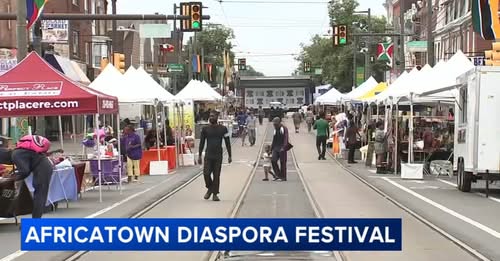
June 28, 2026 was a historic date in Southwest Philadelphia, the art and cultural hub of the African community which is now being designated as Africatown due to the huge presence of African and Caribbean immigrants. It was a day of celebration of African culture with music, food and cultural pride displayed by Africans, African Americans, and Caribbean immigrants. The event was dubbed as the Africatown Diaspora Festival. It was a moment of shared heritage that binds these diverse people who have Africa as their common root. So for all these people, it was a day to celebrate Africa and its cultural diversity through food, music, dance, clothes, jewelries etc. Representing Liberia on the stage was the popular musician, CIC who sang some of his signature tunes that has made him popular in Liberia. Other artists were Lib from Cameroon, I-Octane, a Jamaican reggae artist, Rupert Antonio Clark, better known as Rupee, a soca musician from Barbados, etc. Just as the artists come from different parts of Africa and the African diaspora and the audience was mixed in the same way explains how vibrant the festival was.

The cultural festival stretched along Woodland Avenue between 59th to 65th streets. There were food vendors, artisans, live entertainment and as well as the various community organizations representing different African countries. Liberians, Guineans, Ivoirians, Ghanaians, Nigerians, Sierra Leoneans all felt like one family as they jammed to music that was as diverse as the different nationalities.
In an interview with the local television station ABC, the communication director of the African Cultural Alliance of North America (ACANA), Kou Dolo said, “Our community deserves to have a celebration like this.” There was Kisha Bird, an African American currently living in Ghana who was there selling African clothes from Ghana and Ivoery Coast. She is the owner of Travel Deeper Inc. Speaking to the journalist during the event, she said that, “I was born and raised in Southwest Philly and this cultural festival represents the diversity of the African diaspora rather than any single country or region.” She went on to say that “When we say Africatown, we don’t mean one country. We don’t just mean one region. We mean all of us, and it’s for everyone because we’re celebrating culture.” Ms. Bird comes across as someone who is very enlightened as an African American with lived experiences in Africa and the African American community in the US. As an African American born and raised in Southwest Philadelphia, she said she is glad to be able to connect with both sides of her cultural identities.
This Africatown cultural festival also highlights the African immigrants’ investments on Woodland Avenue which is now known as the “Woodland Avenue business corridor.” The Woodland Avenue business corridor showcases thriving African businesses that are contributing to the vibrant African presence in the Southwest Philadelphia neighborhood. The city of Philadelphia, known as the birth place of America, as well as the organization celebrating the 250th anniversary of the birth of America, have invested millions of dollars in infrastructural improvements, including decorative banners bearing the wording Africatown , bike racks, landscaping and new signage designed to attract visitors to support local businesses.
One of the African business owners is Musa Barry who is popularly known as Uncle Musa. In speaking to a Channel 6 news anchor, he said, “I hope one day people will be visiting Woodland Avenue just the way they visit Chinatown.” Musa Barry is the president of the Woodland Business Association.
Over the years, ACANA has embarked on the Africatown project to promote and showcase the Africa presence in this part of Philadelphia. The idea of Africatown is mirrored after Chinatowns which are in many cities across the US. The first Chinatown is in San Francisco, California and has been around since 1848. It is an enclave of Chinese people outside of China. Since then, there have been Chinatowns in many major American cities such as Philadelphia, New York, Boston, Chicago, etc. It is such a concept that motivated ACANA to start to advocate for the designation of this section of Southwest Philadelphia as Africatown. It has been years in the making and has now taken real shape with office and housing complexes being built and now this cultural festival.
Years ago, stores on Woodland Avenue used to be mostly owned by Koreans, and Chinese. Today, these stores are mostly Africans, particularly Liberians. The African movements and activities are along three major thoroughfares in Southwest Philadelphia. These major thoroughfares are frequented by Africans from the various West African countries mentioned above. These are Woodland Avenue, Chester Avenue, and Elmwood Avenue. On Woodland Avenue, not only are there African grocery stores, there are also financial services centers, immigration attorney offices, as well as vehicle registration and licensing service centers. There are several African restaurants on Woodland Avenue, as well as in other parts of Southwest Philadelphia designated as Africatown.
In the last 30 years, African immigrants have been arriving from various African countries. These Africans are mostly West Africans. Adding to this mix are people from various countries from the Caribbean. These immigrants are noted for their contributions to the cultural vibrancy of the city of Philadelphia. Based on this huge African presence, former Philadelphia City Councilwoman, Jannie L. Blackwell, created Echoes of Africa in 2000. Through the Echoes of Africa organization, there were annual festivals held at the Malcolm X Park in the heart of West Philadelphia. Such events gave visibility to the African presence in Philadelphia. Then in 2005, Philadelphia City Mayor John Street, with the support of Councilwoman Jannie L. Blackwell, signed the executive order that created the Mayor’s Commission on African and Caribbean Immigrant Affairs (MCACIA). This was historic in the sense that Philadelphia became the first city in the US to recognize African immigrants in such a way. Over the years, the African immigrants are making their mark as workers, consumers, taxpayers, business owners and voters in Philadelphia.
The developments and progress of the African immigrant community in Southwest Philadelphia are highlighted in the local media. An example is Southwest Philadelphia based Globe Time. Most of its coverage of the African community in this paper is centered on ACANA and its activities and impacts in the community. ACANA as an organization which was started years ago by Liberian immigrant Voffee Jabateh. He has become a fixer in the politics of Philadelphia. Because of his extensive connections, ACANA’s annual events are attended by a who’s who in city and state politics. With the support from the city of Philadelphia, and the state of Pennsylvania, the Africatown project has now become a reality.
Today, Voffee Jabateh is celebrated as the visionary champion behind this massive development that is now known as Africatown, with the Africatown cultural festival. Voffee is described as a “lifelong community advocate who founded the African Cultural Alliance of North America (ACANA) in 1999 to assist African and Caribbean immigrants who lacked sufficient access to social benefits, education, health care, economic development opportunities and cultural events.” Voffee Jabateh is a former social worker and entrepreneur who understands the needs of the under-served communities and small businesses. His leadership as the CEO has expanded ACANA into becoming one of Southwest Philadelphia’s most trusted community organizations serving all of its residents regardless of national origin with programs that include health and mental health services, immigration services, benefits assistance, financial counseling, English classes, and ACANAfest which is now the Africatown cultural festival.
About the author:
Nvasekie Konneh is a poet and writer. He is the author of three books, “Going to War for America (a collection of poems), The Land of My Father’s Birth,” memoir of the Liberian civil war, and “The Love of Liberty Brought Us Together,” a collection of poems and essays. Nvasekie is the managing editor of Liberia based Public Agenda newspaper. Nvasekie Konneh holds BA Degree in Comparative Literatures with emphases on African, African American and Caribbean literatures from the Union Institute & University in Cincinnati, Ohio. He holds a Master’s Degree in Communication and Media Studies from the West Chester University in West Chester, Pennsylvania. He can be reached at nvaskon1@gmail.com or Knvasekie@yahoo.com.




![[FOCUS] STRATÉGIE DE SOUVERAINETÉ ALIMENTAIRE : Pour écouler ses 37.000 tonnes de production locale, le Sénégal suspend les importations de riz](https://nations-sn.com/wp-content/uploads/2026/07/WhatsApp-Image-2026-07-09-at-03.33.52.jpeg)