China Tanzania tech pact reshapes regional growth
DAR ES SALAAM: TECHNOLOGICAL innovation is no longer a distant ambition but a present-day force shaping economies, and this reality framed the message delivered by Chinese Ambassador to Tanzania Chen Mingjian at the opening of the China High-Tech Fair in Dar es Salaam, recently. Addressing government officials, investors and innovators, she positioned technology as a … The post China Tanzania tech pact reshapes regional growth first appeared on Daily News. The post China Tanzania tech pact reshapes regional growth appeared first on Daily News.
 Black News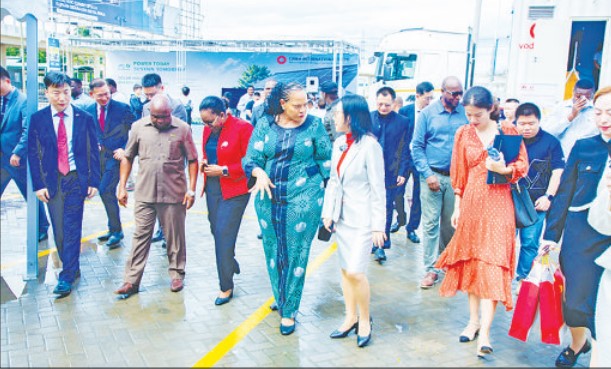
DAR ES SALAAM: TECHNOLOGICAL innovation is no longer a distant ambition but a present-day force shaping economies, and this reality framed the message delivered by Chinese Ambassador to Tanzania Chen Mingjian at the opening of the China High-Tech Fair in Dar es Salaam, recently.
Addressing government officials, investors and innovators, she positioned technology as a “strategic pillar” for productivity, economic resilience and improved livelihoods, setting the tone for a partnership increasingly defined by digital transformation rather than traditional infrastructure.
Her remarks underscored China’s rapid rise in advanced technologies, from artificial intelligence and robotics to renewable energy and digital systems, presenting a model that Tanzania can adapt as it accelerates its own transformation.
She pointed to China’s leadership in generative AI innovation, large-scale deployment of industrial robots and expansion of 5G and cloud computing as evidence of what sustained investment in innovation can achieve. More importantly, she grounded that global narrative in Tanzania’s reality.
Chinesebacked projects, she noted, are already reshaping daily life, expanding telecommunications networks, strengthening digital infrastructure and enabling services such as mobile payments, e-commerce, online education and remote work. These systems are not abstract technologies but practical tools driving inclusion and economic participation.
“It can be said that Chinese technology is increasingly reaching Tanzania’s fields, cities and communities, bringing tangible benefits to the people,” she noted, highlighting a partnership that is moving from concept to measurable impact. Taking the platform next, Minister for Communication and Information Technology Angellah Kairuki reinforced the urgency of this transformation.
She framed Tanzania’s digital agenda as central to national development, not a supplementary sector. Her message was clear: the country is repositioning itself for a digital future.
She described the fair, hosted at the East Africa Commercial and Logistics Centre in Ubungo, as evidence of a maturing relationship between Tanzania and China—one that has evolved beyond roads and ports into high-tech collaboration.
Over the –past decade, she noted, the partnership has become a model of South-South cooperation, increasingly focused on innovation that directly improves lives.
From rural broadband expansion to AI-driven tools in health and education, she highlighted initiatives already narrowing long-standing inequalities between urban and rural communities. Mobile digital classrooms, improved connectivity and smart service platforms are expanding access to knowledge, markets and essential services.
Crucially, she emphasised outcomes over rhetoric. Technologies showcased at the fair, including solar energy systems, smart devices and resilient digital infrastructure are not experimental ideas but deployable solutions capable of addressing real economic and social challenges.
Her policy direction aligns with Tanzania’s digital economy strategy for 2024–2034, which prioritises ICT expansion, smart city development and green innovation. Within this framework, the China High-Tech Fair serves as both a progress marker and a catalyst for deeper collaboration. She outlined three priority areas that will determine the partnership’s success.
First is digital inclusion. Despite progress, connectivity gaps persist, particularly in rural communities. Expanding network coverage and ensuring affordability will require coordinated public-private investment and targeted policy support. Second is technology transfer and skills development.
Tanzania aims to move beyond being a consumer of imported technologies toward building local expertise. Joint training centres, apprenticeships and technical exchange programmes can equip engineers, technicians and entrepreneurs with the capacity to deploy, maintain and innovate within the country. Third is green innovation.
ALSO READ: Government launches China High-Tech Centre to boost trade diplomacy
With climate pressures increasing, collaboration in solar energy, microgrids and energy storage offers both environmental and economic benefits, including job creation in installation, manufacturing and maintenance. This convergence of priorities reflects a broader shift.
Tanzania and China are aligning their development strategies around technology as a driver of growth, productivity and social progress.
The significance of this alignment becomes clearer when viewed through the lens of economic diplomacy. The China High-Tech Fair is more than an exhibition. It is a strategic platform positioning Tanzania as an emerging gateway for technology, logistics and digital commerce in East Africa. Its location in Ubungo is not incidental.
The area has rapidly evolved into a commercial hub, anchored by the East Africa Commercial and Logistics Centre, a complex designed to host thousands of businesses supported by integrated digital infrastructure. This transformation strengthens Tanzania’s role in regional trade.
With Port of Dar es Salaam serving land-linked countries such as Zambia, Rwanda, Burundi, Uganda, Malawi and the Democratic Republic of the Congo, the country is well positioned to become a regional distribution and innovation hub.
Economically, the fair introduces significant opportunities. One of the most immediate is technology transfer. Historically, Tanzanian firms particularly small and medium-sized enterprises have struggled to access affordable modern technologies.
Chinese companies, known for cost-effective solutions tailored to developing markets, present a viable alternative. Exposure to industrial machinery, smart logistics systems, e-commerce platforms and renewable energy technologies can help local businesses reduce costs, improve efficiency and compete more effectively.
For sectors such as textiles, food processing and manufacturing, direct access to suppliers reduces reliance on intermediaries, saving both time and capital.
This shift supports domestic value addition, reducing dependence on imported finished goods while strengthening local industrial capacity. Digital trade presents another major opportunity. As Tanzania’s economy becomes increasingly digitised, driven by mobile money, fintech and online platforms the integration of advanced digital tools is critical.
Chinese expertise in e-commerce, supply chain management and digital marketplaces offers Tanzanian traders’ pathways to regional and global markets. For youth entrepreneurs, the benefits are particularly significant. Many are already active in sectors such as software development, digital marketing and online retail but face barriers including limited access to capital, mentorship and global networks.
Engagement with Chinese firms and technologies can bridge these gaps, fostering innovation and expanding opportunities. Employment generation is another key outcome. Beyond direct jobs linked to the fair, such as logistics, event management and hospitality long-term employment growth will come from technology adoption.
Demand for skilled professionals, including technicians, software operators and digital specialists, is expected to rise. Industrial linkages also stand to deepen. Rather than importing finished products, Tanzania has the opportunity to develop joint ventures, establish assembly plants and promote local manufacturing partnerships. This approach aligns with national industrialisation goals and reduces trade imbalances over time.
However, these opportunities are accompanied by challenges that require strategic management.
One concern is market dominance. Chinese firms, with their financial and technological advantages, could outcompete local businesses if protective measures are not in place. Ensuring fair competition and supporting domestic enterprises is essential.
Another risk is technological dependency. While importing technology can accelerate development, sustainable growth depends on building local innovation capacity. This requires investment in education, research and skills development, as well as active participation from universities and training institutions. Government policy will play a decisive role. Providing affordable financing, technical support and regulatory oversight can help local businesses compete effectively.
Encouraging joint ventures and enforcing local content requirements will further ensure that benefits are shared. At the same time, Tanzanian entrepreneurs must approach the opportunity strategically. Participation in the fair should go beyond purchasing equipment. It requires understanding market dynamics, building partnerships and integrating technology into long-term business plans.
Global experience shows that trade fairs can catalyse industrial transformation when local businesses engage with clear objectives and strategic intent.
The timing of the China High-Tech Fair is therefore significant. Tanzania is experiencing growing investor interest in manufacturing, logistics and digital infrastructure, supported by institutions such as the Tanzania Investment and Special Economic Zones Authority. The fair arrives at a moment when the country is actively pursuing industrialisation and export-led growth.
In this context, the partnership between Tanzania and China represents more than cooperation, it reflects a shared vision of technology-driven development. As both Ambassador Chen Mingjian and Minister Angellah Kairuki reinforced, the ultimate measure of success lies not in showcasing innovation but in implementing it.
Turning ideas into impact through skills development, infrastructure investment and inclusive policies will determine whether this collaboration delivers lasting change. If effectively leveraged, the China High-Tech Fair could become a defining platform in Tanzania’s economic trajectory modernising industries, expanding digital access, creating jobs and strengthening its position as a regional hub.
The direction is clear. Technology is now at the centre of Tanzania’s development story, and through strategic partnerships, the country is positioning itself not just to participate in the global digital economy, but to compete.
The post China Tanzania tech pact reshapes regional growth first appeared on Daily News.
The post China Tanzania tech pact reshapes regional growth appeared first on Daily News.