Congo initiates plans to crack down on mining companies breaking the law
The president of the Democratic Republic of Congo (DRC), Felix Tshisekedi, recently informed his council of ministers that the country must audit its mining joint ventures to ensure that businesses are complying with national regulations, including the repatriation of export proceeds.
 Black News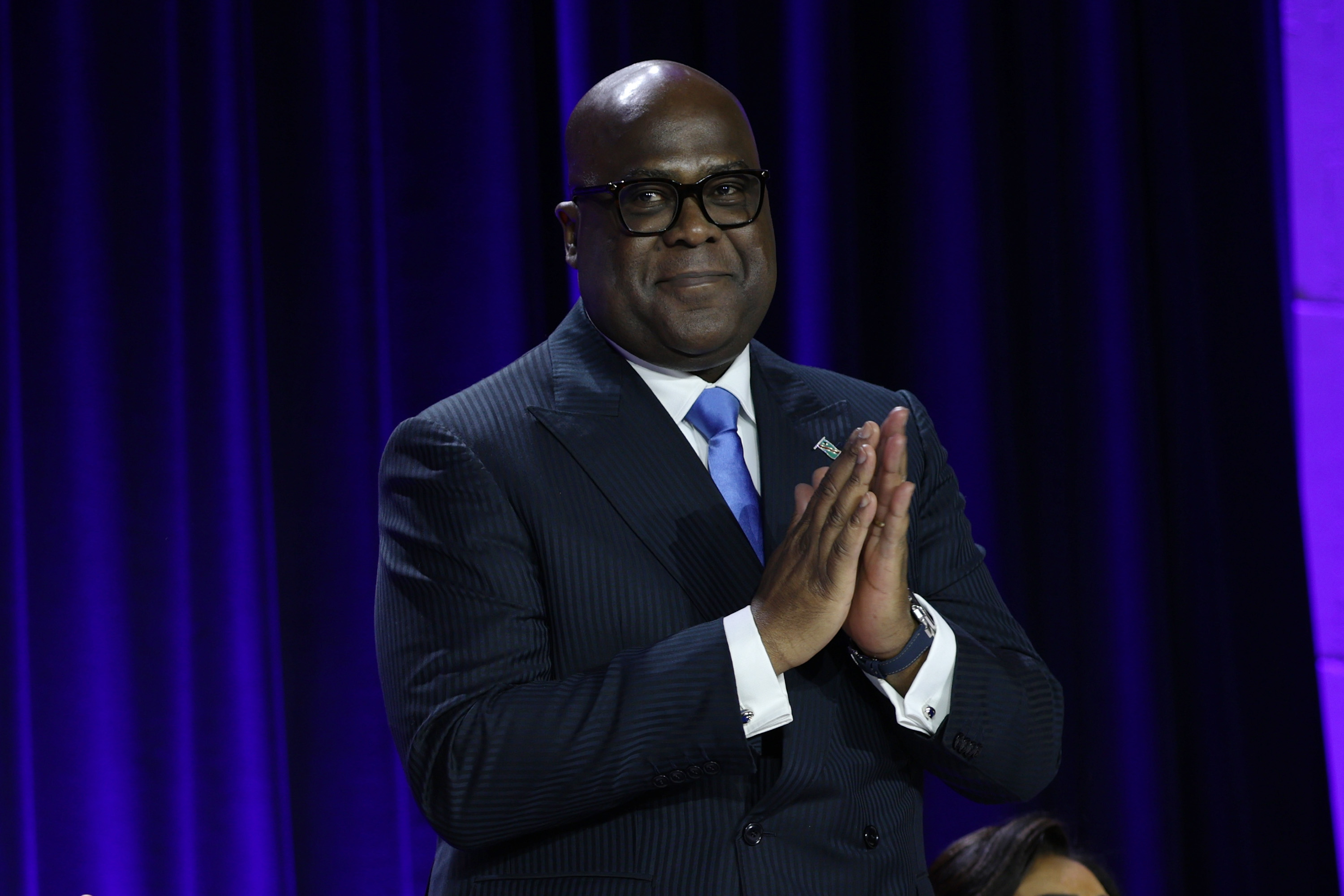
![Democratic Republic of the Congo President Felix Tshisekedi. [Photo by Alex Wong/Getty Images]](https://ocdn.eu/pulscms/MDA_/bc38a8d59a7d9ccef5bfc3351e16a07e.jpg)
The president of the Democratic Republic of Congo (DRC), Felix Tshisekedi, recently informed his council of ministers that the country must audit its mining joint ventures to ensure that businesses are complying with national regulations, including the repatriation of export proceeds.
- President Felix Tshisekedi has ordered an audit of the DRC's mining joint ventures to ensure compliance with national regulations, including the repatriation of export proceeds.
- Relevant ministers have been given thirty days to begin the audit, with preliminary results expected by June 15.
- The audit aims to identify shortcomings, assess uncollected revenues, and propose corrective measures amid concerns over capital flight and non-repatriation of mining revenues.
- Similar audits have recently been initiated in Ghana and Senegal to improve transparency and regulatory adherence in their extractive industries.
Per the minutes of the meeting between the president and his ministers, published on Monday, President Tshisekedi instructed that the relevant ministers initiate the procedure within thirty days, with the expectation of submitting preliminary findings by June 15, as seen on Bloomberg.
“This audit must identify shortcomings, assess uncollected revenues, and propose corrective measures,” the Congolese president stated.
As seen on Bloomberg, the president also stated that the non-repatriation of mining revenues as required by law and capital flight through fraudulent imports “remains a major vulnerability” for Congo.
The DRC is currently the largest supplier of cobalt and the second-largest producer of copper globally.
DON’T MISS THIS: US-backed mining firm unveils world’s largest lithium exploration campaign in DRC
The majority of mining projects in the nation, including large enterprises run by companies like CMOC Group Ltd., Glencore Plc, and Barrick Mining Corp., have minority shares held by the government or state-owned businesses.
Depending on whether they have repaid their initial investment, miners are required by Congolese law to repatriate between 60% and 100% of export earnings.
“The state’s response must be firm, realistic, traceable, and technically applicable,” the country’s head of state said.
In October of 2024, the DRC began cracking down on companies that purchase or source minerals from its conflict-ridden eastern region, where smuggling is exacerbating one of the world’s most severe humanitarian crises.
The country’s administration at the time cautioned Apple Inc. that its acquisition of metals like tin, tantalum, and gold could be tied to violence in Congo and smuggled through neighbouring Rwanda, Bloomberg reported.
Congo’s recent move to initiate an audit of one of its critical sectors follows in the footsteps of Ghana and Senegal, which launched an audit of the mining industry and an audit of the oil, gas, and mining sectors, respectively.
Recent audit initiatives in Ghana and Senegal
In October 2025, Ghana launched its most comprehensive audit of the mining industry in a decade, with a particular focus on the gold mining sector.
The audit was intended to examine production metrics, mineral distribution channels, fiscal obligations, including tax and royalty disbursements, and adherence to environmental regulations at operations managed by prominent gold mining entities, such as Newmont (US), Zijin (China), AngloGold Ashanti and Gold Fields (South Africa), Perseus (Australia), and Asante Gold (Canada), among others.
This auditing process began in November with Gold Fields’ Damang facility and Perseus, with plans to conclude the evaluation of Xtra-Gold’s Kibi unit in June 2026.
In April 2024, the recently inaugurated President of Senegal, Bassirou Diomaye Faye, formally disclosed intentions to initiate a comprehensive audit of the nation's oil, gas, and mining sectors.
![Senegal's President Bassirou Diomaye Faye speaks during a United Nations Summit on Palestinians at UN headquarters during the United Nations General Assembly (UNGA) in New York on September 22, 2025. [Photo by LUDOVIC MARIN/AFP via Getty Images]](https://ocdn.eu/pulscms/MDA_/f6796ae0f27d290077b721ff356d64b7.jpg)
President Faye delivered this announcement during a televised address to the nation, during which he emphasized Senegal's continued receptivity to international investment.
This audit represents one of the primary policy initiatives introduced since the former tax inspector assumed office.