Donnell Cooper blends service, advocacy, and leadership mission
Donnell Cooper’s life remains focused on service, Black uplift, health advocacy, and family.
 Black News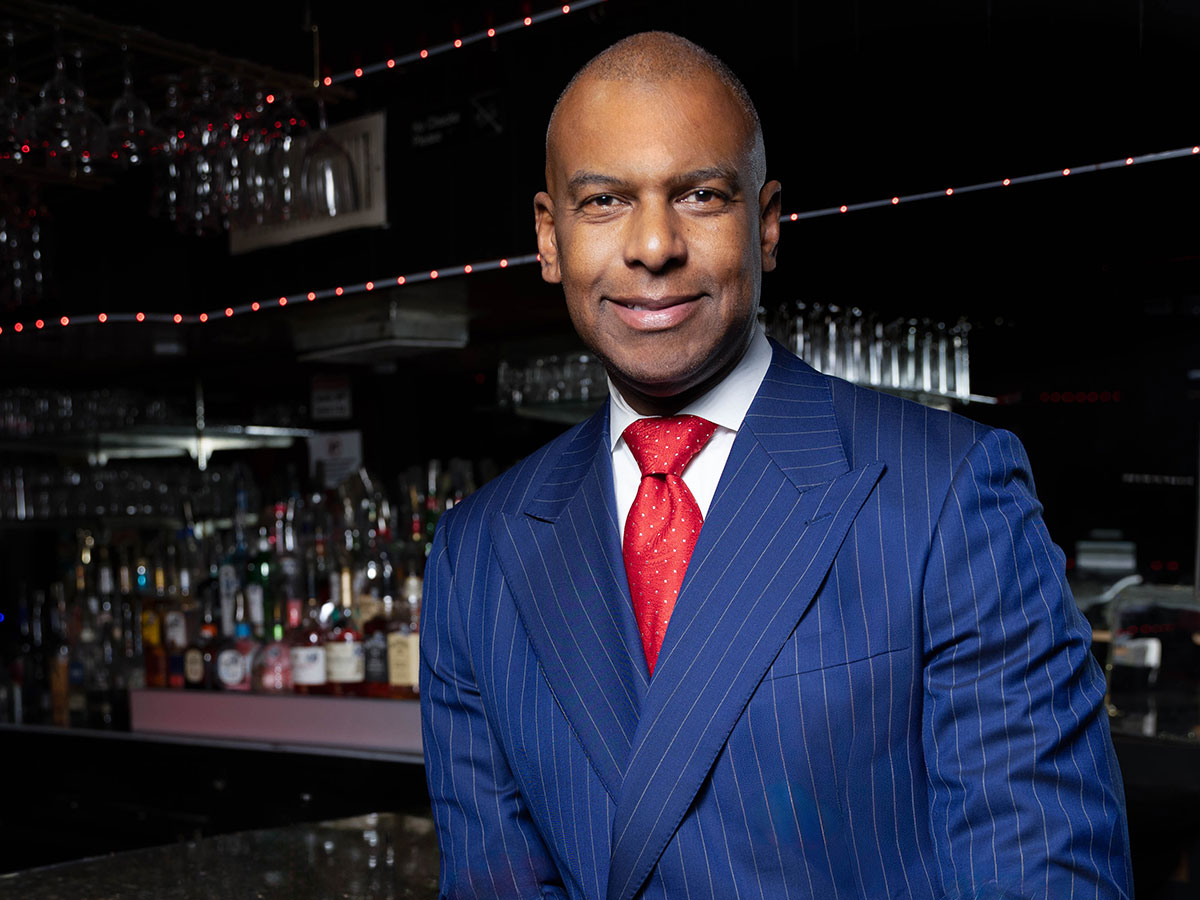

By any measure, Donnell Cooper’s life is rooted in service, discipline, and an unwavering commitment to Black uplift.
Some across Houston know him through his tenure at the Frontier Heritage Club and its annual MLK Day Scholarship banquet. Others recognize him as executive director of Houston’s African American Male Wellness Agency. Still others recall his recent run for a Houston City Council at-large seat, where he earned more than 30,000 votes as a first-time candidate.
Yet beyond these public roles lies a deeper story of resilience, purpose, and a calling to transform Black lives.
From childhood dreams to community impact
As a child, Cooper envisioned a future as a firefighter. But chronic asthma disrupted that dream. Still, the instinct to serve never left him.
Instead, Cooper redirected his path toward public safety and community engagement. He built a career across multiple sectors of law enforcement—working in parole, juvenile justice, and the Harris County court system. Each role reinforced his understanding of the systemic challenges facing Black men and boys.
That commitment expanded into education, where Cooper spent years shaping young minds.
“I moved on to a long tenure period in education,” he said, reflecting on his work teaching chemistry and history at the secondary level before becoming a community college professor teaching government, history, and ESL.
Education, for Cooper, was never just about instruction. It was about access, empowerment, and exposure.
INSERT SLIDESHOW
A personal ‘why’ rooted in family
Today, Cooper’s work as executive director of the African American Male Wellness Agency (AAMWA) places him at the forefront of addressing one of the most urgent crises in Black America: The health disparities faced by Black men.
His motivation is deeply personal.
“I was fortunate growing up as the only child… still living and breathing with my mother and father,” Cooper shared, noting both parents have faced significant health challenges.
His father, Archie Cooper, has been a central figure in shaping his purpose.
“So, people always ask me, what is my why? My why has been my father,” he said. “I walked my father through three rounds of cancer… a kidney removal… and now, at 85, wearing a lifetime colostomy bag. But he’s still kicking and screaming.”

That lived experience transformed Cooper’s outlook. His father’s perseverance—moving from Arkansas to Houston at 16 with only a high school education—became a blueprint for Cooper’s own endurance and productivity.
Community leaders affirm the impact of Cooper’s work.
Entrepreneur Chaun Tatum-Williams called his efforts to improve Black men’s health outcomes “unmatched,” adding that his passion comes from “a place of genuine care.”
Curtis Young of the Houston Recovery Center echoed that sentiment, highlighting Cooper’s advocacy for individuals navigating addiction and recovery.
“Dr. Cooper has impacted my life tremendously,” shared Young, who is currently 19 years sober. “His leadership is impeccable. He’s been a great mentor to me.”
Reclaiming dignity through etiquette and preparation
Beyond health advocacy, Cooper is also addressing another often-overlooked dimension of empowerment: Social and professional readiness.
A published author currently working on his third book, A Great Crusade, Cooper focuses on etiquette as a tool for advancement. The book explores dining etiquette, hygiene, grooming, and proper manners—skills he believes are essential in a shifting professional landscape.
“My work has been about creating access for health equity, creating access for education advancement, and most importantly, making sure that we have a safe environment.”
“Traditional in-office interviews are fading,” said Cooper, explaining that increasingly, hiring decisions are made in informal settings like lunch or dinner meetings.
“And I have been successful with teaching the core skills… centered around dining etiquette, hygiene and grooming techniques, and proper manners,” he said, emphasizing the importance of preparing Black men and women to navigate these spaces with confidence and polish.
For Cooper, etiquette is not about assimilation but about strategic positioning, self-respect, and expanding opportunity.
Building community, creating access
Across every chapter of his life, a consistent theme emerges: Building pathways for others.
“My work has been about creating access for health equity, creating access for education advancement, and most importantly, making sure that we have a safe environment,” Cooper said.
He credits his success to relationships and adaptability.
“Opportunities come by keeping your options open… learning how to pivot… and most importantly, being able to build relationships,” he shared. “I’ve never learned to burn bridges.”
That philosophy reflects a broader understanding of collective progress that recognizes individual advancement is tied to community well-being.
The road ahead

Credit: Aswad Walker/Defender.
Looking ahead, Cooper sees elected office as the next step in his service. He plans to be on the November 2027 ballot in some capacity, aiming to translate his grassroots work into policy impact.
Until then, he remains committed to meeting the needs of Houston’s Black community wherever they arise.
Each day, he draws inspiration from a guiding principle rooted in the teachings of Dr. Martin Luther King Jr.: “If you can’t fly, run. If you can run, walk. If you can’t walk, crawl. But by all means, keep moving.”
For Cooper, movement is not just about motion; it’s about mission. And through that mission, he continues to model what it means to uplift, empower, and transform Black men and women, as well as the communities they call home.