Episode 9 | Dancing in China’s Digital Space
For years, Anglophone coverage of the Chinese internet has emphasised the Great Firewall. The focus on censorship and surveillance collapses information production and access into a false binary between the haves and have-nots, the free and unfree. Yet, the authoritarian state cannot extinguish the Chinese people’s creativity and entrepreneurship, and the wall itself can unfold […] The post Episode 9 | Dancing in China’s Digital Space appeared first on Made in China Journal.
 Black News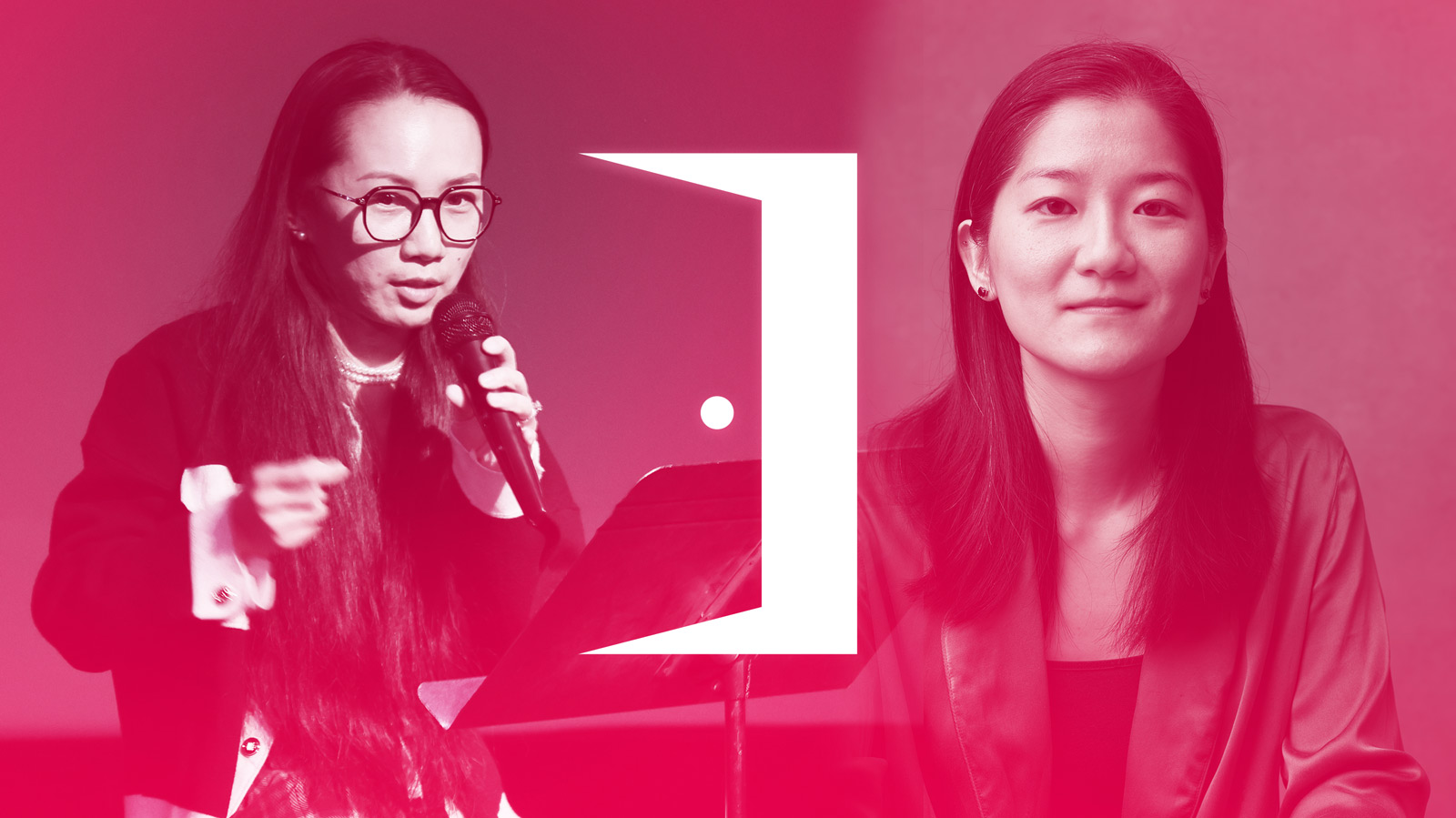
For years, Anglophone coverage of the Chinese internet has emphasised the Great Firewall. The focus on censorship and surveillance collapses information production and access into a false binary between the haves and have-nots, the free and unfree. Yet, the authoritarian state cannot extinguish the Chinese people’s creativity and entrepreneurship, and the wall itself can unfold into a dynamic space of contention and self-expression.
How have the Chinese people been innovating against political and material constraints? How is technological progress pursued and perceived both inside and outside of China? What kind of future or alternative past do people in China imagine for themselves and the rest of humanity? For this episode, Yangyang spoke with journalist and author Yi-Ling Liu and writer Afra Wang on the creative souls who dance along the edge of possibility in China, and the lure and limitations of techno-modernity.
Guest bios:
Yi-Ling Liu is a writer and editor covering AI and how it is shaping Chinese society. She is currently a journalist-in-residence at the Tarbell Center for AI Journalism. She launched and led the China desk at Rest of World as its first China Editor. Her book, The Wall Dancers: Searching for Freedom and Connection on the Chinese Internet (Knopf, 2026), has been shortlisted for the Orwell Prize.
Afra Wang is a writer and researcher working between the California Bay Area and London. She writes about China and Silicon Valley: their cultures, power structures, paths of innovation, and the ways AI is reshaping the future. Her work has appeared in WIRED, The Ideas Letter, Los Angeles Review of Books, and Asterisk, and she writes Concurrent, a Substack newsletter about AI in China and Silicon Valley. She is also the co-host of the Chinese-language pop culture podcast CyberPink / 疲惫娇娃.
Related Materials:
Liu, Yi-Ling. 2026. The Wall Dancers: Searching for Freedom and Connection on the Chinese Internet. New York, NY: Knopf.
Wang, Afra. 2025. ‘On Typing Chinese.’ Reboot, 3 February. joinreboot.org/p/on-typing-chinese
Wang, Afra. 2026. ‘You’ve Never Heard of China’s Greatest Sci-Fi Novel.’ Wired, 20 January. www.wired.com/story/china-sci-fi-morning-star-lingao/
Full Episode Transcript:
Yangyang (00:00)
If I had a penny each time someone in the US, after learning I am a particle physicist from China, asks me with great enthusiasm if I have read Liu Cixin’s The Three-Body Problem, I would have, well, a lot of pennies. Yes, I have read the novel, but only the first book, and no, I did not enjoy it at all, I say, which usually elicits a sigh of disappointment and shuts down the conversation.
I am not here to judge anyone’s taste in literature. I, for one, am not the biggest fan of fiction in general. But I also have a hard time imagining a reverse scenario, if a white American physicist would be approached at such frequency with a similar question about Kim Stanley Robinson. It seems to me a good part of the West’s fascination with the three-body problem is not so much about the novel itself, but more about the West’s obsession with China.
Liu Cixin’s intergalactic saga both confirmed and unsettled longstanding ideas about China in the Western imagination. Is survival of the fittest the rule for human society? Should a technologically advanced alien civilization be feared? And can the people living under authoritarianism be creative and indeed innovate?
I am immensely grateful for a small group of Anglophone writers who have been able to write about technology, society, and China against orientalist stereotypes and Western fears and desires. And I’m so excited to have two of them on the show today. First up, have Yi-ling Liu. Born and raised in Hong Kong, Yiling is a writer, editor, and the author of the gorgeous new book, The Wall Dancers, searching for freedom and connection on the Chinese internet. Yi-ling, thanks so much for joining us and congratulations on the new book.
Yi-Ling (01:52)
Thanks so much for having me, Yang Yang. Delighted to be here.
Yangyang (01:55)
So your book is called The Wall Dancers. Can you explain briefly what that means? And the stories I know revolve around five central characters. Can you just tell us a little bit who they are and what makes them wall dancers?
Yi-Ling (02:07)
Absolutely. Just wanted to start off by saying I also have many pennies, Yang Yang, from the number of times people have asked me about the three-body problem. I’m a rich woman in that regard. But yeah, so to talk a little bit about The Wall Dancers, the title itself, The Wall Dancers, comes from this Chinese phrase, dancing in shackles, daizhe tielian tiaowu. And as far as I know, it was first used by journalists in the early 2000s to describe the kind of process of writing and reporting under state constraints but since then it’s been used by all kinds of people, by hip-hop artists, by software engineers. Actually, it was used in the foreword of the English version of the three-body problem, where Liu Cixin describes himself dancing in chains. And I found that this particular metaphor, this idea of the dance, resonated with me because it was much more dynamic than a lot of ways people have described the relationship between state and society. This kind of push and pull. It kind of really captured my experience of living in a place that’s constantly shifting, that’s kind of swinging between freedom and control, that’s on one hand rich with innovation and yet on the other hand, rigidly constrained. And I came to know the people who were particularly good at performing this dance. I came to know them as dancers or wall dancers because of the way they were doing this on the Chinese internet.
Yangyang (03:34)
And so can you just tell us very briefly which the five characters are?
Yi-Ling (03:40)
Yes. Yes. So the dancers are Ma Baoli, who is an ex-cop turned CEO of the largest gate-eating app in China called Blued. There’s Lu Pin, who was a journalist who founded the most influential feminist magazine, online feminist magazine, Feminist Voices, and then turned into a feminist activist. There is Kafe Hu, who is a hip-hop artist from Chengdu who kind of rises to viral mainstream fame in the 2000 and mid-2010s. And then there’s Chen Qiufan or Stanley Chen who was a tech worker at Google and Baidu before he decided to pivot into writing science fiction full-time. And then finally there’s Liu Lipeng who or Eric Liu who was a sensor at a social media company Weibo in 2010 up until 2011, 2012 before he had a crisis of conscience and started leaking censorship directives and now lives in the US.
Yangyang (04:47)
So listeners, you can catch a glimpse of just like how diverse and colorful the characters are and how fascinating the book is. And I should also mention our episode from last month, we talked specifically about being gay in China and Ma Baoli got a mention and we also talked a bit about gay cops. And so Yiling, if we stay with the idea of like the war in the Chinese political context in terms of like censorship and explicit political constraints.
And one can, if we’re not overstretching this metaphor, but one can approach the wall in different ways, right? One can try to live within it and stay as far away from the edge as possible, which is somewhat like, for example, my mother’s approach. One can try to just jump over the wall and just leave the wall behind. One can try to smash against the wall in an effort to crack it or just alert others to the tyranny of the wall.
So it seems to me that to be a wall dancer, as you mentioned, to live with, against, and through certain political constraints is a very specific and deliberate choice. And so I’m quite curious about your approach, like for a book about the Chinese internet, why did you choose to focus on those who live near the edge and constantly contend with the constraints without facing the most dire consequences are somewhat able to live in a particular space that they neither completely complacent, they are also not imprisoned in that sense, right? And so why did you choose the dancers rather than those who have chosen to live like a safer life or taken a more confrontational approach?
Yi-Ling (06:21)
That’s a great question. And I think a lot of it has to do with the fact that that type of dynamic and that type of relationship to the wall and to state power is almost like rarely talked about or discussed. Like that kind of relationship doesn’t seem to exist, particularly to those who live outside of China. Right. I think within China, it’s a constant. It’s something it’s a dynamic that people are negotiating all the time. It’s not something new. But outside of China, there’s this sense that any relationship to the state has been reduced to kind of one of two simplistic narratives. And I think you’ve sketched that out a little bit, right? There’s the sense of, you know, on one hand, you could be a kind of apologist and patriot and just like sleepwalking through life and have no sense of the constraints that you live in and essentially have no agency over your own life and your own kind of relationship to state power. Then on the flip side, you could be a dissident, an opponent against the regime, and you’re tearing down the walls, and you’re calling truth to power, and suffering from those consequences. And I think while both of those paths certainly do exist, they kind of force people to think in one of those two binaries, right? It really narrows down the possibility of what actually happens and what you can do. And when I was living in China, I just found that is extremely simplistic and reductive and there’s like a whole spectrum of different relationships that people can have and it reminded me in particular I think one work that really inspired me throughout this process was Vaclav Havel’s Living Within the Truth or The Power of the Powerless where he talks about living within the truth and living in the truth as this kind of multiple and kind of inclusive and really broad definition of how one can live under a authoritarian regime, right? He says that living within the truth could be as simple as just straightening your backbone and living with greater dignity as an individual. And oftentimes those actions are so invisible. Those are things that we don’t see, they don’t involve really kind of valiant, quote unquote, brave actions that are captured and very easily shared on social media. And so I think I wanted to just lay out the full spectrum and multiplicity of ways that one can live with integrity within these very particular constraints.
Yangyang (09:03)
Thank you, Yiling. One thing I really appreciate about your work is that you refuse and reject these false binaries and you really show how the wall is not so much like an edge and a cliff, It can unfold into multiple dimensions, into a world in itself. And on that note, I would like to bring in our second guest, whom I feel is also a wall dancer herself. Afra One writes the concurrent newsletter and is a contributor to Wired Magazine among other outlets. She’s also an esteemed podcaster and has been a host of multiple extremely popular Mandarin podcasts, including Loud Murmurs, Xiao Sheng Xuan Hua, and Cyber Pink. And so Afra, if we expand the meaning of the wall a bit to not just explicitly political constraints, but also like other types of borders, including the boundaries of technology. And last year on this show, we had Professor Thomas Mullaney, and we talked about the development of the Chinese typewriter and Chinese input methods. And one can say that as a form, that is also a form of wall dancing, right? That is a way to work with and reach beyond the limits of a technology that was initially designed for Latin alphabets. And Afra, you wrote a really, really fascinating essay about your own experience typing both Chinese and English and how that informed you about the limits and the capaciousness of technology. can you tell us a little bit about that?
Afra (10:24)
Yeah, thank you. First of all, thank you so much for inviting me to be on this podcast, you know, being able to speaking with two writers who deeply inspired me. It such a such an honor. Yeah, going back to going back to my writing, I particularly start with a fascinating story about my name. So I like the article I wrote about the typing in Chinese takes people back to the Beijing airport in 2003 when I was a little kid with my dad. And that was the moment where I started to become very obsessed with personal computer and I became very obsessed with the internet. So that was a moment where I was on QQ all the time. I was on different internet forums, reading a bunch of stuff and participating in all sorts of societal discussions in China. Back then, the internet was a relatively free space. And I was so obsessed by this empowering internet and the personal computer this thing is such a revering instrument in front of me. This is so powerful until my dad and I arrived in the Beijing airport where the flight attendant needed to print out my boarding pass. I only realized that my name Zhao曌, which is a rare character in Chinese, 生僻字, Zhao, couldn’t be found by the typing method at the time. I remember they were using Zhineng ABC, Smart ABC.
And then I just remember she kept scrolling down and down and down until the very last page of Smart ABC to find my Zhao. And then she just couldn’t find it. I just remember that was the moment where this powerful, encompassing, mesmerizing personal computer kind of collapsed in front of me because it couldn’t even type out my name. So I think from that moment, I just started to discover the limitations of technology. And then I started to observe a lot more when I grew up. For example, back then in China, many people needed to learn how to type in Chinese. And now like our, you know, Western counterpart, you can just type in a Latin, like English keyboard, when you type A, the page will show up A. When you type B, the page will show up B. But typing in pinyin or typing in wubi is a learning curve. You kind of need to learn. So when WeChat arrives to everyone’s finger, when smartphones became very accessible and available and cheap, to the point where my grandparents all have smartphones, my aunts all have phones, and then I realized that they couldn’t type. They couldn’t type in pinyin. The way they use WeChat is very different from our understanding of using WeChat, which is they would use voice messages a lot. And that’s why WeChat is probably the initial design of WeChat is you press the phone for a few seconds, you say the word, and then you transmit the voice message instead of typing because I would assume a large portion of Chinese population at the beginning of the mobile internet age never really received any education on how to type, how to use pinyin. So I think that’s another example I gave in a sense of revealing the blind spots of technology and also revealing the hubris of the designer of certain technologies because when you watch commercials for IBM, for Apple, I think the commercials would assume all their users are middle class, in a sense, like if you watch like an Apple commercial in the 90s, you would assume the users would be a middle class white male trying to optimize one’s working efficiency and then would use the Apple device to make the work process faster, process better. But a lot of times the people on the receiving end of technologies are people like my grandma who would very easily get Pinduoduo addiction and who would, finding a really hard time to to put in Chinese characters onto the screen. Yeah, I think, yeah, think writing this piece is me just basically grappling with that certain hubris that Tom Mullaney pointed out in his beautiful, almost seminal book to me about a certain design of technology is know, like certain design of technology has a lot of assumptions. And then facing those assumptions, and then I would argue, especially like my generation of Chinese kids growing up in China is to think how to subvert those assumptions. you know, I also recently wrote a piece about the jail-breaking iPhone is because, you know, when you have such a shiny, expensive California package, the California design piece of technology in front of you, you know, as a kid growing up in the early 2000s, like your initial intuition is to break it, to surpass its limitation and unleash the full potential. And I think back then it wasn’t really a moral question or anything. It’s almost like a no-brainer. Like you jailbreak your iPhone, you make it more powerful, you install all the paid games for free is almost a no-brainer. Yeah, I think that’s my take on the wall question.
Yangyang (16:47)
This is really, really fascinating. I’m someone who actually did not learn how to use a computer until university in China. On the other hand, it’s actually really amusing to me hearing your stories is, I think very, very recently, my mother was just having this argument with her siblings about whether or not their mother is actually capable of using a smartphone. And so I think one of the things that I find really illuminating about your story is it really forces one to think about what tech, who technology is being designed for, right, whose needs are being centered and who are forced to adapt. And on the other hand, what’s your story and also like Professor Tom Mullaney’s book also illuminate is how being in the periphery, being relegated to the margins can be a source of creativity in itself, right? Like it can force one to tinker. And Yiling, in your book, you have this really, really fascinating detail about another form of tinkering in the margins, which is about da kou dai or like punch a hole tape cassettes and CDs. Can you first of all, just like tell us what that is and what is the cultural significance, like the lasting cultural impact of these effectively like defective discarded products.
Yi-Ling (17:54)
Yeah, so Da-kou is literally like punch a hole or cut hole, like cut hole tapes, cut hole CDs. And like, unfortunately, I wasn’t born in the era, like I was just born after like Da-kou was a thing. And so a lot of what I’ve learned has been kind of through asking other people of the Da-kou generation. And they literally do call themselves like the Da-kou generation. But essentially, it first started with tapes and then CDs where they were kind of like the excess surplus CDs that came from Western music companies and they were cut and thrown away at customs as quote unquote plastic foreign trash, right? And so the way to destroy them was just to like punch a hole. So you’ll see the little tapes and there’ll be like a hole right through the middle or a disc where there’ll be like a cut or a gash at the edge. But the thing is like even though there are chunks of the music that you can’t hear, there’s still a lot of it that’s very much present. So you can put the tape in and there may be one song that’s gone, but a bunch of them will be still there. And so they first started showing up as kind of recycled waste, mostly in the Pearl River Delta area. Shantou was actually one of the first areas where the da-kou CDs started appearing in factories. And…they were just like very, very cheap, accessible ways for an entire generation of young Chinese people to access music from the West. And that was like the whole range of different things from like, you know, Nirvana to like, Linkin Park, know, to like Britney Spears, just like coming through the funnels of these CDs. And I think it created this culture of, you know, like hunting and looking for these kind of music as these undiscovered gems, right? So a lot of people would go to a da-kou CD store and just spend hours looking for something new and discovering something new. And I would say that da-kou was a huge part of cultivating China’s underground music scene.
And a lot of it was about, you know, like, what are these new sounds that we’re listening to and how can we kind of articulate a version of our own, right? Like a lot of the first kind of like punk musicians, but also hip hop artists that I write about quite extensively, they might have first discovered Eminem, for example, through like a Daco disc of like the Slip Shady LP, right? And be just like, holy shit, like, what is this sound that I’m hearing? And then think about, okay, well, How can I recreate that sound here at home in Beijing or in Chengdu? And how can I infuse my own particular voice and sound into that genre? And yeah, so I think da-kou was a really formative part of China’s underground music scene.
Yangyang (21:04)
Yeah, I think I was born probably just at the tail end of the da-kou generation, though with my rather restrictive upbringing, I only heard about it like secondhand from my peers or people who are slightly older than me. But I also feel like the da-kou dai, the punch or hole tapes can also be read as a metaphor about innovation, right? Like is reusing, repurposing what the center has discarded as trash a form of innovation? Of course it is. But is it a lesser form of innovation than say producing original music? And I think the answer to that actually very much depends on what one values as innovation and what one sees as progress. And so Afra, I’m not going to ask you the cliched question of can China innovate? However, you have worked in the tech industry for several years yourself, and you converse frequently with entrepreneurs and tech workers from both Silicon Valley and from China’s tech capitals. And so I’m curious whether have you encountered different, whether it’s national, cultural, or just individual, different understandings of what counts as innovation and what kind of progress is most valued.
Afra (22:09)
Yeah, yeah. I think I want to bring up more, like I want to contextualize this conversation a little bit and just, you know, as we talk about da-kou a little bit, I find that the Daco situation is really similar to China’s early 2000s tech industry. It’s like, if you grew up in China in the early 2000s, you never really encountered a complete original or like a non-broken piece of commercial software. Like everything you use is basically pirated or somehow molded or somehow broken then like when you’re downloading those pirated software and then often you see the UI is cranked and then or the stuff on the language on the software are half translated. And I think like the da-kou experience in music is basically quite universal also in the tech world and then I find this energy quite charming and I do think a lot of China’s entrepreneurial spirit sort of grew out of this acceptance or celebration on this incomplete or broken technology. So I think first of all, I think can China innovate? is a framing that’s almost… you know, comes up with too much assumption, you often assume there’s a genius who, you know, in the morning this genius woke up and then comes up with a brilliant idea and then this genius would go to his garage in his California suburban house and then tinkering in the garage and then brings out this piece of beautiful innovation. And I think innovation in a lot of sense in a lot of sense, is not like that.
I’ve been reading this book called The Nature of Technology written by Brian Arthur. It was written in 2009 I think I keep thinking about this quote from the book, is, invention is a matter of problem solving, meeting needs by putting together or combining existing pieces and solving and resolving the issue that arise along the way. So by the definition, think China today, we saw the entire technological trajectory is in a sense innovation. I would use a more concrete example. Recently, I’ve been quite obsessed with 3D printing. And I remember when I was in college and when I was in high school, I heard a lot of hypes about 3D printing, but it was essentially a very niche geeky and expensive device. And then you need to have a lot of technical skills in order to take care of a 3D printing machine. Until there’s a Shenzhen company called Bamboo Lab, basically broke into the market and then completely rewritten the game. So before Bamboo Lab, using 3D printer meant you kind of need to spend a lot of time debugging the machine. then the machine would basically alter what they called spaghetti. It’s like this this like a weird jiggling substance sometimes would ruin the creation. And then after Bamboo Lab came to the scene, it actually incorporated a lot of existing functionalities or existing stuff that available in the Shenzhen supply chain, such as there’s a camera that constantly detecting if the machine is spitting out spaghetti or it is functioning properly as as you direct it, it has a very cheap lidar to detect the situation in the 3D printing space. It has gravity sensor. It has automated a lot of stuff. then you also embedded with Tencent’s Huanjuan 3D generation model and other AI functionalities. So I think this 3D printer produced by this little known Shenzhen company called Bamboo Labs, although the valuation of the company is quite high. But to a lot of the Silicon Valley innovators, Bamboo Labs is just a bunch of engineers assembled whatever is the best from the Shenzhen supply chain together and then made something pretty fascinating. And after Bamboo Labs, 3D printing actually became a thing. I see London fashion designers were using such machines to create customized jewelry. I’ve seen non-engineer-minded people like me can just design something and then render it into a 3D model and then print it out as I want. So it really unleashed an entire wave of users, of people who would never really taste the beautiful, the beauty of 3D printing. And now you have this scalable, very, really robust, really reliable and relatively cheap device and you can print out beautiful things. I think this bamboo lab example also reminds me of, you know, vehicles, right? Like before the Ford era, vehicle was expensive niche little hobby, know, like when you want to have a vehicle, you need to ask people to handcraft to make a vehicle by hand. And then like this vehicle is really fragile, is really expensive. is, you know, it is more for entertaining purposes rather than transportation. But Ford himself introduced a model T introduced the, the production line, basically changed the game for vehicles. And I think bamboo labs is basically the 3d printer’s Ford, which which transformed how we understand 3D printing. And I think it itself is innovation. And then it itself doesn’t have any groundbreaking technology. It didn’t write the paper such as, attention is all you need. It just assembled existing stuff and then making something, making this combination quite strong and works. think I see Bamboo Labs is a great example, is a great case study, and almost like a metaphor for lot of Chinese innovation.
Yangyang (28:46)
This is so fascinating. Actually speaking of 3D printing. So I believe earlier we mentioned Professor Tom Mullaney’s work and Chinese typewriters. I think there is like 3D printing efforts to replicate the MingKwai, the first Chinese typewriter with a keyboard. And so that is like a much cheaper and faster way to produce some prototypes that can be used for educational purposes. And so on the note of like different technological imaginaries, I also think like, right, like a lot of the social perceptions about innovation come from how the story of the innovator or the innovators are told, whether or not they’re placed in the correct context or a strip of context. And a lot of that is also very ideological, right? Like is building a sharper spear a more important innovation than learning how to weave a more sturdy basket? And so on different perceptions of technology, Yiling, I would like to come back to you. Earlier, we both talked about how we would have collected a lot of pennies based on how many times we’ve been asked about the three-body problem. And in your book, you also did mention Liu Cixin’s novels. And as you just mentioned, one of your central characters is another Chinese science fiction writer, Chen Qiufan, Stanley Chan. But Chen Qiongfan’s works are actually very different from the three-body problem or some of Liu Cixin’s works. And as you write a lot of science fiction writers in China, do not worship or glorify technological progress. And they actually write to interrogate the dark sides of development, like environmental pollution in Chen Qiufan’s works or class divisions in Folding Beijing. And so can tell us a little bit about these works? And why do you think it is the three-body problem and not Waste Tide or Folding Beijing that is perceived as like the Chinese science fiction novel that has captured the most global imagination?
Yi-Ling (30:33)
Yeah, that’s a great question. think maybe I could just like map out those three particular writers that you named just to give a sense of like how they differ in terms of style and scope and what they’re paying attention to. Also generationally, they’re different as well. Like Liu Cixin is significantly older than Chen Qiufan and Hao Jingfang who wrote Folding Beijing.
I would say like the key defining characteristics of Liu Cixin and the three body problem is kind of scale. Like he’s discussing long periods of time. He’s talking about the universe. He’s talking about like a lot of people compare him to the kind of science fiction writers who emerged during America’s golden age, you know Isaac Asimov is the obvious point of comparison. This sense of like wonder towards space travel and like time travel and you know, like he is a scientist at heart, right? And so I think a lot of the fascination with Liu Cixin particularly both within China and outside China is the scale of the epic, right? He is going, that’s why you have so many kind of like
U.S. pundits, or UK pundits, you know, like Niall Ferguson saying, like, if you want to understand China, you have to read the Liu Cixin, right? Because he’s delivering an epic story and an epic story is the best way onto which to like project a national narrative. And so I would say that’s like one of the key reasons that he has emerged to the global forefront. I would say like the other reason is just like really good timing you know, he wrote the three body problem and published it in 2008. And he actually was connected to Ken Liu, who translated the first version through Stanley, through Chen Qiufan. So he connected Ken to Liu Cixin. And it was just like the perfect moment for a Chinese science fiction writer to be translated in that way for an international readership, right? Like I think at some point in the book, Stanley told me if this book were published today, it probably wouldn’t have reached that kind of height, right? This is a moment where there was like appetite for Chinese literature. There wasn’t this sense of hostility. There is a sense of like curiosity towards how China perceived its technological future, which a lot of people kind of like impose onto the narrative of three body problem.
By contrast, would say Chen Qiufan’s work and Hao Jingfang’s work, those two are also distinct, but they’re distinct from the three-body problem in that, A, I don’t think they see themselves necessarily as Chinese science fiction writers. know, like when people ask, like, are you a science fiction? They’re like, we are global, we are science fiction writers. Like, our Chineseness is not central to our identity in the way that it is to a certain extent to Liu Cixin.
And so when they’re writing about technology, particularly with Stanley, a lot of his work or a lot of his early work at the very least is focused on the near future. It’s focused on like the really immediate risks and realities of technological progress. And so a lot of his short stories are about like environmental degradation, about the kind of like ennui and boredom that one feels as part of corporate rat race. They’re about like a near future one of his short stories is called the year of the rat which actually when you read it now feels like reality where like there’s this global rat epidemic and a rat sneaks out of a Chinese lab and this is published in 2008 mind you. A rat sneaks out of a Chinese lab and like a global trade war unfolds and like this NATO-like force is like dispatched to go and destroy these rats. And then all of these like university students who can’t find jobs get jobs to go and destroy rats like as part of like a rat destruction squad. And so, you know, like a lot of his stories are like touching upon themes that are very, very much in the present and they don’t necessarily involve kind of intergalactic space travel across you know, multiple centuries and millennia. And I would say his kind of central preoccupation is just like, what does it mean to be human? Like, what does it mean to anchor yourself at a moment of like rapid technological change, be it as a Chinese person or as just a person in this world? Hao Jingfang is similar, but also different in many ways in which like her writing is like very sociological and very much interested in economic systems, in particular inequality. So like Folding Beijing, both of you have absolutely read, but just to like give listeners a sense is about a city that’s been divided into three and it’s like a first class, a second class, a third class. And depending on what time of day it is, like part of the city goes to sleep and part of the city wakes up and they get to enjoy, if you’re part of the first class, like a beautiful sunlight and like lots of space and grass and houses. And if you’re part of the third class, like basically you’re a waste worker and you get the darkness of the night. And for her, like that story is like very much rooted in her work, not only as a science fiction writer, but as an economist. Like she’s a macro economist at a…like state organization, like every day she’s thinking about, or at least when she was writing this story, thinking about like how is automation going to affect the lives of workers, right, and in particular migrant workers. So I think there’s like a very direct, it’s almost like a fable or like a dystopian kind of like policy proposal, you know, very, very rooted in the present day. And so like, That’s just, and I think that’s just like representative of three very distinct voices. And if you were going to, you know, to read like Han Song or Xia Xia, like they all, they all have very distinct senses of what they want to write about and what they’re interested in. And we kind of maybe give Liu Cixin too much credit for being like representative of the entire landscape of Chinese sci-fi. That being said, it is true. They do call him like…the big daddy. mean, I call him big daddy, but they do use similar words to describe exactly Da Liu, right? Like that exerted that level of influence in propelling Chinese sci-fi to the mainstream stage. Like he’s definitely done that, even though he is not representative of the kind of full diversity of voices that are out there.
Yangyang (37:40)
This is so fascinating. Yeah, I’m also like reminded of what Ursula Le Guin had said, right? When she said she writes science fiction, but she is not in the prediction business. She is in the description business. She is using this particular literary genre to describe the world we’re living in in the present. And so speaking of science fiction from China, Afra, you recently wrote for Wired magazine about quote unquote, the greatest Chinese science fiction relatively few had heard of or at least before the publication of your very fascinating piece. And so tell us a little bit about what is Lingao Qiming, what is the Morning Star of Lingao? What is the basic premise of this story? And also it is written in a very, very particular way. So tell us a little bit about that as well.
Afra (38:24)
Okay, yeah, of course, the greatest science fiction in China is an ironic title, it is absolutely not the greatest. Actually, you know, this Wired piece told a lot of people to read Lingao and whenever my friends was about to start Lingao, I was about to warn them, like, you know, lower your expectation. Juar like, you know, it reads like Wikipedia pages, if you know what I mean. Okay, so what is the Morning Star of Lingao?
Actually, some… my friends in crypto told me it is one of the greatest of the DAO experiment. DAO represents decentralized autonomous organization. So I really learned about this piece of novel from a very niche tech community in China, the crypto bros in China. And then I started to get fascinated of Linga and then I started to dig in. And I realized this is so fascinating. So basically this is… a crowd-sourced novel. The writer is not just one person, but almost 500 of writers. And then the way they started to write this novel really started from a very simple question posted on a military forum in China back in 2006. And then the question is basically, what would you do if you can carry the modern knowledge and equipment back to the Ming dynasty?
So this is basically a thought-provoking question inviting people to speculate, know, what we do. And then because of the nature of this forum is, you know, has a lot of like military, like, political policy wonks. So quickly this discussion has spiraled into really detailed scenario speculation or scenario writing. And then people would…. People would say, of course, the first thing we do if we can travel back to the Ming dynasty is to start industrial revolution. But how can we start industrial revolution from ground zero? This is something that’s really fascinating. then I think a big part of Lingao’s aesthetic beauty or aesthetic sensibility comes from this obsession with starting from zero with your physical reality. So when you are reading Lingao, you would read almost like a technical menu to start like a chemical factory or how to make concrete out of nothing. And then which comes with that particular era where this novel was the most influential. It was I think the collective novel fiction, like this novel writing practice hit a peak in the 2010s. And in 2010s, it was a moment where China was massively building infrastructure. And then the people who are participating in this infrastructure building process are the people, know, people who have STEM majors, you know, like 20 to 40 years old, mostly male in Chinese cities. So during the daytime, they are the bridge engineers, know, they are the railway engineers. And then during the nighttime, they would turn themselves into, you know, into jianzheng, you know, keyboard politics, and into, you know, lingao writers, and then, you know, keep writing the story. So the practice of this writing spans almost two decades now. And then I have to say like the lingao is still hasn’t ended yet. And then if you really see the fanfic, there are almost 1,000, if you go to the website, there’s almost 1,400 derivative works. It’s just almost like Harry Potter or Star Wars fanfic. Lingao itself even has its very vast universe of fanfic. Which comes with the core ethos of Lingao, which is the sublimity of industrialization. So the writer of Lingao, the believers of Lingao, they really revere construction. They really revere industrialization. They really revere what the Marxist would call the productivity force, the sheng chan li, the production force. And then they would believe seizing this most advanced production force and building stuff from zero and then transform the nature and then making the nature a more industrialized, a more civilized environment itself, the practice itself is a form of romanticism. So when you’re reading Lingao, the writing itself is anti-literary. It’s because it reads like a manual or Wikipedia pages. It really teaches you how to manufacture a piece of brick or manufacture penicillin.
And then sometimes Lingao would also, I would say, link to Liu Cixin, would also exude this almost self-indulgent emotion on self-sacrificing. So I think Liu Cixin, broadly speaking, think Liu Cixin is also be seen as a sci-fi writer from the industrial party. He is like a part of the bigger industrial party discourse. So like the way Liu Cixin would do in his story is he would sometimes making sacrifice a noble, like making sacrifice a noble cause or romanticize sacrificing. For example, in the beginning of the wandering earth, half of the earth population needed to die because they need to do lottery in order to go to to go to the underground world to be protected from the terrible climate on Earth because the sun is dimming. And then the way Liu Cixin portrays this kind of sacrifice and death is almost making it desirable or making it very noble. And I think I see a lot of those like emotions or elements from the Morning Star of Lingao where they would believe, you know, traveling back to the Ming dynasty and then, you know, abandoning everything, abandoning your comfortness in the modern world, you know, abandoning your family and then going to like, going to this great beautiful venture and devote yourself onto this hard thing is a form of romanticism.
And then later in the plots you have a different kind of revolution. You have different kind of confrontations with the Lingao native populations. And then you also have a variety of confrontations, you know, with other stuff and that comes with certain sacrifices. And then the people in Lingao are running in this like semi-militarized Plutocracy and then the decision makers of the Lingao they would say exactly the same thing where you know The one the earth’s characters would say is like we’ve got to sacrifice You know half of our population just because we need to preserve certain certain stuff or just because we need to advance Certain front of our industrial industrialization process. Yeah, I just see like some interesting parallel between between Lingao and Liu Cixin.
If you can like, disseminate Liu Cixin into like few hundred people, I feel like the few hundred people would be the story writer of Lingao.
Yangyang (46:28)
This is really fascinating. I must admit I have not read the Morning Star of Lingao. And I was not sure if I wanted to, but hearing what you just said, I might just like take a look. And one thing I am genuinely quite curious about is this premise, right? If you could go back 400 years to the Ming dynasty, why is the most valuable thing you could bring back is like the technologies from the industrial society? Since you mentioned like Marxism and productive force, like why not bring back like feminism and class consciousness?
And so this brings me to another dimension, right? Just like can technology be detached from their social and political environments of their creation and utilization and be transported and grafted onto another society? And on that note, Yiling, I would like to come back to you. And in your book, you also wrote about in terms of the great firewall of China in terms of the giant censorship, surveillance apparatus of the Chinese internet.
A lot of Western technological firms, including Cisco and Motorola, provided technologies and equipment for the Chinese government to build up this system. On the other hand, we also hear a lot in the Western discourse about how companies like Huawei, when they sell surveillance equipment abroad or equipment with surveillance capabilities abroad, it’s called Beijing is exporting authoritarianism. And so what is your take on this type of framing?
Yi-Ling (47:52)
Yeah, well, there’s certainly a lot of hypocrisy there, right? I think at the end of the day, like exporting authoritarianism is maybe like the wrong framing. And the correct framing is that surveillance, defense tech, kind of military technology companies are driven primarily by profit incentives. And if they have the ability to disseminate that technology across the world, they will do that.
And we’ve seen that done historically again and again by both Chinese companies, but also U.S. companies. like, I think one thing that has been present in the construction of China’s Great Firewall from the very, very beginning is that U.S. companies were absolutely crucial in making it happen and constructing it. Right. I think the historians Tim Wu and Jack Goldsmith once wrote that the Great Firewall is essentially built by American bricks. So you have, as you said, Motorola, provided the wireless communication to Chinese traffic police. Sun Microsystems was providing provincial police departments, computer networks. And then Cisco was the big one, which ended up being a scandal decades later.
They were essentially doing all of the filtering and surveillance equipment. And at the end of the day, Cisco just saw the Great Firewall, or what it was called then, the Golden Shield Project, as a very lucrative business opportunity. It was going to be huge. It was going to be nationwide. And they already produced this kind of technology for American corporations. It was essentially kind of like a glorified version of like a porn blocker for schools, you know, or a filter to prevent employees from going on to ESPN at the workplace, right? And so they just saw, this technology that we already produce could be very easily adapted to Chinese internet users and make a ton of money. And it’s not just the Great Firewall then. US surveillance tech is still used in China.
I don’t know if you’ve seen this piece written in the AP recently, Dake did this incredible sprawling investigation of how US tech companies continue to provide that equipment to allow China to censor its own citizens. And so I think there’s a great deal of hypocrisy in that framing.
Yangyang (50:30)
Yeah, and the report is by the AP journalist on Dake Kang who published this report last year. And I do encourage listeners to check that out. And so on the note of technology’s relationship with authoritarianism, Afra, let me just ask you this question very, very bluntly. Is so-called AI inherently anti-democratic when it is by construct reliant on concentrated power and resources?
Afra (50:59)
Okay, how do how can I what what can I like playing Tai Chi how to like handle this very so how do I dance this out? Okay, I think people used to believe in internet is inherently democratic and then Ealing’s book came out, you know, you know, China basically proves that internet is not inherently democratic, it could be you know, very, very meticulously controlled. And deployed to do things we never thought the internet would do. And people used to believe open source is inherently democratic or decentralizing. Open source community is basically a very ideology-driven movement, starting from the Linux Foundation until Microsoft and other big Silicon Valley corporations proved wrong for-profit American tech giants can also profit from the altruistic global open source community. recently we learned that China is all in open source. Open source has been written into the five-year plan. It was being implemented by different local government to encourage local tech communities to practice open source. was encouraged by the central government to, you know, for different tech companies, not just large language, not just AIs, to open source their stuff. And then, like, I would argue open source is, what we believe it’s inherently decentralizing, it’s no longer inherently decentralizing, is because when it’s been written by a… into a policy paper by a nation state. It basically lost its original intention. So I think for AI specifically, think, okay, how can I answer the question? I guess I need to talk about two pieces of writing that help me understand this question or this framing.
One would be this 1990 paper called Do Artifacts Have Politics? then like this, basically this piece of writing argues that technology carries certain political commitment in its architecture. For example, one example in this piece would be Robert Moses, this like infamous New York based builder who used to destroy a lot of people’s houses in order to build beautiful parks.
So Robert Moses Parkway overpasses on Long Island was somehow in a sense carries certain, I think carries certain political power and political commitment. And then if you think about, you know, I grew up in Shanxi and Beijing, spent a lot of time in Beijing. I think when you think of Beijing’s modern architecture and how the city is arranging itself the internal logic of the city streets. Although it’s all built with concrete, it was all built with the very similar technology of how New York streets are built. I think Beijing’s internal grid system carries certain political commitment. So I think this really helps us to think how we can understand AI. And then that comes to the second person that helps me with answering this question would be Henry Farrell, a brilliant professor from Johns Hopkins University. And he has been constantly arguing that do not envision AI as some sort of omnipresent AGI as AI god. He’s like, no, no, no. AI is essentially a bureaucratic technology. What he meant by AI is a bureaucratic technology is what AI does, and it does really good is to help people classify, sort, and predict, and optimize, enforce certain rules, and understand certain information. For example, in the current Pentagon versus anthropic drama, the way that the US military uses clot is not just using clot to help it to make certain decisions on, know, who should be the target of destruction. But Claude was helping the U.S. military to sort out and to understand, to classify and to read a lot of raw files that you’re never able to hire the amount of people to understand or to read. So AI really helped the U.S. military to have a lot of mushy, underground stuff a lot more legible and easy to recognize. And once certain information is legible and easy to recognize, then you can come to make a decision. And the whole process of what I just described is essentially a bureaucratic process. So Henry Farrell would argue that AI is intensifier or it’s amplifier for certain bureaucratic institution, for certain procedures. And I do think, in the sense, think, If AI is a bureaucratic technology, then it can make authoritarian states even more authoritarian, even more overpowering. because it’s like certain institutional logic is so embedded in this technology.
Yangyang (57:00)
Thank you for this extremely thoughtful and artful answer. Yeah, and so speaking of like power and its disparities and potentially how to resist, Yi-ling, to close out our conversation, I would like to come back to the wall dancers. And in particular, one group you portray in the book, where the dancing can be quite literal, which are Chinese hip hop artists.
And so on one hand, hip hop as an art form is deeply rooted in black history and black struggle. And last year, actually another guest we had on the show is Professor Jeff Wasserstrom. And Afra, I know he is the former professor of yours. And in Jeff’s new book, The Milk Tea Alliance, he also talked about hip hop artists from Thailand and Myanmar who have called themselves like rap against the junta or rap against dictatorship. And so this musical form is also being used as a very explicit political form of resistance. And on the other hand, I remain quite ambivalent about the Chinese hip-hop artists you portray, Yi-ling. In some ways, they seem more like, actually more like the tech bros you also write about who attend Burning Man. They may adopt a certain lifestyle, they may dress and talk a certain way that the government does not particularly like. They may even say some anti-establishment things. But that seems more like a persona or like even a costume that they can put on and take off. And so my question is, if rebellion is merely aesthetic, how potent can it be?
Yi-Ling (58:28)
Yeah, that’s a great question. I guess, like, do you mean specific? I’m assuming you mean specifically within the realm of Chinese hip hop artists, right?
Yangyang (58:35)
Yeah, let’s focus on that.
Yi-Ling (58:37)
Yeah, no, I think rebellion as an aesthetic is kind of useless. But I do think that, like, they’re from the hip hop artists that I have spoken with, there really is kind of like a full spectrum of different artists, like who have maybe like absorbed counterculture deep into their understanding of the world and how they move into the world and those of whom have maybe taken like hip hop counterculture as a part of their like hairdo and their outfit, you know, and their lingo. And I would say that the system by which I mean like the paths to commercial success, the paths to fame, the paths to mainstream visibility is structured in such a way that no one who has really deeply internalized that kind of countercultural ethos of kind of provocative pushback in rebellion can truly surface and express that ethos to a wide public audience, right? So like, you can have it, you can have that, and I’ve encountered many hip hop artists who do, who maybe even like start out with that. I think Xiao Laohu, J Fever is someone who I think is really internalized in his bones, or some of the early hip hop artists in Beijing in the 90s, like Insar for example, and their track, Bae Jingwan Ball, I think is deeply, deeply counter-cultural, beyond just a kind of swag, so to speak. But if you were to look at Insar, they can’t make music. Many of their songs are banned. They would never rise to the ranks of the rap of China, which is the mainstream TV show that is essentially like this supercharged accelerant of hip-hop fame. Sailo, who I think has had to, know, he’s like very popular among a segment of hip-hop heads, but I think will never reach like Jay Chou, you know what I mean? Like fame because of the way his lyrics are, his particular kind of approach to hip hop. Like he himself has said, know, I will continually want to express myself authentically. And if that means like scoping down that audience to a smaller and smaller number, know, 100 to 10 to one, then so be it. But we’ll never really hear about that. Whereas like the ones who do make it to the mainstream stage, the ones who do become victors of the rap of China, who are like all over Bili and like are the Douyin stars. They’re gonna be the ones who followed the rules, you know, took off, know, rolled up their sleeves to cover their tattoos, who, and both aesthetically and who’ve like sanitized their lyrics. you know, maybe there’s like an inkling of that ethos that is still inside and still stirred when they like first heard Eminem for the first time in like the 90s and the early 2000s. But we won’t be able to see it. Like it won’t appear on the mainstream stage. And then obviously I think there’s also like a more cynical understanding of just like a contingent of hip hop artists who were never drawn to that ethos in the first place, right? Who liked the aesthetic and just kind of replicated it. But I guess like a shorter way of answering your question is like, I think that it’s very much present in hip hop artists in China, it’s just like, it’s not going to be able to rise to the surface and it’s not going to be something that’s visible and seen. those who, the kind of rebellion that we do see will be largely cosmetic and aesthetic.
Yangyang (01:02:28)
Yeah, and I think the issues like the contentions and contradictions and a full spectrum of different types of hip hop artists in China are also present like within like the Black hip hop artists here in the US as well the ones who achieve the most mainstream success. They’re also very much part of the establishment and in a way like this art form of Black rebellion has been tamed into Black capitalism as well. And so it also is a question for all of us in terms of what is the limits of our political and moral imagination and what are the material conditions that can carry that into fruition. so Yi-ling Liu, thank you so much for joining us and congratulations again on the marvelous new book.
Yi-Ling (01:03:10)
Thank you. Thank you, Yangyang.
Yangyang (01:03:11)
And Afra, thank you for your time and insights and for sharing your stories and all the illuminating essays you write that shine brighter than the morning star of Lingao.
Afra (01:03:21)
Thank you. Well, I will memorize this line you said. Also, at the beginning, Yangang introduced us as anglophone writers. I was instantly like, I was like, my God, this is great. Yeah. Yeah, we are. I love to be called as anglophone English writer. Anglophone writer. It’s great.
Yangyang (01:03:37)
Ha ha ha ha ha ha! We are!
Afra (01:03:39)
Yeah, we are, we are, I love to be called as an Anglophone English writer… it’s great
Yangyang (01:03:46)
Now I, now I think at some point, think Afra is yours, right? Like your, your headset is showing up as on Fuguihua.
Afra (01:03:56)
Yeah, it is my xiao hong shu persona. I have this fake, how to say, consumerism obsessed xiao hong shu persona. I actually use Fu Guihua, no, is outing myself out, sometimes I use Fu Guihua as like, I have this alternative 40 year old Chinese woman who loves to consume, auspicious, with a round face.
Yangyang (01:04:25)
And for the understanding of non-Sinoophone listeners, fuguihua means the flower of wealth and nobility. Ahahahaa.
The post Episode 9 | Dancing in China’s Digital Space appeared first on Made in China Journal.