From birthplace to powerhouse: How China’s development model offers a blueprint for Africa
JIAXING, China — Standing on the shores of Nanhu Lake, the birthplace of the Communist Party of China (CPC), visitors are reminded of how a movement founded more than a century ago has overseen one of the world’s most remarkable economic transformations. Addressing a media delegation from Ethiopia and Rwanda, Professor Deng Yanting, Deputy Director […]
 Black News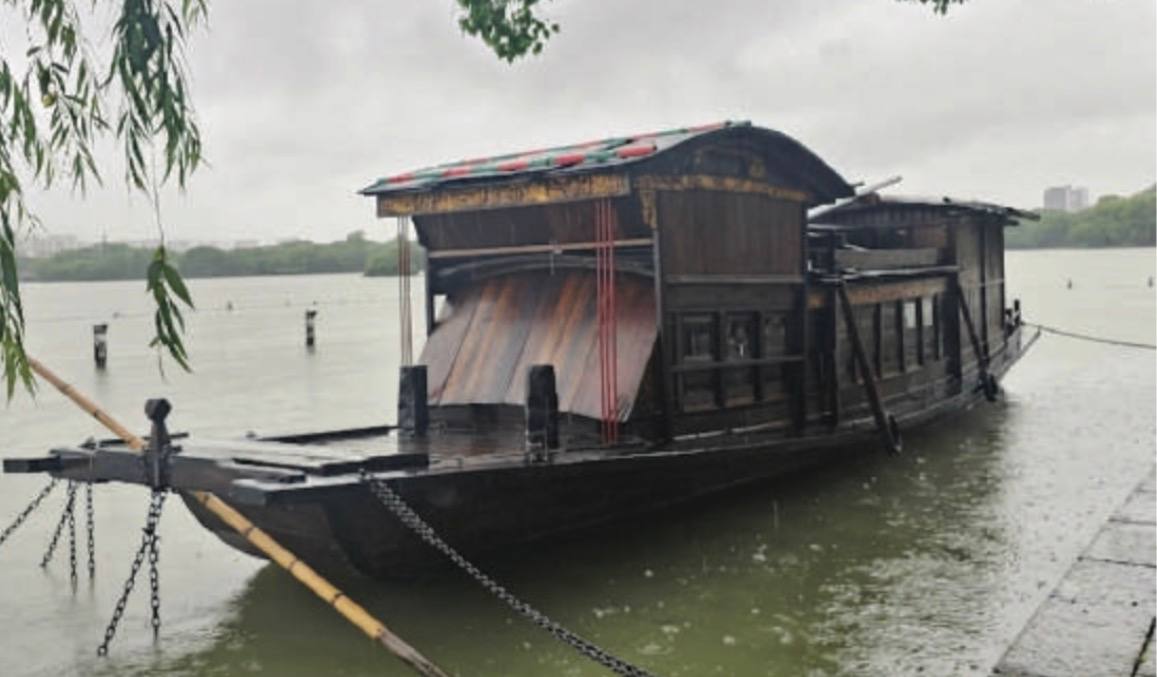
JIAXING, China — Standing on the shores of Nanhu Lake, the birthplace of the Communist Party of China (CPC), visitors are reminded of how a movement founded more than a century ago has overseen one of the world’s most remarkable economic transformations.
Addressing a media delegation from Ethiopia and Rwanda, Professor Deng Yanting, Deputy Director of the Division of Security Studies at the China-Africa Institute, reflected on China’s journey from widespread poverty to becoming the world’s second-largest economy, arguing that the country’s experience offers valuable lessons for developing nations, particularly in Africa.
“The evidence of China’s development is visible everywhere,” Professor Deng said, pointing to the bustling, modernized surroundings. “The transformation speaks for itself and requires little explanation.”
As the CPC approaches its 105th anniversary, Professor Deng outlined the governance model and policy framework that, in his view, have underpinned China’s development.
Among the country’s most significant achievements, he cited the eradication of absolute poverty under the United Nations’ poverty standards and China’s long-term goal of building a modern socialist country by 2049, the centenary of the People’s Republic of China. He said the long-term objective has guided national planning and policymaking across successive administrations.
According to Professor Deng, continuity in policymaking has been central to achieving these objectives. Before major national policies are implemented, party committees across the country—from Beijing to local governments—participate in coordinated study sessions to ensure a shared understanding of policy priorities and objectives.
With more than 100 million CPC members nationwide, he said the system is designed to maintain policy consistency while ensuring implementation at every level of government.
Professor Deng also reflected on China’s political evolution following the collapse of the imperial system, drawing comparisons with the governance challenges faced by many post-colonial African countries after independence.
Managing a population of more than 1.4 billion people, he argued, requires a governance structure capable of aligning diverse interests behind shared national goals. Rather than adopting a competitive multi-party political system, China has chosen what he described as a unified institutional model that seeks to build consensus within a single governing framework.
He described Chinese modernization as a gradual process focused on reducing domestic inequalities, strengthening national capacity, and pursuing reform while preserving policy independence. The objective, he said, is to ensure that economic globalization benefits the population without compromising China’s long-term development priorities.
Responding to questions from journalists, Professor Deng also addressed China’s One China policy, placing it within the historical context of the Chinese Civil War and the geopolitical tensions that followed during the Cold War.
He said the policy remains the cornerstone of China’s diplomatic relations, with Beijing maintaining formal diplomatic ties only with countries that recognize the People’s Republic of China as the sole legal government of China. Countries that maintain official diplomatic relations with Taiwan do not have formal diplomatic relations with Beijing.
Professor Deng distinguished the Taiwan issue from international conflicts such as the Russia-Ukraine war, describing it as an internal matter concerning China’s sovereignty and territorial integrity.
For many African observers, the discussion offered insight into how China’s leadership links historical experience, centralized governance and long-term strategic planning to its broader development agenda—an approach that continues to attract attention from countries seeking alternative pathways to economic transformation.