From homeownership to capital control: Rethinking economic freedom for Black families
Black Americans were excluded from wealth-building opportunities for centuries through slavery, broken promises and discriminatory policies, leaving a racial wealth gap that persists today. Now, economists and advocates point to homeownership and greater control of capital as key pathways toward closing that divide and achieving true economic freedom for Black families. The post From homeownership to capital control: Rethinking economic freedom for Black families appeared first on AFRO American Newspapers.
 Black News

By Megan Sayles
AFRO Staff Writer
msayles@afro.com
For more than two centuries years, Black Americans were exploited for forced, unpaid labor under chattel slavery in the U.S.—stripping them of their humanity, freedom and any avenue to accumulate wealth. Even after emancipation in 1865, the promise of “40 acres and a mule” as reparations never materialized. In the decades that followed, more promises were denied and new systems emerged that systematically excluded Black Americans from economic advancement, including exclusion from the GI Bill, redlining and discriminatory lending practices.

The effects of those policies remain visible today in the racial wealth gap. In 2022, the Federal Reserve reported that median wealth among White families was more than six times that of Black families, or $285,000 compared to $44,900.
Many economists and advocates continue to debate what it will take to narrow that gap and move closer to true economic freedom for Black Americans.
“Top of my list for economic freedom for Black Americans is homeownership,” said Rodney A. Brooks, author of “Fixing the Racial Wealth Gap.” “Right now, we’re looking at a White homeownership rate of about 74 percent and a Black homeownership rate of about 43 percent.”

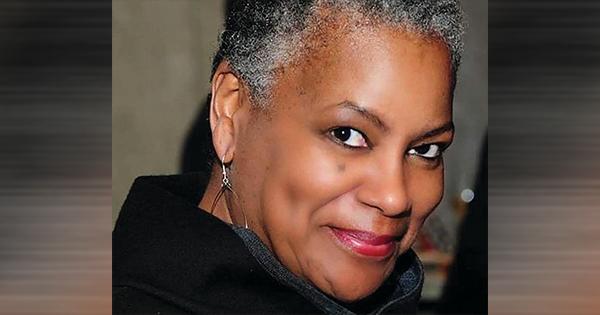
Credit: Photo courtesy of Rodney A. Brooks
Homeownership builds wealth in several ways. Each mortgage payment increases equity that can be leveraged for investments such as education or entrepreneurship, while property values typically appreciate over time, boosting net worth. Over generations, that equity can also be passed down as inherited wealth.
Brooks said expanding housing programs that move residents from renting into homeownership would be key to closing the wealth gap.
“Baltimore, for example, has thousands of uninhabited houses,” said Brooks. “Think about a program that would get people into those houses, giving them loans and assistance to help fix them up.”
Other experts argue that narrowing the racial wealth gap also depends on shifting who controls capital and how it circulates within communities.
Curtis Kidd-Telemaque, director of the Center for Financial Excellence at Howard University, said true economic power is tied to ownership and industry control, which in turn shapes employment and opportunity within communities.
“It is that ability to hire your own race or ethnicity without any sort of backlash at all,” said Kidd-Telemaque.
Through his work at the Center for Financial Excellence, he said he encourages students to leverage their training in private equity, investment banking, capital markets and wealth management to start their own companies.
“I don’t want to create a bunch of analysts that work for the industry for the rest of their life,” said Kidd-Telemaque. “I would like to create some small and large business owners who can then hire out.”
That shift, he added, can change how capital flows.
“Someone of the same ethnicity can then direct capital to their venture project, their barbershop or whatever is is they seek to do without jumping the hurdle of trying to convince someone who doesn’t look like you that this thing is going to work when they don’t want to give you the money anyway,” said Kidd-Telemaque.

Credit: Photo courtesy of Howard University
When it comes to measuring progress in closing the racial wealth divide, there are several metrics Kidd-Telemaque and Brooks pointed to a few indicators. Brooks highlighted homeownership rates as a benchmark of wealth-building capacity, noting that increases in Black homeownership would likely correlate with a narrowing of the racial wealth gap.
Kidd-Telemaque, meanwhile, recommended using the Gini coefficient to assess overall inequality, which measures how far a society’s distribution of money deviates from perfectly equal distribution. He also suggested that growth in Black-owned banks could serve as a sign that economic power is shifting.
“It’s access to capital and capital being controlled by Black people. You can greenlight anything you need to in this particular country with money,” said Kidd-Telemaque. “You can start someone’s dreams.”
The post From homeownership to capital control: Rethinking economic freedom for Black families appeared first on AFRO American Newspapers.