Ghana vows never to find itself in a position where it needs a bailout from the IMF
Ghana, which a few years ago opted for a $3 billion bailout from the International Monetary Fund (IMF), has committed to never finding itself in such a position again.
 Black News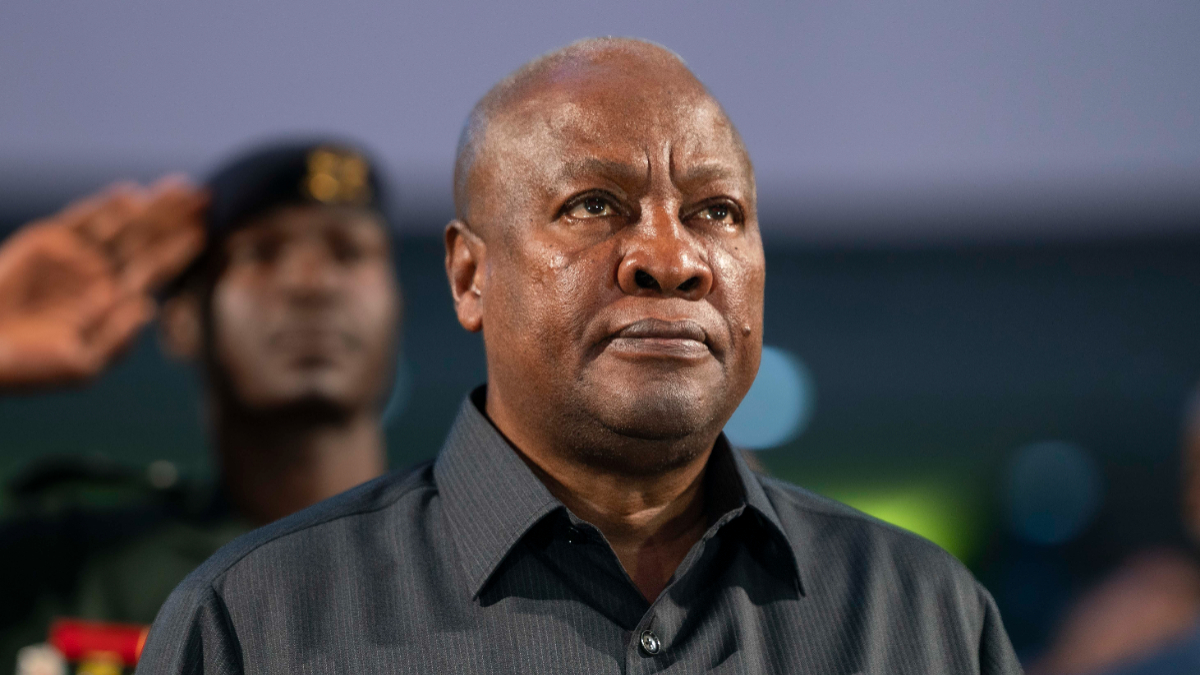
![John Dramani Mahama, President of the Republic of Ghana. [Photo by Ernest Ankomah/Getty Images]](https://ocdn.eu/pulscms/MDA_/d5ff23b4e5e81e4e5a3e83d5c5cbc273.jpg)
Ghana, which a few years ago opted for a $3 billion bailout from the International Monetary Fund (IMF), has committed to never finding itself in such a position again.
- Ghana's Finance Minister declared that the country will no longer seek financial bailouts from the IMF after overcoming a severe economic crisis.
- Ghana plans to conclude its current IMF program and transition to a Policy Coordination Instrument focused on reforms and investor confidence, not direct funding.
- Major reforms included fiscal discipline measures, cutting wasteful spending, repealing certain taxes, and reducing the size of government.
- The government implemented systems to control public spending, manage debt, and stabilize foreign reserves, aiming for a primary budget surplus by 2026.
The West African country’s current Finance Minister, Dr Cassiel Ato Forson, referencing Ghana’s economic struggle prior to receiving a substantial loan from the IMF, stated that Ghana will no longer seek a financial bailout from the global lender.
DON’T MISS THIS: Ghana could become a victim of its own success, as borrowing costs raise concerns
“It is important to recount this not to dwell on the past, but to remind ourselves of the heavy price of fiscal indiscipline and economic recklessness, and to affirm our collective resolve that Ghana must never return to that path,” the Finance Minister said.
During an address to the parliament on Thursday, on Ghana’s new engagement with the IMF, the Minister noted that some lessons are hard-learned, and the country is doing everything possible not to revert to the economic low experienced in 2022.
Dr. Forson explained that, upon the successful conclusion of the final review of the current International Monetary Fund (IMF) program, the nation will transition to a non-financing framework designated as a Policy Coordination Instrument (PCI).
He further asserted that Ghana has migrated from a period of crisis management toward a state of economic stability, describing this progression as a pivotal milestone within President John Mahama's Reset Agenda.
“Ghana has evolved from a position of supplicant to one of partner,” he said, emphasizing that the recent engagement with the global lender would focus on policy coordination, reforms, and investor confidence as opposed to direct financial assistance, as seen on the GraphicOnline.
“No further IMF financial bailout will be required in the foreseeable future,” he added.
After taking over what he called a severe economic and financial crisis, Dr. Forson informed Parliament that the administration had implemented significant changes to restore macroeconomic stability.
The Minister noted during his presentation that the government had undertaken decisive reforms to restore macroeconomic stability after taking over what he described as a deep economic and financial crisis.
“Ordinary Ghanaians bore the heaviest burden of the crisis through runaway inflation, erosion of incomes and savings, high interest rates, job losses, and increased economic insecurity,” he stated.
According to Dr. Forson, the administration recalibrated the IMF-supported program after taking office in order to guarantee more equitable burden-sharing and comprehensive structural reforms.
The implementation of a Public Financial Management commitment control system to limit spending, the operationalization of the Sinking Fund to handle future debt obligations, and the creation of the GoldBod initiative to promote reserve accumulation and foreign exchange stability were some of the major interventions he highlighted.
He also mentioned that the current administration increased efficiency and cut wasteful spending, as it eliminated several pesky taxes, such as the E-Levy, Betting Tax, Emissions Levy, and VAT on auto insurance, as well as reduced the number of ministers from 123 to 60 and ministries from 30 to 23.
In November, Ghana promised to come off its deal with the International Monetary Fund (IMF) on a high note, following its impressive economic performance in the fiscal year.
The Finance Minister noted that so far met the IMF's requirements for its fiscal responsibility framework.
This is a result of projections that show that the West African country could record a primary budget surplus of 1.5% of its Gross Domestic Product (GDP) by 2026, as highlighted by the finance minister.
Ghana’s $3 billion loan from the IMF
On May 17, 2023, the International Monetary Fund's executive board approved a $3 billion loan deal for Ghana over three years.
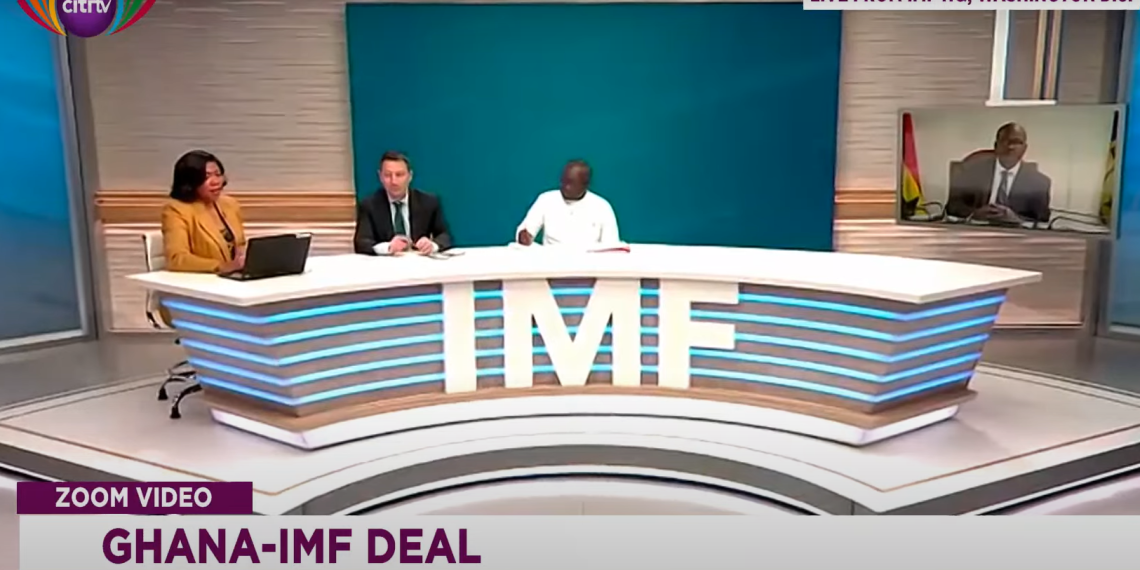
This enabled an immediate distribution of around $600 million and provided a path out of the country's greatest economic crisis in a generation.
Shortly after, Ghana announced an ambitious goal to offset $10 billion of its total external debt by 2026.
The Ghanaian president at the time, Nana Akufo-Addo, said that the IMF bailout would restore trust and put the nation's economy back on a solid foundation in a televised speech.
Due to its enormous public debt and inflation, Ghana between 2022 and 2023 experienced one of its biggest economic crises in a generation.