Hip-Hop Activist: Plastics Are the New Civil Rights Fight
Rev. Lennox Yearwood Jr., president and CEO of the Hip Hop Caucus, has spent more than two decades at the intersection of environmental justice, public health, and civic organizing. He founded the Hip Hop Caucus in September 2004 to build a sustainable organization through which the Black culture could support communities that experience injustice “first […] The post Hip-Hop Activist: Plastics Are the New Civil Rights Fight appeared first on Word In Black.
 Black News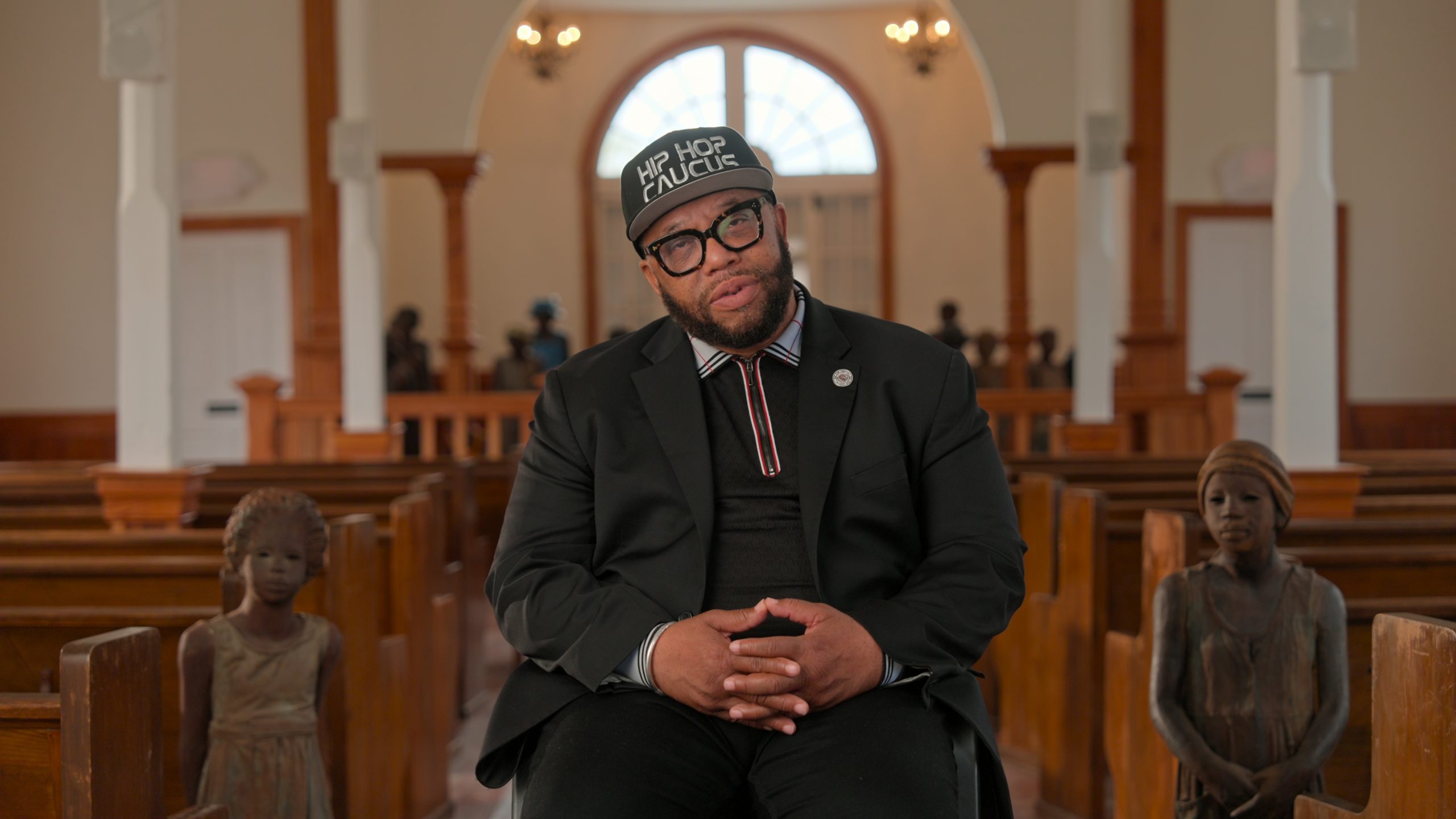

Rev. Lennox Yearwood Jr., president and CEO of the Hip Hop Caucus, has spent more than two decades at the intersection of environmental justice, public health, and civic organizing. He founded the Hip Hop Caucus in September 2004 to build a sustainable organization through which the Black culture could support communities that experience injustice “first and worst.”
From the floodwaters of Hurricane Katrina to the petrochemical plants of Cancer Alley, he has connected the dots between corporate pollution and the targeted destruction of Black life.
As a minister, community activist, and Air Force veteran, Yearwood is one of the most influential people in Hip Hop political life. On June 4, he was a panelist at this year’s Hollywood Climate Summit, an annual conference for entertainment and media professionals to discuss climate and environmental issues.
Part of that discussion focused on the issues raised in the Netflix documentary “The Plastic Detox.” Yearwood is featured in the documentary and lent his expertise as a national leader who’s been engaged in bridging the gap between communities of color and environmental issue advocacy.
Produced by an Academy Award®-winning team, The Plastic Detox features commentary from leading scientists interwoven with personal stories of couples who bravely share their infertility journey and the steps they’ve taken to detox their homes and lives.
In this conversation, Yearwood explains why microplastics and the locations of petrochemical plants are frontline civil rights issues — and what every American can do right now to decrease the effects of microplastics on their bodies and lives.
This conversation has been edited for clarity and length.
WIB: What do you believe is the first thing Black communities need to know about microplastics and their health?
It’s simple: stop plastics — particularly as they are impacting our community. For too long, our community has been seen as the path of least resistance. Companies have been looking to put things in our communities that they wouldn’t put anywhere else.
Plastics come from fossil fuels, from oil and gas, and these facilities are being placed specifically in Black communities, causing tremendous pain through toxic exposure.
I’m from Louisiana. For those who don’t know, there is an 85-mile stretch of land between Baton Rouge and New Orleans called Cancer Alley. It got that name because so many petrochemical facilities have been placed there to make plastics, and the result is the highest cancer rates in the country — particularly killing Black people in that community. The fact that a business plan exists that amounts to a death sentence for our communities means we must do everything to stop it.
Word In Black: Why should people be more aware of plastics, and what can they do about it?
Rev. Lennox Yearwood Jr.: We figured it would be tough for people to understand petrochemicals. They may understand plastics, though — which is why we were part of the documentary The Plastic Detox. The film is literally about how plastic is having an impact on your life.
And let me be very clear: this isn’t about some faraway person who doesn’t live near you. The plastic in your kitchen, the plastic in your house that is breaking down — we are consuming roughly a credit card’s worth of plastic every single week. That’s the amount of plastic going into our bodies just through everyday ingestion as plastic breaks down around us.
If you have plastic cups, utensils, laundry packets, or takeout containers in your home, that has a huge impact. The film shows how that affects everything from sleep and asthma to reproduction. We actually looked at families who allowed themselves to be tested — we went into their homes, took urine and blood samples, removed the plastic, and tracked what happened. People lost weight. They slept better. Brain fog cleared. And in many cases, people who were essentially sterile were actually able to have children. It’s amazing how much plastic affects us.
Another key factor in this story is how women — and Black women in particular — are on the front lines and fence lines of the environmental justice movement. They are literally staying home to fight back against corporations. David and Goliath, in many cases.
WIB: Can you speak to the specific physical effects of plastic exposure?
Yearwood: Plastic is plastic — when it gets into your body, it hardens. It has a huge impact on heart disease. Plastic gets into the arteries, so it is very much connected to cardiovascular health. Beyond reproduction, which is certainly a major concern, it also affects breathing and can accelerate asthma and emphysema.
Now, people will say, “We need plastic for heart stents” — and they’re right. There are some uses for plastic that are genuinely important, from medical devices to aerospace applications. We are not saying get rid of all plastic. What we’re saying is that the fossil fuel industry right now is trying to maintain its margins by creating a gluttony of plastic that we don’t need, and that excess is what’s harming us.
WIB: What was the turning point — the moment or fact that made you say plastics and petrochemicals have to be part of this fight?
Yearwood: Cancer Alley. That’s ground zero.
I came into this work primarily through Hurricane Katrina. That’s the origin story. I was in DC when Katrina hit, and it was surreal to watch your community, your friends, drowning in the richest country in the world. I’m part of the Hip Hop Caucus and being in that position we were able to hit the ground — and we’ve been on the ground every single year since, for 21 years now.
But the thing that connected Katrina to petrochemicals was a realization: even if Katrina had never happened, we would still have a Cancer Alley problem. We would still have petrochemical and plastic facilities causing people to have the highest cancer rates in the country. Even without the hurricane, people are dying from this.
Sometimes when you’ve been living near the monster your whole life, you don’t even recognize it as a monster — especially if that same plant was the one that offered someone in your family a job. You don’t always have the information to understand what’s being taken from you. Life expectancy in these communities goes from 70 down to 50, down to 40.
When you do the research, you begin to see how insidious these companies are. They are literally putting their plants on former plantation sites — as if the same land that caused horror for our ancestors is now being used to harm their descendants. And ironically, that’s also one of the ways we’ve been able to fight back. Louisiana law prohibits building on burial grounds, and we were able to show that these plantation sites contained burial grounds. In essence, our ancestors came back and fought for us.
WIB: For someone who doesn’t live in Cancer Alley — who doesn’t think they’re in a high-exposure area — what do you suggest they do to reduce their plastic exposure?
Yearwood: Step one is what you’re doing right now: engaging with journalism and storytelling that tells these stories. We appreciate Black media especially, which has been critical for covering issues that mainstream outlets have ignored for too long.
Step two is the documentary. At Hip Hop Caucus, we’ve come to understand that we’re fighting differently than our parents did. Our parents fought for equality in the 20th century. Today, when it comes to plastics, petrochemicals, and environmental justice, we are fighting for existence in the 21st century. We have to tell the story differently — through documentaries, social media, town halls, every channel we have.
For people not living in Louisiana or Appalachia or Ohio or Pittsburgh or Houston — places with high concentrations of petrochemicals — it still affects you. Clean air and clean water are impacted everywhere. And on a personal level, we now have detectable plastic in the placentaIf it’s this bad in 2026, 100 years from now people will look back and ask: what were you doing? What kind of world were you leaving?
So, on a practical level: reduce the plastic in your home. Replace plastic cups and utensils where you can. Stop microwaving food in plastic containers. Be mindful of takeout packaging. And watch the film — it walks you through what to do, step by step.
WIB: Are you seeing data centers and AI infrastructure also being sited in these same communities? Is there a connection to the plastics and petrochemical fight?
Yearwood: Absolutely. What’s striking is the similarity: these companies look at predominantly poor Black communities and see them as the path of least resistance. They believe these communities can’t defend themselves. And so, they place the worst of the worst — petrochemical plants, data centers, pipelines — in those neighborhoods, destroying not only people’s current lives but their children’s futures.
Data centers consume enormous amounts of water and pollute air. Chemical facilities cause emphysema, asthma, and cancer. It is killing us. At some point, you have to call it what it is.
Our parents fought for equality in the 20th century, and we are still fighting for that — that hasn’t changed. But now, because of data centers and petrochemical facilities, we are also fighting for existence itself. Because the babies born in that Plastic Detox documentary — born in 2025, likely to live to see the year 2100 — deserve blue skies and clean water. Our job, like our parents before us, is to fight for their freedom to live well.
RELATED: Environmental Leaders Push for Stronger Climate Commitment
The post Hip-Hop Activist: Plastics Are the New Civil Rights Fight appeared first on Word In Black.