Jazz Chisholm, A Lollipop & The Never-Ending Attack On Black Joy
Jazz Chisholm Jr.'s on-field lollipop sparks debate over baseball's resistance to players' personalities and joy.
 Black News
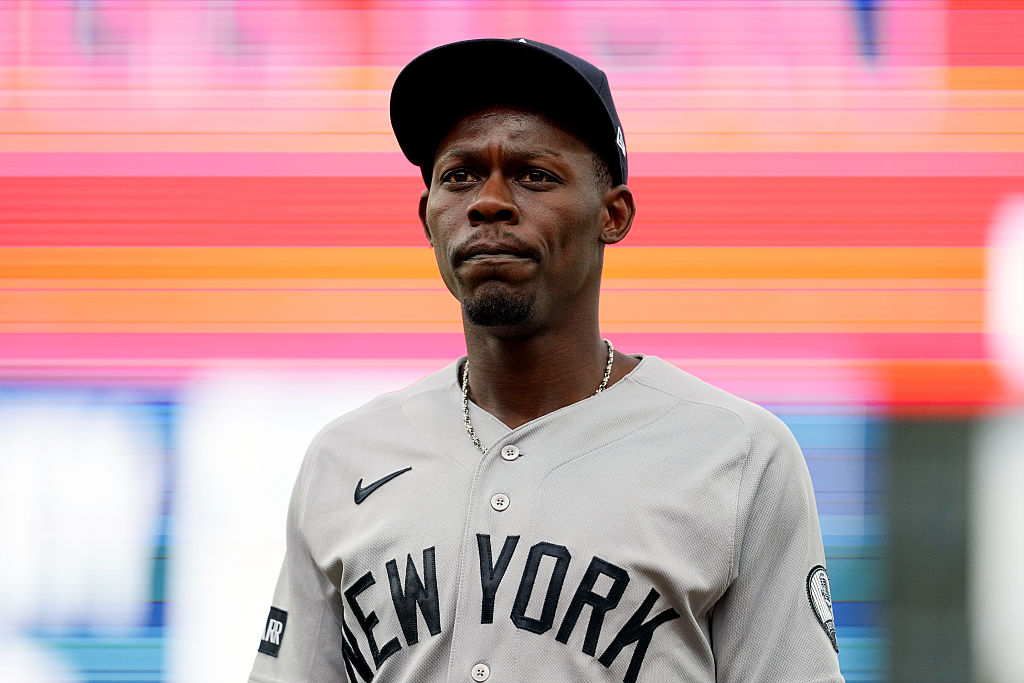
Jazz Chisholm Jr. has never been the type of player you had to squint to notice. The Yankees infielder is one of baseball’s most electric personalities, a Bahamian-born All-Star who has built his name on speed, pop, flash, confidence and a style that feels more like the future of baseball than the sport’s buttoned-up past. Before he ever got to New York, MLB was already marketing him as one of the game’s brightest young faces, making him the cover athlete for MLB The Show 23 and highlighting the flair he brings through bat flips, defensive highlights, Euro-step celebrations and off-field style.
But this week, the conversation around Chisholm somehow shifted from what he brings to the game to what he had in his mouth. During Monday night’s game against the Detroit Tigers, cameras caught Chisholm playing second base with a green lollipop in his mouth. Yankees manager Aaron Boone later admitted he was not happy about it, saying on Talkin’ Yanks that it “pissed him off” and making it clear he addressed the situation with Chisholm afterward. Boone said there was a safety element to the conversation, and fair or not, the moment became an easy target after the Yankees lost that game and were in the middle of a rough stretch.
To be clear, there is a reasonable baseball conversation somewhere in there. Playing the field with a lollipop in your mouth probably is not the smartest safety choice, especially in a sport where a ball can be smoked at you with barely any reaction time. Even Sports Illustrated, while calling the reaction overblown, noted that the lollipop could have been dangerous if Chisholm had to dive, fall or make a sudden play. But the issue is that a small “don’t do that again” moment turned into a referendum on Chisholm’s character, professionalism, maturity and entire way of playing the game. That’s where the conversation got bigger than candy.
And of course, Jazz responded the only way Jazz could. The very next night, he went 2-for-4 against Detroit and crushed a go-ahead two-run homer in the sixth inning of a 4-3 Yankees win. After the blast, he danced his way back to the dugout, grabbed a container of lollipops and held it up for the cameras like a man who understood the moment perfectly. Boone even joked afterward that “The Lollipop Kid” came through and said Chisholm could have all the lollipops he wanted as long as they stayed in the dugout. Chisholm said his teammates were egging him on and admitted, “We had fun.”
That’s the part that keeps getting lost: fun. Baseball has spent years trying to market itself to younger fans, Black fans, Latino fans and anyone who doesn’t think the sport should feel like a museum with cleats. Then somebody like Jazz shows up with color, rhythm, confidence and personality, and suddenly everybody wants to lecture him about “respecting the game.” This is not the first time he has been treated like the problem for being himself. Chisholm has been questioned for his flash, criticized for his confidence and even became a debate topic when he was picked as an MLB video game cover star despite being exactly the kind of player the sports claims it wants to elevate. MLB itself has described him as one of baseball’s most fun players to watch because of that same flair.
The reaction online showed how divided people were. Some fans were legitimately angry, with one viral critic calling Chisholm “an attention-seeking idiot” and saying the lollipop was dangerous and a bad example for kids. Others pushed back, with longtime reporter Clarence Hill Jr. writing that “Black joy remains under attack by racist narratives.” Under that conversation, fans argued both sides, with some saying Jazz gets hate because of who he is and others saying race had nothing to do with it and that he simply needed to act more professionally. That is probably the clearest snapshot of the entire debate: some people saw a safety mistake, some saw another excuse to attack a Black player’s personality, and some saw both at once.
That’s why this situation matters beyond one Blow Pop in June. Black athletes and athletes of color are often asked to be great but not too loud; marketable but not too different; entertaining but only in ways that make traditional fans comfortable. Jazz Chisholm is not perfect, and nobody is saying he should take the field with candy in his mouth again. But the speed with which a silly moment became proof that he does not “get it” says a lot about how baseball still treats joy when it comes from players who don’t fit the old-school mold. Jazz hit the homer, shook the jar and laughed it off. The rest of the sport should probably ask why it gets so uncomfortable when players like him remind everybody that games are supposed to be fun.
RELATED: MLB’s Wander Franco Found Guilty Of Sexually Abusing A Minor But Avoids Jail, Social Media Reacts