Kimberlé Crenshaw on ‘Backtalker,’ Being Denied Entry to Harvard Club, and the Assault That Almost Killed Her
*Kimberlé Williams Crenshaw‘s memoir “Backtalker: An American Memoir” is a powerful and poignant story of resilience and resistance, tracing her journey from Canton, Ohio, to becoming a pioneering civil rights scholar. Crenshaw, a UCLA and Columbia University law professor, recounts her pioneering work in Critical Race Theory (CRT) and intersectionality – two terms she helped […] The post Kimberlé Crenshaw on ‘Backtalker,’ Being Denied Entry to Harvard Club, and the Assault That Almost Killed Her appeared first on EURweb | Black News, Culture, Entertainment & More.
 Black News
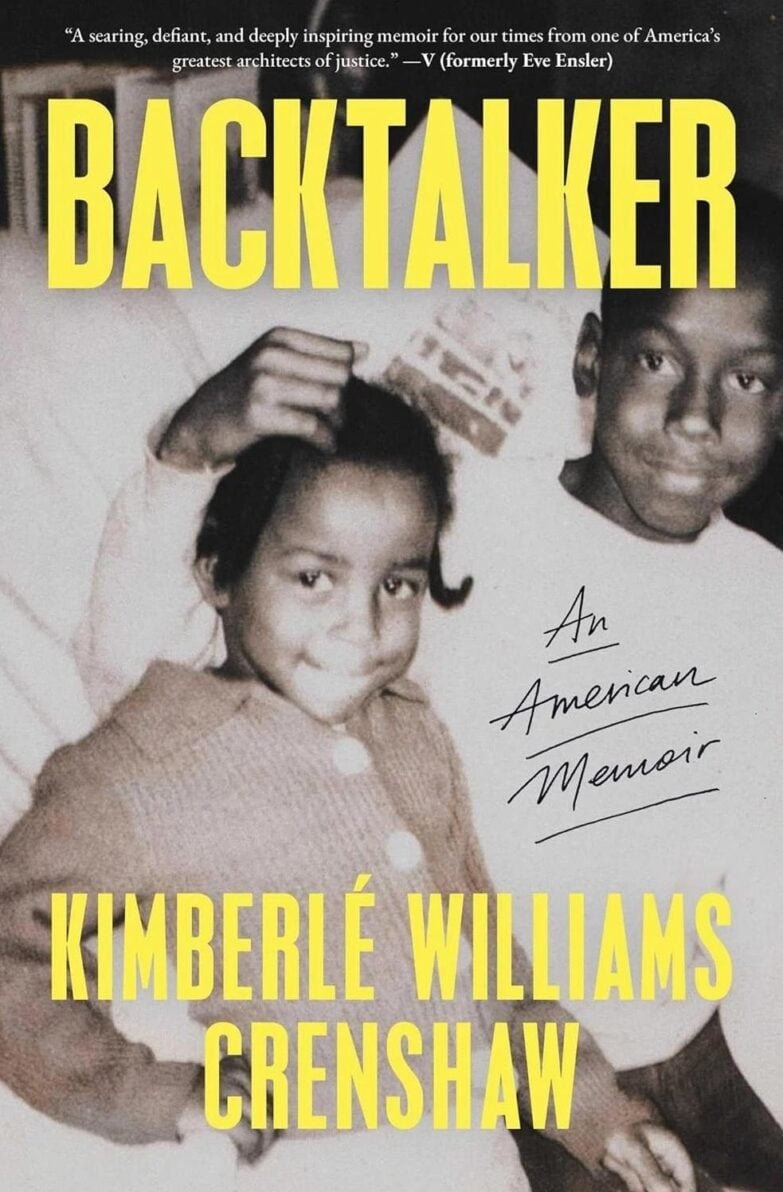
*Kimberlé Williams Crenshaw‘s memoir “Backtalker: An American Memoir” is a powerful and poignant story of resilience and resistance, tracing her journey from Canton, Ohio, to becoming a pioneering civil rights scholar.
Crenshaw, a UCLA and Columbia University law professor, recounts her pioneering work in Critical Race Theory (CRT) and intersectionality – two terms she helped coin.
Her voice is unapologetic and unrelenting as she reflects on experiences like being denied entry to a Harvard club due to her gender, assisting Anita Hill during the Clarence Thomas Supreme Court confirmation hearing, and even the assault from a boyfriend, who attempted to throw her out of a 10-story window.
Through her work with the African American Policy Forum, Crenshaw sheds light on how systems of oppression intersect and compound, making it impossible for marginalized communities to be reduced to single issues.
Her work has shaped the language and frameworks used to discuss social justice today, serving as a call to action to recognize and resist oppressive systems.
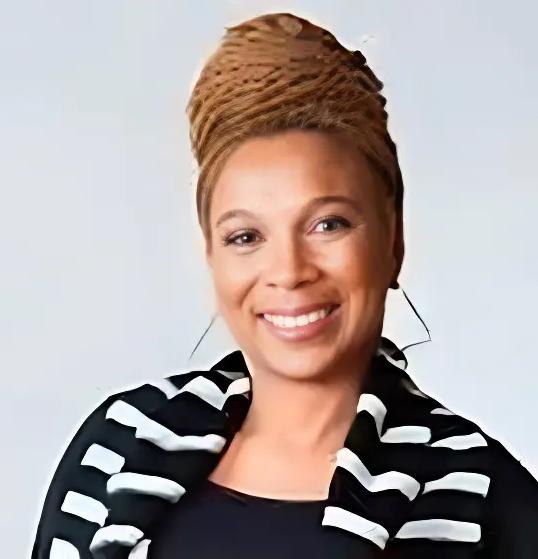
At 67, Crenshaw’s work continues to shape the national conversation on race, gender, and justice.
In “Backtalker” (Simon & Schuster), Crenshaw delivers a searing indictment of systemic power structures, while affirming her own voice and exploring how personal trauma fueled her groundbreaking – and often polarizing – work on race and gender.
“Back talk is saying: it is not reverse discrimination to ensure our institutions are equitably constituted,” Crenshaw said.
Crenshaw recently read from “Backtalker” at The Hammer Museum in Westwood, followed by a moderated conversation.
I recently caught up with Crenshaw to discuss her memoir and explore the current landscape of voting and civil rights in the U.S. The conversation unpacked the country’s divisions and what it means to fight for equity in these uncertain times.
Darlene Donloe: What is intersectionality?
Kimberlé Williams Crenshaw: Intersectionality is about understanding how different forms of oppression (like racism, sexism, and homophobia) intersect and overlap, creating unique experiences of discrimination. Imagine an intersection with multiple roads. One road is racism. The other is sexism.
DD: How do you respond to critics who argue that intersectionality is a divisive or overly complex concept?
KC: My first tendency is to say, reading is fundamental, and too few people do it. My second response is to remind people that when the command is for us to bow, to subordination, to accept discrimination, and second-class citizenship as our birth right or our birth burden, anything that comes along that says no to that. When unity means tolerating racism, we’ll divide – and that’s the point.
DD: How do Critical Race Theory and intersectionality help us understand the complexities of the current immigration policy and its impact on those marginalized communities?
KC: Policies framed as ‘neutral’ often mask racial bias. Look at Trump’s targets – not Northern Europe or Canada, but Haiti, ‘shi*hole countries’. They’re racializing who belongs. Colorblindness is a myth; it whitewashes systemic racism. Now they’re even targeting the 14th Amendment – it’s a slippery slope.”
DD: Do you believe that over the years, you’ve been naming things that those in power would prefer, remain unnamed?
KC: Of course. That is precisely why the MAGA group and their various enablers go after things like the 1619 Project or go after structural racism, intersectionality, or Critical Race Theory. They see its value. You don’t try to take over or redefine something valueless. They’re trying to suppress it because once we can name and understand our condition, we can transform it. The first thing our enslavers went after was our ability to communicate. Literacy is power – that’s why enslavers targeted ours.
DD: The country is divided on civil rights and the failure of America’s equitable promise.
KC: We’re going to divide when you’re going to ask us to accept losing our right to elect people of our choice. If that’s what you think unity requires, then yeah, we’re going to divide over it. I say that power is divisive, racism, white supremacy, white nationalism, and patriarchy. That’s the initial division. And what we’re trying to do is address that division to make us whole rights-bearing citizens.
DD: Talk about the discord in this country. Take your pick – inflation, immigration, wars, healthcare accessibility, gun violence, political polarization, redistricting battles in several states, suppressing voting rights, etc.
KC: What is happening is we are now seeing the fruits of the labor of MAGA ancestors, the faction of this country that was always willing to break it, before being willing to share it. That’s been the long-term trajectory, and they’ve been enormously successful in changing the commitment, the imperative to perfecting our democracy, to recovering it from its racial brokenness. And they’ve been well-resourced and strategically brilliant at covering the board. They went after the courts and have successfully been able to train the courts onto the remaining vestiges of equity in our political arena as well as in our economic arena, so that the playing field has shrunk.
DD: Does that mean the Democrats didn’t do enough to stop it?
KC: The Democrats got into this playing field a little late and a dollar short, and now we’re playing a game of catch-up with a lack of clarity about how this came about and what we need to do to unravel it. So, clearly, anti-blackness, the idea that we can try out, the closures and the censorship and the limiting scope of political power on Black folk, and understand that once it gets established there, it can be used to undermine the rest of society. That’s what’s happening in Virginia. That’s what’s happening in Louisiana.
DD: So, what’s the takeaway?
KC: The main takeaway here is that the ideology that they’re using to their benefit is called color blindness. In the morning, get used to saying we’re post-racial. In the evening, gets used to facilitating and permitting white red state legislatures to completely wipe out Black political power. That’s what’s happening. And until we’re able to understand that colored blindness is a racial ideology that allows for white supremacy and Christian white nationalism to ride to the middle of the town square, and then start dictating what our democracy looks like, until we can call a thing a thing, they’re going to clobber pro democratic forces with it.
DD: You helped coin the term Critical Race Theory, which has become a lightning rod. Are you surprised it has become so divisive?
KC: No, I’m not. Critical Race Theory addresses the ways that racial inequality can continue to exist, even when people claim to be colorblind. It’s the study of the ways that racial power continues to be reproduced, often through law, even in a period after segregation has collapsed.
DD: Why did you write ‘Backtalker’?
KC: I wanted to honor my family’s legacy and ground my work in Black American history. During the 60s and 70s, we as a people were coming of age, and we were demanding a different relationship with the country. These ideas – Critical Race Theory, intersectionality – are as American as apple pie. They’re rooted in our history, born from our struggles for justice. It’s infuriating to see them labeled ‘un-American.’ They’re trying to gentrify our history, make it unrecognizable to us.
DD: Do you believe you had a choice in becoming who you are?
KC: I think about myself, and I think about my work. I see a straight line from my great-grandfather and great-grandmother on both sides to my grandparents and my parents. Of course, kids, you know, can choose to resist or go in the absolute opposite direction, but for me, I wanted to be part of the movement. I think it was natural. It’s a choice that was laid out for me in the most compelling way possible.
(If You Like/Appreciate This EURweb Story, Please SHARE it!)
MORE NEWS ON EURWEB.COM: NAACP Chapter President Warns White People Not to Seek Interim Mayor Position | WATCH
We Publish Breaking News 24/7. Don’t Miss Out! Sign up for our Free daily newsletter HERE.
The post Kimberlé Crenshaw on ‘Backtalker,’ Being Denied Entry to Harvard Club, and the Assault That Almost Killed Her appeared first on EURweb | Black News, Culture, Entertainment & More.