No girl should live in fear: Parliamentarians renew fight against SGBV
Organised by the Network of Parliamentarians on Population and Development and the Legal Platform under the National Population Commission Secretariat, with support from the World Bank-funded SWEDD+ Project, the conference focused on strengthening legal protections and empowering lawmakers to champion the rights of women and girls. Sessions included a panel on the implications of SGBV, relevant laws and religious perspectives, plus capacity-building on the Legal Compendium to equip National Assembly Members with tools to advocate for stronger reforms for adolescent girls and young women. Speaking for the Office of the Vice President, Deputy Permanent Secretary Sukai F. Secka described the gathering as a critical moment for The Gambia. “Violence against women and girls is not merely a private issue; it is a national development concern that requires collective action,” she said. Secka cited alarming data from the 2019-2020 Demographic and Health Survey: 40% of ever-married women in The Gambia have experienced physical, sexual or emotional violence from a current or former partner. “These figures remind us that despite progress, sexual and gender-based violence remains a significant challenge,” she noted. She also raised concern over the continued prevalence of Female Genital Mutilation, which exposes thousands of girls to serious health consequences. While acknowledging legislative gains like the Women’s Amendment Act 2015 and Children’s Amendment Act 2016, Secka stressed that laws alone are not enough. “Effective enforcement, sustained advocacy, community engagement and increased awareness remain essential,” she said. Hon. Gibbi Mballow, Chairman of the Network of Parliamentarians on Population and Development, said the conference reflects the National Assembly’s commitment to addressing injustices affecting women and vulnerable groups. “The fight against SGBV and harmful practices cannot be won through legislation alone. Laws must be accompanied by effective implementation, resources, strong institutions, public education and community engagement,” Mballow said. He noted the network has become one of the most active parliamentary caucuses, using debates, committee work and constituency outreach to challenge harmful norms and support survivors. “As parliamentarians, our role does not end once a law is passed. We must ensure survivors have access to justice and support services,” he added. Representing the Speaker, Hon. Samba Jallow of Niamina Dankunku called SGBV a humanitarian crisis and obstacle to development. “When a girl is forced into early marriage or a woman is subjected to violence, we witness the erosion of our social fabric and stalling of economic progress,” he said. Jallow linked the fight to The Gambia’s demographic dividend goals: “There can be no demographic dividend if half our population is held back by fear or harmful practices.” He urged lawmakers to tackle digital violence and strengthen accountability. “We must move from a culture of silence and settlement to a culture of accountability and justice,” he urged.
 Black News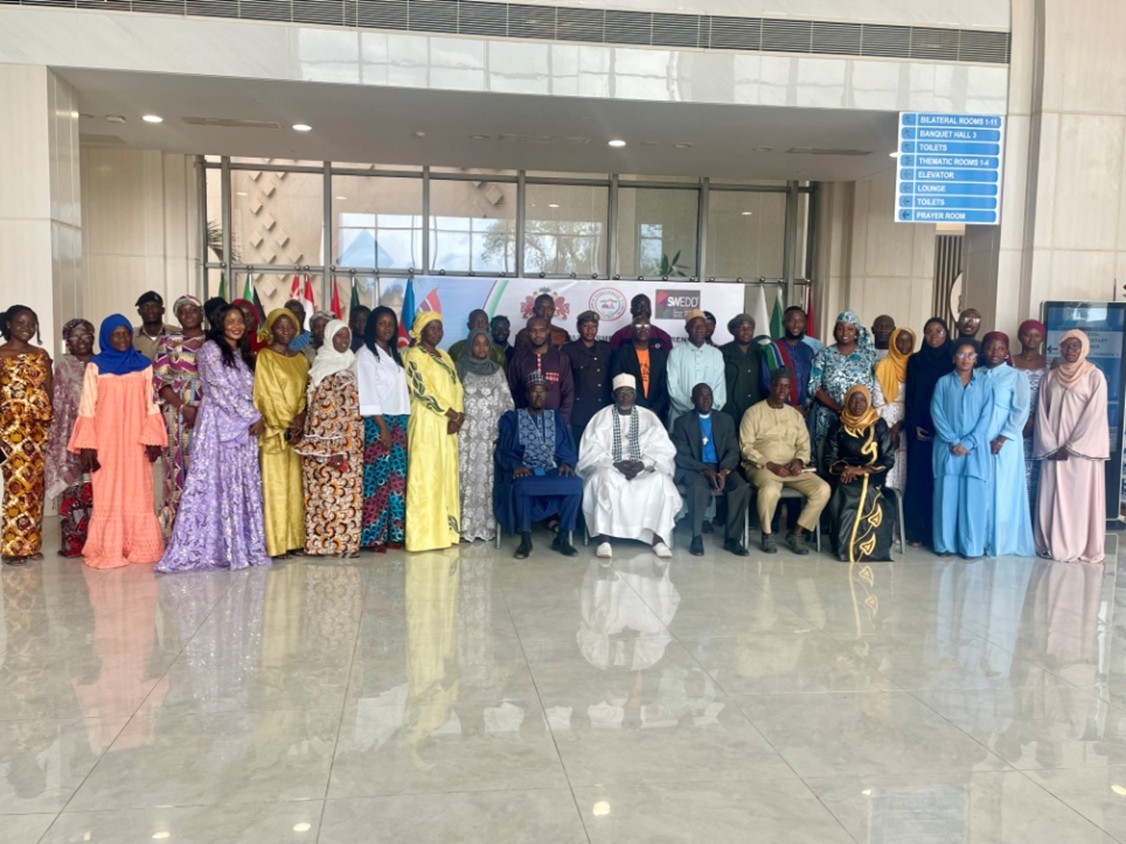
Organised by the Network of Parliamentarians on Population and Development and the Legal Platform under the National Population Commission Secretariat, with support from the World Bank-funded SWEDD+ Project, the conference focused on strengthening legal protections and empowering lawmakers to champion the rights of women and girls.
Sessions included a panel on the implications of SGBV, relevant laws and religious perspectives, plus capacity-building on the Legal Compendium to equip National Assembly Members with tools to advocate for stronger reforms for adolescent girls and young women.
Speaking for the Office of the Vice President, Deputy Permanent Secretary Sukai F. Secka described the gathering as a critical moment for The Gambia.
“Violence against women and girls is not merely a private issue; it is a national development concern that requires collective action,” she said.
Secka cited alarming data from the 2019-2020 Demographic and Health Survey: 40% of ever-married women in The Gambia have experienced physical, sexual or emotional violence from a current or former partner.
“These figures remind us that despite progress, sexual and gender-based violence remains a significant challenge,” she noted. She also raised concern over the continued prevalence of Female Genital Mutilation, which exposes thousands of girls to serious health consequences.
While acknowledging legislative gains like the Women’s Amendment Act 2015 and Children’s Amendment Act 2016, Secka stressed that laws alone are not enough.
“Effective enforcement, sustained advocacy, community engagement and increased awareness remain essential,” she said.
Hon. Gibbi Mballow, Chairman of the Network of Parliamentarians on Population and Development, said the conference reflects the National Assembly’s commitment to addressing injustices affecting women and vulnerable groups.
“The fight against SGBV and harmful practices cannot be won through legislation alone. Laws must be accompanied by effective implementation, resources, strong institutions, public education and community engagement,” Mballow said.
He noted the network has become one of the most active parliamentary caucuses, using debates, committee work and constituency outreach to challenge harmful norms and support survivors.
“As parliamentarians, our role does not end once a law is passed. We must ensure survivors have access to justice and support services,” he added.
Representing the Speaker, Hon. Samba Jallow of Niamina Dankunku called SGBV a humanitarian crisis and obstacle to development.
“When a girl is forced into early marriage or a woman is subjected to violence, we witness the erosion of our social fabric and stalling of economic progress,” he said.
Jallow linked the fight to The Gambia’s demographic dividend goals: “There can be no demographic dividend if half our population is held back by fear or harmful practices.” He urged lawmakers to tackle digital violence and strengthen accountability.
“We must move from a culture of silence and settlement to a culture of accountability and justice,” he urged.