
Power, Representation, and the Battle for District 20
The controversy intensified after longtime Congresswoman Debbie Wasserman Schultz announced she would seek election in Florida’s Congressional District 20, a historically Black district that has long served as a political stronghold for Black voters in South Florida. The post Power, Representation, and the Battle for District 20 appeared first on The Westside Gazette.
 Black News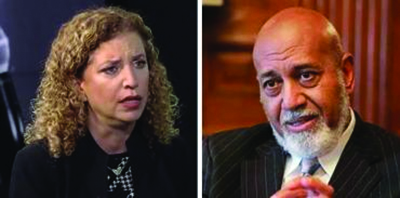
DNC Members Say Wasserman Schultz Run Undermines Black Political Power
By Bobby R. Henry, Sr.
South Florida is once again at the center of a political firestorm — one that many Black leaders say is bigger than any one candidate, election, or political career. At stake, they argue, is the future of Black political representation itself.
The controversy intensified after longtime Congresswoman Debbie Wasserman Schultz announced she would seek election in Florida’s Congressional District 20, a historically Black district that has long served as a political stronghold for Black voters in South Florida.
Now, prominent Democratic National Committee members, Black elected officials, and community leaders are publicly condemning the move, saying it comes at a dangerous moment in American history — one marked by redistricting battles, attacks on voting rights, and what many see as a systematic dismantling of Black political influence.
In a sharply worded statement released Tuesday, a majority of Florida’s elected DNC members accused Wasserman Schultz of “undermining Black political power” by pursuing what critics describe as a safer political seat after Florida’s congressional maps were redrawn by Gov. Ron DeSantis and Republican lawmakers.
“Our party cannot credibly denounce the dismantling of Black political power by Republicans while treating one of Florida’s few remaining majority-Black districts as a political opportunity,” the DNC members stated.
Those words have sent shockwaves throughout Broward County and beyond.
For many in the Black community, District 20 represents far more than lines on a map. It symbolizes decades of struggle, sacrifice, organizing, marches, lawsuits, and bloodshed connected to the Voting Rights Act and the fight to ensure Black voters could elect candidates who reflected their lived experiences.
The district was historically represented by the late Alcee Hastings and later by Sheila Cherfilus-McCormick, making it one of the few congressional districts in Florida where Black political leadership was not accidental — but intentional.
Critics argue that at a time when the U.S. Supreme Court has weakened key Voting Rights Act protections and states across the South are redrawing districts in ways many believe dilute minority voting strength, Black political representation cannot be treated as negotiable.
Incoming Senate Democratic Leader Designate Shevrin Jones publicly stated that “Black representation is non-negotiable,” while the Florida Legislative Black Caucus described Wasserman Schultz’s decision as “disheartening.”
This latest battle also arrives amid growing frustration within Black political circles over what many see as a pattern occurring nationwide: the erosion of Black-majority districts, challenges to DEI initiatives, attacks on Black history education, and renewed efforts to weaken the political power built during the Civil Rights Movement.
For many longtime community advocates, the issue is not merely whether Wasserman Schultz is qualified. Few dispute her political experience or long tenure in Congress. The deeper concern, they say, is whether historically Black political spaces are once again becoming expendable when political survival is at stake.
The conversation has become deeply emotional because many residents remember the sacrifices that created opportunities for Black representation in the first place — from the marches of the Civil Rights era to the lives lost fighting voter suppression across the South.
To many, this moment feels less like ordinary politics and more like a test of whether Black political power will be protected or slowly absorbed and erased.
Wasserman Schultz has defended her decision, arguing that Republican-led redistricting efforts shattered Broward County’s congressional representation and forced difficult political choices.
Still, critics say the issue transcends party loyalty.
“This is bigger than Democrat or Republican,” one local organizer told the Westside Gazette. “This is about whether Black communities will continue to have authentic representation or whether our political voice will become collateral damage in political chess games.”
As the race for District 20 intensifies, one thing has become clear: this election is no longer simply about who wins a congressional seat.
It has become a referendum on representation itself.
And for many in South Florida’s Black community, the question remains painfully familiar:
If historically Black districts are no longer protected for Black political empowerment, then what was the struggle for in the first place?
The post Power, Representation, and the Battle for District 20 appeared first on The Westside Gazette.


