The $2.68 Million Fence vs. The Forest’s People
On February 27, 2026, the Keiyo Indigenous Community filed a formal grievance with the United Nations Development Programme’s Social and Environmental Compliance Unit, alleging that a $2.68 million conservation project was being constructed across their ancestral land, including burial sites, without their free, prior, and informed consent. The case was registered as SECU0027 on March 2, 2026, and placed under eligibility review. Resolving such a complaint requires navigating a strict nine-step accountability process. Sixty-six days later, on May 4, the Kenyan government officially launched fencing operations at Kaptagat Forest in Elgeyo Marakwet County. The case was still at Step Two: […] The post The $2.68 Million Fence vs. The Forest’s People appeared first on African Arguments.
 Black News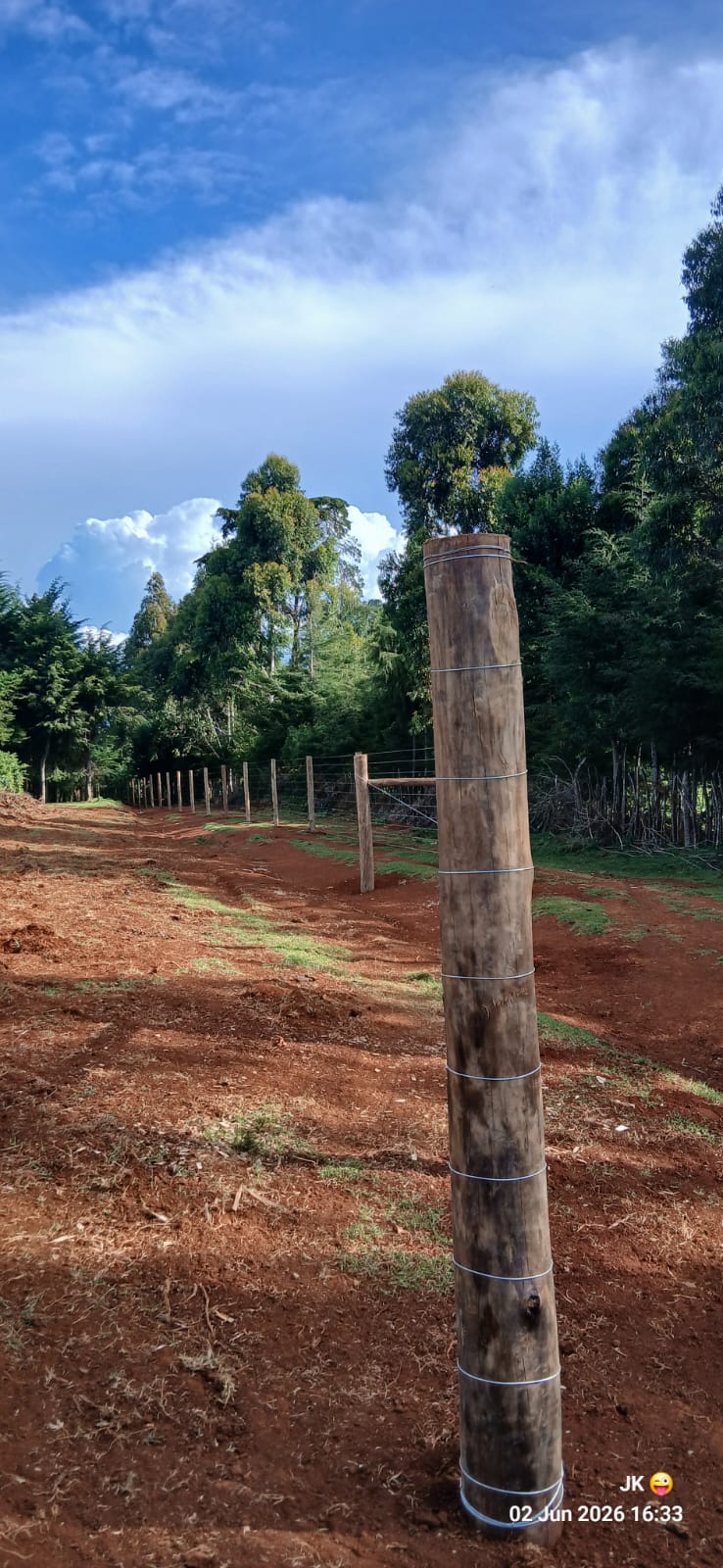
On February 27, 2026, the Keiyo Indigenous Community filed a formal grievance with the United Nations Development Programme’s Social and Environmental Compliance Unit, alleging that a $2.68 million conservation project was being constructed across their ancestral land, including burial sites, without their free, prior, and informed consent. The case was registered as SECU0027 on March 2, 2026, and placed under eligibility review.
Resolving such a complaint requires navigating a strict nine-step accountability process. Sixty-six days later, on May 4, the Kenyan government officially launched fencing operations at Kaptagat Forest in Elgeyo Marakwet County. The case was still at Step Two: Determining Eligibility. On the ground, construction rolled out anyway.
This sequence raises a question about the accountability of international conservation finance: what happens when a formal grievance is filed against a UN-backed project, and construction continues while the complaint is under review?
What the Project Claims to Be
The Kaptagat Integrated Conservation Programme spans over 20,000 hectares across Elgeyo-Marakwet and Uasin Gishu counties, targeting five distinct forest blocks: Sabor, Penon, Kipkabus, Kessup, and Kaptagat. The Strategic Fencing Programme, a government-led initiative backed by UN funding under the Kenya Forest Landscape Restoration Project, is officially framed as a community-aligned intervention: a model for how climate finance can restore degraded ecosystems and benefit the people who live alongside them.
President William Ruto has pledged to plant 15 billion trees by 2032, and the $2.68 million allocated to Kaptagat is drawn from international climate finance mechanisms designed to ensure conservation delivers tangible benefits to local communities. The programme’s most visible symbol is Olympic marathon legend Eliud Kipchoge, who has adopted a 50.8-hectare section of the Kaptagat block for ecotourism. For the Kenyan government, this offers global prestige. For the Keiyo elders, it is a symbol of what the programme consistently prioritises over their claims: international visibility over historic justice.
What the Complaint Actually Says
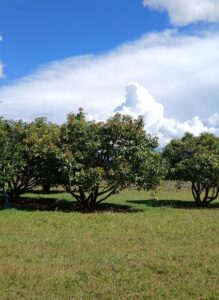
An avocado plantation at Sabor (Photo: Martina Jebet)
The SECU0027 complaint, filed by representatives of the Keiyo Indigenous Community, documents exclusion across all five forest blocks and alleges violations of four pillars of the UN’s Social and Environmental Standards, the binding rules designed to prevent UN-funded projects from harming local communities.
The grievances are specific and deeply consequential. At Sabor Forest Station, where the Kenya Forest Service officially launched the 273-kilometre fencing project, traditional grazing rights were restricted in favour of state-directed avocado farming. State actors frame this as a livelihood success. The Keiyo elders describe it as the dispossession of user rights their community has exercised for generations.
At Penon block, the elders allege that conservation fencing restricts access to identifiable sacred burial sites. At Kipkabus, agencies distributed high-yielding dairy cattle to promote zero-grazing as a forest-access alternative — an initiative the elders argue bypasses indigenous land-use practices entirely. Kessup block, which feeds water streams draining into the Lake Victoria basin, faces a total ban on logging and settlement that the elders say has severed critical community access without compensation.
Across all five blocks, the complaint alleges violations of four UN standards: indigenous peoples’ rights to ancestral land and cultural sites; free, prior, and informed consent (the community was never given a genuine opportunity to say no); economic displacement without compensation; and anti-retaliation protections for community members who spoke out against the project.
Kakamega: The Pattern Behind the Project
Kaptagat is not an isolated case. Two hundred kilometres west, Kakamega Forest tells a longer version of the same story.
Kenya’s only tropical rainforest and one of the last surviving fragments of the ancient Guineo-Congolian ecosystem, Kakamega has lost more than a third of its cover since independence. The causes are familiar: agricultural encroachment, illegal logging, and the progressive hardening of its boundaries against the communities that border it. A2025 peer-reviewed study in Frontiers in Forests and Global Change examined the socioeconomic effects of conservation enforcement on communities at Kakamega’s edge. Stricter boundary controls, including physical fencing, disproportionately affected the poorest households: those with no alternative income and no land beyond the forest boundary. For these families, the forest was a pharmacy, a fuel source, and in lean seasons, a food supply. Exclusion did not eliminate their need; it simply made meeting it illegal.
This is the pattern Kaptagat risks repeating. The communities living alongside its five forest blocks are not abstractions in a project document. They are people whose livelihoods, burial rights, and ancestral land use are shaped by where a fence lands, and who bear the cost when it goes up without their consent.
The Accountability Gap
The central question this story raises is not whether Kenya should protect its forests; it should. The question is whether the international financing architecture designed to ensure that protection is done ethically is functioning as intended.
The UN is not a passive funder here. As the implementing agency, it is directly responsible for ensuring its Social and Environmental Standards are met before and during project implementation. Those standards exist because conservation projects have a documented history of displacing the communities they claim to benefit, a pattern the conservation literature calls conservation-induced displacement. By launching a physical construction while the case sits in Step Two of a nine-step process, the UN has outpaced its own accountability structure before it can even begin. The system is designed to audit harm after it occurs, rather than pausing operations to prevent it.
Henry Kemei, Conservator at the Kenya Forest Service, explained the structural limits of the compliance mechanism. “The Social and Environmental Compliance Unit is an independent fact-finding body, not a court,” he said. “It lacks the legal authority to issue injunctions or order the state forest service to stop building.” Because the Kenya Forest Service operates as a national agency on land the government classifies as state-owned, it can continue construction under its own mandate regardless of the UN’s internal review status. The UN’s only lever, Kemei explained, is financial: “If it freezes its financial pipeline, construction usually slows down due to the state forest service budget constraints.”
The project’s mandatory risk-assessment forms — legally required to log community risks before approval — have not been made public. Without them, it is impossible to determine whether the Keiyo community’s presence was accounted for during the planning phase or overlooked entirely. Until these internal records are unsealed, the fence stands as a physical fait accompli, insulated from the very standards meant to govern it.
The Broader Stakes
Kenya is not alone in this tension. Across the continent, governments are deploying conservation fencing as a frontline tool for meeting their country-level climate pledges submitted under the Paris Agreement. The pressure to show measurable results creates institutional incentives that work against the slower, more complex work of genuine community consent.
The problem runs deeper than procedure. Kemei described a pattern in which community consultations target Community Forest Associations or local leaders who may not represent the poorest, most forest-dependent households. “Consultations can become technical presentations where consent is ‘bought’ through promises of short-term jobs,” he said, “rather than addressing long-term loss of land access.” Resistance rarely results in abandoning a project; the fence moves slightly, but the displacement remains.
Many forest-restoration initiatives across Africa are increasingly linked to carbon-market ambitions and climate-finance mechanisms. Kenya’s Climate Change (Amendment) Act mandates that a minimum of 40% of net carbon revenues from land-based projects be directed to community benefit-sharing funds. If indigenous custodians are physically excluded during the policy-mapping phase, they have little reason to believe they will see any of the revenue share legally mandated once the carbon markets actually open.
What is at stake in Elgeyo Marakwet County is not only the rights of the Keiyo community, significant as those are. It is the credibility of a model being replicated across Kenya and exported across the continent, one that promises community-aligned conservation while building the infrastructure of exclusion.
The Fence Didn’t Wait
The Keiyo community has not withdrawn its complaint. They have not received a formal response to their allegations about the burial sites. They do not know when, or whether, the review will conclude, or what will happen to the fence if it does.
What they have is a structure going up on land they describe as their own, across five forest blocks, financed by a system that wrote the rules to prevent exactly this outcome.
That system has a longer history at Kaptagat than its current architects acknowledge. The elders’ complaint documents what they describe as the forceful seizure of ancestral land during the colonial era, before the forest was gazetted into state control. The international attention surrounding Kaptagat today, the celebrity adoptions, the tree-planting ceremonies, and the climate pledges, is built on land whose foundational legitimacy the Keiyo have never stopped contesting.
Kenya’s reforestation targets are real. The climate pressures driving them are real. But conservation built on procedural shortcuts does not resolve the tensions between forest protection and community rights; it defers them, with interest.
The question now is whether the UN will treat an open compliance case as a reason to pause operations, or merely as an administrative inconvenience to be outlasted. That answer will say more about the future of climate finance in Africa than any tree-planting ceremony.
The post The $2.68 Million Fence vs. The Forest’s People appeared first on African Arguments.