The going away of silence: A tribute to Ngugi
One year after his passing, how should we remember Ngugi? 1. The early years At first, it was just enough to write. Because the silence had gone on for too long. In just a hundred years, between 1860 and 1960, the Africans between the two Rift Valleys experienced a most profound change to their existences in material, spiritual, biological, and even chronological ways. They have been forced to face the question of the very meaning of their existence ever since. Though epic in scale, much of this was unacknowledged and undocumented, be it in fiction, or fact. Where it was […] The post The going away of silence: A tribute to Ngugi appeared first on African Arguments.
 Black News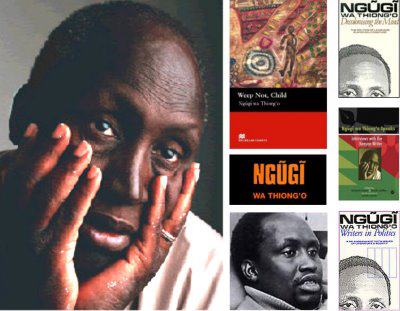
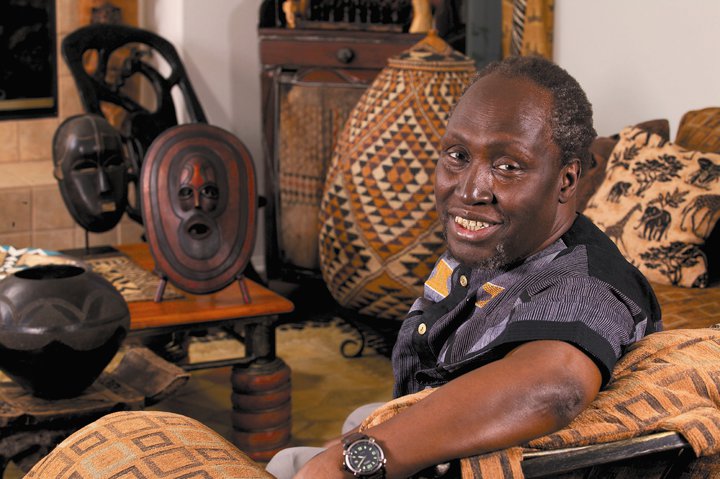
One year after his passing, how should we remember Ngugi?
1. The early years
At first, it was just enough to write. Because the silence had gone on for too long.
In just a hundred years, between 1860 and 1960, the Africans between the two Rift Valleys experienced a most profound change to their existences in material, spiritual, biological, and even chronological ways. They have been forced to face the question of the very meaning of their existence ever since.
Though epic in scale, much of this was unacknowledged and undocumented, be it in fiction, or fact. Where it was made seen, it usually took the perspective of the ones who had engineered all these transformations. Not surprisingly, all of it was then presented as having been a Good Thing.
Born in 1938, Ngugi came to maturity in the shadow of the African war against not just British colonialism, but specifically, the settler colonial nature that it took in what we now call Kenya.
We forget that this conflict, all told, lasted eight years from Governor Evelyn Baring’s Emergency declaration orders in October 1952. The conflict was concentrated among Ngugi’s Agikuyu people, from whom the white settlers had taken a lot of land before targeting the entire population as a hotbed of terrorism.
Like many in that community, Ngugi’s family suffered – to use a human rights parlance not available to Black People anywhere at the time – abuses such as cultural onslaught, state murder, mass displacement and detention camps as a consequence.
Independence was presented as the solution to the overall crisis of colonial Kenya. It arrived in 1963. Beneath the tumult and euphoria, independence came with a deep undercurrent of silence. This silence became the meeting place between old wounds and new disappointments. The resultant political turmoil led to new dictatorships.
Some radicals fashionably dismiss independence as not important. But it was. Because it allowed for the saying of things long never said, even though it was not clear who was going to say them. Yvonne Adhiambo Owuor famously noted that her country Kenya has three official languages: English, Kiswahili, and Silence. I like to think that Ngugi wa Thiong’o offered a fourth: witness.
Because this is how that generation of writers came into existence and relevance. The silence had to go away.
Ngugi was at the forefront of this intellectual cohort, and was to reach back into his childhood experiences to give him a focus, and a direction.
2. Flowers from a supposedly barren place
We don’t reflect enough on the fact that Kenya is the only white settler British colony in Africa located outside southern Africa.
Settler colonialism brings a particular kind of dispossession. It is about erasure; place names, monuments, cultural values, human names and the like, are all under attack.
Most critically, it is about replacement. What has been erased is replaced by something Settler. However, it is not the original culture of the settler, but a locally fabricated approximation thereof.
There is Locally-made English food of all the wheat and dairy products in the settler valleys grown to supply an “English” breakfast.
There were plenty of Locally-Made European names, coming out of the movement of prominent individuals and their empire-brought activities. An interesting variation of this were the studios licensed to publish local versions of international music albums. One could buy the latest release from some American musician. However, the album sleeve would be a most basic facsimile of what the same album would have in a shop in the West: no internal sleeve notes, no foldable cover – basically, just a coloured envelope. Ditto ‘Panadol’. Not its generic version, but the genuine thing, made by the local outpost of the parent company headquartered in the metropolis.
The most egregious case is, of course, that of the locally-made English people. These descendants of the original settlers. Many educated only to a rudimentary level. Speaking English while never having been to Europe, finding Some Thing To Do. Existing in a construct where their only status was that they were of European descent, and had constructed a “Europe” around all of us.
There is an important difference also between the Natives who were invaded and conquered in the earlier periods of European global expansion (1500–1700), and those who met this fate much later, from the 1870s onwards. In the first group there was a lot more equality in the balance of forces amidst great brutality from the conqueror. In the second group, the brutality remained, but due to technological advancement and lessons learned, the balance of power through force was a lot more on the invader’s side. Basically, the science of killing, and manipulating was now much further advanced in their favour.
This is what makes the occupation of say, Zimbabwe and Kenya, much different than the colonisation of Canada or Southwest Africa (now Namibia). In the later cases, the politics of organising a cultural erasure are much more comprehensive and effective, because lessons were learned from the earlier days of using single-shot breech-loading muskets to fight Natives who had similar weapons of their own. A simple example, if such a lesson were necessary, was the conquest of the Indian sub-continent – began at a time when Western European military doctrine still had soldiers pacing forward in lined formations while wearing brightly coloured uniforms. The British “Redcoats” found this high visibility put them at a disadvantage while fighting irregular forces, and realised that by covering their uniforms with mud and dust, they survived better on the battlefield. “Khaki” is the Urdu word for dust, in turn spun off from the Persian word, also meaning ‘soil’ and ‘dust’. This is how the British army eventually migrated from red to brown fabric for their uniforms as their armies occupied more and more of the tropics.
The interior of Africa was colonised much later than its coast, but much more quickly and using much better organised physical cultural weapons.
With Kenya, we then add to this the arrival of a white settler community, linked to the conquering power.
Kenyan politics and cultural engagements were, therefore, always texturally different from those found in the other two of the original three countries of the East African Community (it is now a regional economic bloc of eight states). Indeed, there was first an artistic dystopia; aspirational African imitators fabricating whiteness. This “tradition” continues to plague the soul of modern Kenyan artistic and to some extent, broader intellectual expression: the need to make a local version of something from “out there”, as being the pinnacle of expression.
As such, Kenya would have been forgiven if it had become the most culturally barren place in East Africa. Identity and expression were pushed to the margins, with some aspects – for instance, the entire history of the Mau Mau, including the use of the term “Mau-Mau” itself – banned outright, and others mined and appropriated for the tourism industry.
Instead, there came to life a particular kind of storytelling: laconic, extremely frank, historically subtle. A flower from a supposedly barren place.
3. Confronting power
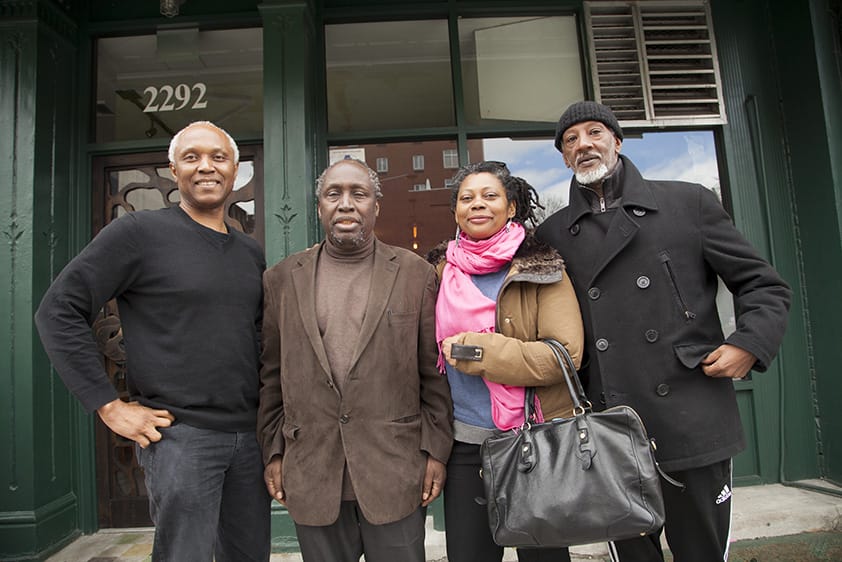
Re-uniting with old comrades: Prof Ngugi wa Thiong’o with Prof Okey Ndibe (left), Prof Barbara Caldwell and the writer, Abdilatif Ega in April 2015 at the Serengeti International Tea House in Harlem, New York. (Photo courtesy: Hollis King)
As Professor Kiyimba pointed out during the recent commemoration for Ngugi held by the Uganda Law Society, Ngugi’s initial writing conformed with a general pattern of critique and disappointment with the emerging realities of Independence.
These critiques, Kiyimba explained, could be spilt into four: the directly political; the economic; the cultural and social; and the psychological. His view is that Ngugi was concerned largely with the last. Certainly, a lot of his fiction is concerned with the inner voice, and with the question of individual motive, and group sensibility.
All told, Ngugi’s critiques were quite measured in tone, given his lived experience as a young man, and as a member of his community. His sharper, more trenchant language seemed reserved for the present. But his reminiscences came with a much calmer, sometimes almost disengaged tone. This is curious, especially when one learns about the utterly depraved sadism experienced by colonised people in the settler colony.
A Kenyan friend insists that there is a certain emotional austerity found among Kikuyu people, especially the women, that can be traced back to there never having been a public conversation to exorcise the demons of the Emergency era, and especially the concentration camps. Maybe this is what Ngugi himself was wrestling with as he wrote.
Indeed, this is a matter that only began to be more openly discussed in the 1980s. Even then, it was not curated by writers of Kenyan origin. And by this time, the horrors of the Arap Moi regime were firmly entrenched.
The war had been long and brutal, the absolute silence about it that followed was even longer, and a more cruel thing still. Perhaps more could be said, by saying less.
However, all his early plays had this straightforward Brechtian feel to them. Taciturn. Matter of fact. Cold witness.
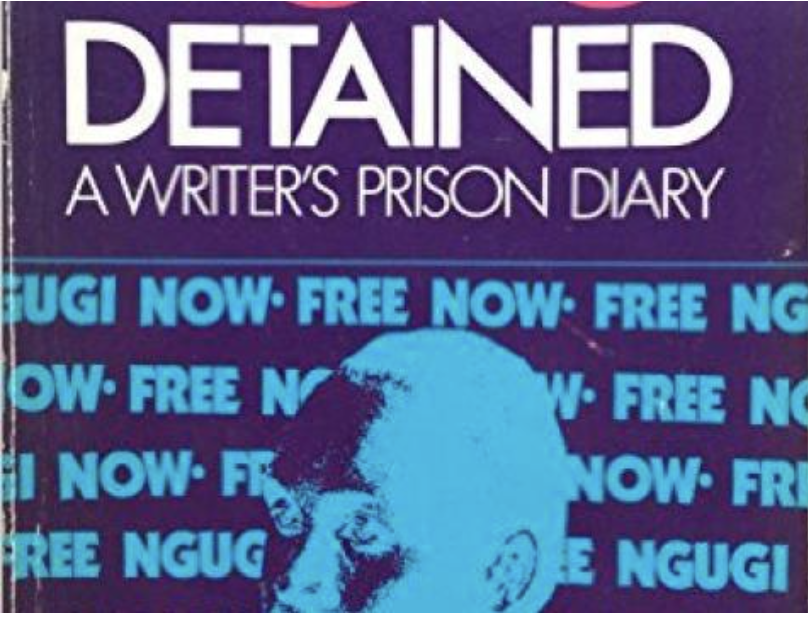
Then something turned. Essays emerged. Very direct shots were taken at the emerging social arrangements and the self-satisfaction of the comprador that was growing with it. The central theses, repeated in Detained (1981); Writers in Politics (1981), and Barrel of a Pen (1983) was that Literature cannot exist in the abstract, and cannot turn itself away from the ongoing social predicaments. Ngugi even condemned as an “empty, hollow bourgeois idea” his (and other emerging writers’) original expectation that on becoming fully established, they would be free to spend the rest of their careers poking fun and exchanging witticisms with one another from their various perches in academia, very much in the style of the Western literati.
In short, he initiated the erasing of a certain vision of literature for Africans, and counter-proposed another.
The reactions of the Kenyan intelligentsia were extreme by the standards of normal people. There was in some circles, an immediate and comprehensive dismissal of the issues raised, often using tools well outside the realm of intellectual discourse. It was another curiosity: either Ngugi was stirring up things that the elite intelligentsia had long managed to suppress; or he was exposing the hollowness of their secret (and not-so-secret) ambitions to become the pseudo-white people of the region.
Among the Kikuyu elite, with its dark history of collaboration with the colonial authorities during the war in the 1950s and who now sat in the inner sanctum of post-colonial comprador power – those Ngugi and others on the Left labelled wabenzi (the owners of Mercedes Benz limousines) – his critiques of the then emerging post-colonial society were treated as heretical. I recall reports from him that all it may have taken was for a few passages from one or other of his works to have been read to Jomo Kenyatta, for the latter to approve the request that Ngugi be “detained”.
It was almost an admission of defeat; since we cannot win the argument, we will simply suspend it indefinitely. Since we cannot answer your pointed questions, we shall stop you from asking them. Since we have lost sight of ourselves, let us hide you also in a dungeon.
4. Exploring expression
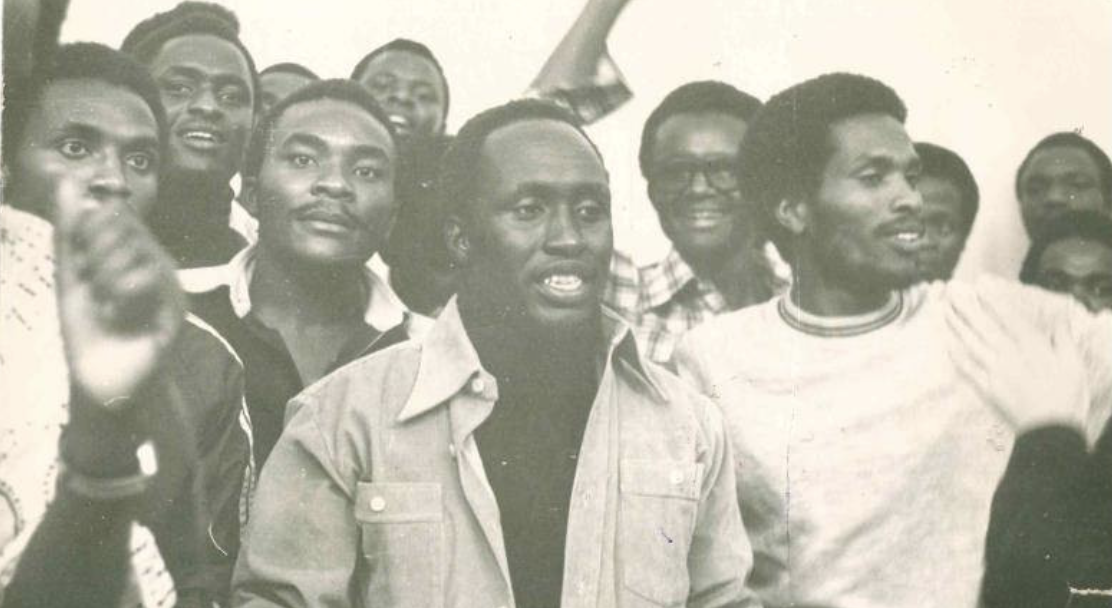
African literature has long operated on a set of contradictions. Who is its owner? Who is its consumer? And should they be?
In particular, the novel as an artefact that emerged from a very specific point in the emergence of Western thought: could it be Africanised, or was its very form a hindrance to the development (and rediscovery) of “real” African expression?
Did a novel in an African language make it African? And how did any of this matter?
Many creatives from Africa often have a moment where they observe – or it is observed of them – that they need to go home to reconnect with the cultural expression of their people.
I heard how Fela Kuti was challenged to go explore more of his own Nigerian musical roots by the American Jazz and funk musicians he was spending a lot of time playing with while in the United States. The same point was made – in characteristically rude fashion – in American Jazz icon and innovator Miles Davis’s autobiography, about Hugh Masekela. Even my own father, Robert Serumaga, owes part of his later immersion into African stage expression to a series of encounters with Ellen Stewart, the African-American theatre innovator and founder of New York’s La MaMa Theatre.
I cannot honestly say that in my years of reading, tracking and interacting with Ngugi, that I came across signs of a similar transformational encounter in his creative timeline. His radicalism, and the uncomplicated courage he brought expressing it, seemed to be something that emerged from inside himself.
Nevertheless, his breadth of knowledge of the political and intellectual currents from around the world, especially Latin American literature, do suggest many kinds of interactions with the like-minded globally.
This radicalism is best exemplified in the Revolution at the English Department, the campaign that resulted in the demotion of English in literature when he and colleagues forced the reconstitution of the English Department of the University of Nairobi as the Department of Language and Literature, in 1971. This was a further entrenchment of a pattern of confronting the grip of Western thought on the Kenyan (and wider African) intelligentsia at a structural level.
The entire Kamirithu Community Theatre Project in Limuru could be understood in this way. Now the ideas were being replanted outside the boundaries of the spaces in which they had been seeded. Having read the play most famous from that period (in English translation, not the original Gikuyu), I came to the conclusion that the significance of Ngahiika Ndenda was more as a statement – an act of resistance against the aforementioned erasure of the African in Kenya, as opposed to a statement through content and messaging. This especially for the language in which a lot of the anti-colonial war was prosecuted, and on a site erected that was once a “colonial village” – shorthand for an Emergency-era concentration camp. Furthermore, at a time when, despite the Kenyatta state’s anti-colonial credentials, it was still technically illegal for memories and emblems of the insurgency to be publicly aired.
I came to this reading because where I come from, Native language use had been normal and standard in colonial Uganda. There had been apartheid around the politics of the management of the Uganda National Theatre (built in the twilight of the colonial era), but the dynamics of Native resurgence were very different. The issue of what was being said on stage, or on radio would in our context, weigh more than the issue of simply whether it had been said in a Native language. This is what I have meant by saying that settler colonialism created its own unique struggles at a cultural level.
Intellectuals like Mahmood Mamdani have misunderstood this to be the recruitment of Native identity to the enforcement of colonial power. However, we Natives saw it more as an act of resistance and cultural survival, showing the limits of what colonial power had been able to erase. Indeed, even Ngugi described his arrival in Kampala as a Makerere University Freshman as his first time in an actual African city.
A small footnote here: Ngugi mentioned to me (when I was fortunate to finally meet him in person, during the rehearsals for Dedan Kimathi in London) that he and my father, Robert Serumaga had discussed the possibility of Serumaga’s ultra-Africanist Abafumi Theatre Company collaborating in a performance with the community theatre project. Unfortunately, Ngugi was detained in the same week our family arrived as harried exiles in Nairobi. By the time Ngugi was released, Serumaga was at war. And by the time Ngugi went into his own exile, Serumaga was dead.
It would and should have been a useful and instructive encounter. These two minds were coming to the same conclusions about African expression from two very different political traditions, and with a putative adherence to two opposed camps of the Cold War.
5. The storm, and after
To continue.
“Detention” is a very problematic word. It is used by the state to assert that something decent, legitimate and legal is taking place. It affords a respectability to an act of state that is, in fact, the very opposite and one in which a delinquent state abandons all claims and commitments to constitutionalism.
In 1982, Ngugi travelled from Nairobi to London to launch his book, Devil on the Cross. He never returned – or, at least, never returned to stay. He was to spend the rest of his life, a total of 43 years, in some kind of exile.
It was through my marginal involvement with his staging of The Trial of Dedan Kimathi, that I first heard Kikuyu resistance songs. In London, despite having spent many formative years in Kenya, and having even attended a school based in Limuru, where Kamirithu was located and Ngugi was born. Such was the power of erasure.
But why London? Bystanders often misunderstand why those claiming to fight imperialism often travel to and live in the metropoles of the very empires they claim to be opposing. It is deemed hypocritical, but actually, it is very logical. Through their historical institutions the British have tentacles that reach deep into the societies they conquered in Africa, Asia and elsewhere. Consequently, many of the levers, the personnel (active and retired), archives, information and interested parties concerned with how such control is maintained, were to be found in this city.
So, there is a very long modern Third World, Black and African tradition in coming to fight the empire from its capital. Ho Chi Minh, Marcus Garvey, Bernard Coard, and others had all spent some political time in London. From our region we had Jomo Kenyatta, Uganda’s Semakula Mulumba, and others all networking in the heart of Empire. The Pan African Congress gathering held in Manchester in 1945 was the first in which native leaders of the colonies encountered their diaspora colleagues and formally began agitating for independence.
This pattern was repeatable in the capitals of each of the Western European empires.
But there was a second reason, rooted in the exceptionally stubborn strain of the British ruling elite’s venality and opportunism, which saw them jump at the chance to play second fiddle to the United States, leveraging that huge cultural footprint in Africa to carve out a special place for themselves as a sort of “African Whisperer” for the Americans. The Western European powers, having fought each other to exhaustion in the 1939–45 war, now ceded control of their empires to the Americans who were interested in gaining commercial (and, therefore, political) access.
This was, in the view of the British, a far better option than surrendering the territories wholesale to the colonized peoples themselves, and their assumed friends in the Soviet camp supporting their demand for Independence.
My view is that this is the concrete meaning of the “Special Relationship” Britain has long claimed to have with the United States.
Continuity and cooperation were starkly demonstrated in Kenya, where the United States’ and British embassies shared the same building in Nairobi which was also either adjacent to, or also occupied by or possibly even owned by, the British conglomerate known as Mitchell Cotts Ltd which, by some circuitous history, was the corporate descendant of the Imperial British East African Company which invented both Kenya and Uganda as its founding commercial ventures before being taken over by the British Crown in the mid-1890s.
That’s the general context. It helps one to understand that even with Independence, and with the American rise to global dominance, there was still a lot of useful diplomatic and intelligence work that African (and other) liberation movements could do in London’s corridors and meeting halls. And of course, in the space known as the Africa Centre, where the various stressed-out refugee-activists could be found networking, fighting, fundraising through galas, book launches and exhibitions, and generally just exiling their time away.
The targets were the same: the Black Diaspora; the (then) vast British trades union movement; various branches of the British Labour Party; the huge British media industry; specialist academics; the parties that controlled British local government systems; those sections of British civil society concerned with war, famine, human rights; and the myriad factions of the British extreme Left.
The goal was to get influence of policy, material assistance and public support. The methods were a lot of talking, networking, lobbying and seeking media coverage. It meant, among other things, dealing with a huge number of woefully under-informed, but highly opinionated Britons lumbered often with a misplaced sense of superiority.
The concept of mass communication has been substantially transformed since those days. Back then, large organizations – some private corporations, others owned by the state – decided what the public needed to know, and relayed it to us via radio, television and print. All aspects of the process – information gathering, subject selection, editing and the rest – were all strictly in the hands of the broadcaster.
There was a tradition of alternative media in radio and especially print, but in general, the “airwaves” were dominated in each jurisdiction by a few very large key players. Publicity is the oxygen of politics. You get known, understood and supported by being seen and heard.
Those liberation movements that were able to make inroads with the media houses, and gain traction with their editorial decisions, were truly blessed. This led to a a lot of effort being made to get the attention, not just of the media house’s top decision-makers, but also with anyone in the ecosystem who could hook you up. Many well-known publishing houses had intimate relationships with newspapers, and many prominent politicians were on very good terms with the big names in the broadcast media. If they knew you they might introduce you to their friends in the media.
There was a kind of unspoken hierarchy of African and other exile presences. South African exile groups were at the top of the pile; the African National Congress was the great she-elephant among them. Refugee-activists from certain South and Latin American countries were also visible and important. There were many very industrious organizations from the Horn of Africa, and a rather secretive but chaotic representation of the South Sudan armed movement. As well, were quiet and resourceful organizations from The Gambia, Angola, Zimbabwe and Sudan, and a most rambunctious presence of former Ghanaian cadres of the Flight Lt Jerry Rawlings presidency era, now left bewildered by all that happened there after.
The Middle Easterners also flared up, especially the exiled Iranians from the Shah Pahlavi era, somewhat dismayed at having to rub their pure Aryan shoulders with all manner of humans, especially Africans, in the corridors of the British Refugee Council offices.
Ngugi’s arrival in London placed the Kenyan exile movement somewhere near the top of that heap. It was only natural. This was a global literary heavyweight (much as he carried it lightly). His writing and activism spoke in very clear terms to many of the issues close to the hearts of the global Black Diaspora, not least anti-Black racism, of which London was the nerve centre. The efforts of the much older and larger anti-Apartheid movement had of course already made those interested develop a deeper understanding of the particular animal that was Settler Colonialism. The absence of anything negative against the Eastern Bloc, not to mention Ngugi’s much greater access to the media, made the Kenyans the more amenable face of African exile activism.
We, on the other hand, came to a people who had been left jaded by the propaganda war exhausted on the personality of General Amin. We had no Settlers to speak of and therefore no stark narrative line to push. We were also willing to “go there” and get into esoteric debates about whether the Soviet Union was still a force for good in the world. We had no Mandela or Ngugi equivalent, who could personify the struggle as they had theirs. Ugandans and their never-ending issues had become almost passé since the end of the regime of General Amin. Few other African exiles were deemed important; they were from countries whose London-like metropolis was Paris, Brussels or even Washington. We remained bumping at the bottom, having interesting conversations with the fractious and equally marginalized step-children of South Africa’s liberation struggle such as the Pan African Congress, and the Black Consciousness Movement.
Fighting a neo-colony is texturally different than fighting a colony. This can be seen in how the advent of majority rule resulted in South African civil society becoming flat-footed, unable to move the needle further in the dismantling of the physical legacies of the colonial period.
All of this was to work very much against us after Yoweri Museveni’s National Resistance Army took power in early 1986, and the broad Kenyan anti-Moi resistance, in their wisdom (and later, their great loss), elected to lend credibility to it. Because what good things they said about the new Uganda regime were taken and weighed against all the bad things we were saying about it. And, as said, this was a matter of whose voice carried more weight.
There were particularly close relations with a cohort of activists from Senegal, Ghana, Nigeria and elsewhere, who espoused Pan African ideals. Some had been central in participating in the initial London staging of Kimathi at the Africa Centre.
Many of them became part of the team that organized the Pan African Conference in 1994 in Kampala. In attendance were the likes of Stokely Carmichael/Kwame Ture, and Hassan Farah Aideed, lending a radical gloss to the event. It could be argued that this was how Uganda’s forays into the Democratic Republic of Congo was successfully sold to Ugandans – as a gesture of pan African solidarity, as opposed to the Western-backed invasion it actually was.
As said, information is the fuel of activism, but one no longer needs to be over there to get visibility, even as the empires themselves rapidly decline. There are probably now more peoples of African origin living in European cities that at any other time in history. But at the same time, the percentage of them engaged in political activities has never been smaller.
Ngugi already provided the template for the next step. Activism, and intellectual engagement will become more and more local; in language, in location and in targeting. As much as we can all be broadcasters now, we will all have to have something of continuing value to say. Local language content can be rich or can be poor, depending on the politics of the broadcaster. Ngugi wrote about the whole world, but did so in an African language.
6. Writers in politics, politicians who write
Writers in Politics makes the case for writers to consider their position in the face of the various crises and problems facing their communities and, presumably, the nations about which they write.
Does a writer’s activism allow him to remain a writer, or does he become a politician? And can political material and experiences feed the creative mind in the way the ordinary human experience does?
I still recall a Ngugi book entitled Fire in the Mountain, which came out in those days. It was possibly published by Zed Press. I mention that, because it is impossible to find any reference to it anywhere I looked.
It functioned as an odd history of the anti-colonial war, as told through oral testimonies from a number of Africans who had been fighters in that war. I cannot recall the exact number, but they were not few.
It made a particular impression on me. It did not have the feel of a series of conversations with older people reminiscing on past events in their lives. Instead, it came across as rigid and doctrinaire. The interview subjects became ciphers for what the owners of the book project wanted to say – the kind of novel critics of Soviet literature used to call agitprop literature. There was a very diligent, scrupulous effort made to ensure that the rebellion was referred to as the Kenya Land and Freedom Army. This was of course its actual formal name. But even my own experience of interviewing tells me that not every person will say the same things in exactly the same way.
Furthermore, there was a final question put to each interview subject at the end of their respective interviews. To paraphrase, it was a kind of invitation to the subject to make a kind of summing up. As I recall, each is recorded to have responded in exactly the same way. In exactly the same form of words, they each expressed an undying pride to having “contributed to the fight against colonialism and imperialism”, or words to that effect.
Many will not be aware today that the word “imperialism” was used in different ways by two great factions of the Left, depending on whether they were aligned with the Union of Soviet Socialist Republics (the USSR, the Soviet Union, Russia, the Eastern Bloc, the Warsaw Pact to give it all its various names). When Russian-backed or affiliated players said the word, they meant basically the United States and its friends with the NATO alliance. This was the essence of the Cold War.
When non-Russian entities on the Left used it, it meant a wider collection of any country involved in the actual, or intended domination and exploitation of another country.
In our party, we held the view that by the mid-1970s, the Soviet Union had become an imperialist country in both intent and practice. This naturally put us at odds with many African liberation movements, which enjoyed good relations and material benefits from the Russians.
But there was a wider question regarding the apparent sterility of Soviet Marxism after Stalin; it was as if no notable personalities, or works were to emerge from the place that had, at the source of their struggle to take power and then build up a socialist state, produced some very prolific writer-leaders. A writer in politics could perhaps contribute to the struggle by helping find the writers in other struggles and therefore help us better understand the motives of other movements.
Most of the big dogs of liberation struggles globally seemed to have Soviet connections, and the broad Kenyan resistance to the Moi regime, of which Ngugi was a part, was no exception. This is far from calling him, or even them, a soviet agent or puppet.
This was a long and involved process, and one still shrouded in secrecy today. I have never been able to determine Ngugi’s actual role here, but I do know that it basically rendered our own exile work so pointless that it contributed to our later decision to dissolve our party globally.
I had a few conversations with Ngugi (often by phone) in the early 2000s where the issue came up. In response to my question about where he felt the Museveni regime had gone wrong, he responded that “they [the NRA] never understood the real value and meaning of the power they had awakened, and thus did not know what to do with it. And so they handed it over to other people.”
This was classic Ngugi: succinct, offered quietly in a brutally simple matter-of-fact manner, and profoundly accurate.
7. Legacy
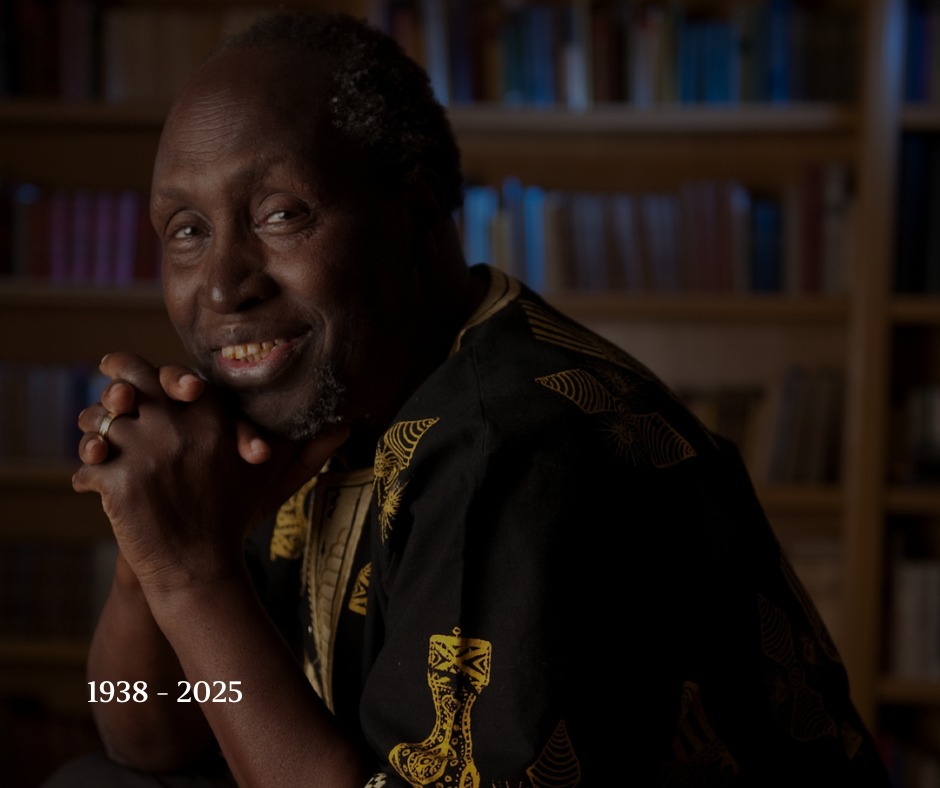
Finally, Ngugi’s intellectual and activist journey is best known for the concept of decolonisation, which has now become the centre of gravity in postcolonial discourse. If not coining the word itself, Ngugi is responsible for the normalisation of the use and development of Native African languages in spaces and practices previously deemed the natural place of European languages, and particularly Western European ones; the radical broadening of the concept of literature; and the obligation to deploy the arts and gifts of the African storyteller to let out and amplify the struggles of the African and similarly affected people for freedom and dignity. In other words, to make and keep art relevant to the communities it comes from.
This did not all come at once. And that in itself is important.
A good way to think about the meaning of this man’s work, a year after his passing, is to ask how things would have been if he had never existed.
A second way is to salute a person who remained loyal to his history, his inheritance and his chosen ideals, even when that put him in harm’s way.
A man who knew when change was due, and made it.
It started with him, the best-known and most successful writer from Kenya. He did not want more fame; he wanted something different: freedom.
The post The going away of silence: A tribute to Ngugi appeared first on African Arguments.