The Lion Mountains Roar: Sierra Leone’s Eternal Heritage of Gold, Diamonds, and Unconquerable Spirit.
By: Professor Dr. Sufi Atif Amin Al Hussaini Clause I: The Dawn of Sovereignty April 27, 1961 The formal journey of Sierra Leone as a sovereign state began on April 27, 1961, when the green, white, and blue flag was first hoisted, marking the end of over 150 years of British colonial rule. Sir Milton […]
 Black News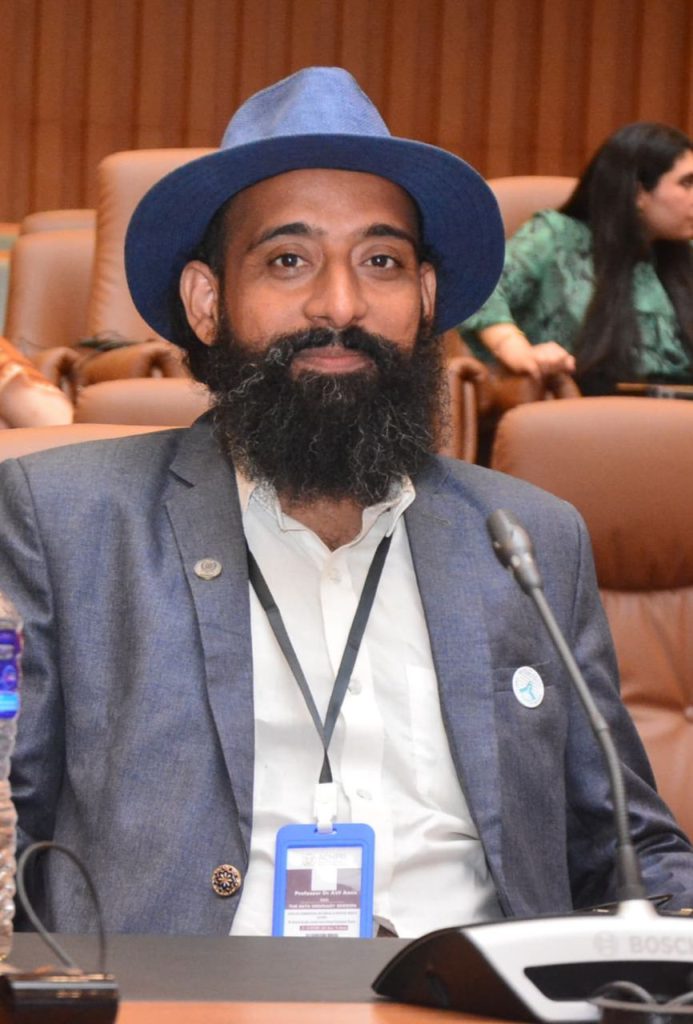

By: Professor Dr. Sufi Atif Amin Al Hussaini
Clause I: The Dawn of Sovereignty April 27, 1961
The formal journey of Sierra Leone as a sovereign state began on April 27, 1961, when the green, white, and blue flag was first hoisted, marking the end of over 150 years of British colonial rule. Sir Milton Margai, a medical doctor by profession, became the nation’s first Prime Minister, leading a people who had long yearned to translate their cultural richness into political self-determination.
Clause II: The Colonial Hub of Enlightenment and Health
Long before independence, Sierra Leone served as the “Athens of West Africa.” Fourah Bay College, established in 1827, was the first Western-style university in Sub-Saharan Africa, educating the pioneers of West African administration, law, and medicine. This legacy transformed Freetown into a colonial hub for intellectual and clinical excellence, attracting scholars and patients from across the continent, setting a standard for academic rigor that defined the region’s early elite.
Clause III: Geographic Grandeur and Demographic Vitality
Strategically located on the southwest coast of West Africa, Sierra Leone covers a land area of approximately 71,740 square kilometers. It is bordered by Guinea to the north and east, and Liberia to the south. As of early 2026, the population is estimated at approximately 8.9 million people.
Demographic Breakdown (Statistical Reference):
- Female: 50.8% (approx. 4.52 million)
- Male: 49.2% (approx. 4.38 million)
- Children (0–14): 40.2% — representing the nation’s future potential.
- Youth (15–35): 33.5% — the primary engine of economic growth.
- Old Age (65+): 3.1% — the keepers of wisdom and tradition.
Clause IV: Intellectual Standing and Regional Ranking
Sierra Leone continues to rebuild its educational infrastructure. The current literacy rate stands at approximately 48% to 52%, with aggressive government policies targeting a 360-degree improvement. In terms of cognitive performance and “Mental IQ” rankings within the West African sub-region, Sierra Leone consistently demonstrates high adaptability and linguistic intelligence, often ranking within the top tiers of ECOWAS nations for creative problem-solving and resilience.
Clause V: The Heroism of Healing – Defeating the Ebola Virus
The story of Sierra Leone’s triumph over the 2014–2016 Ebola outbreak is written in the blood of its martyrs. Dr. Sheik Humarr Khan, a world-renowned virologist and the nation’s leading expert on viral hemorrhagic fevers, is the legendary figure who sacrificed his life to save millions. By treating over 100 patients and establishing the rigorous containment protocols that eventually halted the virus’s spread, Dr. Khan’s bravery became the global blueprint for pandemic management. His legacy continues to inspire medical professionals worldwide.
Clause VI: Icons of Global Excellence
Sierra Leone has produced giants who contribute to the global tapestry:
- Science: Dr. Monty Jones, a world-class plant breeder and World Food Prize laureate, developed NERICA (New Rice for Africa), transforming food security across the continent.
- Sports: Icons like Mohamed Kallon (Football) and Eunice Barber (Athletics) have brought international glory to the nation.
- Education/Economics: Dr. Kandeh Yumkella, former UN Under-Secretary-General, is a global leader in sustainable energy and economic policy.
Clause VII: The Eternal Bond – Diplomatic Relations with The Gambia
The brotherhood between Sierra Leone and The Gambia is historic, formalized immediately upon independence in 1961. For over 65 years, these two nations have shared a unique bond rooted in common legal systems, educational exchange, and the “Anglophone” heritage.
- Bilateral Trade: Trade focuses on fisheries, timber, and the exchange of human capital. Both nations serve as mutual gateways to the ECOWAS market, fostering a spirit of “West African Exceptionalism.”
Clause VIII: The Mined Treasures – Gold, Diamonds, and Divine Blessings
Sierra Leone is blessed with some of the world’s highest-quality minerals. The diamond industry alone has a multi-billion dollar potential, with historical extractions including the “Star of Sierra Leone” (968.9 carats).
- The Queen’s Witness: In 1961, during her independence tour, Queen Elizabeth II visited the Kono diamond fields, witnessing firsthand the extraction of these “tears of the sun.”
- Economic Worth: The estimated value of unexplored gold and diamond reserves runs into tens of billions of US dollars, a powerful asset gifted by Allah Almighty to provide for the people’s welfare.
Clause IX: Fertile Soils and Livestock , The Game Changer
The land of Sierra Leone is exceptionally fertile. Agriculture contributes over 60% to the GDP.
- Self-Sufficiency: By prioritizing rice, cocoa, and livestock, the nation can eliminate unnecessary food imports. A healthy, engaged youth population can manage these resources to ensure total food security, transforming “imported hunger” into “exported abundance.”
Clause X: The Youthful Renaissance – AI and IT Entrepreneurship
The government of Sierra Leone must view its youth not as a liability, but as a “Strategic Asset.”
- IT Entrepreneurship: By establishing AI Innovation Hubs, Sierra Leone can produce “Champions of AI” who provide remote services to the global market, turning unemployment into unbeatable economic growth.
- 360-Degree Change: Technological literacy is the cornerstone of modern sovereignty. A nation that masters AI masters its own destiny and secures its freedom against the chains of poverty.
Strategic Roadmap: Youth, AI, and Economic Growth
To transform the threat of unemployment into a catalyst for growth, the Government of Sierra Leone must adopt a “Youth-First Digital Strategy”:
- IT Entrepreneurship Hubs: Establish specialized zones where youth are provided with high-speed internet and capital to launch startups.
- Champions of AI: Integrate Artificial Intelligence and Internet of Things (IoT) education into the national curriculum.
- Demand-Oriented Manpower: Shift vocational training toward data science, coding, and remote-work skills to serve the global digital economy.
- Sovereignty through Growth: Economic independence is the only shield for national sovereignty. A self-sufficient economy reduces reliance on foreign aid and empowers the state to protect its own interests.
Clause XI: Divine Stewardship and Resource Management
Allah Almighty has blessed Sierra Leone with fertile soil, abundant minerals, and a brilliant populace. As per the clear instructions of Allah, the management of these resources must be rooted in Justice (Adl) and Trust (Amanah). By organizing available resources with transparency and fear of the Almighty, the government can deliver prosperity to every citizen, fulfilling the divine mandate of stewardship.
Clause XII: Global and Regional Leadership (ECOWAS)
Currently, Sierra Leone holds a prominent position within the ECOWAS hierarchy, with President Julius Maada Bio serving as the Chairman of the ECOWAS Authority of Heads of State and Government. This role has amplified the nation’s diplomatic power, allowing it to lead regional integration, peace-building, and economic reform across West Africa.
Clause XIII: Administrative Regions and Natural Splendor
The country is divided into five main regions: The Northern Province, North West Province, Eastern Province, Southern Province, and the Western Area. Sierra Leone is home to breathtaking landscapes, including:
- The Peninsula Beaches: River No. 2 Beach and Bureh Beach.
- Tiwai Island Wildlife Sanctuary: A biodiversity hotspot.
- The Loma Mountains: Home to Mount Bintumani, the highest peak in the country.
- Bunce Island: A historic site of global significance.
To further refine this research based article, the following breakdown organizes Sierra Leone’s five main regions by their strategic suitability, geographic borders, and international connectivity. This spatial analysis is essential for any national transformation plan rooted in economic sovereignty.
Strategic Regional Suitability & Economic Mapping
| Region | Primary Strategic Suitability | Geographic Advantages |
| Northern Province | Agriculture (Grains) & Livestock Hub | High savanna grasslands ideal for large-scale cattle ranching and grain production (rice/tobacco). |
| North West Province | Trade, Logistics & Maritime Gateway | Proximity to the capital and the international airport (Lungi); strategic for cross-border trade. |
| Eastern Province | Cash Crops & High-Value Mining | Tropical rainforest climate perfect for Cocoa and Coffee; home to the nation’s primary Diamond reserves. |
| Southern Province | Industrialization & Educational Hub | Centrally located with high rainfall for Oil Palm; Bo City serves as a major commercial and academic center. |
| Western Area | Port, Shipping & Administrative Hub | Home to Freetown and one of the world’s largest natural deep-water harbors; center of AI/Tech innovation. |
Detailed Regional Breakdown & Borders
1. The Northern Province (The Gateway to the North)
- Suitability: Primarily Livestock and Agriculture. The “Boliland” areas are ideal for mechanized rice farming, while the savanna is the traditional heartland for cattle, sheep, and goats.
- Borders: * Internal: Bordered by the North West Province (West), Southern Province (South), and Eastern Province (Southeast).
- International: Shares a significant border with the Republic of Guinea to the North and East.
2. The North West Province (The Coastal Corridor)
- Suitability: Port and Shipping (Strategic Support) and Agriculture. This region is vital for mangrove rice cultivation and serves as a major transit point for goods moving between Freetown and Conakry.
- Borders:
- Internal: Bordered by the Northern Province (East) and the Western Area (Southwest).
- International: Shares a border with the Republic of Guinea to the North and the Atlantic Ocean to the West.
3. The Eastern Province (The Diamond & Cocoa Belt)
- Suitability: Agriculture (Cash Crops) and Global Mining. This is the nation’s “wealth engine,” where diamonds are extracted and high-grade cocoa/coffee are grown for export. As previously noted, the Kono fields here were the witness to the historic 1961 diamond extraction tour.
- Borders:
- Internal: Bordered by the Northern Province (North) and the Southern Province (West).
- International: Shares dual international borders with the Republic of Guinea (North/East) and the Republic of Liberia (East/South).
4. The Southern Province (The Industrial & Academic Heartland)
- Suitability: Industrialization and Educational Hub. Bo, the capital of the South, is a historic center of learning. The region is also suitable for industrial-scale agro-processing, particularly for palm oil and ginger.
- Borders:
- Internal: Bordered by the Western Area (West), North West Province (Northwest), Northern Province (North), and Eastern Province (East).
- International: Shares an international border with the Republic of Liberia to the Southeast and the Atlantic Ocean to the South.
5. The Western Area (The Crown of Commerce)
- Suitability: Port and Shipping, Educational Hub, and AI/IT Entrepreneurship. This region houses Freetown and the Queen Elizabeth II Quay. It is the most suitable zone to pilot the “Champions of AI” initiative, utilizing its high connectivity to transform the youth into a digital workforce.
- Borders:
- Internal: Bordered entirely by the North West Province to the East.
- International: No land borders; it is surrounded by the Atlantic Ocean on three sides, making it the nation’s primary maritime gateway.
International Border Summary
For the purposes of diplomatic and economic planning, it is important to note:
- Provinces with International Borders: Northern, North West, Eastern, and Southern.
- Dual Border Provinces: Only the Eastern Province shares borders with both neighboring countries (Guinea and Liberia), making it a high-priority zone for ECOWAS regional integration and security.
Conclusion: A Vision of Revolution and Prayer
As we reflect on the journey of this great nation, we are reminded of the philosophy of the East, particularly the revolutionary spirit found in the poetry of Allama Iqbal:
“Yaqeen muhkam, amul paiham, mohabbat fatih-e-alam, Jihad-e-zindagani mein hain ye mardon ki shamsheerain.”
Translation: “Firm faith, ceaseless action, and world-conquering love, These are the swords of men in the struggle of life.”
Final Prayer: May Allah Almighty shower His countless blessings upon the land of Sierra Leone. We pray for the health and long life of its people, and that the nation enjoys its independence and prosperity until the Day of Judgment. May all internal and external enemies of peace and progress be met with the justice of the Almighty, while the facilitators of progress receive their divine reward.
We further pray for peace in Palestine, Iran, and every corner of the globe. May the gold and diamonds of Sierra Leone shine as symbols of hope for all of humanity.
Long Live Sierra Leone! Long Live The Gambia! Long Live Pakistan!