The Unfinished Business of Freedom: Why our young entrepreneurs still wait for dawn
An economy that does not embody Ubuntu is not neutral. It is simply cruel in a polite language.
 Black News
by Lutic Molo Mosoane
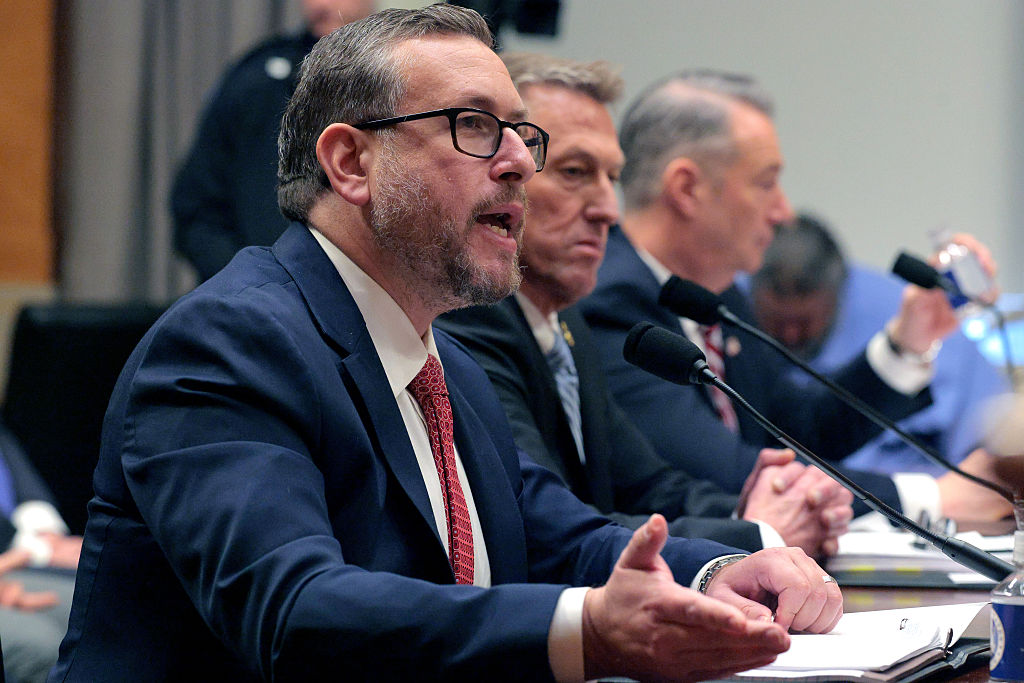
Two weeks ago, at the BRICS+ Youth Innovation Summit hosted at Tshwane University of Technology, I sat among adjudicators in the AI and Digitisation category and watched young South Africans pitch solutions that would hold their own in Silicon Valley, Shenzhen, or Bengaluru. They were precise. They were prepared. They were building tools that could transform healthcare, agriculture, education; the very sectors our country cannot afford to keep failing.
I left that room with one settled conviction: the problem has never been our young people.
In days, on 27 April 2026, we will mark thirty-two years of democratic freedom. This year also carries another weight of fifty years since the generation of 1976 stood up, and many fell, so that the rest of us could sit in rooms like the one I described. It is a sacred coincidence of anniversaries. It is also, if we are honest, an uncomfortable mirror.
Because somewhere between 1976 and 2026, we quietly allowed a lie to settle into our national psyche: the lie that our young people are waiting to be saved. That what they lack is initiative, or skill, or hunger, or “entrepreneurial spirit.” It is a convenient lie because it makes the shortfall of freedom their fault rather than ours.
The truth I have witnessed in pitch rooms, in accelerator cohorts, in the young businesses I have had the privilege to mentor is the opposite. What our young entrepreneurs lack is not drive. It is scaffolding.
A freedom that stops at the boardroom door
Consider what a young founder in South Africa today must navigate to build anything at all. She must register a company and remain tax-compliant from day one, even before her first invoice. She must satisfy BBBEE requirements, UIF, COID, SARS, and often industry-specific licensing each with its own portal, its own fee, its own penalty regime. She must persuade a bank to extend credit against a balance sheet that does not yet exist. She must compete for procurement tenders written for incumbents twice her size, on payment terms that would sink her if honoured and that often are not honoured at all.
And she must do all of this while the lights go off, the data is expensive, and the capital markets still treat her postcode as a risk category.
This is not a failure of talent. This is a failure of design.
In my own submissions to Parliament’s Standing Committee on Finance on the 2026/27 Fiscal Framework, I have argued as many before me have that our national budget continues to be written as if small business is a charitable afterthought rather than the engine of the employment, we claim to prize. We speak of an “SMME-led recovery” in speeches. We build an SMME-hostile ecosystem in practice. The two cannot coexist forever.
Ubuntu in the economy, not just in the slogan
There is a Sepedi saying I return to often: Tau tša hloka seboka di šitwa ke nare e hlotša; lions without unity are defeated by a limping buffalo. We have a generation of lions. They are not failing for want of teeth. They are failing because the pride has been scattered by a system that was never designed to hold them together.
Motho ke motho ka batho; a person is a person through other people. It is the philosophical heart of who we claim to be. But Ubuntu cannot be confined to funerals and state banquets. It must show up in how a bank reads a young woman’s business plan. It must show up in how a municipality pays a thirty-day invoice on day twenty-eight rather than day one hundred and eighty. It must show up in whether a township-based fintech founder can access the same enterprise development rand that currently flows, almost reflexively, to the usual suspects in Sandton.
An economy that does not embody Ubuntu is not neutral. It is simply cruel in a polite language.
What freedom must still do
If 1994 gave us political freedom, and the class of 1976 paid for it, then the unfinished business of our generation is economic freedom, and the young entrepreneur is its front line.
Finishing that business is not mysterious. It requires a procurement revolution not another policy document, but measurable, audited thirty-day payment across the public sector, and the enforcement of set-asides that reach first-time suppliers rather than rotated incumbents. It requires finance that is fit for purpose blended instruments that bridge the missing middle between microfinance and commercial credit, underwritten by development finance institutions assessed on developmental impact rather than on replicating the risk models of commercial banks. It requires a single compliance front door, because a state that asks a twenty-four-year-old founder to file separately with SARS, UIF, CIPC, COID, and the BBBEE Commission on five different platforms is not regulating; it is gatekeeping. And it requires patient capital for ideas that scale our continent because the AI and digitisation solutions I saw at the BRICS+ summit will either be funded here and scaled across Africa or bought cheaply and scaled elsewhere. One of those outcomes is freedom. The other is a familiar story.
The dawn we owe them
I write this as someone who has both pitched and adjudicated, who has sat on both sides of the funding table, who has seen funding change the trajectory of a small business and seen R0 end the dream of a better one. I write it, too, as a person of faith; raised on the conviction that justice must roll down like waters, not trickle down as a rounding error in a national budget.
On 27 April, we will raise our flag. We will play our anthem. We will remember, rightly, the long walk that brought us here.
But let us also tell the truth our young entrepreneurs already know: freedom is unfinished so long as the best idea in the room cannot find the capital, the contract, or the compliance pathway to become a business. The generation of 1976 did not die for a freedom that stops at the ballot box. The class of 2026 is not asking to be rescued. They are asking reasonably, and for the last time politely that the country they are already trying to build should finally meet them halfway.
Lutic Molo Mosoane is a Chartered Global Management Accountant, Award winning Entrepreneur and President at Winsome Africa. He is an advocate for structural reform, youth empowerment, and entrepreneurship-driven economic justice.